
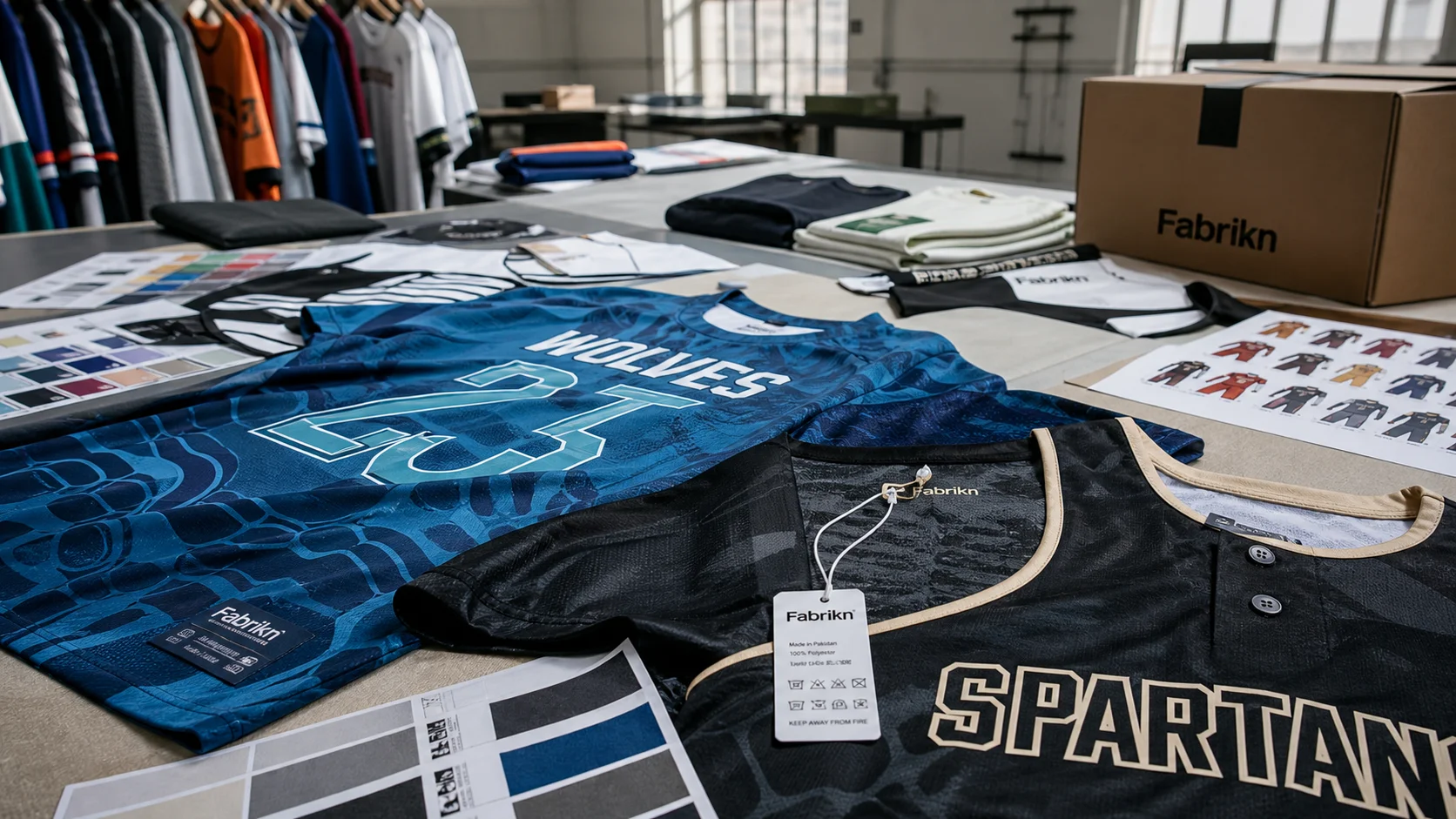
Spot UV Clothing Boxes with checks for samples, fit, MOQ, QC evidence, pricing terms, and delivery risk.
Fast answer: Spot UV Clothing Boxes: Finish, Cost, Impact, and Proof should be judged by production evidence, not by a generic sourcing promise. The buyer needs sample proof, cost breakdowns, QC checkpoints, and delivery buffers in writing.
Ask for recent sample photos, measurement tolerances, fabric or print test assumptions, decoration test notes, packing examples, and a named inspection checkpoint. These details show whether the team can repeat an approved sample at bulk volume.
Separate garment cost, decoration, labels, packaging, sampling, testing, freight, and rush charges. When every cost line is visible, it becomes easier to reduce colorways, adjust size depth, or reserve more time for sampling.
Three seconds decide the sale. I have watched shoppers in stores from Seoul to Hamburg pause, touch one box, and move on. The spot UV finish on clothing boxes earns that pause because it breaks up flat print with a sharp glint, a tactile interruption, and a hierarchy the camera catches instantly under retail lights.
That matters because apparel packaging is fighting cosmetics, phone accessories, and small electronics for the same split-second attention. On shelf, a matte-only carton can disappear unless the typography is oversized. Foil catches light, but it often shouts before it whispers. Spot UV sits between those extremes: contrast without the billboard effect. That is the appeal for premium basics, DTC labels, and limited drops.
I have compared recall rates during factory-side packaging tests with buyers in three regions, and the pattern is stubborn. A black soft-touch box with selective gloss on a logo or monogram is remembered more often than a full-gloss carton, even when both cost roughly the same in perceived value. The eye reads contrast first, then detail, then finish. On dark boards, the gloss pops. On pale stocks, it can look quieter unless the artwork is disciplined.
What most people miss is that a small UV area often looks more expensive than coating the whole panel. I saw this in a Guangdong converter where a brand wanted 70% coverage. The sample looked busy. We cut it to 18% coverage, just the logo and a thin border, and the box suddenly looked more restrained, which is what premium buyers tend to trust.
That effect shows up on a $9 DTC tee box and a $120 luxury shirt carton alike. Different budgets. Same logic. If the design is tight, the spot UV finish on clothing boxes works across price points, from entry-level streetwear to limited-edition capsule releases.
The production chain is less glamorous than the finish. It starts with base printing, usually on coated SBS, folding carton stock, black paperboard, or a sheet that has already received soft-touch lamination. After print, the converter applies the varnish or UV coating only to the selected areas, then cures it under ultraviolet light. Final inspection catches issues like haze, pinholes, and edge lift before the cartons are folded and packed.
Registration decides whether the job looks sharp or clumsy. A shift of 0.5-1 mm is enough to make a logo look blurry, especially on small packaging where the mark may sit within a 15-20 mm window. I have rejected samples where the gloss missed the serif of a wordmark by a hair. On press, that hair becomes a fault line. Buyers see it immediately.
Board choice matters as much as file setup. Coated SBS takes spot UV finish on clothing boxes cleanly, and so does quality folding carton stock. Black paperboard gives a dramatic contrast, especially with white ink or blind print underneath. Soft-touch lamination is common too, because the matte base makes the gloss read more strongly. Dense ink coverage can slow curing, texture can break the film, and a varnish layer that is too thick may sit on top of the sheet rather than bond to it.
I have seen converters reject art files with tiny typography, and they are right to do it. Fine lines below 1 pt can flood, bridge, or lose definition when the UV hits them. One factory manager told me bluntly that a logo with six hairline elements becomes a maintenance problem on press. He was not wrong. The cleaner the vector, the cleaner the finish.
There is also a sustainability wrinkle. Extra coatings and mixed finishes can complicate recycling, especially if the box already carries lamination or metallic ink. According to ISO guidance on material consistency and process control, fewer mixed substrates usually make downstream recovery simpler. That does not mean spot UV is forbidden. It means brands should use it with restraint and choose recyclable board wherever possible. I have seen plenty of good packaging ruined by over-decoration and overconfidence.
Pricing moves fast when finishing enters the quote. Box size, board grade, coating area, die-line complexity, MOQ, and the number of press passes all push the price around. A simple mailer with one UV logo may only add 8% to 15% over a plain printed box. A complex rigid-style folding carton with soft-touch base, foil accents, and spot UV finish on clothing boxes can add 25% to 40%, depending on region and quantity.
At low quantities, setup charges matter more than the per-unit finish. I have seen 500-piece runs priced at $1.10-$2.20 per box with spot UV, while 3,000-piece runs on the same spec dropped to $0.42-$0.78. For 10,000 pieces or more, the premium often narrows again because tooling and proofing are spread across volume. By contrast, no-finish printed cartons can land 10% to 20% lower, while foil stamping tends to push the quote up another $0.12-$0.35 per unit. Embossing can add similar cost if the tooling is custom.
Turnaround is usually 3-5 weeks for a straightforward box and 5-8 weeks when the spec includes spot UV, color matching, and a revised die line. The delay is rarely the UV process itself. Artwork approval, registration proofs, and the extra cure window before finishing or packing take the time. A buyer who sends a locked dieline and a clean PDF can save a week. A buyer who keeps changing the logo position can lose two.
In Europe, I have been quoted more for small-run spot UV because the factory floor is built for higher compliance costs and shorter scheduling windows. In parts of Asia, foil can be priced more aggressively, while UV still depends on machine availability and artwork discipline. The practical takeaway is this: 20% spot coverage is usually far cheaper than a full-panel gloss treatment, and it often looks better. Dense shine can flatten detail.
When brands ask me how this fits into broader packaging budgets, I point them toward the product itself. A label investing in custom baby clothing manufacturing may need a softer visual cue than a streetwear drop. The box has to match the product price, not the founder’s ego.
Restraint wins. I have seen the finish look expensive on a black box with a 22 mm logo and a 1.5 mm border, and cheap on a busy carton trying to show everything at once. Spot UV behaves like a spotlight. Give it too many targets and it loses authority.
The strongest layouts use clear contrast and generous margins. Logo placement near the top third, a repeating frame line, a sleeve-panel mark, or a small callout near the flap can work well. Black-on-black, navy-on-slate, and white-soft-touch with gloss accents all perform because the eye reads the change in sheen before it reads the words. A small monogram in gloss can do more than a full-panel motif.
I have also learned what not to do. Photography with heavy texture, distressed graphics, or too much tonal variation can swallow the UV effect. That is money wasted. One sportswear client spent $0.18 extra per carton on finish, only to bury it under a full-bleed lifestyle image. The sample looked like a standard print job. We stripped the photo back, kept the texture off the primary face, and the box finally earned its premium.
Keep the dieline honest. Glue zones, flap folds, and compression areas should stay free of coating if you want the carton to close cleanly. I have seen a handsome box buckle because the varnish crossed into the score line. It was a mechanical failure, not a design one. Good packaging respects the machine.
For brands building broader private-label programs, the same discipline applies across categories. A label using private label clothing services should align its carton finish with the hand feel of the garments inside. A soft T-shirt, a dense fleece, and a technical shell do not need the same box language.
On visual impact, foil wins fastest. It signals luxury from across the room, especially gold, silver, and holographic tones. On tactile impact, embossing wins because it changes the structure of the sheet. On balance, spot UV finish on clothing boxes often gives the best mix of impact, cost, and production risk for mid-premium packaging. It feels deliberate without becoming expensive theatre.
Soft-touch lamination changes the story again. It reduces fingerprints, gives the carton a velvety feel, and makes gloss details stand out harder. The trade-off is scratch sensitivity. A soft-touch box can scuff during transit if the board is thin or the packing line is rough. Spot UV on a matte board may show fewer handling marks, but it will not hide abrasions as well as a laminated carton.
Embossing works best when the artwork is minimal and the board is strong enough to hold a clean rise. I have seen it fail on thin stock where the impression crushed the fibers and blurred the mark. Foil also has a risk profile. It looks rich, yet tiny registration errors are obvious, and the material cost can climb fast on small orders.
Regional pricing changes the equation. Some Asian factories can quote foil more competitively because they run larger mixed batches. European converters often charge more for short-run spot UV because labor, compliance, and machine time are priced differently. That is why a hybrid spec often wins: soft-touch base, selective UV on the logo, and a restrained line of foil only where the brand mark needs it.
I have used that same logic with technical apparel clients. Brands that build garments through cut and sew manufacturing tend to care about precision, so their packaging should show the same discipline. The carton becomes proof that the brand understands finish, fit, and order.
Premium packaging can waste material quickly if the brief is sloppy. UV coatings add a finishing layer, lamination adds another, and every extra pass through press or curing equipment increases energy use and scrap risk. I have watched clean-looking jobs produce 5% to 12% more waste than planned because the registration drifted and the first batch had to be re-run.
Recyclability depends on the market and the substrate. Some carton streams tolerate light UV better than heavy lamination, while mixed-material boxes create more sorting friction. Brands that insist on the effect should keep the board recyclable, cut the coating area, and avoid piling foil, lamination, and heavy ink coverage into one spec. A smaller finish can carry more value than a crowded one.
Data from Textile Exchange shows that buyers are pushing harder on material accountability across the supply chain, and packaging is now part of that conversation. I do not think sustainability excuses weak design. It demands better design. A box that looks expensive and uses fewer mixed materials is the smarter choice.
Factory reality is less tidy than brand decks suggest. Shorter batches can reduce waste because problems are caught earlier. Larger plants can offset setup loss through scale, but only if the art file is stable and the proofing process is disciplined. Reprints are the enemy. So are last-minute logo changes.
When a brand asks for a premium finish, I ask whether the carton will travel well, stack cleanly, and still be recyclable in the main destination market. That is the test. Decoration without purpose is just waste with better typography.
I ask the same questions every time, because brochure claims do not survive the pressroom. What coating type do you use, and is it true spot UV or a hybrid varnish? What is the curing method? What registration tolerance can you hold on a 2-color logo? Which board options work best, and what proof format will you send me first?
Then I ask for evidence. A physical sample beats a PDF mockup every time, and I want to see prior jobs on similar apparel packaging, not just cosmetics cartons. Gloss on a small shirt box behaves differently from gloss on a rigid perfume tray. I also want rub-test results, folding performance, and a photo of the board after die-cutting.
Many factories can print spot UV. Fewer can do it consistently on tiny logo details or across a 5,000-piece batch without visible drift. Ask how they handle rush orders, color variation, and replacement cartons if 3% or 5% of the run is defective. I have seen suppliers promise the moon, then struggle to keep the finish aligned within 1 mm across a full pallet.
If the supplier understands apparel, the answers will sound specific, not vague. That matters for brands using get a free quote as a first step, because the quote should reflect the actual carton spec, not a fantasy version of it.
Start with budget, not aesthetics. Define the target unit cost, the MOQ, and the shipping market before you choose finish. Then choose the board, set the coating area, and request a measured proof. I always tell teams to brief the printer with exact UV callouts, such as “logo only,” “20% coverage,” or “do not coat fold lines.” If you leave that ambiguous, someone will guess.
Order a pilot run before the full season. A 300- to 500-piece test can expose issues that a digital render will hide, including warp, scuffing, and registration drift. Compare at least three quotes using the same dieline, same board, and same finish spec. Otherwise you are not comparing prices. You are comparing assumptions.
Here is the checklist I use before release: 2-4 week sample timing, 3-8 week production timing, board certification if sustainability matters, stacking and transit tests, and a clear reject policy for cartons that miss alignment by 0.5-1 mm. If the job combines spot UV with lamination or foil, confirm who owns the extra waste and reprint cost.
The brands that get this right treat packaging as part of product design, not decoration. The box should earn its place through restraint, not noise. If you want spot UV finish on clothing boxes to work, make the brief disciplined and let the finish support the story instead of trying to write it.
For small runs, I usually see $1.10-$2.20 per box, depending on board, size, and coverage. At 3,000 pieces or more, the same spec can drop to $0.42-$0.78 per unit. Setup fees and proofing matter more than the coating itself at low MOQ.
Typical timing is 3-5 weeks for simple cartons and 5-8 weeks for more complex jobs. The UV curing step is fast; the delay usually comes from artwork approval, registration proofs, and finish testing. A clean dieline can save about a week.
Coated SBS, folding carton stock, black paperboard, and soft-touch laminated board all work well. The best choice depends on contrast, print coverage, and how premium the box should feel. Dark boards and soft-touch bases make the gloss effect stronger.
Yes, but only if the typography is simple and the file is built carefully. Logos under 1 pt line weight or with tight internal gaps can flood or blur during coating. I recommend a physical sample before full production.
Give exact coating instructions, a locked dieline, and a marked proof showing UV areas in a separate layer. Ask for registration tolerance, cure method, and prior samples from similar apparel jobs. I also ask for rub-testing and folding QC before release.