
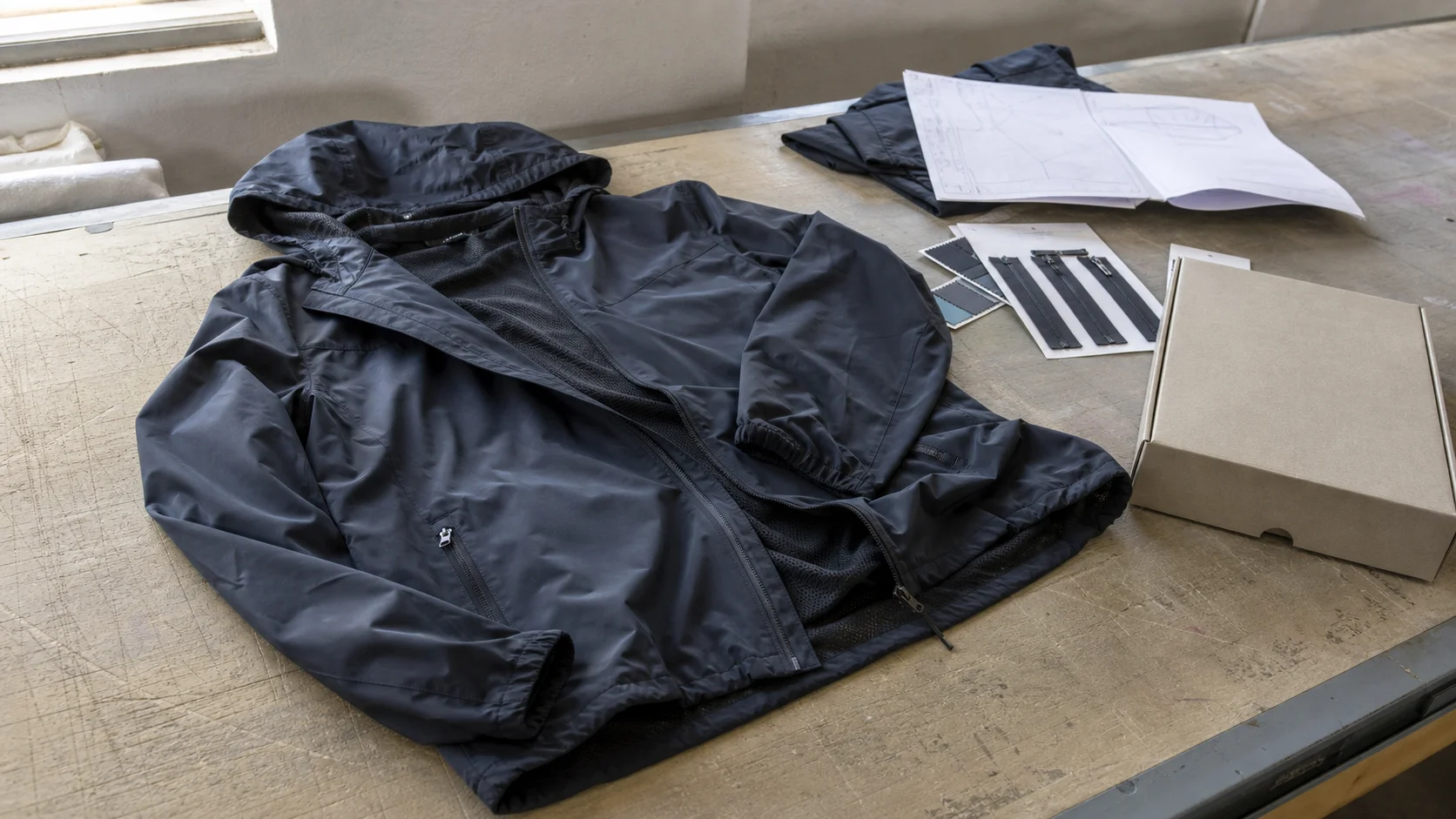
A product-specific SEO outline for restaurant group buyers assessing reorder risks, decoration consistency, sizing continuity, and production artifacts...
Stretch Wind Jacket Reorder Risk Review - Activewear & Teamwear manufacturing guide
For restaurant groups, a stretch wind jacket looks simple on a purchase order: lightweight outer layer, team logo, easy to issue across multiple locations. The reorder risk is not simple. Once the first production run is in use, small differences in fabric stretch, color shade, zipper quality, logo placement, or size grading can become expensive across dozens or hundreds of employees.
This review focuses on the sourcing risks behind a stretch wind jacket reorder for restaurant groups, especially when the jacket is part of activewear and teamwear programs. The goal is not to make the product more complicated than it needs to be. The goal is to prevent a second or third order from arriving with visible differences from the first one.
A first order is usually judged against a new design brief. A reorder is judged against memory, staff expectations, existing uniforms, and photos already used in brand manuals. That makes tolerance much tighter. If the first jacket had a soft hand feel, matte surface, clean stretch recovery, and a stable navy shade, the reorder must match that practical standard.
The most common mistake is assuming that a reorder only means “make the same jacket again.” In apparel manufacturing, a reorder still depends on available fabric lots, trim suppliers, machine settings, decoration method, worker handling, packing standards, and quality control. If any one of those inputs changes, the final jacket may still be technically acceptable but commercially wrong for the buyer.
Restaurant groups have a sharper issue than many buyers because staff often work side by side. A slightly different black shell, shinier zipper tape, lower logo position, or shorter sleeve is easy to spot when employees from different hiring waves stand together. Store managers may not know the textile reason, but they will see that the uniform program looks inconsistent.
Purchasing judgment: treat every reorder as a controlled repeat production, not as an automatic repeat purchase. The more visible the garment is to customers, the tighter the control should be.
Stretch wind jackets sit between performance outerwear and staff uniform. For restaurant groups, they are useful because they cover several roles without feeling as formal as a blazer or as heavy as a fleece jacket. They work for front-of-house teams moving between indoor and patio service, delivery staff, catering crews, managers, valet teams, and event staff.
The product usually needs to be light, packable, breathable enough for active work, and presentable enough for guest-facing service. A good jacket should allow arm movement when carrying trays, loading vans, opening patio umbrellas, or handling curbside pickup. The fabric does not need to perform like technical mountaineering gear, but it must recover after movement and maintain shape after repeated wear.
For restaurant groups with multiple locations, the jacket also needs to be easy to reorder. New staff join continuously. Locations open at different times. Seasonal patio staffing may increase demand without much warning. A uniform style that cannot be repeated reliably becomes a supply problem, not just a product problem.
If your team is building a broader uniform sourcing program, reviewing manufacturing services and production support early can reduce reorder exposure. A practical place to start is the service overview at fabrikn.com/services/.
Fabric is the largest reorder risk in a stretch wind jacket. The first order may have used a specific nylon-spandex or polyester-spandex woven fabric. The reorder may be produced months later, when the same mill lot is no longer available. Even if the fabric content is described the same way, the hand feel, surface sheen, stretch direction, and recovery can change.
Typical stretch wind jacket fabrics include woven polyester with 3% to 8% spandex, nylon-spandex blends, mechanical stretch polyester, and lightweight laminated or coated fabrics. Common weights may fall around 90 gsm to 160 gsm, depending on the intended climate and price point. A lower weight can feel more packable but may show seam puckering, transparency, or wrinkling. A heavier fabric may look cleaner but feel too warm for active restaurant staff.
Stretch recovery matters more than stretch percentage alone. A jacket can stretch well on the fitting table but bag out at elbows or hem after work use. For restaurant groups, this can make staff look untidy before the garment is actually worn out. Reorder fabric should be checked for both elongation and recovery, preferably against the approved first-order fabric swatch.
Buyers should avoid approving reorder fabric from a digital photo. Photos are useful for screening, but they cannot confirm stretch, weight, coating feel, or shade behavior under restaurant lighting. Request a physical swatch and compare it to the retained standard from the first order.
Color risk is especially high in black, navy, charcoal, olive, burgundy, and brand-specific shades. Restaurant groups often choose darker jackets because they hide minor stains and match broader uniform palettes. Dark colors also expose lot variation when one jacket is worn next to another.
A reorder can fail commercially even when the color is within a normal textile tolerance. A slightly purple navy, greenish black, or warm charcoal may be acceptable in general apparel but wrong for a uniform program. The risk increases when jackets are distributed to stores that already have employees wearing the first batch.
Color should be managed through standards, not memory. The factory or supplier should hold an approved shade standard, and the buyer should keep one as well. For reorders, bulk fabric should be checked against that standard before cutting. Once cutting starts, color corrections become expensive and often impossible.
For multi-location restaurant groups, color tolerance should be stricter than for generic promotional apparel. The jacket is not a giveaway item. It is part of customer-facing brand presentation.
Trim changes can make a reorder look like a different garment. Zipper tape shade, puller shape, matte versus shiny finish, drawcord quality, elastic tension, snap finish, stopper color, and label material all affect the final look. On a stretch wind jacket, the zipper is often the most visible trim, especially on black or navy styles with contrast hardware.
Factories may substitute trims when the original supplier is out of stock or the reorder quantity is lower than the first run. A substitution may be functionally acceptable but visually wrong. This is where restaurant group buyers need clear trim sheets, not just style photos.
Trim sheets should include size, material, color, finish, supplier code if available, and approved reference samples. For zipper risk, specify coil or molded zipper, gauge size, tape color, slider finish, puller shape, and whether the zipper must be reverse coil or standard. For drawcords, specify diameter, construction, color, tip finish, and elasticity if used.
Trim Area Common Reorder Risk Practical Control Main zipper Different tape shade, puller shape, or slider finish Keep approved zipper sample and require trim approval before production Elastic cuffs Too tight, too loose, or different recovery Specify elastic width, stretch, and finished cuff measurement Drawcord and stopper Different cord diameter or stopper color Approve cord, stopper, and tip together as a trim set Labels Incorrect care content, size label, or brand label placement Use a label placement diagram and confirmed label artwork Pocket zipper Lower-quality zipper causing snagging Test pocket operation during sample and final inspectionPurchasing judgment: do not allow “similar trim” language on visible components unless the buyer has approved the exact substitute. Similar is too broad for uniform reorders.
Fit risk is easy to underestimate because wind jackets are often described as relaxed or easy-fitting. Stretch fabric gives some forgiveness, but it does not fix a poor size spec. Restaurant staff move actively, and the jacket must work over polos, T-shirts, button-down shirts, or light base layers depending on the role.
Reorder problems often appear when the factory adjusts patterns, changes sewing tolerance, or uses fabric with different stretch recovery. A medium can feel tighter across the back, sleeves can finish shorter, or the hem can ride up when staff reach forward. If the jacket is used for both men and women in a unisex fit, size grading needs extra attention.
For restaurant groups, the size curve may also shift over time. A first rollout may focus on existing staff. A reorder may need more small sizes, more extended sizes, or more manager sizes depending on hiring patterns. The buyer should review actual issue data before reordering the same size ratio.
Measurement tolerance should be realistic. Very tight tolerance on a lightweight stretch jacket may create unnecessary rejection risk, but loose tolerance can cause inconsistent uniforms. Many buyers use tolerances around plus or minus 1 cm for small points and plus or minus 1.5 cm to 2 cm for larger body measurements, depending on the construction and factory capability. The final tolerance should match the product, fabric, and volume.
Restaurant group jackets are rarely blank. They usually carry a chest logo, sleeve mark, back print, department identifier, or location-specific decoration. Branding makes reorder control more difficult because decoration is often handled after garment sewing, sometimes by a separate facility.
Common decoration methods include embroidery, heat transfer, screen print, silicone print, woven patch, rubber patch, and reflective print. Each method has tradeoffs. Embroidery looks durable but can pucker lightweight stretch fabric. Heat transfer gives a clean surface but depends on temperature, pressure, time, and wash durability. Screen print can work well for larger graphics but may crack if the print is not suitable for stretch fabric.
Logo placement should be specified from fixed points, not estimated by eye. For example, chest logo placement can be measured from center front zipper and high point shoulder. Sleeve placement can be measured from shoulder seam or sleeve hem, depending on the design. A placement tolerance should be included because small variations are normal, but the tolerance must be narrow enough to protect brand consistency.
Artwork files should be controlled. A reorder should not rely on a screenshot, JPEG, or copied file from an old email thread. Vector artwork, thread colors, transfer film specs, print color references, and decoration dimensions should be stored with the tech pack.
Purchasing judgment: if the logo is customer-facing, approve a decorated pre-production sample before bulk decoration. Blank garment approval alone is not enough.
Minimum order quantity can change between the first order and reorder. The first production run may meet a fabric mill MOQ, trim MOQ, and factory line minimum. A later reorder may be smaller, especially if it is only for replacement stock or new hires. That smaller quantity can create higher unit cost, trim substitutions, or fabric stock limitations.
Typical MOQ ranges for custom stretch wind jackets vary by supplier model and material availability. For a fully custom cut-and-sew jacket, buyers may see minimums around 300 to 800 pieces per color, with some programs requiring 1,000 pieces or more when custom-dyed fabric is involved. For semi-custom stock fabric programs, MOQ may be closer to 100 to 300 pieces per color. For decorated blanks, MOQ can be lower, but product continuity risk may be higher if the blank style is discontinued.
Restaurant groups should plan reorder quantities based on usage, not just current shortage. A safe approach is to calculate active staff count, expected turnover, new location openings, seasonal staffing, damage replacement, and buffer stock. The buffer matters because rush reorders are usually where quality control gets weaker.
Reorder Model Typical MOQ Range Main Advantage Main Risk Decorated stock jacket 24 to 100 pieces, depending on decorator Fast and low commitment Style or color may be discontinued without control Semi-custom using stock fabric 100 to 300 pieces per color Better control with moderate volume Fabric lot variation and limited trim choices Fully custom cut-and-sew 300 to 800 pieces per color, sometimes higher Best control over fit, trims, and branding Longer lead time and higher planning requirement Custom-dyed fabric program 500 to 1,500 pieces per color, depending on mill MOQ Best brand color control at scale Higher inventory exposure and fabric approval stepsThese ranges are general. Actual MOQ depends on fabric source, trim availability, decoration method, factory capacity, and whether the supplier is holding greige fabric or finished stock.
Lead time is not just sewing time. A stretch wind jacket reorder can involve fabric booking, lab dip approval, bulk fabric production, trim sourcing, sample approval, cutting, sewing, decoration, inspection, packing, and freight. If any approval step is slow, the delivery date moves.
Typical lead times may range from 2 to 4 weeks for decorated stock jackets, 5 to 8 weeks for semi-custom production using available fabric, and 8 to 14 weeks or more for fully custom production with custom fabric or trims. Custom dyeing, water-repellent treatment, special zippers, reflective details, or complex decoration can extend that timeline.
Restaurant groups should pay special attention to seasonal windows. Patio season, holidays, new store openings, catering events, and recruitment waves can create sudden jacket demand. Waiting until inventory is nearly empty usually forces one of three bad choices: accept a substitute product, pay rush charges, or issue inconsistent uniforms.
Lead-time planning should include internal decision time. Buyers often calculate factory lead time but forget approval delays from brand, operations, finance, or regional managers. A sample sitting unapproved for ten days is still part of the reorder timeline.
Teams that need help structuring reorder calendars, approval gates, or production discussions can contact Fabrik through fabrikn.com/contact-us/.
A reorder still needs sample control. The level of sampling can vary depending on how much has changed. If the same fabric lot, trims, pattern, factory, and decoration setup are still active, a lighter approval path may work. If any major input changes, the buyer should request a more complete sample process.
The practical sample sequence usually starts with reviewing the previous approved sample and production comments. The supplier should confirm whether all materials are identical or whether substitutions are proposed. If fabric is changing, the buyer should approve a new fabric swatch before garment sampling. If trim is changing, approve trims before the pre-production sample.
A pre-production sample should represent the actual reorder materials, construction, decoration, labels, and packing method. It should not be made from leftover fabric or approximate trims unless clearly marked as a reference sample only. Buyers should compare the pre-production sample against the original approved sample and the first-order production garment if available.
Sampling adds time, but skipping it can create a larger delay if bulk goods arrive wrong. For restaurant groups, the cost of inconsistent uniforms across stores can exceed the cost of one extra approval step.
Final inspection is where reorder assumptions are tested. A shipment can pass basic counting and packing checks while still failing the buyer’s real need. Inspection should include workmanship, measurement, color, trim, decoration, labeling, packing, and comparison against the approved sample.
Common workmanship issues on stretch wind jackets include seam puckering, skipped stitches, uneven topstitching, zipper waviness, twisted sleeves, loose threads, misaligned pockets, tension marks near elastic, and uneven hems. Lightweight stretch fabrics can be unforgiving when sewing tension is not controlled.
Decoration inspection is equally important. Logos may be off-center, crooked, too high, too low, incorrectly sized, wrong color, or poorly bonded. Heat transfers should be checked for edge lifting, scorching, adhesive marks, and stretch cracking. Embroidery should be checked for puckering, thread color accuracy, backing residue, and clean trimming.
For larger orders, many buyers use AQL inspection levels. The exact level should match the risk and order size. A restaurant group rolling out jackets across visible customer-facing teams should not rely only on factory self-inspection unless the supplier has a strong and verified process.
A reorder risk review should be short enough to use but detailed enough to catch the main failure points. The checklist below is designed for purchasing teams, operations managers, uniform coordinators, and brand teams working together.
Risk Area Question to Ask Buyer Action Fabric Is the exact same fabric lot or approved equivalent available? Request swatch approval and compare against retained standard Color Will the reorder match jackets already in use? Approve lab dip or bulk fabric before cutting Trims Are zippers, elastic, cords, labels, and pulls unchanged? Review trim card before production Fit Has fabric stretch, pattern, or size grading changed? Approve fit sample if any major input changed Decoration Is logo artwork, size, method, and placement controlled? Approve decorated pre-production sample MOQ Does reorder quantity support original materials? Confirm cost, substitutions, and minimums before PO release Lead time Are approval steps included in the calendar? Build calendar with sample, production, inspection, and freight dates Inspection Who confirms the shipment before release? Set inspection criteria and sample comparison requirementsGood reorder management is mostly discipline. Keep the approved sample. Keep the fabric swatch. Keep the trim card. Keep the logo file. Keep the measurement spec. Keep inspection comments from the first order. When the next reorder starts, those records prevent the same decisions from being rebuilt from memory.
Restaurant groups often face a practical choice: use a decorated stock jacket or develop a custom stretch wind jacket. Neither choice is automatically better. The right choice depends on volume, brand standards, timing, and tolerance for change.
A decorated stock jacket is faster and easier at low volume. It can work well for small teams, test markets, temporary events, or emergency replenishment. The weakness is continuity. The supplier may discontinue the style, alter the fit, change the fabric, or run out of the required color. Restaurant groups that need a consistent look for several years may find this risky.
A custom jacket gives more control over fit, fabric, trims, color, logo placement, and future reorders. The weakness is planning. Custom production usually requires higher MOQ, longer lead time, and more approval steps. It also requires better forecasting so the group does not run short between production cycles.
For many restaurant groups, a hybrid approach is sensible. Use a custom jacket for core brand locations and long-term staff programs, while keeping an approved backup stock style for emergencies, new openings, or temporary teams. The backup should be documented and approved in advance, not chosen during a shortage.
A strong tech pack does not need to be overly complicated, but it must be complete. At minimum, it should include flat sketches, measurement specs, fabric details, trim details, logo placement, artwork references, label details, construction notes, packing instructions, and quality expectations.
Restaurant groups should also maintain a reorder file. This can be a shared internal folder or supplier-managed record, but it should be easy to retrieve. Include approved samples, photos, PO history, size breakdowns, staff feedback, inspection reports, and supplier comments. The point is to make the next reorder faster and more accurate.
When sourcing partners understand brand standards and operational realities, they can flag risks earlier. To understand Fabrik’s background and sourcing orientation, buyers can review fabrikn.com/about-us/.
A stretch wind jacket reorder for restaurant groups should be managed as a repeatable uniform system, not as a simple apparel refill. The biggest risks are not dramatic. They are small differences that become obvious at scale: a different navy shade, a shinier zipper, a tighter cuff, a lower logo, a shorter sleeve, or a fabric that loses recovery after use.
The safest reorder process starts before the first order ships. Keep standards, document approvals, and record production comments. If the first order is already complete and documentation is weak, rebuild the standard before placing the next PO. Pull a garment from current inventory, confirm measurements, photograph logo placement, collect fabric and trim details, and use that as the control reference.
Do not overpay for unnecessary complexity, but do not treat a customer-facing uniform as a commodity if consistency matters. For restaurant groups, the jacket is part of the guest experience. A careful reorder review protects brand presentation, staff confidence, and purchasing predictability.
Get a free quote from Fabrikn — your trusted B2B clothing manufacturer with 10+ years of experience. MOQ as low as 200 pieces.
Get a Free Quote →The biggest risk is material inconsistency. Fabric with the same general content can still differ in weight, stretch recovery, surface sheen, and color shade. For restaurant groups, those differences are visible when staff wear old and new jackets together.
Typical fully custom MOQ is often around 300 to 800 pieces per color, with higher minimums for custom-dyed fabric or special trims. Semi-custom programs may start around 100 to 300 pieces. Decorated stock jackets can be lower, but continuity risk is usually higher.
Yes, in most cases. If every material, trim, pattern, and decoration setup is unchanged, the sample process may be lighter. If fabric, trims, logo method, factory, or fit has changed, a new pre-production sample should be approved before bulk production.
Keep an approved physical color standard from the first order and require lab dip or bulk fabric approval for the reorder. Compare under daylight and store-like lighting. Do not approve color from photos alone.
There is no single best method. Embroidery is durable but can pucker lightweight stretch fabric. Heat transfer can look clean but must be tested for bonding and stretch. Screen print works for some graphics but needs suitable ink. The best choice depends on fabric, logo size, wash expectations, and brand look.
For custom production, planning 8 to 14 weeks ahead is safer, especially if fabric or trims must be produced. Semi-custom programs may need 5 to 8 weeks. Decorated stock can be faster, often 2 to 4 weeks, but depends on inventory and decoration capacity.
Inspect fabric shade, measurements, stitching, zipper function, trim consistency, logo placement, decoration quality, labels, packing, and carton markings. Compare bulk goods against the approved sample and first-order reference garment where possible.
It can be a good option for low-volume, temporary, or urgent needs. The tradeoff is continuity. If the supplier changes or discontinues the style, future reorders may not match. Large restaurant groups usually need stronger control than a basic stock program provides.