
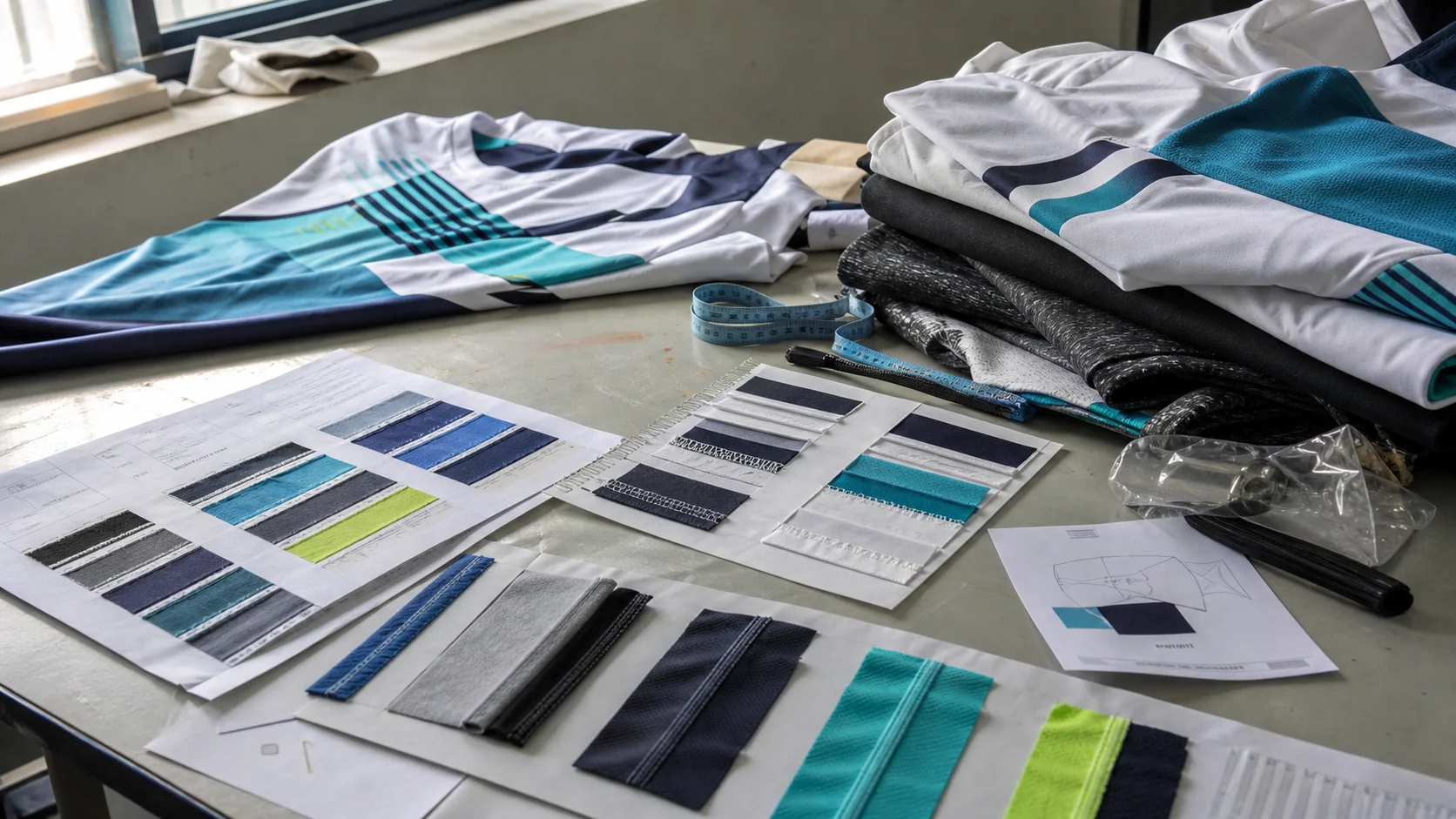
A practical SEO outline for corporate uniform buyers auditing sublimated teamwear panel colorfastness before approving bulk production, reorders, and...
Sublimated Teamwear Panel Audit for Uniform Buyers - Decoration & Printing manufacturing guide
Wholesale sublimated teamwear can look clean in a presentation sample and still create problems in rollout: uneven panel shades, logo drift, weak crocking, dye migration, or a sleeve that does not match the body after repeated washing. For corporate uniform buyers, the risk is not only cosmetic. A colorfastness failure can damage brand consistency across departments, regions, sports events, promotional teams, and staff programs.
A sublimated teamwear panel colorfastness audit is a practical control process used before bulk production, during production, and before shipment. It checks whether printed fabric panels can hold approved colors under expected use, washing, rubbing, perspiration, heat, and storage conditions. It also verifies whether the supplier can repeat the same result across sizes, panels, batches, and reorders.
This guide is written for B2B uniform buyers sourcing wholesale sublimated teamwear for corporate programs, staff events, branded sportswear, hospitality teams, school partnerships, fitness crews, trade show uniforms, and promotional campaigns. It focuses on buying judgment: what to specify, what to inspect, where factories commonly fail, and how to set realistic approval standards before placing a volume order.
Sublimation printing is widely used for teamwear because it can create bright graphics, all-over prints, names, numbers, sponsor panels, gradient effects, and repeatable brand artwork without the hand feel of screen printing or heat transfer vinyl. The design becomes part of the polyester fabric rather than sitting heavily on top of it.
That advantage also creates a sourcing risk. If the print profile, fabric base, heat press condition, paper quality, or cutting alignment is not controlled, every panel can behave slightly differently. A front body panel may look acceptable, while the sleeve looks dull. A dark navy may shift purple after washing. A red sponsor panel may bleed visually into a white side insert. A black collar rib or binding may transfer shade during packing if moisture and heat are not managed.
Corporate uniform buyers usually need consistency more than novelty. A sports team may tolerate slight variation between seasons. A corporate program often cannot. Staff standing together at a product launch, logistics hub, airport counter, gym opening, or hospitality event should look like one brand system, not several print trials stitched into garments.
A panel audit gives buyers a structured way to control this before the shipment leaves the factory. It is not a replacement for good design, clear artwork files, or capable production. It is a checkpoint system that reduces the chance of receiving mixed shades, weak wash performance, or panels that fail under normal use.
Buying judgment: do not approve sublimated teamwear only from a digital mockup. A mockup shows layout. It does not prove colorfastness, fabric behavior, panel matching, or repeatability.
Colorfastness is the ability of a colored material to resist change or transfer when exposed to washing, rubbing, perspiration, light, heat, moisture, storage, or use. In sublimated teamwear, panel colorfastness covers both the printed artwork and the relationship between panels after cutting and sewing.
For example, a uniform polo or jersey may include a front panel, back panel, two sleeves, side inserts, collar, cuffs, placket, reflective trim, zipper tape, woven label, and heat transfer neck mark. Even when the main panels use the same printed fabric, their color result can vary due to print direction, press temperature, roll shade, fabric stretch, or inconsistent dwell time.
A proper audit looks beyond whether the garment “looks nice.” It asks whether each visible component remains within the approved shade tolerance after normal conditions. That includes dry rubbing from arms and equipment, wet rubbing from sweat, repeated domestic or industrial laundering, and storage in cartons during warm transport.
General print quality checks whether artwork is sharp, placed correctly, and free from obvious print defects. Panel matching checks whether each part of the garment belongs to the same approved color family. A buyer may receive a jersey with crisp graphics and still reject it because the sleeves are visibly different from the body.
Panel matching is especially important for corporate uniforms because brand colors are often fixed. A small variation in royal blue, charcoal, green, orange, or red can be obvious when dozens of staff members stand together. Bright colors and dark saturated colors usually need tighter control than heather effects, abstract patterns, or low-contrast designs.
Sublimation depends on heat, pressure, time, dye, transfer paper, and polyester fiber behavior. A small change in one variable can shift the final shade. Common causes include:
Most of these issues are preventable, but only if the buyer and supplier define controls early. Once bulk panels are printed and cut, repairs are expensive and often unrealistic.
Wholesale uniform orders carry different risks from one-off custom teamwear orders. The order size is larger, the brand standards are stricter, and the garments may need to be reordered over several months or years. The following risks deserve attention before purchase order approval.
Corporate buyers often provide Pantone, CMYK, RGB, or brand guideline references. Sublimation cannot always reproduce every Pantone color exactly on every polyester base. The fabric ground, print profile, and lighting conditions affect the result.
The practical target is not a perfect paper-to-fabric match. The target is an approved fabric standard that can be repeated. Buyers should approve a physical printed fabric swatch or garment panel under controlled light rather than relying only on a brand book.
Panel shade variation is one of the most common issues in sublimated teamwear. A factory may print body panels on one day and sleeves on another, or use different transfer paper rolls. If controls are weak, shade variation appears in assembled garments.
This risk increases with large orders, complex size curves, multiple styles, and tight delivery schedules. Buyers should require panel matching inspection before sewing, not only after final garment assembly.
Some sublimated garments look strong at first but fade after laundering. Corporate uniforms may be washed frequently, sometimes under harsher conditions than retail sportswear. Staff may use hot water, strong detergent, tumble drying, or commercial laundry services.
A realistic wash test should match the expected care environment. If the uniform will be used in gyms, hospitality, event staffing, or operations teams, the audit should include repeated wash cycles before bulk release.
Crocking means color transfer caused by rubbing. In teamwear, this may occur at underarms, collars, side seams, backpacks, seat belts, lanyards, sports equipment, or stacked garments. Perspiration can worsen rubbing and shade change.
Dark colors, heavy saturation, and contrast panels should receive closer testing. A black or navy sublimated panel next to white trim is a classic high-risk combination.
Corporate uniform shipments may sit in cartons, warehouses, vehicles, or event storage rooms. Heat and pressure can encourage dye transfer, especially if garments are packed before fully conditioned or if trims are unstable.
Buyers should not ignore storage testing for urgent promotional launches. The garment may pass a quick visual check but show transfer marks after compressed packing.
A panel audit is only useful if the product specification is clear. Vague instructions such as “polyester jersey with sublimation print” leave too much room for interpretation. The supplier should receive a structured tech pack and confirm production assumptions before sampling.
Sublimation works best on polyester or high-polyester blends. For corporate teamwear, common fabric options include:
Buyers should specify composition, weight tolerance, knit structure, stretch requirement, moisture-wicking finish, anti-pilling expectation, hand feel, and color ground. White or light polyester bases usually produce cleaner sublimation colors. Dark fabric bases are generally not suitable for standard sublimation unless special processes are used, and those processes may affect cost and hand feel.
Artwork files should be supplied in production-ready format, typically vector files for logos and high-resolution layout files for all-over graphics. The supplier should confirm scale, repeat alignment, logo placement, name and number fonts, sponsor positioning, and size grading rules.
Brand colors should be referenced by Pantone where possible, but buyers should approve the actual printed result on the nominated fabric. If the company has strict brand governance, a tolerance range should be agreed using a physical standard, spectrophotometer reading, or signed swatch card.
Trims can create colorfastness failures even when the sublimated fabric is stable. Buyers should confirm:
Trim shade should be checked against both the approved artwork and finished garment. A navy zipper that looked acceptable alone may look wrong beside a sublimated navy panel.
The care label is not just a compliance item. It defines the conditions against which performance should be judged. A garment labeled for cold wash and line dry may not survive hot industrial laundry, and the supplier may not accept liability if the buyer never stated that use case.
Corporate buyers should define the real cleaning environment early. If staff will use commercial laundry, higher testing standards may be needed. If the order is for a short promotional event, the buyer may accept a different performance threshold, but this should be deliberate.
A sublimated teamwear panel audit works best when it is built into the buying calendar. Leaving it until final inspection creates pressure and reduces options. The following workflow is practical for wholesale corporate uniform sourcing.
The audit starts with documentation. The tech pack should include fabric specs, artwork files, placement measurements, color references, size chart, trim list, construction details, care label requirements, packing method, and inspection criteria.
If the supplier cannot confirm these details before sampling, bulk production will likely rely on assumptions. That is a poor position for the buyer.
For sublimation, the most useful early sample is often a print strike-off on the actual bulk fabric or nominated fabric quality. This should include main brand colors, gradients, dark areas, light contrast zones, logos, and any high-risk panel transitions.
A buyer should request at least one full-color strike-off before approving a salesman sample. For complex programs, it is sensible to approve multiple strike-offs under standard light conditions.
Before a full sample is sewn, panels should be checked flat. This makes it easier to spot shade variation, print banding, registration issues, and logo scaling problems. Flat panel review is especially useful for raglan sleeves, side panels, shoulders, and all-over graphics crossing seam lines.
If a design includes a graphic running from body to sleeve, audit the seam transition carefully. Cutting and sewing tolerances can create visible misalignment.
Fit samples confirm garment construction, size, comfort, and movement. Photo samples or salesman samples confirm final appearance. These are not always the same sample, and buyers should avoid treating them as interchangeable.
A fit sample may use substitute fabric or print. A photo sample should use production-intent fabric, artwork, trims, and finishing. For corporate uniform buyers, the photo sample should show how the garment looks on the body and under likely working conditions.
Selected panels and finished samples should be tested before bulk cutting. Testing can be internal, third-party, or buyer-supervised depending on order value and risk level. The key is to test production-intent materials, not only generic fabric.
A low-risk event order may use simplified wash and rub testing. A national corporate uniform rollout should use formal standards and retain sealed approved samples.
The pre-production sample should represent the final approved product. It should use confirmed fabric lot, print profile, trims, labels, thread, construction, size grading, and packing method.
Once signed, this sample becomes the factory’s production standard and the buyer’s inspection reference. Any later change to fabric, artwork, trims, or process should trigger reapproval.
In-line inspection catches issues while correction is still possible. Panel shade checks should happen after printing and before sewing. Finished garment checks should happen after sewing, pressing, labeling, and packing.
For larger wholesale orders, buyers may request an initial production inspection when the first 10–20% is complete, then a final random inspection before shipment.
Testing requirements depend on the buyer’s market, product use, and compliance framework. The following tests are commonly discussed in apparel sourcing. Buyers should confirm exact standards with their quality team, laboratory, or regulatory adviser.
Test Area What It Checks Why It Matters for Sublimated Teamwear Colorfastness to washing Shade change and staining after laundering Confirms whether printed panels can survive expected wash cycles Colorfastness to rubbing Dry and wet color transfer through friction Important for dark panels, underarms, backpacks, collars, and equipment contact Colorfastness to perspiration Reaction to acidic and alkaline sweat conditions Relevant for sportswear, event staff, gym uniforms, and outdoor teams Colorfastness to light Shade change after light exposure Useful for outdoor staff, tournaments, field teams, and promotional events Dimensional stability Shrinkage, growth, and distortion after washing Panel mismatch can worsen if fabric changes shape after laundering Heat or storage migration Transfer under pressure, heat, or packed conditions Reduces risk of carton storage marks and dye transfer in transitColorfastness results are often graded on a scale where higher grades indicate better performance. Many buyers target grade 4 or above for staining and shade change, but requirements vary by market, product type, and use case. A budget event jersey and a long-term corporate uniform program should not have the same tolerance.
Buyers should avoid using unrealistic standards without considering fabric and color limitations. Bright fluorescent effects, deep navy, black, red, and high-contrast white areas may need extra development. The supplier should explain limits before production, not after failure.
Fabric swatches are useful because they isolate the printed fabric. Finished garment testing is also important because seams, trims, labels, and packing create additional risk. A complete audit uses both when the order value justifies it.
For smaller orders, buyers may choose a focused approach: test high-risk panels, trims, and one finished garment. For large corporate programs, finished garment testing should be part of approval.
Sampling is where many sublimated teamwear projects lose time. Buyers ask for a perfect sample without giving complete artwork, or suppliers rush a sample using available fabric that does not match bulk production. Both situations create false confidence.
A controlled approval workflow should move in stages:
Sample timelines vary, but a typical sublimated teamwear sampling stage may take 7–20 days depending on artwork complexity, fabric availability, trim sourcing, and approval speed. A basic print strike-off may be faster. A full pre-production sample with custom trims, graded sizing, and formal testing will take longer.
Buying judgment: if the delivery date is fixed, reduce complexity before cutting audit steps. Removing unnecessary trims or simplifying panel artwork is safer than skipping colorfastness checks.
MOQ and lead time depend on the supplier’s setup, printing method, fabric availability, number of styles, size range, and trim requirements. Sublimated teamwear can be flexible for customization, but wholesale corporate orders still need production planning.
MOQ varies by factory and product complexity. As a cautious reference, buyers may see ranges such as:
Buyers should ask whether MOQ is calculated per design, per colorway, per style, per size, or per purchase order. This detail affects cost quickly. A 300-piece order split across three designs and twelve sizes is more complicated than one 300-piece design in six sizes.
Lead time should be broken into phases rather than quoted as one optimistic number. A realistic schedule may include:
Peak season, custom fabric, special packaging, late artwork changes, and failed tests can extend these timelines. Buyers should build approval buffers into launch calendars, especially for corporate events with fixed dates.
Better control usually costs more. The question is whether the risk justifies the cost. For a small one-day event, a buyer may accept simplified inspection and limited testing. For a staff uniform rollout across multiple branches, formal testing and production inspection are sensible.
Decision Lower-Cost Option Higher-Control Option Purchasing Judgment Color approval Digital mockup approval Printed strike-off on bulk fabric Use physical strike-offs for brand-critical colors Testing Basic internal wash check Third-party colorfastness testing Use formal tests for repeat programs and large orders Inspection Final visual check only Panel audit plus in-line and final inspection Inspect panels before sewing when shade risk is high Fabric sourcing Available stock polyester Nominated fabric lot with retained standard Use nominated fabric for reorders and brand consistencyA final inspection should be built around the approved sample and written specification. For sublimated teamwear, the inspector should not only count defects. The inspector should compare panels, test appearance under light, check measurements, and review packing risk.
Inspection sampling should follow the buyer’s AQL policy or agreed inspection plan. For brand-critical corporate uniforms, buyers may use tighter limits for major visual defects than for hidden minor defects. Panel shade mismatch should normally be treated as a major defect because it is visible during use.
A supplier’s ability to print bright graphics is not enough. Corporate uniform buyers should evaluate whether the supplier can manage repeatable color, documentation, production discipline, and inspection response.
Useful questions include:
Buyers working on broader uniform programs can review manufacturing support options through Fabrikn’s services. For company background and sourcing approach, the about us page gives useful context. Buyers preparing a new sublimated teamwear brief can also use the contact us page to discuss specifications, timelines, and audit expectations.
Some warning signs are easy to overlook when pricing is attractive. Be cautious if a supplier:
A low unit price can become expensive if the supplier cannot control rework, replacement, air freight, or brand complaints. The strongest purchasing position is to clarify standards before the purchase order and link payment milestones to sample approval and inspection outcomes.
A clear specification reduces arguments. The following template can be adapted for request-for-quote documents and purchase orders.
Specification Area Buyer Should Define Product Style name, garment type, gender, fit, size range, intended use Fabric Composition, gsm, knit, stretch, finish, color ground, shrinkage tolerance Print Sublimation method, artwork files, color references, print placement, repeat rules Panels Panel names, shade tolerance, seam alignment, logo crossing points Trims Collar, cuffs, zipper, binding, thread, labels, patches, drawcords Testing Wash, rub, perspiration, light, dimensional stability, storage migration Sampling Strike-off, fit sample, photo sample, pre-production sample, sealed standard Inspection AQL level, major defects, shade mismatch criteria, carton pull method Packing Folding method, polybag, size ratio, carton marks, moisture controlThis level of detail may look heavy for a simple jersey order, but it protects both sides. The buyer gets clearer accountability. The supplier gets fewer subjective comments after production.
This often happens when the sample fabric and bulk fabric are not the same, or when print settings change. Prevention starts with approving strike-offs on bulk-intent fabric and requiring the supplier to retain print settings. Bulk should be compared against the sealed standard before cutting.
Sleeves may be printed in a different batch, pressed at a different temperature, or cut in a different direction. The buyer should require panel grouping by print batch and flat panel shade checks before sewing.
This can result from unstable trims, high-pressure folding, heat, residual moisture, or insufficient cooling before packing. Storage migration checks and better packing controls reduce the risk. White panels should not be placed under unnecessary pressure against dark saturated zones.
Fading can indicate weak print fixation, unsuitable fabric, harsh laundering, or unrealistic care expectations. Buyers should test repeated wash cycles and define care conditions that match actual use. If staff uniforms will be washed frequently, do not approve based on one quick rinse test.
Reorder mismatch is common when no physical standard is retained. The buyer should keep approved samples, fabric swatches, artwork versions, and test records. The supplier should confirm whether the same fabric lot, print profile, and trim source are still available. If not, a new approval round is needed.
Corporate buyers want brand accuracy, but sublimation has practical limits. Fabric absorbs and reflects color differently from paper, screens, plastic trims, and embroidery thread. A Pantone chip is a reference, not a guarantee of identical fabric output.
The buyer’s role is to decide which standards are non-negotiable and which can be managed by tolerance. Logo shape, spelling, and placement should be non-negotiable. Brand color should be controlled through approved fabric standards. Minor shade differences hidden inside seams may be acceptable. Visible body-to-sleeve mismatch is usually not acceptable.
Good sourcing decisions separate critical defects from tolerable variation. This prevents over-inspection of low-risk details while giving proper attention to issues that affect brand presentation.
For wholesale sublimated teamwear, the safest buying approach is to approve materials and process before bulk production, not only finished appearance at the end. A panel colorfastness audit gives corporate uniform buyers a practical framework for controlling visible shade, wash performance, rub resistance, trim interaction, and reorder consistency.
Start with a complete tech pack. Approve print strike-offs on the intended fabric. Test the highest-risk colors and panels. Inspect panels before sewing. Keep sealed standards for future comparison. Treat delivery speed, unit price, and audit depth as connected decisions rather than separate negotiations.
A supplier that can manage these controls may not always offer the lowest quote, but it can reduce the cost of complaints, replacements, event delays, and brand inconsistency. For corporate uniform buyers, that tradeoff is often worth it.
Get a free quote from Fabrikn — your trusted B2B clothing manufacturer with 10+ years of experience. MOQ as low as 200 pieces.
Get a Free Quote →It is a quality control process that checks whether printed garment panels keep their approved color and do not transfer dye under washing, rubbing, perspiration, heat, storage, and normal use. It also checks whether panels match each other before and after sewing.
Corporate uniforms need consistent brand presentation across teams and locations. Panel shade mismatch, fading, or dye transfer can make a uniform program look unprofessional and may create costly replacement claims.
Typical MOQs may range from 50–100 pieces for simple designs, 100–300 pieces for corporate styles with more controls, and 300–500 pieces or more for custom fabric, trims, or strict color requirements. Exact MOQ depends on the supplier and product specification.
A standard wholesale program may require 7–20 days for sampling and 20–45 days for bulk production after approvals. Testing, custom trims, fabric sourcing, peak season, and artwork changes can extend the schedule.
Not always. Pantone references are useful, but polyester fabric, print settings, and light conditions affect the final shade. Buyers should approve a physical printed fabric standard rather than relying only on a Pantone chip or digital mockup.
Washing, dry and wet rubbing, perspiration, dimensional stability, and storage migration are usually the most relevant for sublimated teamwear. Outdoor uniforms may also need light fastness testing.
Both are useful. Fabric swatches help isolate print performance, while finished garments reveal trim interaction, seam effects, packing pressure, and actual garment behavior. Larger corporate programs should include finished garment testing.
The main risks are panel shade mismatch, print banding, logo misplacement, seam misalignment, dye transfer, poor wash fastness, incorrect sizing, unstable trims, and carton-level shade variation.
Keep sealed approved samples, printed swatches, artwork versions, fabric records, and test reports. Ask the supplier to confirm fabric lot, print profile, and trim source before every reorder. If materials change, approve a new strike-off.
It depends on risk. A short-use event order may use simplified checks, but brand-critical colors, dark-to-white contrast panels, or high-visibility corporate launches still benefit from strike-off approval and basic wash and rub checks.