
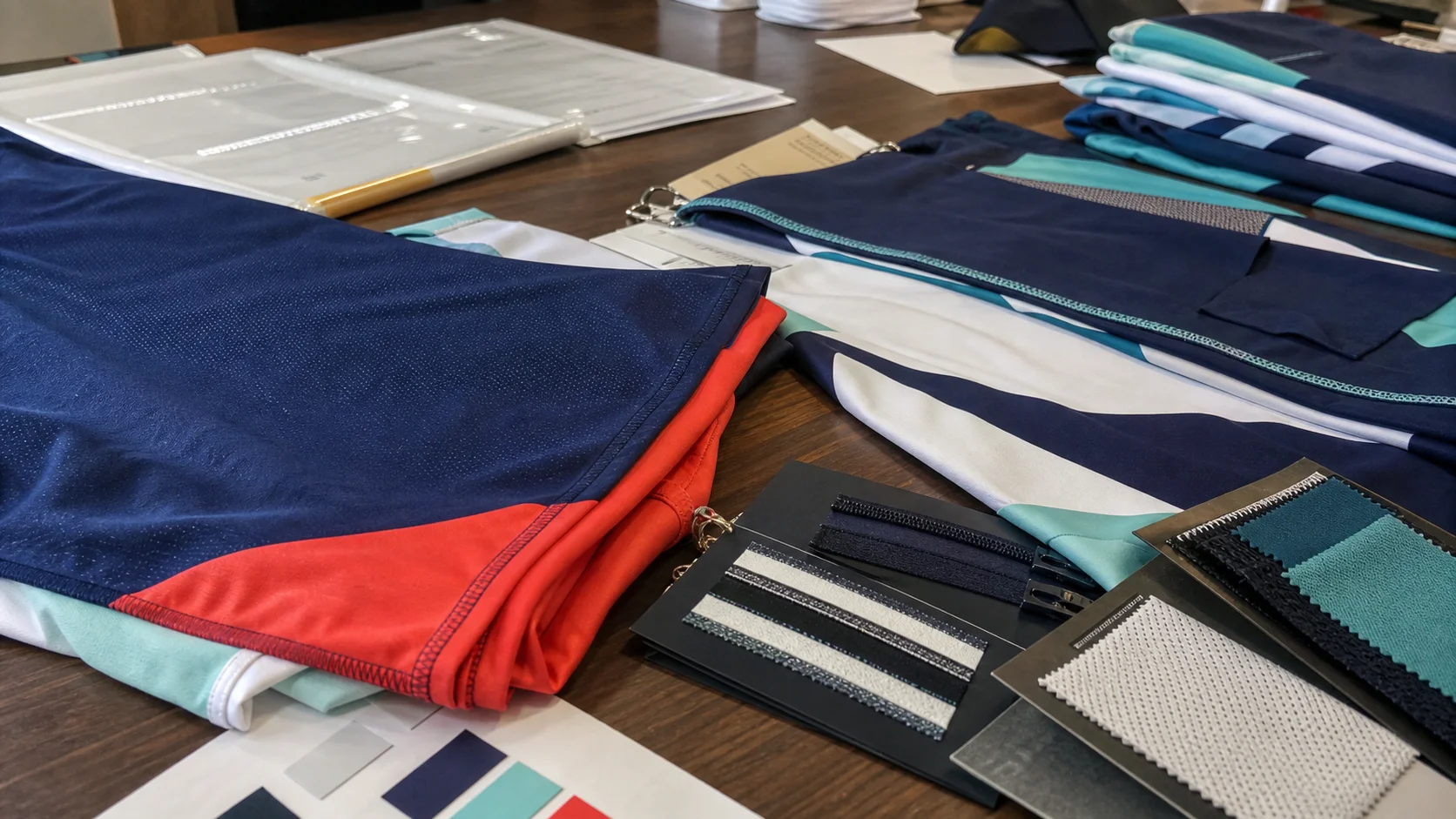
A practical SEO article outline for food hall operators evaluating reorder risks in sublimated teamwear panels, from artwork version control and dye-lot...
Sublimated Teamwear Panels Reorder Risk Review - Decoration & Printing manufacturing guide
Food hall operators usually buy teamwear for a mixed operating environment: front-of-house hosts, bar staff, cleaning teams, kitchen support, vendor-facing coordinators, security, and event staff. The uniform has to look coordinated, tolerate long service hours, and remain reorderable when headcount changes. Sublimated teamwear panels can solve several decoration problems, especially when logos, color blocks, sponsor marks, and role identifiers need to be built into the garment rather than printed on top.
The reorder risk is often underestimated. Sublimation is not only a decoration method; it is a production system built around fabric, panel artwork, cutting, sewing, shade control, and repeat data. A food hall may approve a great-looking first order, then struggle six months later when new hires need matching garments and the supplier cannot reproduce the same color, panel placement, size grading, or trim package. That gap becomes visible on the floor immediately.
This review looks at the practical sourcing risks behind sublimated teamwear panels for food hall operators. It covers reorder planning, artwork control, MOQ expectations, sample approval, lead-time dependencies, fabric and trim specifications, inspection points, and purchasing tradeoffs. The goal is not to make sublimation sound complicated for its own sake. The goal is to prevent a uniform program from becoming inconsistent after the first rollout.
Food halls are not static workplaces. Tenant mix changes, seasonal foot traffic rises and falls, pop-up vendors rotate, and operators often add temporary teams for events, private bookings, holiday periods, and new openings. A uniform program that cannot be replenished in small or predictable quantities creates operational friction.
The risk is not just running out of shirts. The larger issue is visual inconsistency. If one team member wears the original navy-and-white sublimated polo and another wears a later reorder with a slightly purple navy, a different collar rib, or a logo sitting 20 mm higher on the chest, customers may not know why the uniform looks off. They will still read it as less organized.
For food hall operators, the teamwear also needs to work across multiple roles. A general manager may want one core graphic system, with small differences for floor staff, sanitation, bar support, delivery coordination, and events. Sublimated panels make this possible because the design can include color-coded sleeves, side panels, back yokes, shoulder stripes, or printed role names. That advantage becomes a liability if the artwork and panel data are not controlled for repeat production.
Operators should treat sublimated teamwear as a semi-custom garment program, not a casual decorated stock item. That means the reorder plan should be reviewed before the first purchase order is placed.
Direct purchasing judgment: if the food hall expects frequent hiring, temporary labor, or multiple site openings, reorder reliability should carry more weight than a highly complex all-over graphic.
Sublimation uses heat and pressure to transfer dye into polyester-based fabric. In teamwear, the artwork is often printed onto paper, then transferred onto fabric panels before the garment is cut and sewn, or printed directly onto pre-cut panels depending on the supplier’s setup. The result is a smooth decoration that does not add a heavy ink layer to the garment surface.
For food hall uniforms, sublimation is commonly used on polyester polo shirts, performance T-shirts, lightweight jackets, aprons with polyester face fabrics, staff jerseys, and event tops. It is especially useful when the design includes gradients, repeated patterns, multiple logos, or color blocking that would be expensive or stiff using screen print or heat transfer.
Panel sublimation is different from printing a logo onto a finished shirt. With panel sublimation, the design is mapped to garment pieces: front body, back body, sleeves, collar stand, side panels, or yokes. Those pieces are then sewn together. This allows more design freedom, but it introduces more variables.
A basic heat-transfer logo on a stock polo is easier to reorder in small quantities, but it may not provide the same integrated look. A fully sublimated panel garment looks more custom, yet the buyer needs stronger production controls.
Artwork drift is one of the most common reorder risks. A first order may be approved using one set of files, then a reorder is produced from a resized PDF, flattened image, or manually adjusted version. Small changes in scale, logo position, color values, or panel layout can create visible inconsistency.
Food hall operators should keep one approved master artwork package. That package should include editable vector files where possible, placed logos, Pantone or color references, panel maps, print direction, size grading notes, and a dated approval record. If the supplier keeps the production file, the buyer should still request a PDF proof and final technical artwork archive for internal records.
Sublimated color is affected by artwork values, transfer paper, ink system, fabric composition, fabric whiteness, heat press settings, and finishing. A navy, charcoal, burgundy, or deep green used in a food hall brand palette can move noticeably between lots if it is not controlled.
Food hall operators should not rely only on screen appearance. Digital screens are poor predictors of sublimated fabric color. The better control point is an approved physical color standard: a prior production swatch, lab dip, or retained garment panel. For brand-critical colors, the supplier should confirm the closest achievable sublimation match on the actual fabric base.
A repeat order may still show slight variation. The commercial question is whether the tolerance is acceptable. If all new garments will be issued to a new location or new team, a minor shade change may be manageable. If the reorder will be mixed with existing uniforms on the same shift, the tolerance needs to be tighter.
Sublimation works best on polyester or high-polyester fabrics. A supplier may quote a 150 gsm birdseye mesh for the first order and then switch to a 160 gsm interlock or a different moisture-wicking jersey on reorder if the original fabric is unavailable. That can change handfeel, drape, opacity, color depth, shrinkage, and breathability.
Food hall teams work in warm, high-traffic environments. A heavier fabric may look premium but feel uncomfortable during long shifts. A lighter fabric may breathe well but show transparency, snagging, or poor recovery after laundering. Fabric substitution should require buyer approval, not be left to production discretion.
Panel sublimation depends on garment patterns. If the supplier updates the fit, changes sleeve shape, revises the side seam, or alters grading between sizes, panel artwork may shift. A logo that sat correctly on the left chest in size M may move too close to the armhole in size XL if grading is not reviewed.
Food hall operators should approve a size set or at least a limited size run before bulk production, especially for unisex tops. Reorder risk is higher when the team includes a broad size range, because artwork placement and garment balance must work across sizes rather than only on the salesman sample.
Collar ribs, zippers, buttons, drawcords, reflective tabs, neck tape, labels, and hangtags can all change between production runs. In sublimated teamwear, the printed body may be the focus, but trim changes are often what make reorders look different.
For example, a black flat-knit collar on the original polo may be replaced by a rib collar with a different texture. A zipper pull may change shape. A woven size label may be replaced by heat transfer labels. These differences are not always unacceptable, but they should be reviewed before production.
Reorder risk increases when the food hall only needs 20 replacement pieces but the factory MOQ is 100 or 300 pieces per style. The buyer may either overbuy and hold inventory, accept a higher unit price, or switch to a different decoration method for small replenishment. None of these choices is automatically wrong, but they should be planned.
Typical MOQ ranges vary by supplier and garment complexity. For sublimated panel teamwear, a practical range may be 50 to 100 pieces for simple repeat styles with existing artwork, 100 to 300 pieces for custom cut-and-sew styles, and 300 pieces or more when custom fabric, trims, labels, or multiple size breaks are involved. Small-batch digital sublimation can sometimes support lower quantities, but unit cost and lead time may rise.
The garment specification should be detailed enough for another production run to be measured against it. A vague description such as “polyester performance polo with sublimation” is not sufficient for reorder control.
Specification Area Recommended Detail Reorder Risk if Missing Fabric composition Example: 100% polyester or 92% polyester / 8% spandex Different stretch, print depth, handfeel, and shrinkage Fabric structure Birdseye mesh, interlock, pique, jersey, woven polyester Visible texture and performance differences Fabric weight Target gsm with tolerance, such as 150 gsm ± 5% Garments feel lighter or heavier than the original order Moisture management Wicking finish, quick-dry performance, or no special finish Comfort complaints during long shifts Color standard Approved fabric swatch, Pantone reference, or production panel Brand color inconsistency between orders Trim package Collar type, zipper spec, button material, label type, tape color Reorders look similar but not identical Artwork placement Panel map by size, seam alignment notes, logo position tolerances Logos shift, stripes misalign, and role marks moveFor front-of-house teamwear, 140 to 170 gsm polyester birdseye or interlock is often a practical range. It can be light enough for warm indoor service and stable enough for repeated laundering. For premium polos, 170 to 200 gsm may provide better structure, but operators should test comfort in warm zones near kitchens and dish return areas.
Stretch fabrics can improve comfort, especially for staff who lift, reach, or move between service stations. A polyester-spandex blend may raise cost and requires careful heat control during sublimation. Too much heat can affect stretch recovery or cause fabric distortion. Buyers should ask whether the supplier has already run sublimation on the proposed stretch base.
For aprons or outer layers, woven polyester or poly-cotton blends may be considered, but sublimation requires a polyester surface. Cotton-rich fabrics are not suitable for true dye sublimation unless a special coating or transfer approach is used, and that may affect wash durability or handfeel. If the food hall wants a cotton-touch look, the supplier should present realistic print and wash samples before the order is approved.
Standard trims are usually safer than highly customized trims. A standard black zipper, common button size, or available rib collar can be easier to replace than a custom-dyed trim that carries a separate MOQ. If brand presentation requires custom trims, the buyer should understand whether extra trim stock can be held for future reorders.
Neck labels and care labels should also be specified. A food hall with multiple locations may need consistent size labels, operator branding, and care instructions. Heat transfer labels can feel clean and lightweight, but they may crack or peel if poor materials are used. Woven labels can last longer, but they may feel scratchy if placed poorly.
MOQ and lead time are not fixed numbers. They depend on supplier setup, artwork readiness, fabric availability, trim availability, size range, order quantity, production season, freight method, and whether the order is a repeat or a new development.
For food hall operators, the practical issue is how quickly replacement garments can be delivered without compromising consistency. If new staff start every month, waiting 8 to 12 weeks for a custom reorder may be too slow. If the operation hires mainly before seasonal peaks, larger planned orders may work better.
Order Type Typical MOQ Range Typical Lead-Time Considerations First development order 100 to 300 pieces per style Artwork setup, sample rounds, fabric testing, size set approval Repeat order with same specs 50 to 200 pieces per style Depends on retained files, available fabric, and production slot Small urgent top-up 20 to 50 pieces where supported Higher unit cost, limited size mix, possible batch color variation Multi-location rollout 300 pieces and above Better cost control, stronger need for size forecasting and inventory planningSampling may take 1 to 3 weeks once artwork and fabric are confirmed. Bulk production may take 3 to 6 weeks after sample approval for straightforward repeat sublimation, and longer when fabric or trims need to be made or reserved. International freight, customs clearance, holiday shutdowns, and peak sportswear production periods can extend the timeline.
Short lead times are possible when the supplier has the base fabric, artwork, pattern, and trims ready. The buyer should be cautious when a very short lead time is promised for a complex reorder with no current fabric stock. Speed is useful only if the replacement garments still match the approved standard.
For sourcing support, food hall operators can review the apparel development and production options listed on Fabrikn’s services page. For brand teams comparing supplier models or deciding whether to standardize a uniform program, the about page can also help frame what type of production partner is suitable.
A strong sample process reduces reorder risk. The buyer should approve more than the general look of the garment. The approval should define what must remain consistent in future orders.
The technical brief should state the garment type, target wearer, operating environment, fabric, trim, artwork requirements, size range, packaging needs, and reorder expectations. For a food hall, it should also mention laundering conditions, shift length, and whether garments will be worn near heat, grease, cleaning chemicals, or outdoor seating areas.
Artwork proofs should show panel layout, logo placement, color references, and scale. If different roles need different color panels or printed titles, each version should be listed. A role-based artwork matrix is useful when one design system has several variations.
A strike-off or print swatch should be produced on the actual fabric. This is the right stage to evaluate color, print sharpness, gradient handling, small text, and logo edges. Small text can become fuzzy on textured knits, so role names and sponsor marks should be tested at real size.
The fit sample should confirm garment construction, measurements, comfort, and panel placement. For unisex teamwear, fit can be a compromise. Food hall operators should decide whether a single unisex block is acceptable or whether separate men’s and women’s fits are worth the additional MOQ and inventory complexity.
A size set is useful for checking grading, logo position, sleeve length, body length, and seam alignment across sizes. It is especially important when staff sizes range from XS to 4XL or when the design includes diagonal lines, side panels, or chest logos.
The pre-production sample should represent the approved bulk standard. It should use the correct fabric, print method, trims, labels, stitching, and packaging. If the pre-production sample differs from the earlier sample, the difference must be documented and approved before bulk production begins.
The food hall operator should keep one sealed control sample from the approved production. The supplier should keep one as well. Future reorders can then be checked against a physical garment rather than memory, screenshots, or outdated design files.
Practical sourcing rule: do not approve bulk production from a digital mockup alone when sublimated panel alignment, brand color, or fit consistency matters.
Inspection for sublimated teamwear should cover both normal garment quality and decoration-specific risks. AQL inspection may be used for larger orders, but even smaller reorders should be checked against a defined standard.
Uniforms in food halls face more than ordinary office wear. Staff may be exposed to cooking odors, spills, cleaning agents, steam, repeated washing, and abrasion from counters or apron ties. Sublimated print is generally durable because the dye is inside the polyester fibers, but the garment can still fail through poor fabric quality, seam weakness, pilling, snagging, or trim degradation.
Wash testing is worth considering before a large rollout. A practical wash test may include several domestic or commercial wash cycles, followed by checks for color change, shrinkage, twisting, seam appearance, label condition, and odor retention. If the food hall uses an outsourced laundry service, the supplier should know the expected wash temperature, drying method, and chemicals.
Fit consistency matters when teams are reordered over time. Measurements should be checked against a spec sheet with tolerances. Typical tolerance may be around ±1 cm for smaller points of measure and ±2 cm for larger body measurements, depending on garment type and supplier agreement. Tighter tolerances may increase rejection risk and cost.
Buyers should pay close attention to body length, chest width, sleeve length, shoulder width, collar shape, and placket length. For polos and team tops, a small change in body length can alter the uniform look across staff. For aprons, strap length and tie placement can affect practical use during service.
There is no single best uniform method for every food hall. Sublimated teamwear panels are useful when the operator wants a strong branded look, multiple colors, low decoration weight, and good wash durability on polyester garments. The tradeoff is that the buyer must manage artwork, fabric, trims, and repeat production more carefully.
Embroidery, screen print, heat transfer, woven patches, or direct-to-film decoration on stock garments may be more flexible for low-quantity replenishment. Those methods can also support faster replacement if the same blank garment remains available. The downside is that stock garment colors and styles can be discontinued, and surface decoration may not achieve the same integrated teamwear look.
For many food hall operators, the best strategy is a tiered uniform system. Core staff and managers may wear sublimated panel polos or performance tops. Temporary event teams may use stock T-shirts with simpler decoration. Cleaning or back-of-house support may use durable aprons or workwear with embroidery or heat transfer. This reduces reorder pressure on the most customized garment while keeping the overall brand system coherent.
A lower unit price can hide a higher operational cost if reorders fail. If the supplier cannot hold fabric consistency, produce accurate panel placement, or support smaller replenishment, the food hall may end up replacing the entire uniform program earlier than planned.
Paying slightly more for better documentation, retained control samples, and repeat production discipline can be justified when the uniform is visible every day. A food hall with one small team may prioritize flexibility. A multi-site operator should prioritize consistency, data control, and supplier reliability.
Operators ready to discuss a new program or a reorder issue can use Fabrikn’s contact page to start a specification-led conversation before committing to a production route.
The following checklist helps food hall operators reduce sublimated teamwear panel reorder risk before placing the first purchase order.
Control Point Question to Ask Preferred Answer Artwork ownership Who holds the final production files? Supplier and buyer both retain approved records Color standard What will future reorders match against? Physical swatch or approved production garment Fabric continuity Can the same fabric be used again? Fabric code, composition, gsm, and backup option documented Trim continuity Are collars, zippers, labels, and buttons repeatable? Trim specs confirmed with substitution approval required MOQ flexibility What is the minimum reorder quantity? Aligned with hiring and seasonal replenishment needs Size forecasting Which sizes are likely to be needed later? Initial order includes buffer stock in high-use sizes Inspection plan What defects will be checked before shipment? Color, placement, measurements, trims, labels, and packing reviewed Reorder timing When should the next order be placed? Before inventory falls below operating reserveA controlled buffer is often cheaper than emergency production. Food hall operators should identify the highest-turn sizes and keep extra units available. Medium, large, and extra-large often move fastest in unisex programs, but each operator should use its own staff data rather than generic assumptions.
For a small food hall, holding 5% to 10% extra stock may be enough. For larger or multi-site operations, a 10% to 15% buffer may be more realistic, especially before peak seasons. The buffer should include the most common sizes and any role-specific garments that would be difficult to replace quickly.
Excess stock has a cost. It ties up cash and may become obsolete if branding changes. Understocking also has a cost, because mismatched uniforms weaken the floor presentation. The right buffer depends on staff turnover, event calendar, storage space, and the expected life of the brand identity.
A simple reorder calendar can prevent last-minute decisions. The operator should review uniform inventory before hiring peaks, new vendor launches, holiday events, summer traffic, and planned site openings. If production takes 6 to 10 weeks including approval and freight, the purchasing calendar should start earlier than the staffing calendar.
Reorders should also be grouped where possible. Instead of placing three small urgent orders, the buyer may save cost and improve color consistency by placing one planned order with a better size mix. This works best when managers report uniform needs regularly and damaged garments are tracked.
A specification does not need to be overly complex, but it should be clear. The example below shows the level of detail that reduces confusion.
Item Example Specification Style Unisex short-sleeve performance polo with sublimated front, back, and sleeve panels Fabric 100% polyester birdseye mesh, 155 gsm, moisture-wicking finish Decoration Panel sublimation with approved brand pattern, left chest logo, back neck mark, sleeve color code Collar Black flat-knit rib collar, standard supplier quality, no substitution without approval Placket Three-button placket with black buttons Labels Heat transfer neck label, sewn care label at side seam Sizes XS to 4XL with approved graded spec Inspection Check color against control sample, logo placement, seam alignment, measurements, labels, and packingThis level of detail helps both the buyer and supplier. It does not remove all risk, but it gives the reorder a defined target. Without it, each reorder becomes a fresh interpretation of the original concept.
Sublimated teamwear panels can give food hall operators a sharp, durable, and highly branded uniform system. They are particularly useful when one operator needs a coordinated look across different roles, events, and service zones. The key risk is not the first order. The key risk is whether the second, third, and fourth orders still match the approved standard.
Before placing an order, buyers should review artwork control, physical color standards, fabric availability, trim continuity, MOQ terms, lead-time dependencies, sample approval steps, and inspection procedures. A supplier that can explain these points clearly is usually safer than one that only sells the visual mockup.
The practical choice is simple: if the food hall needs a custom teamwear look, build the reorder system from day one. If the operation needs constant small-batch replenishment, consider a hybrid approach using sublimated garments for core roles and simpler decoration for temporary or high-turn positions. Good sourcing is not only about the best-looking garment on launch day. It is about keeping the team looking consistent after hiring changes, laundry cycles, and real service conditions.
Get a free quote from Fabrikn — your trusted B2B clothing manufacturer with 10+ years of experience. MOQ as low as 200 pieces.
Get a Free Quote →Yes, they can be suitable when the garment is polyester-based and the operator wants strong branding, color blocking, or role-specific graphics. They are less suitable when the food hall needs cotton-rich garments or very small frequent reorders with no planning window.
A typical repeat MOQ may range from 50 to 200 pieces per style, depending on the supplier, fabric availability, artwork complexity, and size mix. Some suppliers can support lower quantities, but the unit price may be higher and color consistency should still be checked.
Repeat orders may take around 3 to 6 weeks after confirmation if the fabric, trims, artwork, and production slot are ready. Sampling, fabric shortages, custom trims, freight delays, or peak production periods can extend the timeline.
They should approve and retain a physical control sample, specify the fabric base, use documented color references, and require the supplier to compare new production against the approved standard. Digital artwork alone is not enough for reliable color control.
Sublimation is better for full-panel graphics, gradients, repeated patterns, and lightweight decoration on polyester. Embroidery is often better for simple logos, premium texture, and smaller reorders on stock garments. The best choice depends on brand design, reorder frequency, budget, and fabric preference.
Inspection should cover color, print clarity, ghosting, white marks, panel alignment, logo placement, measurements, stitching, trims, labels, packing ratios, and carton markings. For food hall use, wash performance and snag resistance are also worth reviewing.
For most food hall operators using custom sublimated teamwear, a modest buffer is sensible. A 5% to 15% reserve can reduce emergency reorder pressure, especially in common sizes and role-specific garments. The right amount depends on turnover, storage space, and seasonal hiring patterns.