
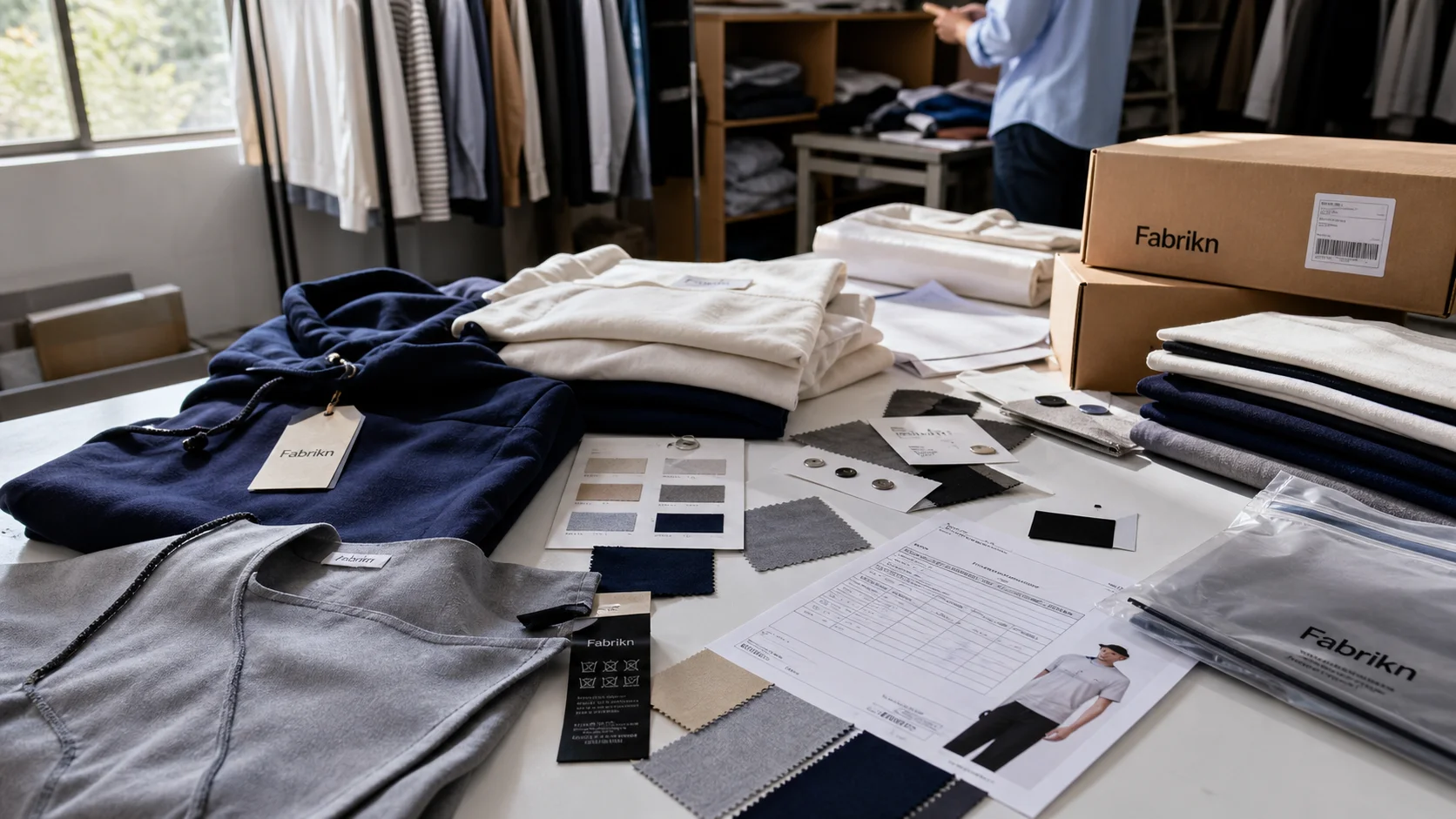
Sustainable Sourcing Cost Comparison for Apparel with checks for samples, fit, MOQ, QC evidence, pricing terms, and delivery risk.
Fast answer: Sustainable Sourcing Cost Comparison for Apparel: Deposits, Cost Lines, QC, and Rework Risk should be judged by production evidence, not by a generic sourcing promise. The buyer needs sample proof, cost breakdowns, QC checkpoints, and delivery buffers in writing.
Ask for recent sample photos, measurement tolerances, fabric or print test assumptions, decoration test notes, packing examples, and a named inspection checkpoint. These details show whether the team can repeat an approved sample at bulk volume.
Separate garment cost, decoration, labels, packaging, sampling, testing, freight, and rush charges. When every cost line is visible, it becomes easier to reduce colorways, adjust size depth, or reserve more time for sampling.
Sustainable sourcing cost comparison for apparel is one of the most important decisions modern fashion brands must make. As consumers demand greater transparency and environmental responsibility, brands are under pressure to choose materials, suppliers, and production methods that support sustainability without destroying margins. The challenge is that sustainable sourcing often appears more expensive at first glance, leading many brands to ask a simple question: how do the real costs compare?
The answer is more nuanced than comparing a price tag on a fabric swatch or a factory quote. Sustainable sourcing involves direct costs, indirect costs, compliance requirements, logistics, product quality, and brand value. A responsible sourcing strategy may cost more upfront, but it can also reduce risk, improve customer loyalty, and create a stronger long-term business model.
In this guide, we break down sustainable sourcing cost comparison for apparel in practical terms. You will learn how to compare materials, production methods, hidden costs, and supplier value so your brand can make smarter sourcing decisions. If you are exploring responsible manufacturing options, you can also learn more about our approach on the Fabrikn services page or reach out through our contact us page.
In apparel, sourcing costs affect everything from retail pricing and gross margin to inventory planning and product positioning. For sustainable fashion brands, cost comparison is especially important because “eco-friendly” does not automatically mean “economically efficient.” A brand may find one supplier offering organic cotton at a higher price than conventional cotton, or a recycled polyester program that requires a larger minimum order quantity. Without a structured comparison, decisions may be based on assumptions rather than total business impact.
Cost comparison matters because sustainable sourcing affects multiple parts of the supply chain:
Brands that focus only on the unit cost of a garment often overlook broader financial effects. A slightly more expensive sustainable option may reduce returns, strengthen product quality, and support a premium price point. For many brands, the real question is not whether sustainable sourcing costs more, but whether it delivers better total value.
To compare sourcing options accurately, it helps to separate the cost structure into clear categories. Each category can vary significantly depending on the fabric, manufacturing location, order volume, and certification requirements.
This is the most visible cost and often the first place brands compare options. Sustainable fibers such as organic cotton, recycled polyester, hemp, linen, TENCEL Lyocell, and certified wool may cost more than conventional alternatives. The price difference depends on fiber availability, market demand, and processing complexity.
Even when a fiber itself is affordable, the processing required to make it suitable for apparel can add cost. Low-impact dyeing, water-saving finishing, and chemical management systems may increase production expenses but improve environmental performance and compliance.
Sustainable factories often invest in better working conditions, safer equipment, training, and wage standards. These investments can influence labor rates. However, higher labor quality may also improve consistency and reduce mistakes.
Certifications such as GOTS, GRS, OEKO-TEX, FSC, or Fair Trade can add fees for testing, audits, traceability systems, and documentation. These costs are important for credibility, especially if your brand markets sustainability claims.
Transport, customs, storage, and lead time management can shift total costs significantly. Sourcing from a more local or more integrated supplier may reduce hidden logistics costs even if the unit price is slightly higher.
A cheaper supplier that produces inconsistent goods can create higher defect rates, rework, and returns. Sustainable sourcing should include quality performance as part of the financial analysis.
The choice of fabric has one of the biggest impacts on sustainable sourcing cost comparison for apparel. Below is a practical overview of commonly used materials and how they often compare financially.
Organic cotton typically costs more than conventional cotton because of agricultural practices, certification, and lower yield in some cases. However, the price premium can vary widely depending on region and sourcing scale. Organic cotton may be a strong choice for brands that want a natural handfeel and a clean sustainability story, especially in tees, sweatshirts, babywear, and basics.
From a cost perspective, the premium can be justified by brand positioning and consumer trust. If organic certification helps you command a higher retail price or reduces marketing risk, the total cost impact may be favorable.
Recycled polyester is often slightly more expensive than virgin polyester, though pricing depends on feedstock availability and certification requirements. The cost gap can narrow when sourced at scale or when sustainability requirements are built into the product line from the start. Recycled polyester is widely used in activewear, outerwear, bags, and performance garments.
Brands should also consider durability. If recycled polyester offers similar performance and reduces dependence on fossil-based inputs, the slightly higher fabric cost may deliver strong long-term value.
Hemp and linen are often viewed as premium natural fibers. Their costs may be higher due to processing, limited supply chains, and fabric availability. However, they are durable, breathable, and increasingly popular in fashion-forward sustainable collections. For premium apparel lines, the higher input cost can support a more elevated brand identity.
TENCEL Lyocell is generally more expensive than lower-cost viscose because of controlled production processes and responsible sourcing practices. The price premium can be worthwhile for soft handfeel, drape, and a strong sustainability narrative. Many brands use Lyocell in dresses, loungewear, shirts, and linings where comfort and aesthetics matter.
Blended fabrics can help balance performance and cost. For example, an organic cotton/recycled polyester blend may lower the total cost compared with pure organic cotton while still supporting sustainability goals. The right blend can also improve durability, wrinkle resistance, or stretch performance, which may reduce returns and extend product life.
Material cost is only part of the equation. Manufacturing methods also influence sustainable sourcing cost comparison for apparel. A factory’s equipment, energy usage, labor standards, and waste handling practices can alter your total cost structure.
Sustainable brands often begin with smaller orders to test the market. Smaller production runs usually carry a higher unit cost because setup costs are spread over fewer pieces. Larger orders can reduce cost per unit, but they require stronger forecasting and inventory management.
Brands should consider whether the product is a test style, evergreen basic, or seasonal item. Sustainable sourcing becomes more affordable when order planning aligns with demand and avoids excess inventory.
Factories with certifications often charge more due to documentation, traceability systems, and compliance standards. However, they can reduce risk for brands that need verified sustainability claims. Working with a certified partner can also save time during brand audits and retail onboarding.
For brands that want to build trust, this premium may be a worthwhile investment rather than a pure expense.
Local sourcing may have a higher labor rate but lower freight cost, faster lead times, and better communication. Offshore sourcing may offer lower production prices but can introduce higher shipping costs, longer transit times, and more complex quality control.
The cheapest production quote is not always the lowest total cost. Many brands discover that better communication and faster replenishment create meaningful savings over time. If you want support in evaluating production paths, consider reaching out via our about us page to learn more about Fabrikn’s approach to apparel manufacturing.
When comparing sustainable sourcing options, hidden costs can make the difference between a smart investment and an expensive mistake. These costs are often ignored in early-stage sourcing conversations.
Sustainable fabrics and techniques may require more sampling iterations. For example, a recycled fabric may behave differently during sewing, printing, or dyeing. Multiple rounds of samples increase time and cost.
Depending on your product category, you may need additional lab testing for colorfastness, shrinkage, fiber content, chemical safety, or durability. These costs should be built into your sourcing budget early.
Many sustainable inputs are available only in certain quantities. Low MOQ flexibility can be valuable for smaller brands, but it may come at a premium price. Higher MOQ materials may offer better unit economics but less flexibility.
Lower-quality sourcing or unreliable suppliers can create deadstock, missed launches, or rush shipping costs. Sustainable sourcing that improves predictability may reduce these losses over time.
If a supplier cannot verify claims or meet compliance standards, the brand may face legal exposure or reputational damage. These risks are difficult to quantify but can be much more expensive than a higher sourcing quote.
Sustainable sourcing cost comparison for apparel should not stop at unit price. A better framework looks at long-term business value. Sustainability can improve value in several ways.
Consumers increasingly look for authenticity, transparency, and ethical production. Brands that source responsibly can differentiate themselves and justify premium pricing.
Higher-quality materials and better manufacturing can increase garment lifespan and decrease product defects. This can reduce returns, markdowns, and customer complaints.
Long-term sourcing partnerships tend to improve consistency and communication. Reliable suppliers help brands plan better and scale more efficiently.
As regulations and retailer requirements continue to tighten, brands that already use traceable and certified sourcing may face fewer disruptions.
In many cases, sustainability acts as a value multiplier. The right material and supplier choice may cost more today but improve margin protection, customer loyalty, and resilience over the life of the brand.
To make an informed decision, use a structured comparison rather than relying on the lowest quote. Here is a practical framework brands can use when evaluating sustainable sourcing options.
A useful method is to create a side-by-side scorecard. Weight each factor according to your brand priorities. For example, a premium direct-to-consumer brand may prioritize material quality and sustainability story, while a private label brand may prioritize cost stability and compliance. The best sourcing decision is the one that supports your business model, not just the lowest quote.
Sustainable sourcing does not have to be prohibitively expensive. Brands can use several strategies to reduce cost while maintaining responsible practices.
Blends can reduce cost while preserving key sustainability features. For example, combining organic cotton with recycled polyester can improve durability and lower fabric expense.
Using fewer fabric types, colors, and trims can simplify sourcing and reduce development costs. Simplicity also improves quality control.
Early planning helps avoid rush fees, air freight, and emergency sampling charges. Brands that forecast demand more effectively usually achieve better margins.
Manufacturers that manage multiple steps in-house or through trusted partners can reduce coordination costs and improve efficiency.
Grouping styles, sizing, or fabric programs can improve economies of scale. This is especially useful for basics and repeat products.
Garments that last longer are easier to justify at a higher price point. Better durability can also reduce returns and increase customer satisfaction.
The success of sustainable sourcing often depends on the partner you choose. A good manufacturer should not only provide competitive pricing, but also help you navigate certifications, materials, production timelines, and quality control.
At Fabrikn, we work with brands that need practical support in sustainable apparel production, from development to final manufacturing. The right partner can help you compare options objectively and choose the best combination of price, quality, and responsibility. If you are ready to discuss a project, you can start with our services page or contact our team through contact us.
When evaluating a manufacturing partner, ask these questions:
The best partners are transparent about trade-offs. They will help you understand where a premium is justified and where savings can be achieved without compromising product integrity.
Get a free quote from Fabrikn — your trusted B2B clothing manufacturer with 10+ years of experience. MOQ as low as 200 pieces.
Get a Free Quote →Not always. Some sustainable options cost more upfront, but the total cost can be competitive when you factor in durability, reduced returns, better brand positioning, and lower risk. In some cases, sustainable sourcing may even lower long-term costs.
Materials are usually the biggest visible cost driver, but manufacturing efficiency, MOQ, certifications, and logistics also have a major impact on total cost.
Use a total landed cost approach that includes materials, labor, freight, testing, duties, compliance, and quality risk. A simple unit price comparison is not enough.
That depends on the product. Organic cotton, recycled polyester, and blended fabrics often provide a good cost-performance balance. For premium items, hemp, linen, and TENCEL Lyocell may be worth the extra cost.
Yes, certifications usually add expense through testing, audits, and documentation. However, they also strengthen trust and can support retailer or consumer requirements.
Small brands can manage cost by starting with focused product lines, using strategic blends, planning carefully to avoid rush fees, and working with flexible manufacturing partners.
Ask about material traceability, certification, MOQ, lead time, defect rates, communication process, and total landed cost. These details reveal the true value of the supplier relationship.
Sustainable sourcing cost comparison for apparel is not about finding the cheapest option. It is about choosing the sourcing path that best supports product quality, brand credibility, and long-term profitability. When brands evaluate costs holistically, sustainability becomes not just a responsibility, but a strategic advantage.