
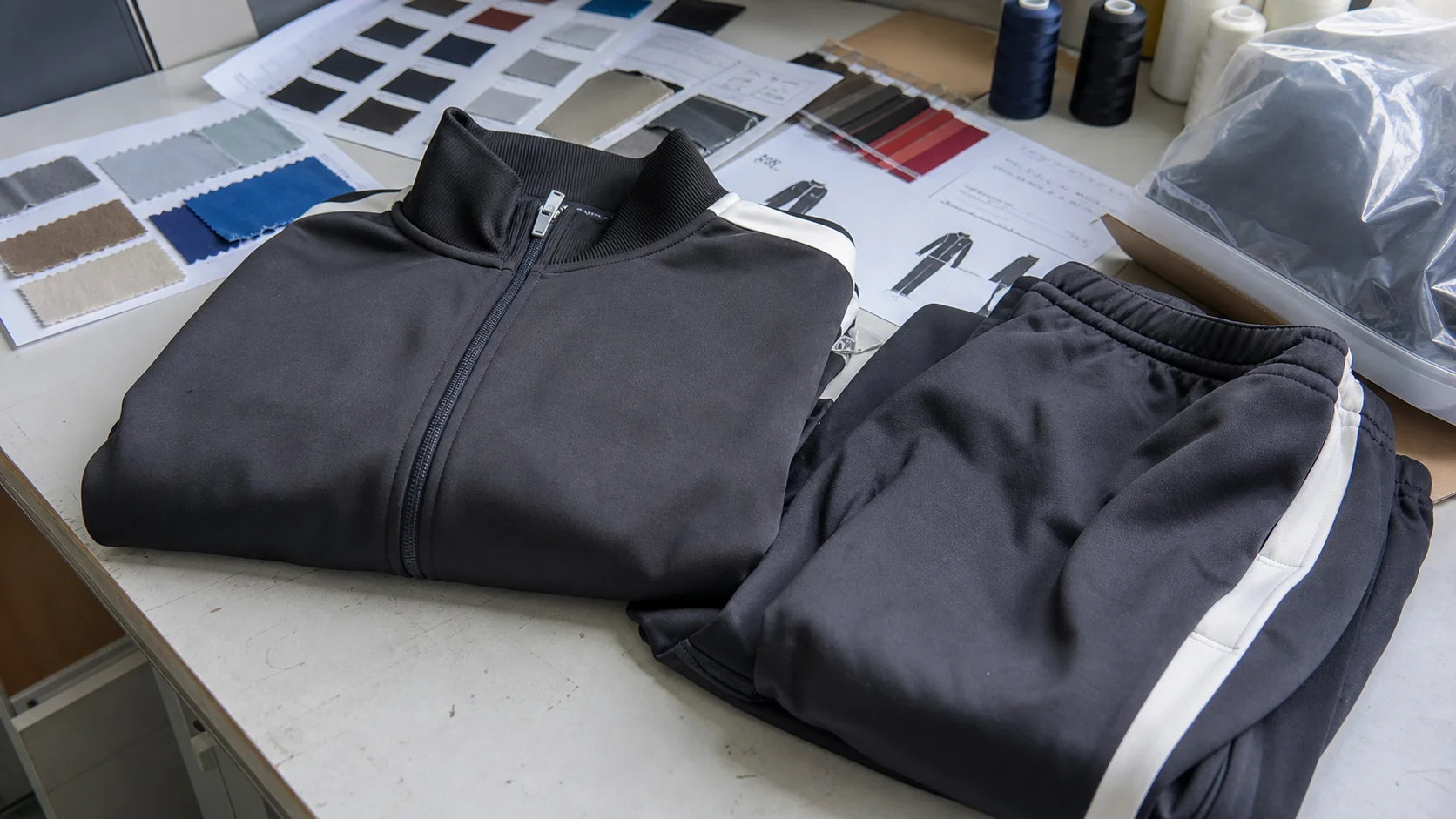
A practical outline for food hall operators reviewing wholesale team tracksuit reorder risks, from sizing drift and fabric continuity to decoration...
Team Tracksuit Reorder Risk Review for Food Halls - Activewear & Teamwear manufacturing guide
Wholesale team tracksuit reorder risk review for food hall operators is not just a uniform buying exercise. It is a continuity issue. Food halls rely on large mixed teams: floor supervisors, cleaning crews, host teams, security staff, vendor support, delivery coordinators, event staff, and sometimes seasonal pop-up teams. When tracksuits are used as teamwear, reorder mistakes show up quickly on the floor.
A missed shade, discontinued fabric, wrong logo placement, or delayed replenishment can make a site look inconsistent. For multi-vendor venues, that inconsistency affects brand control, staff recognition, and customer confidence. Tracksuits are comfortable and practical for active service environments, but they also carry higher reorder risk than simple T-shirts because they combine multiple panels, trims, zippers, waistbands, cuffs, drawcords, embroidery, printing, and size grading.
This review is written for food hall operators, facilities managers, procurement teams, and hospitality groups buying wholesale team tracksuits. The focus is practical: what can go wrong, what to specify, what to approve before production, and when to reorder so the team is not caught short before a launch, holiday rush, or vendor rotation.
Food halls have a different uniform environment from single-brand restaurants. Staff may move between indoor and outdoor zones, chilled storage areas, loading points, event spaces, waste rooms, and customer-facing seating areas. A team tracksuit gives the operator a practical layer that works across these zones while still looking coordinated.
For front-of-house support teams, a matching jacket and pant can make staff easy to identify without using stiff formalwear. For cleaning, porter, and runner teams, stretch and movement matter. For security or floor control, color blocking and visible branding can help guests find assistance quickly.
The reorder risk comes from the same advantage. Tracksuits are visible. If a venue opens with a black recycled polyester tracksuit with contrast piping and embroidered chest logos, a later reorder in a slightly different black, different cuff rib, or altered jacket length will be noticeable. Inconsistent uniforms can make a new starter look temporary or under-equipped.
Purchasing judgment: tracksuits are a good choice when the food hall wants team visibility, comfort, and year-round layering. They are less suitable if the operator cannot commit to consistent specs, controlled reorders, and proper size forecasting.
The most common reorder problem is assuming that a previous purchase can be repeated exactly without maintaining a technical record. In wholesale manufacturing, “same as last time” is not enough. Mills change fabric lots. Trim suppliers update zipper pulls. Dye batches shift. Factories may change cutting tolerances or substitute available rib to meet a shipment date.
Food hall operators should review reorder risk across five areas: fabric, trim, branding, fit, and timing. Each area affects both visual consistency and operational readiness.
Risk Area What Can Go Wrong Practical Control Fabric Shade variation, handfeel change, shrinkage difference, discontinued quality Keep fabric code, GSM, composition, color standard, and approved swatch Trim Different zipper, elastic tension, drawcord, stopper, rib, or label Record trim specs and approve trim cards for each reorder Branding Logo size shift, embroidery thread mismatch, print cracking, wrong placement Use artwork files, placement measurements, and approved strike-offs Fit Changed size grading, short sleeves, tight cuffs, inconsistent pant length Lock graded measurements and tolerance rules Lead Time Late delivery before openings, events, inspections, or peak trade Plan reorder triggers and buffer stock by role and sizeOperators that buy from multiple uniform vendors without a central spec file carry extra risk. One vendor may interpret “navy tracksuit” as a brushed fleece. Another may quote interlock polyester. A third may use woven track fabric. The price difference may look attractive, but the floor result can be uneven.
If the business needs a stable teamwear program across several food halls, a structured supplier relationship is useful. Review manufacturing and sourcing capabilities before placing repeat orders. A supplier’s service structure can often be checked through pages such as Fabrikn services, where buyers can evaluate whether product development, customization, and production support match their needs.
Fabric is the first reorder risk because it controls appearance, comfort, durability, and wash performance. Food hall tracksuits often need to survive frequent laundering, grease exposure, repeated bending, and temperature changes between service zones.
Wholesale team tracksuits are usually made from one of several fabric types. Each has a tradeoff.
For food halls, polyester-rich fabrics are often practical because they dry faster and tolerate heavy use. Cotton-rich tracksuits feel comfortable but can show stains and fading sooner. Brushed fleece may work for back-of-house winter layers, yet it can be too warm for active runners or cleaners.
A reorder should not rely on photos or old purchase descriptions. The buyer should keep a clear fabric specification:
Color deserves special attention. Black, navy, charcoal, bottle green, burgundy, and cream are common food hall uniform colors, but they are not simple to repeat. A black polyester tricot and a black cotton fleece absorb dye differently. A navy fabric from one mill may sit more purple or more green than the approved original.
Purchasing judgment: if the food hall must maintain a polished brand image, do not change fabric qualities between reorders to save a small unit cost. The visible mismatch can cost more in operational credibility than the fabric saving is worth.
Tracksuits contain more trims than many buyers expect. A jacket may include a center-front zipper, pocket zippers, zipper pullers, collar rib, sleeve cuffs, hem elastic, neck tape, labels, drawcords, eyelets, and toggles. Pants may include waistband elastic, drawcord, pocket bags, ankle zips, rib cuffs, and internal labels.
Trim substitutions are a common reorder problem because they are easy to overlook. A factory may use a similar zipper if the original is unavailable. The garment may still function, but the appearance changes. In teamwear, small differences become obvious when staff stand together.
Food hall teams often carry keys, radios, phones, gloves, and service tools. Pocket construction matters. Shallow pockets may be cheaper, but they cause complaints and lost items. Zipped pockets cost more and may increase production time, yet they are worth considering for supervisors, floor teams, and runners.
Elastic is another overlooked risk. Waistbands that feel comfortable in sampling can become too loose after repeated washing if elastic quality is poor. Rib cuffs can stretch out, especially on fleece tracksuits. For reorder consistency, the supplier should retain trim references and submit a new trim card if any component changes.
Branding errors are highly visible in food halls. Guests need to recognize official staff. Vendor teams, venue operations, cleaning teams, and event crews may all be present at the same time. If tracksuit branding is inconsistent, customers may not know who to approach.
Logo application should be controlled with the same discipline as garment construction. The buyer should not approve production based only on a digital mockup. A physical strike-off or sample is needed, especially for embroidery, heat transfer, silicone print, reflective print, or woven badges.
For reorders, the key risk is artwork drift. The original logo file may not be the same file used by the factory. A JPEG pulled from a website is not enough. Operators should keep vector artwork, thread color references, print color standards, logo dimensions, and placement measurements.
Placement should be measured from fixed garment points. For example, the left chest logo may sit a set distance below the shoulder seam and away from the center-front zipper. Back logos should be measured from the collar seam. Pant logos should be measured from the waistband edge or side seam.
Small food hall teams sometimes request individual names or role labels. This can help operations, but it complicates reorders. Names create extra sorting work, more chances for spelling errors, and weaker resale or redistribution value. Role labels such as “Floor Team,” “Security,” or “Events” are usually easier to manage than personal names.
Tracksuit reorder planning fails when procurement buys the same quantities in every size. Food hall teams are not evenly distributed across XS to 4XL. Workforce composition changes by shift type, role, market, and season. New openings often over-order medium sizes and under-order larger sizes, especially when both jacket and pant need to fit correctly.
A good reorder plan separates jacket size demand from pant size demand where possible. Matched sets are simple to issue, but they do not fit everyone. If the supplier forces set sizing only, returns and unused inventory may rise. Separates cost more to manage but improve fit and staff acceptance.
Food halls often employ part-time and seasonal staff. Uniform loss and damage rates are higher in operations with frequent turnover. A reorder risk review should calculate issue frequency, not just headcount. If 80 staff members require tracksuits but turnover adds 20 replacements per quarter, reorder demand is closer to 160 sets per year than a one-time 80-set purchase.
Production tolerances must be realistic. A jacket chest tolerance of 1 cm may be too strict for bulk tracksuit manufacturing, while a 4 cm tolerance may cause visible fit variation. Common tolerance ranges depend on fabric and construction, but many buyers use approximately 1 cm to 2 cm tolerance for smaller points and 2 cm to 3 cm for larger body measurements. The exact tolerance should be agreed before production.
Key measurement points include jacket chest, body length, shoulder width, sleeve length, hem width, pant waist relaxed, pant waist stretched, hip, thigh, inseam, front rise, back rise, and leg opening. For stretch fabrics, relaxed and stretched measurements both matter.
MOQ is one of the biggest reorder constraints. Food hall operators may need only 30 replacement tracksuits, while the factory MOQ may be 100, 300, or 500 pieces per color. Custom-dyed fabric, custom trims, and special branding often increase MOQ.
Typical wholesale MOQ ranges vary by supplier, fabric, and customization level:
These are typical ranges, not guarantees. Buyers should confirm whether the MOQ applies per style, per color, per size, per fabric, or per logo version. A quote that says “MOQ 300” may mean 300 jackets and 300 pants, or 300 complete sets. That difference affects budget immediately.
Low MOQ is convenient, but it can carry tradeoffs. The supplier may use available stock fabric rather than reserved fabric, which increases shade variation risk. Unit price may be higher. Lead time may be shorter, but repeatability may be weaker. Higher MOQ can improve consistency if fabric and trims are ordered together, yet it ties up cash and storage space.
Purchasing judgment: for stable food hall chains, buying slightly above immediate need can be sensible if the style is locked for at least 12 months. For experimental concepts or temporary venues, low-MOQ stock-based programs reduce leftover inventory risk.
Tracksuit lead time depends on fabric availability, trim sourcing, sample approvals, branding method, production capacity, inspection timing, and shipping route. A reorder is not always faster than a first order if the supplier must remake fabric, source discontinued trims, or reapprove artwork.
Typical timelines may look like this:
Stage Typical Time Range Main Dependency Spec confirmation 2 to 7 days Quality of buyer tech pack and previous records Lab dip or fabric approval 5 to 14 days Color complexity and mill response Fit sample or reorder sample 7 to 21 days Pattern availability and trim sourcing Branding strike-off 3 to 10 days Embroidery, print, or transfer method Bulk production 20 to 45 days Order size, factory capacity, fabric readiness Inspection and packing 2 to 7 days Defect rate and carton requirements Shipping Varies widely Destination, freight method, customs, peak periodsA safe reorder calendar should work backward from operational dates. Food halls have predictable risk periods: opening weeks, school holidays, winter events, outdoor market activations, holiday trading, and major local events. Uniform purchases placed too close to these dates often force buyers into expensive air freight or poor substitute products.
Custom tracksuit reorders should usually be initiated before stock reaches emergency levels. A practical reorder trigger might be when reserve stock falls below 8 to 12 weeks of expected issue volume. For high-turnover venues, the trigger may need to be earlier.
Sample approval prevents many reorder failures, but only if it is structured. A reorder sample should not be treated as a formality. It is the buyer’s chance to catch fabric, trim, fit, and branding changes before bulk production.
For a pure reorder of an existing style, the buyer may not need a full new development cycle. Still, a pre-production sample or at least fabric, trim, and branding approval is sensible if more than a few months have passed since the last run. Supplier changes, fabric lot changes, and trim availability can all affect the final garment.
Approval communication should be specific. “Looks good” is risky. A better approval states what is approved: color, fit, logo size, thread color, zipper, waistband, and label position. If changes are needed, they should be listed with measurements and references.
Food hall operators should not wait until cartons arrive to discover bulk problems. A final inspection can catch visible defects, measurement issues, shade variation, packing errors, and branding mistakes before shipment.
Inspection standards should be agreed before production. For apparel, many buyers use AQL-style inspection methods, but the exact level should match the order value and risk tolerance. A small emergency reorder for one site may use a lighter check. A multi-site rollout should use more formal inspection.
Measurement checks are essential. Tracksuits can pass a visual inspection but still fail in fit if sleeve length, inseam, or waistband stretch is off. Branding durability should also be checked. If heat transfers are used, ask for wash test expectations and application temperature controls.
The supplier conversation should happen before placing the reorder, not after problems appear. Food hall operators should ask direct questions and document answers.
Operators reviewing a supplier for the first time should also look at company background, communication structure, and product scope. Pages such as Fabrikn about us can help buyers understand whether a sourcing partner is positioned for custom apparel programs or only transactional product supply.
A good reorder plan starts with usage data. The buyer should know how many sets were issued, how many remain, how many were damaged, and which sizes moved fastest. This is not glamorous work, but it prevents expensive mistakes.
From there, the operator can set a minimum stock level. For example, a venue with high staff turnover may keep two to three months of reserve stock in core sizes. A stable team may need less. Multi-site operators should decide whether to hold inventory centrally or at each venue. Central stock improves control, but local stock is faster for urgent starts.
Every wholesale team tracksuit program should have a reorder file. This file should include:
If this file does not exist, build it before the next reorder. The first reorder after a loose original purchase is often the highest-risk order because the buyer is trying to reconstruct specifications from delivered garments. That can be done, but it takes time and may not produce an exact repeat.
There are three common buying strategies for food hall tracksuits: stock-based decoration, semi-custom manufacturing, and full custom development. Each has a place.
Strategy Best For Tradeoff Stock-based tracksuits with logo Small teams, urgent launches, temporary events Lower control over long-term continuity Semi-custom tracksuits Growing venues needing color and branding control Moderate MOQ and lead time Fully custom tracksuits Multi-site operators and strong brand systems Higher MOQ, longer development, more approvalsStock-based programs are practical when the food hall needs speed and flexibility. The buyer chooses an existing blank and adds logos. Reorder risk depends on whether the blank remains available. If the supplier changes the stock style, the operator may need to accept a mismatch or switch the entire program.
Semi-custom manufacturing is often the middle ground. The buyer can control color, logos, and certain trims while avoiding the full cost of developing a complex garment from scratch. This works well for operators planning multiple sites or recurring staff growth.
Full custom development makes sense when the tracksuit is part of a broader brand identity. It allows better control over fit, pocket function, color blocking, trims, and labeling. The tradeoff is MOQ, timeline, and the need for disciplined approvals.
For operators ready to review specifications, request a quote, or compare program options, a direct inquiry through Fabrikn contact us is a practical next step. Buyers should include estimated quantities, target delivery date, logo requirements, preferred fabric, and whether they need jackets and pants as sets or separates.
The cheapest reorder price is not always the lowest total cost. Food hall operators should look beyond unit price and consider operational cost.
The better buying question is not “What is the lowest price?” It is “What is the lowest controlled cost for a repeatable teamwear program?” That includes fabric durability, staff comfort, reorder reliability, and administrative effort.
Before approving a wholesale tracksuit reorder, food hall operators can use a simple risk rating. Score each category as low, medium, or high risk. High-risk areas should be resolved before deposit payment or production release.
Category Low Risk High Risk Fabric Same fabric code and approved swatch available Supplier proposes “similar” fabric without sample approval Color Lab dip or stock swatch approved against standard Color approved only from screen image Trim Trim card matches previous order Zippers, rib, or cords substituted without confirmation Branding Strike-off approved with placement sheet Logo applied from old image or unclear artwork Fit Measurements and tolerances confirmed No size chart or fit sample before bulk Timeline Buffer exists before operational deadline Delivery depends on best-case production and freightThis framework helps procurement teams push back on weak quotes. If a supplier cannot confirm fabric continuity, trim availability, and branding approval, the order may still proceed, but the buyer should understand the risk clearly. A lower price does not remove that risk.
Wholesale team tracksuit reorder risk review for food hall operators comes down to control. The garment may look simple, but repeatability depends on documented specifications, realistic MOQ planning, disciplined sample approval, and enough lead time.
For a single temporary food hall event, a stock tracksuit with logo decoration may be enough. For a permanent venue or multi-site group, a controlled custom or semi-custom program is usually better. The operator should choose fabric and trims that can be repeated, avoid unnecessary personalization, and maintain inventory records by role and size.
The strongest reorder programs are not built during a crisis. They are built when the first order is approved, the spec file is complete, and the supplier understands that consistency matters as much as price. Food halls are fast-moving service environments. Uniform procurement should be structured enough to keep up.
Get a free quote from Fabrikn — your trusted B2B clothing manufacturer with 10+ years of experience. MOQ as low as 200 pieces.
Get a Free Quote →The main risk is inconsistency between the original order and the reorder. Fabric shade, trims, logo placement, fit, and size availability can all change if the operator does not maintain a detailed spec file and approval process.
Typical MOQ ranges from about 20 to 100 sets for stock tracksuits with logo decoration, 200 to 500 sets for custom color or semi-custom styles, and 300 to 1,000 pieces or more for full cut-and-sew custom programs. The exact MOQ depends on fabric, color, trims, and supplier structure.
Sets are easier to buy, issue, and count. Separates usually fit staff better because jacket and pant sizes do not always match. For stable teams and larger operators, separates can reduce unused inventory and improve comfort, but they require better stock management.
For custom or semi-custom tracksuits, start the reorder when reserve stock drops below roughly 8 to 12 weeks of expected issue volume. Longer buffers are safer before openings, seasonal peaks, or large events. Stock-based decorated tracksuits may move faster, but availability can still change.
At minimum, approve fabric color, trim card, branding strike-off, and a pre-production sample if there is any fabric, trim, fit, or logo change. For high-volume or multi-site orders, size set samples and sealed approval samples are recommended.
Polyester-rich tricot or interlock fabrics are often practical because they dry quickly, resist heavy use, and support sporty teamwear styling. Cotton-poly fleece or French terry can be comfortable but may shrink, fade, or feel too warm in active service environments.
Keep vector artwork, approved logo dimensions, thread or print color references, and placement measurements. Approve a physical embroidery, print, patch, or transfer strike-off before bulk production. Digital mockups alone are not reliable enough for repeat teamwear.
Common issues include shade variation, incorrect logo placement, poor embroidery, print cracking, zipper faults, weak seams, twisted waistbands, wrong size labels, and mixed packing. Measurement checks are important because a garment can look acceptable but fit poorly.
Not necessarily. A lower unit price can come with fabric substitutions, weaker trims, higher defect risk, poor packing, or shorter garment life. The better measure is controlled total cost, including durability, consistency, staff comfort, and reorder reliability.