
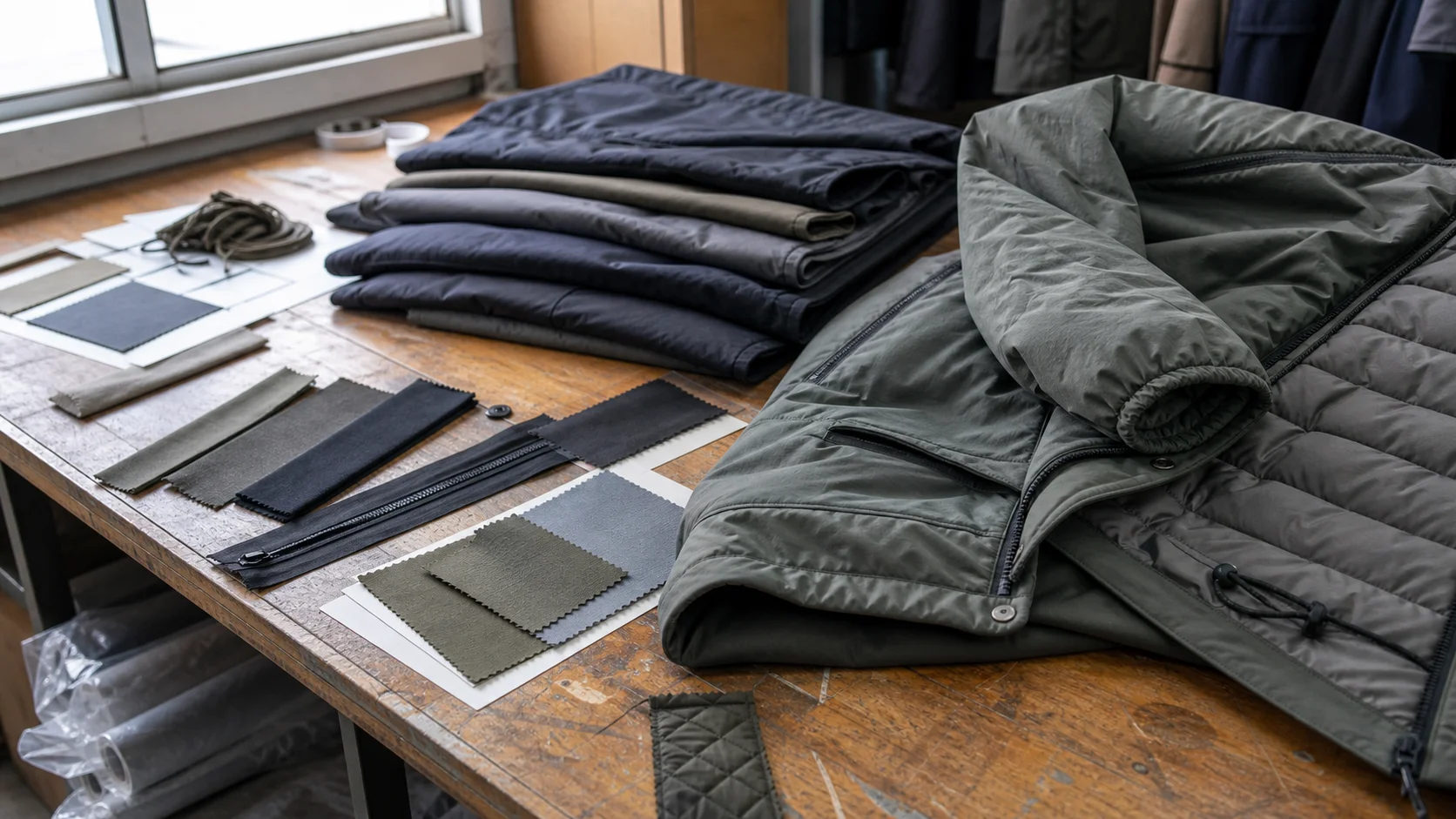
A buyer-focused outline for auditing thermal parka colorfastness, built for gym program sourcing decisions, production approvals, and outerwear quality control.
Thermal Parka Colorfastness Audit Checklist - Outerwear & Jackets manufacturing guide
Thermal parkas for gym programs sit in an awkward but important category. They need to look sharp, hold color under repeated wear, and stay presentable after exposure to sweat, friction, rain, and regular laundering. For buyers, the issue is not only whether the jacket passes a lab report. It is whether the factory can produce consistent color performance at scale, across trims, linings, shell fabrics, and multiple production lots.
A colorfastness audit is the practical way to reduce that risk. It checks whether the factory understands the spec, controls the dye and finishing process, tests the right materials, and can prove that the garment will not bleed, crock, shade shift, or fade too quickly. For gym program buyers, that matters because the product usually carries a uniform look, team identity, or branded retail appearance. If color problems appear after delivery, the cost is not limited to replacements. Brand trust drops fast.
The purpose of a thermal parka colorfastness audit is simple: verify that the factory can deliver a garment that keeps its color through use and care. In outerwear, that means looking beyond the shell fabric. Buyers should review the body fabric, contrast panels, lining, pocketing, zippers, drawcords, rib details, prints, heat-transfer labels, embroidery backings, and any reflective or coated parts that may react differently during washing or rubbing.
Gym program buyers should think in terms of application, not abstract compliance. If the parkas are worn by staff, coaches, or members traveling between facilities, the garment may see damp bags, frequent contact with equipment, and repeated laundering. Dark colors are often preferred for these programs because they hide soil better, but dark shades also create higher risk for crocking and shade inconsistency. Lighter colors may show staining and yellowing more clearly. Both paths require discipline.
A useful audit does three things. First, it confirms the factory has a written colorfastness standard. Second, it checks whether the lab and production results match the buyer’s target use case. Third, it identifies whether the factory can hold the same result across the full order, not just a small approval sample.
Gym program buyers often run on tighter appearance expectations than casual outerwear buyers. The parka may be part of a staff uniform, member incentive package, or sponsorship-driven apparel program. In those cases, the garment reflects the organization every time it is worn. Uneven dyeing, dye migration onto collars or backpacks, and fading around seams are not minor defects. They read as poor control.
Colorfastness is especially important in thermal parkas because the garment construction usually includes multiple materials. The shell may be polyester, nylon, or a blended woven with DWR finishing. The insulation could be synthetic fill or quilted layers. The lining may use a different yarn count or weave density. Once different fabrics are assembled, the risk of shade variation and dye interaction rises. A factory that can manage color on a single fabric roll may still struggle after cutting and sewing.
For buyers, the tradeoff is common: stronger, deeper colors often mean more aggressive dye recipes or chemical treatments, which can improve appearance but increase testing pressure. A safer color choice may not always align with brand design. That is why the audit checklist needs to cover the full material stack, not only the face fabric.
Use the checklist below as a factory audit framework. It can be applied during development, pre-production review, or final approval of a supplier for a gym program order.
Audit Area What to Check Buyer Judgment Shell fabric Dye lot consistency, shade banding, wash and rub performance, finish stability Accept only if the factory can show test reports and batch control Lining and insulation components Color transfer risk, heat-setting stability, shade match with outer shell Important for darker parkas and quilted constructions Trims and accessories Zipper tape, pullers, cord ends, labels, hook-and-loop, snaps, reflective parts Trim mismatch is a common overlooked defect Printing and branding Heat transfer, screen print, embroidery backing, adhesive stability Branding must survive laundering and rubbing Color lab dip approval Lab dip match to target shade under standard light Approve only with controlled lighting and spec reference Production control Bulk lot segregation, shade sorting, cut panel matching Production discipline is as important as lab performance Testing records Third-party or in-house results for rub, wash, water, perspiration, and light exposure Results should match end-use conditionsThe factory should begin with a clear color standard. That means a physical reference, Pantone target where relevant, approved lab dip, and a statement about acceptable tolerance. Buyers should not rely on photos alone. Screen differences and lighting conditions make images unreliable. For gym programs, where consistency across a multi-size order matters, a physical standard is the safer benchmark.
The shell fabric composition shapes the colorfastness result. Polyester, nylon, and blends behave differently under dyeing and finishing. The buyer should ask what dye class is used, how the fabric is heat set, and whether any water-repellent or coating finish could affect rub performance. If the jacket includes recycled content, the factory should explain whether that affects shade control or batch variation. That is not a reason to reject recycled material, but it does require more testing discipline.
A strong factory should send one or more lab dips, revised against comments, before bulk color is approved. The buyer should verify who approves the final shade, how the reference sample is stored, and whether the same reference is used in production and QC. A common mistake is approving a sample in one light source and then judging the bulk under another. That creates avoidable disputes.
Rub transfer is one of the most visible failures in dark thermal parkas. The shell may look good on the hanger, then leave residue on shirts, seat covers, or hands. Buyers should require both dry and wet crocking data for relevant colors. A decent result on dry rub alone is not enough for a gym program, because damp use conditions are realistic. If the garment uses contrasting panels, each color zone should be assessed separately.
Even if the jacket is not intended for heavy home washing, buyers should still review wash durability. Gym programs tend to create repeated care cycles, and outerwear often ends up in commercial laundering or home wash routines despite care instructions. The factory should show whether the color remains stable after the expected number of care cycles. Fading around seams, pocket edges, and high-friction zones should be considered a failure if the buyer’s brand standard is premium.
Thermal parkas may not be worn during active exercise, but they are often used in transitional conditions: coming in from rain, standing near training spaces, or carried in damp bags. Perspiration testing still matters for collars, cuffs, and lining contact points. If sweat or moisture shifts the shade, bleeds into the lining, or creates localized discoloration, the issue will show up quickly in real use.
If the parkas are used in travel, outdoor entry areas, or long-term staff wear, lightfastness should be reviewed as well. Sun exposure is not always the primary concern for thermal outerwear, but it becomes relevant for darker colors and display-oriented programs. A buyer should ask how the factory evaluates light exposure and what fading threshold is acceptable. If the garment is sold as premium branded wear, the tolerance should be tighter than for commodity outerwear.
Many colorfastness problems are not about the shell fabric alone. Zipper tapes, pocketing, printed labels, and linings can bleed or migrate. A dark shell with a light lining can show staining if the dyes are unstable. Buyers should request testing on the full garment assembly, not only on isolated fabric swatches. This is where some suppliers try to shortcut the process. The purchase decision should favor factories that test the actual construction.
When the bulk order starts, the factory should sort rolls and cut panels by shade. That matters most when the order is split across multiple dye lots. Even a small variation can become obvious on a large surface such as a parka body. Buyers should ask how the supplier manages roll identification, fabric spread, and panel matching. A weak shade control process is a warning sign for the whole order.
Colorfastness does not end at the sewing line. Heat, humidity, and poor packaging can affect appearance before the product reaches the buyer. Garments packed while damp can create odor, migration, or local discoloration. Storage near direct sunlight or volatile chemicals also creates risk. The audit should include how the factory cools, inspects, and packs the goods before shipment.
Buyers often ask which tests matter most. The answer depends on use, but for thermal parka programs the usual core set includes rub, wash, perspiration, water, and sometimes light exposure. The factory should not cherry-pick only the easiest test result. The test set should reflect the real garment use case.
Test Type Why It Matters Typical Buyer Focus Dry rub Checks pigment transfer onto other surfaces Critical for dark shells and trims Wet rub Simulates damp-contact transfer risk Important for gym and travel use Wash fastness Measures color retention after laundering Needed for uniform programs and retail returns Perspiration fastness Checks reaction to sweat and moisture Useful for collars, cuffs, and inner contact points Water fastness Assesses bleed and appearance after wet exposure Relevant for rain and daily commutes Lightfastness Measures fade under exposure Relevant for premium or long-life garmentsPass-fail logic should be defined before production begins. A factory may present a test result that is technically acceptable on paper but not strong enough for the buyer’s business model. For example, a garment destined for staff uniforms may need tighter rub and wash thresholds than a short-term promotional item. Buyers should align the standard to expected lifespan, color depth, and price point.
It is usually better to pay for stronger testing and tighter process control than to accept the cheapest acceptable result. That is especially true for thermal parkas, where construction cost is already higher because of insulation, lining, and trim complexity. A low-cost colorfastness shortcut can erase the savings quickly once claims begin.
A serious audit looks at documents as much as samples. The factory should be able to show its incoming fabric inspection method, lab dip approval records, test reports, bulk shade tracking, and final inspection checklist. If those records are incomplete, the risk is usually not just paperwork. It signals weak process control.
Ask how the factory handles fabric source changes. If a mill substitutes yarn, coating chemistry, or finishing method, the colorfastness outcome can shift. The supplier should notify the buyer before any change and re-submit testing if needed. Buyers should also ask whether the factory stores sealed reference swatches from the approved stage. Those references are useful when bulk shade disputes appear.
When assessing process control, favor suppliers that can explain their workflow in plain language. A good answer usually covers incoming inspection, lab approval, bulk fabric segregation, pre-production sample verification, inline QC, final inspection, and packed-goods review. If the explanation is vague, the manufacturing system is probably vague too.
For more background on how a supplier should manage outerwear production, buyers can review services and learn more about the company at about us. If the program has a tight timeline or requires multiple fabric options, start the conversation early through contact us.
Several failure points repeat across thermal parka programs. One is approving a shell fabric that passes in lab form but fails once sewn with contrasting trim. Another is ignoring the lining, especially when it uses a different fiber or dye route. A third is accepting one test report from a small sample and assuming the bulk order will behave the same.
Inspection risk rises when the order is split across multiple production lots. Even if each lot is nominally within tolerance, subtle differences can show once jackets are packed together. Buyers should insist on lot separation control and final random inspection that checks shading across cartons, not just within a single carton.
Another common issue is finish interaction. Water-repellent finishes, laminations, and coating processes can affect rub performance. A jacket can look clean and sharp in merchandising photos but still leave residue in use. That is why production samples and final bulk samples should both be tested, not only proto samples.
Packaging can also create false confidence. A garment that looks acceptable before packing can show migration or pressure marks after compression. For a thermal parka, that matters because the garment is bulky and often packed tightly for freight efficiency. The buyer should define packing standards early and check whether the factory has experience handling large-volume outerwear.
Colorfastness control affects timing. Buyers should expect the sample approval process to take longer when multiple colors, coated fabrics, or complex trims are involved. Typical MOQ ranges for custom thermal parkas often sit around 300 to 1,000 pieces per style, though some factories can go lower for development or higher for efficient bulk runs. The real constraint is often fabric minimums, not sewing capacity.
Sampling usually follows a sequence: design confirmation, fabric and trim sourcing, lab dip approval, proto sample, fit sample, pre-production sample, and then bulk approval. Each step can add time if revisions are needed. If the buyer changes color after lab dip approval, the schedule can slip fast. A practical sourcing team should build in buffer time for re-dips, re-testing, and bulk shade confirmation.
Lead time also depends on whether the factory is buying piece-dyed fabric, sourcing stock color fabric, or producing a custom mill run. Stock fabric is faster but may limit shade control or exact brand matching. Custom dyeing improves branding control but extends the calendar and raises the need for batch testing. For gym programs with fixed launch dates, the safer path is to lock the color earlier and freeze changes before bulk ordering begins.
When deciding whether to approve a thermal parka supplier, buyers should separate nice-to-have claims from actual control. A factory that says it can “pass all tests” is not enough. The supplier should identify which standards are used, which materials were tested, and how the bulk process is controlled. If the answer stays generic, the buyer should treat that as a soft warning.
A sensible sourcing judgment is to prefer factories that show three strengths: repeatable lab dip approval, clear documentation, and honest discussion of tradeoffs. A strong supplier will tell the buyer where risk remains, especially on dark shades, recycled yarns, contrast trims, and coated finishes. That kind of caution is useful. It helps the buyer make a realistic decision rather than a wishful one.
Do not overvalue a low unit price if the colorfastness process is thin. Outerwear claims are expensive to reverse after shipment. For gym programs, the buyer should consider not only immediate aesthetics but also how the parka will look after three months of use. If the answer is uncertain, the audit is not complete enough.
Practical rule: approve the factory only when the shell, trims, and finished garment all pass the same colorfastness logic, not separate promises from different departments.
Get a free quote from Fabrikn — your trusted B2B clothing manufacturer with 10+ years of experience. MOQ as low as 200 pieces.
Get a Free Quote →For most gym program buyers, dry and wet rub are the most visible. Wash fastness is the next priority because repeated laundering exposes weak dye control quickly.
No. The finished garment should be reviewed as a system. Linings, zippers, labels, prints, and contrast trims can create transfer or shade issues even if the shell passes.
Typical MOQ ranges often start around 300 to 1,000 pieces per style, depending on fabric source, trim complexity, and factory size. Custom colors or special finishes can raise the threshold.
Most programs go through at least two approval stages, and sometimes more if lab dips or trims need revision. Buyers should plan for proto, fit, and pre-production checks before bulk signoff.
Shade variation across bulk lots is one of the biggest risks, especially on dark colors and mixed-material parkas. The second major risk is approving fabric performance before the full garment is tested.
Freeze the color early, confirm trims before sampling, and request test reports before bulk fabric purchase. Clear approval steps save more time than rushed production ever will.
For buyers sourcing thermal parkas for gym programs, colorfastness should be treated as a commercial risk control, not a lab exercise. The right factory can prove that its fabric, trims, and finished garments hold color under real use conditions. That is the difference between a product that looks acceptable on arrival and one that still looks credible after the season has started.