
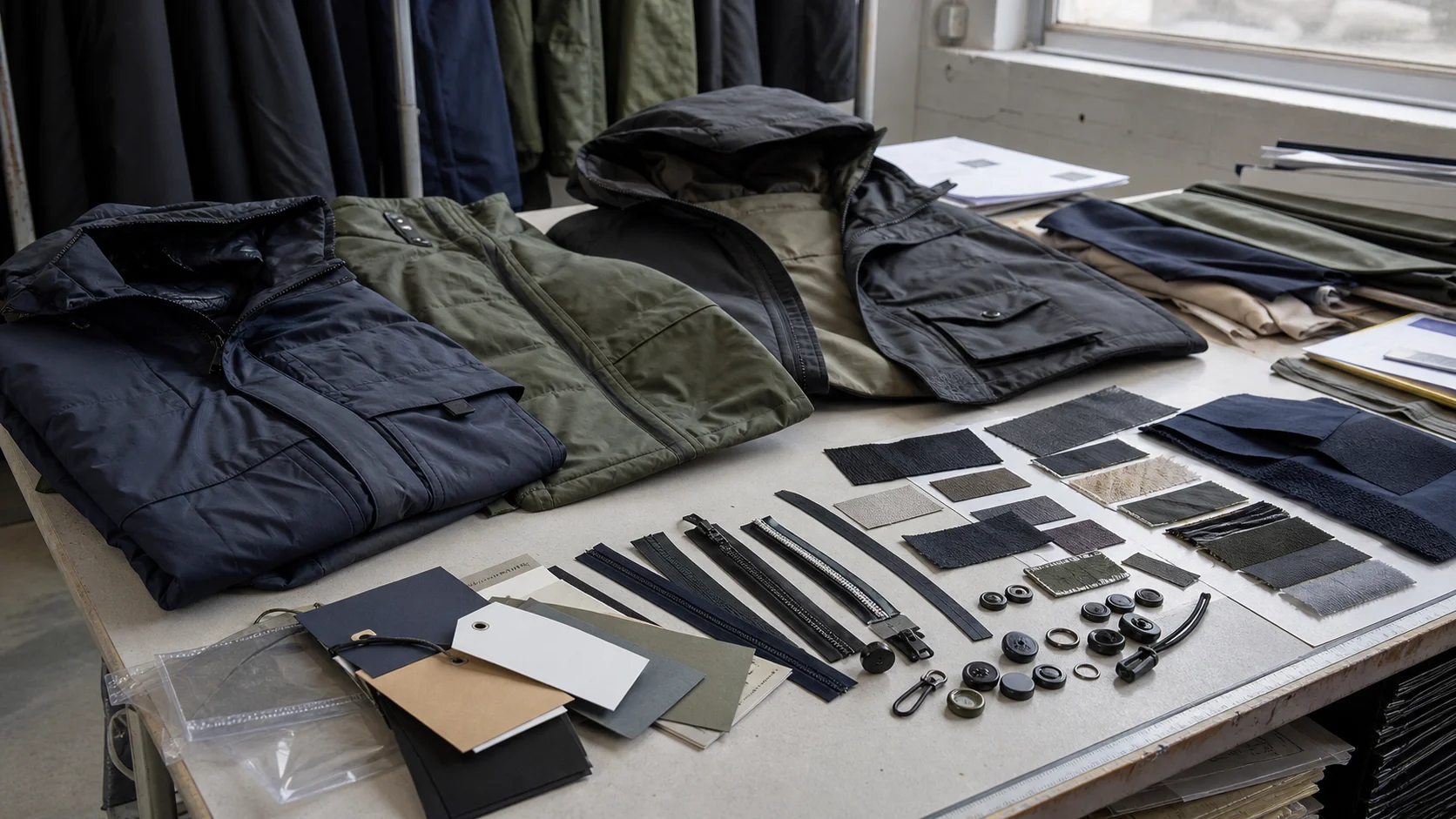
A practical quality and inspection outline for retail operations teams evaluating thermal parka fabrics, from insulation and shell durability to weather...
Thermal Parka Fabric Testing for Retail Ops Teams - Fabrikn production reference
Category: Quality & Inspection
Retail operations teams sit close to the commercial risk of a winter outerwear program. If a thermal parka fails in store, the issue rarely stays inside the product team. Returns increase, customer service volume rises, markdown pressure builds, and store teams lose confidence in the range. Fabric testing is one of the most useful controls retail ops can use before bulk production, but it needs to be structured around real product risks rather than a generic lab checklist.
This guide explains how retail operations teams can approach thermal parka fabric testing, what to request from suppliers, which test results matter most, and where inspection risk still remains after lab approval. It is written for teams managing buying, sourcing, quality, warehouse intake, store readiness, and returns prevention across cold-weather outerwear programs.
A thermal parka is not a simple fashion jacket. It is a layered product expected to provide warmth, resist wind, handle moisture, survive abrasion, and maintain appearance after repeated wear. The fabric package typically includes an outer shell, insulation, lining, pocketing, interlining, drawcords, tapes, labels, and often a coated or laminated surface. Weakness in any one component can become a customer-facing defect.
Retail operations teams need fabric testing because outerwear failure is expensive to correct late. Once finished parkas are packed, shipped, allocated, and delivered to stores or distribution centers, a fabric issue may require sorting, relabeling, repairs, returns, or full rejection. Testing during development and pre-production reduces the chance of discovering problems at the inbound inspection stage.
The main commercial risks are straightforward:
The retail operations view should be practical: testing is not about achieving every possible technical result. It is about matching product claims, price point, climate use, and expected wear. A premium expedition-style parka needs a stricter protocol than an urban fashion parka sold for mild winter use. A children’s parka has different safety and durability concerns than an adult commuter jacket. The test plan should reflect the product’s real risk profile.
If your team needs support building a quality plan around outerwear sourcing, review the broader manufacturing and quality support available through Fabrikn services.
Retail teams often say “test the fabric,” but a thermal parka is a system. Testing only the shell fabric can leave major defects undetected. A practical testing plan should identify each material layer and decide which tests are required before purchase order placement, before bulk cutting, and before final inspection.
The outer shell carries the highest visibility and much of the performance load. Common shell materials include polyester, nylon, cotton-poly blends, high-density woven fabrics, and fabrics with polyurethane, acrylic, or TPU coatings. Some parkas use laminated membranes for water resistance and breathability.
Typical shell fabric checks include weight, fiber content, colorfastness, tear strength, tensile strength, abrasion resistance, water repellency, water resistance, dimensional stability, and coating or lamination durability. For down or synthetic-filled parkas, the shell also needs suitable fill-proof performance to prevent fiber migration.
Insulation is the warmth layer and may be down, feather-down blend, recycled synthetic fill, polyester padding, or sheet wadding. Testing requirements depend on the insulation type. Down programs need fill power, composition, cleanliness, odor, and sometimes species or origin documentation depending on market requirements. Synthetic insulation needs weight, thickness, compression recovery, thermal resistance where required, and migration risk assessment.
Retail ops teams should be cautious with warmth claims. A hangtag claim such as “suitable to -20°C” is difficult to support unless the full garment system has been evaluated under a recognized method or a clearly defined internal standard. Fabric and insulation tests help, but they do not automatically prove the temperature rating of a finished parka.
Lining failures are common in outerwear because linings face friction from garments worn underneath, keys, phones, wallets, and repeated arm movement. Lining fabric should be checked for seam slippage, tear strength, abrasion, colorfastness to rubbing and perspiration, and dimensional stability. Pocketing should be stronger than many teams assume, particularly for large handwarmer pockets or internal phone pockets.
Trims are not always part of “fabric testing,” but they influence fabric performance and inspection outcomes. Zipper tapes can bleed color. Hook-and-loop tabs can abrade shell fabric. Drawcords and elastic can fail extension and recovery. Faux fur trim can shed or fail appearance checks. Reflective tape can crack after washing or low-temperature flexing.
A retail operations testing guide should include these materials in the same approval calendar. The best shell fabric result will not protect a program if the zipper tape stains the lining or the drawcord channel tears after a few wears.
Testing should start with the claims the retailer plans to make. Many product failures are not complete failures of construction; they are mismatches between customer expectation and actual product performance.
Common thermal parka claims include:
Each claim should have evidence. “Water-resistant” may be supported by spray rating or hydrostatic pressure results at a moderate level. “Waterproof” usually requires higher hydrostatic performance and careful seam construction, often including seam sealing. “Breathable” should not be used loosely if no water vapor transmission or related test has been performed. A recycled claim needs chain-of-custody documentation or an accepted verification method, not just a supplier statement.
Retail ops teams should ask the product, legal, and ecommerce teams to align claim wording before the final test protocol is issued. Changing a claim after production is possible. Changing bulk fabric performance after cutting is not.
Purchasing judgment: do not pay for premium waterproof-breathable fabric if the garment design has unsealed seams, open storm flaps, or decorative stitch lines that defeat the claim. Either upgrade the construction package or reduce the claim.
Testing results only matter when tied to a clear specification. A lab report that says a fabric “passes” is not enough unless the buyer, supplier, and factory agree on the exact requirement. Retail operations teams should push for a controlled technical file before sampling moves too far.
Spec discipline is especially important when the program has several colorways. Black, navy, olive, beige, and bright fashion colors may not perform the same in rubbing, crocking, shade consistency, or DWR retention. Testing only one color can be acceptable for some base physical properties, but colorfastness and shade controls should be considered by color.
The exact test protocol depends on market, buyer standards, product claim, and local regulations. The table below gives a practical view of common test areas and why they matter for retail operations. Values should be set by the retailer’s quality manual, recognized standards, or product-specific risk assessment.
Test Area Typical Purpose Retail Ops Risk if Missed Fiber content Confirms fabric composition against label and claim. Mislabeling, compliance issues, customer distrust. Fabric weight Checks consistency against approved standard. Garments feel lighter, warmer claims questioned, inconsistent drape. Tear strength Measures resistance to tearing under stress. Rips at pockets, cuffs, hood, or seams during wear. Tensile strength Assesses fabric breaking strength. Bulk fabric unsuitable for heavy parka construction. Seam slippage Checks fabric yarn movement at seams. Open seams, especially on lining and stress points. Abrasion resistance Evaluates surface wear from rubbing. Premature wear on elbows, seat area, cuffs, and bag-contact zones. Pilling Measures surface balling or fuzzing. Customer complaints after limited use. Colorfastness to rubbing Checks dry and wet crocking. Color transfer to hands, bags, upholstery, or inner garments. Colorfastness to washing Evaluates shade change and staining. Returns after home laundering. Colorfastness to perspiration Checks staining under sweat exposure. Neckline, underarm, and lining discoloration claims. Spray rating Measures surface water repellency. Fabric wets out quickly despite water-resistant claim. Hydrostatic pressure Measures resistance to water penetration. Rain leakage complaints and unsupported waterproof claims. Water vapor transmission Assesses breathability where claimed. Overheating, condensation, and poor comfort feedback. Dimensional stability Checks shrinkage or growth after care. Poor fit after washing, twisted panels, lining distortion. Coating adhesion Assesses coating bond to base fabric. Peeling, bubbling, delamination, or sticky handfeel. Fill leakage Checks down or fiber migration through shell and seams. Visible feathers or fibers, customer complaints, store display issues.Water resistance is one of the most misunderstood areas in parka sourcing. A shell may pass a spray test because water beads on the surface, but still allow water penetration under pressure. A hydrostatic pressure test gives a stronger view of resistance to water entry. The right requirement depends on the promise made to the customer.
For fashion parkas described as water-resistant, a moderate spray rating may be enough if the care label and hangtags do not overstate performance. For products described as waterproof, teams should evaluate hydrostatic pressure, seam sealing, zipper construction, hood design, cuff closure, and post-wash performance. A waterproof fabric alone does not make a waterproof garment.
Thermal performance is affected by insulation type, fill weight, garment length, quilting pattern, baffle design, shell wind resistance, lining, hood coverage, and fit. Fabric testing can help confirm material inputs, but a finished garment assessment is often needed if the retailer wants to market a specific warmth level.
Thermal tests may include CLO value, thermal resistance, or guarded hot plate style methods depending on the lab and standard used. Teams should be careful comparing results across different methods. A supplier’s internal warmth rating may not be equivalent to an independent lab rating.
Dark colors carry higher crocking risk, especially black, navy, dark green, and burgundy. Wet crocking is important for parkas because rain, snow, sweat, and condensation are realistic use conditions. Light-colored linings can show staining quickly if shell fabric, zipper tape, or labels bleed.
Retail ops teams should treat colorfastness as a customer service issue, not just a lab issue. Color transfer onto car seats, knitwear, handbags, or scarves can escalate beyond a normal return.
Parkas rub against backpacks, seat belts, desks, counters, and store fixtures. Abrasion testing helps predict surface durability, but it should be reviewed alongside the target customer and price point. A brushed or peached shell may feel commercial at try-on but show wear faster than a smoother high-density woven shell.
There is a tradeoff here. A softer handfeel can improve conversion in store. A tougher shell can reduce complaints but may feel stiff or noisy. Retail teams should decide the priority before approving fabric, not after the first wear test feedback arrives.
A reliable fabric testing process connects sampling, approvals, and bulk controls. Skipping stages can save days early and cost weeks later.
The supplier submits hanger swatches, fabric details, construction information, coating or finish notes, and available previous test reports. Previous reports are useful for screening, but they should be checked for date, fabric reference, color, test method, and whether the tested material is truly the same as proposed for the program.
For solid colors, lab dips are reviewed against the color standard under agreed light sources. For prints, a strike-off checks print scale, color, registration, and handfeel. A lab dip approval should not automatically approve bulk fabric. It approves the color direction only.
Early testing may be done on available fabric or proto sample fabric. This helps catch obvious failures, but teams should not rely on it as final bulk approval unless the supplier confirms it is identical to production fabric and finishing.
The most important stage is testing fabric from the actual bulk lot or a representative production lot before cutting. This is where fiber content, weight, colorfastness, water resistance, strength, and shrinkage should be confirmed against the approved specification.
If the parka is labeled machine washable, the finished garment or fabric package should be evaluated after the recommended care cycle. For coated or laminated shell fabrics, post-wash water repellency and coating condition are important. For down garments, care testing should consider clumping, odor, loft recovery, and leakage.
Retail ops teams should maintain a sealed record: approved swatch, lab dip, test report, trim card, care label, size set comments, pre-production sample approval, and inspection criteria. This file becomes the reference when inbound teams or third-party inspectors find shade, handfeel, or surface issues.
For sourcing programs that need structured communication between product, supplier, and quality teams, Fabrikn provides company background and operating context at Fabrikn about us.
Thermal parka fabric testing is tied closely to minimum order quantities and lead times. Retail teams should not treat testing as a separate administrative task. It affects fabric booking, lab capacity, production scheduling, and delivery commitment.
MOQ varies by fabric mill, fiber type, finish, color count, and trim supplier. The ranges below are typical planning references, not guaranteed terms:
Small retail programs can reduce MOQ pressure by using stock shell fabrics, standard zipper colors, existing insulation qualities, and limited colorways. The tradeoff is less exclusivity and less control over exact shade or finish. Larger programs can justify custom development, but the testing burden increases because more variables are introduced.
Typical outerwear development timelines are longer than basic apparel because fabric finishing, insulation sourcing, trims, testing, and sample corrections all take time. A cautious planning view may include:
Testing failures create the largest schedule risk when they occur after bulk fabric has been produced. A failed crocking, hydrostatic pressure, or coating adhesion result may require re-finishing, replacement fabric, or a change in product claim. None of those fixes are painless close to shipment.
Purchasing judgment: for a seasonal parka drop, late fabric approval is often more dangerous than a slightly higher fabric cost. A cheaper shell that requires repeated testing rounds can destroy the delivery window.
Passing fabric tests does not guarantee passing final inspection. Lab testing evaluates selected samples under defined conditions. Inspection evaluates actual production quality across a shipment. Retail ops teams need both.
Bulk rolls may vary from roll to roll or panel to panel. Parkas use large pieces, so shade differences are visible. Shade banding is especially noticeable on front panels, sleeves, hoods, and pocket flaps. Inspectors should compare garments against approved standards and check panels under suitable lighting.
Common shell defects include slubs, streaks, coating marks, creases, oil stains, needle lines, broken yarns, and dye spots. Quilted parkas may also show uneven fill distribution or panel distortion. A fabric can pass lab performance testing and still have unacceptable visual defects.
Heavy parkas place stress on seams, especially at armholes, side seams, pocket openings, hood joins, cuffs, and placket edges. Seam slippage tests help, but factory sewing quality is still critical. Poor needle selection can damage coated fabrics. Excessive stitch tension can cause puckering or tearing. Low stitch density can weaken seams.
If the product claims waterproof performance, inspection should verify seam tape placement, adhesion, coverage, and consistency. Missed seam tape, wrinkled tape, overheating, and poor bonding can create leakage points. Inspectors may not perform full hydrostatic garment tests during every inspection, so visible construction checks are important.
Down and synthetic fill must be evenly distributed. Thin zones at the shoulders, chest, back, or sleeves create warmth complaints. Overfilled zones can distort fit. Loose fibers or feathers visible on dark shells can create store presentation issues even if the product is technically functional.
The care label, fiber label, hangtag, barcode data, carton marking, and website copy should match the approved test evidence. A machine washable claim needs testing support. A waterproof hangtag should not be attached to a merely water-resistant garment. Retail ops teams are often the last line of defense before allocation.
A useful checklist should be simple enough for buyers and operations teams to apply, but detailed enough to prevent vague approvals. The following list can be adapted into a pre-production gate.
Teams planning a new thermal parka program or reviewing a failed inspection can use Fabrikn contact us to discuss sourcing and quality control requirements.
A common mistake is copying a premium outdoor brand’s testing protocol into a value retail program without adjusting for price, construction, and customer promise. This can make the product commercially unworkable. The opposite mistake is accepting supplier standards that are too weak for the selling claim.
Retail operations teams should rank requirements into three levels:
This structure helps purchasing teams make better tradeoffs. If a shell fabric narrowly underperforms on abrasion but the product is a low-use fashion parka, the team may accept it with adjusted expectations. If the same fabric fails wet crocking or coating adhesion, acceptance is much harder to justify because the customer complaint risk is immediate and visible.
Documentation matters. Every concession should be recorded with the reason, risk, affected color or lot, and final decision owner. Informal approvals cause problems when returns data appears months later and nobody can reconstruct why a marginal fabric was accepted.
Good suppliers should be able to answer practical questions clearly. Vague answers often signal that the fabric package is not fully controlled.
The answers do not need to be polished. They need to be specific. A supplier that can identify risks early is usually easier to manage than one that promises every requirement without evidence.
Retail ops teams should read test reports with a skeptical but fair eye. The report should identify the applicant, sample description, color, style or fabric reference, received date, test method, results, and conclusion where applicable. If the report is old, unclear, or linked to a different fabric reference, it should not be treated as proof for the current bulk lot.
Pay attention to “tested as submitted” language. Labs test the sample provided; they do not guarantee that the supplier will use the same quality in production. This is why bulk-lot testing and incoming roll controls are important.
Reports should also be checked against the intended market. Requirements can vary by country, retailer policy, product category, and age group. Children’s outerwear may involve stricter trim safety, drawcord, and chemical requirements than adult outerwear. A domestic market supplier report may not cover the requirements of an export retail program.
Thermal parka fabric testing works best when it is treated as a buying control, not a paperwork step. The most useful approach is to link claims, specifications, testing, sampling, and inspection into one decision flow. Retail operations teams do not need to become textile scientists, but they do need to ask for evidence before the shipment is at the warehouse door.
The strongest programs usually have three habits. They define product claims early. They test actual bulk materials before cutting. They inspect finished garments against a sealed approval file rather than relying on memory or supplier assurances.
A parka can be warm but not waterproof. It can be water-resistant but not durable. It can pass fabric testing and still fail garment inspection. These distinctions matter because retail customers judge the finished product, not the lab report. The job of the retail ops team is to make sure the lab report, the approved sample, and the packed garment all tell the same story.
Get a free quote from Fabrikn — your trusted B2B clothing manufacturer with 10+ years of experience. MOQ as low as 200 pieces.
Get a Free Quote →The most important tests usually include fiber content, fabric weight, tear strength, tensile strength, seam slippage, abrasion, colorfastness, dimensional stability, water repellency, water resistance, coating or lamination durability, and fill leakage. The exact protocol should match the product claim and selling market.
No. Water-resistant fabric can repel light moisture or brief exposure, often supported by spray testing. Waterproof fabric requires stronger resistance to water penetration and usually needs garment-level construction controls such as seam sealing. A waterproof fabric does not automatically make the finished parka waterproof.
Bulk fabric should be tested before cutting whenever possible. Early development tests are useful, but the key approval should come from actual bulk fabric or a representative production lot. This reduces the risk of cutting fabric that later fails colorfastness, water resistance, or strength requirements.
Stock shell fabrics may start around 300 to 800 meters per color. Custom dyed woven shells often run around 1,000 to 3,000 meters per color. Coated or laminated fabrics can be around 1,500 to 5,000 meters per color. Actual MOQ depends on mill policy, finish, color count, and season capacity.
It can be used for screening, but it should not automatically approve the new order. Check whether the report matches the same fabric reference, mill, color, finish, and production route. For higher-risk programs, test the current bulk lot before cutting.
Common issues include shade variation, coating marks, stains, weak seams, seam slippage, poor fill distribution, feather or fiber leakage, fabric defects, missing seam tape, zipper tape staining, and mismatch between labels and approved claims.
First confirm the sample identity, test method, and requirement. Then assess whether the failure affects compliance, customer claims, or general quality expectations. Options may include retesting, supplier corrective action, fabric replacement, claim reduction, restricted use of affected lots, or order rejection. The decision should be documented.
Not by itself. Insulation testing helps confirm the warmth material, but a temperature rating depends on the full garment system, including fill weight, construction, length, fit, wind resistance, and hood design. Specific temperature claims should be supported by suitable garment-level evidence or clearly defined internal standards.