
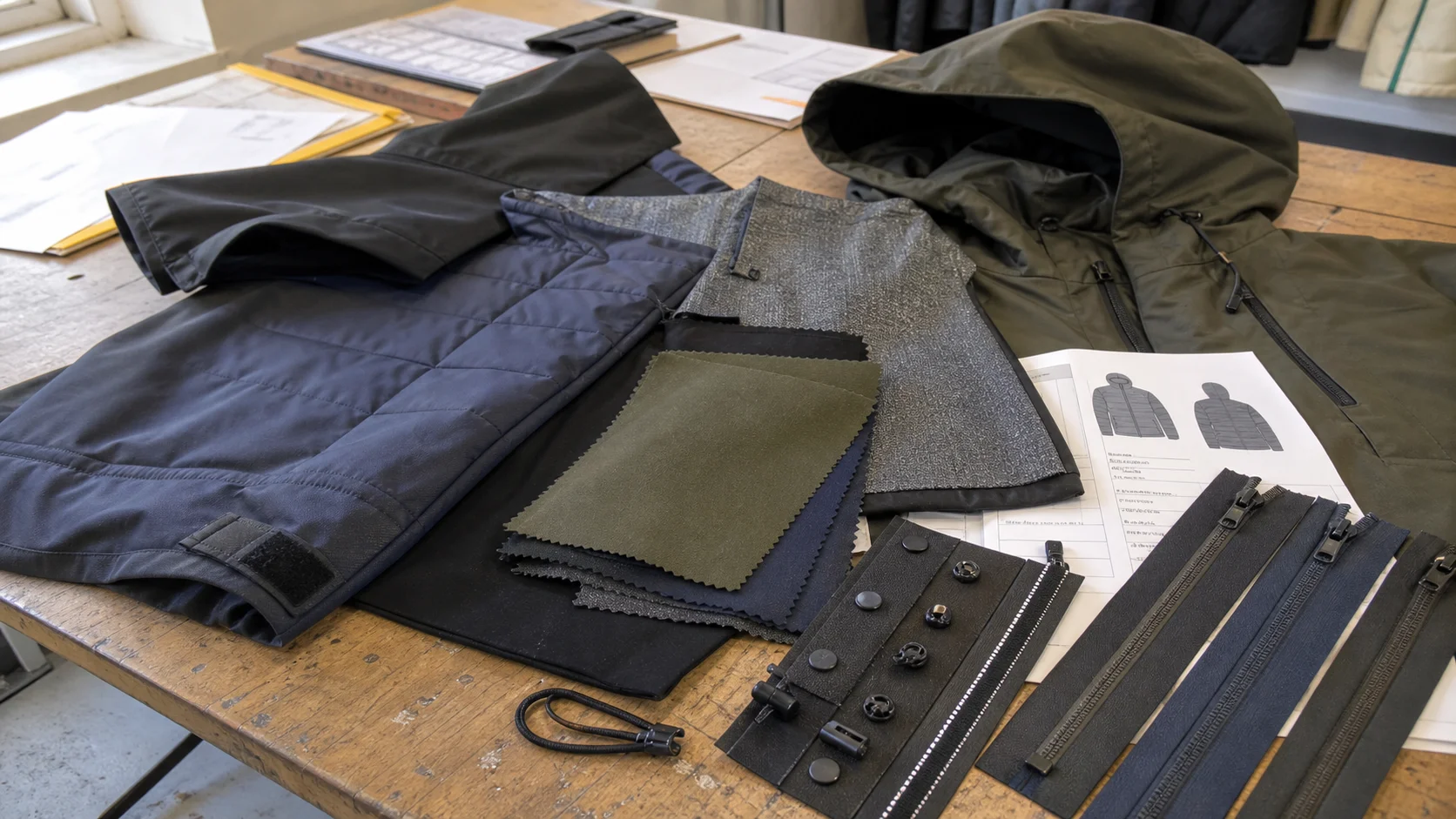
A retail operations-focused outline for evaluating thermal parka fabric tests, insulation performance, seam durability, compliance records, and inspection...
Retail QA teams do not buy thermal parkas on style alone. A parka can look clean on a showroom hanger and still fail when exposed to cold, moisture, abrasion, or normal handling in distribution. Fabric testing is the part of sourcing that separates a usable winter program from an expensive return problem. For retail operations teams, the goal is not to over-spec everything. The goal is to define the right test gates, confirm the fabric system is stable, and catch failure points before bulk production starts.
This guide covers the practical side of thermal parka supplier fabric testing for retail operations teams. It focuses on the material checks that matter most: shell fabric performance, insulation behavior, trim compatibility, color stability, seam durability, and the inspection risks that tend to appear when a winter outerwear order moves from sample to bulk.
Thermal Parka Fabric Testing for Retail QA Buyers - Fabrikn production reference
A thermal parka is a system, not a single fabric. The shell, lining, insulation, zippers, seam construction, and finish all influence the final result. A supplier may source decent fabric, but if the coating cracks, the downproofing leaks, the DWR is weak, or the trim cannot tolerate cold handling, the garment can still fail in the field.
Retail QA buyers usually face three business risks:
Testing is not only about passing a lab report. It is about proving the supplier can repeatedly buy, cut, sew, and finish a stable material package. That is why the retail QA function should treat fabric testing as a sourcing control, not a paperwork exercise.
For winter outerwear, the cheapest fabric is rarely the cheapest program. If the shell finish, insulation fill, or trim quality drifts after sample approval, the cost appears later as rework, markdowns, and avoidable returns.
A solid fabric testing plan starts by separating the garment into testable material groups. Each group has different failure modes.
The outer shell carries the weather exposure. Retail teams usually want checks for water resistance, wind resistance, abrasion, colorfastness, dimensional stability, and coating adhesion where relevant. Nylon and polyester shells are common, and each behaves differently depending on denier, weave structure, and finish.
The lining affects hand feel, comfort, and wearability. A lining may not need the same weather performance as the shell, but it still needs colorfastness, tear resistance, and low risk of snagging or pilling. If the lining is brushed or printed, the buyer should confirm rub performance and shade consistency.
Thermal performance depends on fill type and construction. Down, synthetic fill, and hybrid systems each create different testing needs. Down fill requires loft and fill power checks, while synthetic insulation needs thickness, recovery, and compression behavior. Retail teams should not accept a generic “warmth” claim without the supporting method and test basis behind it.
Zippers, snaps, hook-and-loop tape, drawcords, cord locks, and elastic all influence durability and consumer satisfaction. Trims often fail before the fabric does. Cold-weather use makes this more visible because brittle plastic parts and poor zipper tape performance show up quickly in low temperatures.
When a parka includes welded panels or seam taping, the tape adhesion and seam integrity deserve attention. Stitch density, needle damage, and seam allowance control all affect moisture resistance and long-term appearance. A good fabric can still lose performance if the sewing line is inconsistent.
Retail operations teams need a short list of non-negotiable specifications before approvals begin. These details should be fixed in the tech pack or approved material sheet, not left to supplier interpretation.
These specifications matter because many supplier disputes start with vague language. “Water resistant” can mean different things across mills. “Warm” can mean almost nothing unless the team defines a measurable standard, an approved test method, and the exact sample construction used for validation.
Sample approval for thermal parkas should happen in stages. A single pre-production sample is rarely enough when fabric, insulation, and trims are all in play. Retail QA buyers are better served by a staged approval path.
The supplier should submit fabric swatches, trim cards, test reports, and the full construction summary. This is the point to verify whether the offered material actually matches the buyer's spec. If a substitute fabric is proposed, it should be treated as a new approval item, not a silent replacement.
Color approval should happen before bulk dyeing or fabric cutting where possible. For dark winter goods, color variance becomes visible quickly under retail lighting. Shade band approval is especially important for body fabric, hood trim, and lining combinations that sit close together on the rack.
The proto sample confirms basic construction, panel balance, and trim placement. It should not be used as proof of final performance, since the fabric lot or insulation lot may still change. It is still useful for spotting obvious issues such as stiff hand feel, poor drape, or excessive bulk.
Once fit is closer to final, buyers should check whether the insulation load changes the silhouette too much in larger sizes. Parkas often look fine in a single sample size and then become awkward in the upper size range because the fill distribution or baffle spacing was never adjusted.
This sample should use bulk-intended fabric, trims, and approved construction. It is the best place to verify seam behavior, zipper function, and final appearance after pressing or finishing. If the supplier cannot source the exact approved fabric, the release should be paused until that gap is closed.
Retail teams should request practical wear checks where the program risk justifies it. A thermal parka may need several wear cycles, cold exposure, and light washing or cleaning evaluation depending on the care label. Some failures only appear after compression, storage, or repeated use.
For sourcing teams that need support with this stage-gated process, [Fabrikn services](/services/) is the most relevant starting point.
MOQ is often set by fabric mill minimums, insulation availability, and trim purchase volumes rather than by the finished garment factory alone. Retail teams should ask early whether the supplier is quoting a stock fabric or a custom-made material, because the difference changes both risk and timeline.
Lead time depends on more than sewing capacity. Fabric dyeing, coating, lamination, sample approval, trim procurement, and bulk inspection all move the schedule. A retail team should ask for a lead-time breakdown by stage rather than a single promised ship date.
Late changes to fabric weight, finish, or trim are especially expensive in winter outerwear. A zipper change can trigger a new compatibility review. A shell fabric change can affect insulation distribution, seam puckering, and the final warm hand feel. These are not small edits. They can reset part of the approval process.
Good fabrics still fail at the garment level when the process is weak. Retail QA teams should focus on the likely defect patterns rather than only looking for obvious holes or stains.
Thermal parkas often use multiple panels and trims. Color drift between shell, hood lining, and pocket trim is a common complaint. The risk rises when the supplier sources from different lots or multiple mills. Shade control should be checked under standard lighting and not only under warehouse light.
A water-repellent finish can look acceptable at first and still fail after abrasion or washing. QA teams should confirm the intended care method and test after any relevant pre-treatment. A parka that wets out quickly creates the impression of poor warmth even when insulation is present.
Uneven fill distribution causes visible cold spots and bulky zones. This is a construction issue, but fabric stability affects how the garment holds the fill. Slippery linings, weak baffle control, and incorrect stitch balance can all contribute to the problem.
Heavy fabrics and insulation magnify seam issues. If the shell shrinks unevenly or the thread tension is wrong, the finished garment can twist after washing or appear distorted on the rack. Buyers should inspect not only the front appearance but also the side seam and hood attachment zones.
Zippers can jam when tape stiffness, coil quality, or stitch tension is off. A zipper that works at room temperature may fail in colder conditions. Cold-cycle handling is worth checking when the product is intended for true winter use.
Areas such as cuffs, elbows, pocket openings, and inner collar surfaces wear faster. Retail buyers should ask where the fabric was tested and which area is most likely to show use damage. A fabric that passes a generic test may still show localized wear in a real parka design.
The table below gives a practical starting point. The exact standards may vary by market, category, or buyer protocol.
Material Area Test Focus Why It Matters Typical Buyer Concern Shell fabric Water resistance, abrasion, tear strength, colorfastness Protects the garment from weather and wear Wet-out, pilling, premature surface damage Lining fabric Colorfastness, tear strength, rubbing performance Supports comfort and internal durability Shade transfer, snagging, weak hand feel Insulation Loft, recovery, fill consistency, compression response Drives warmth and bulk control Cold spots, uneven appearance, collapse after packing Zippers and snaps Cycle durability, cold handling, corrosion resistance Controls daily usability Breakage, sticking, rust, poor alignment Seams and taping Stitch strength, tape adhesion, seam appearance Affects weather protection and finish quality Leakage, puckering, open seamsRetail QA buyers should not release bulk until the following points are clear. This is the practical gatekeeping step that protects the seasonal program.
If the program needs supplier validation, sample coordination, or third-party support, [contact Fabrikn](/contact-us/) before bulk decisions are locked in. If vendor qualification is part of the sourcing workstream, [About Fabrikn](/about-us/) is the place to check the service scope and company background.
Supplier communication should be direct and specific. Retail QA teams get better results when they ask for evidence rather than promises.
Request the exact fabric specification sheet, the source mill reference if available, and the test method used for each critical claim. If the supplier only provides a marketing description, the material is not ready for final approval.
Winter programs are vulnerable to substitute materials because buyers often approve samples months before bulk production. Any change in shell, lining, fill, or trim should be recorded and reviewed before it reaches cutting. A small substitute can create a large downstream problem.
Not every parka needs an exhaustive laboratory package. A value-tier retail program may focus on key durability and appearance risks, while a performance winter line may justify more extensive low-temperature and weather resistance checks. The right plan depends on channel expectations, price point, and return risk.
Suppliers sometimes claim “premium warmth,” “outdoor grade,” or “all-weather protection” without a matching technical basis. Retail buyers should insist on measurable details. A better program uses defined performance targets, traceable materials, and sample evidence that the final garment can actually meet the claim.
Approval history matters when disputes appear later. Keep a clean record of the approved swatch, trim card, test report version, sample photos, and sign-off date. This makes it easier to identify whether the failure came from the material, the factory process, or an unapproved substitution.
Good retail sourcing is usually about choosing where to spend control effort. Thermal parkas deserve extra attention on shell performance, insulation stability, zipper quality, and sample stage discipline. Less important details can be simplified if the product is not positioned as technical outerwear.
The most common mistake is trying to solve a performance problem with a stronger inspection at the end of the line. That approach is late and expensive. A better approach is to define the material risk early, test the exact components that carry the risk, and hold the supplier to the same approved standard through bulk.
For retail operations teams, that means treating fabric testing as part of commercial control. It protects margin, reduces returns, and keeps seasonal supply from drifting after sample sign-off.
Get a free quote from Fabrikn — your trusted B2B clothing manufacturer with 10+ years of experience. MOQ as low as 200 pieces.
Get a Free Quote →The most important tests usually cover water resistance, abrasion, tear strength, colorfastness, insulation recovery, zipper durability, and seam integrity. The exact mix depends on the product position and weather exposure.
Stock shell fabrics may start around 300 to 1,000 meters per color. Custom-dyed or custom-coated fabrics often require 1,000 to 3,000 meters or more. Trims and insulation can carry separate minimums.
A practical path usually includes material submission, proto sample, size set or fit sample, and pre-production sample. Higher-risk programs may add wear validation or cold-condition checks before bulk release.
Bulk failures often come from fabric lot changes, trim substitutions, weaker process control, or insulation handling issues. A sample can look correct while the production run drifts in weight, shade, or construction quality.
Both matter. Fabric testing confirms the base material can meet the spec, while garment testing shows how the full system behaves after sewing, filling, and finishing. Parkas should not be approved on fabric data alone.
Common issues include shade variation, weak DWR, zipper sticking, insulation migration, seam puckering, and surface wear at cuffs or pocket openings. These are worth checking before and after bulk production.
Request the fabric specification, test reports, approved swatches, trim details, sample sign-off record, and a clear statement on substitution control. That package gives QA teams a defensible approval trail.