
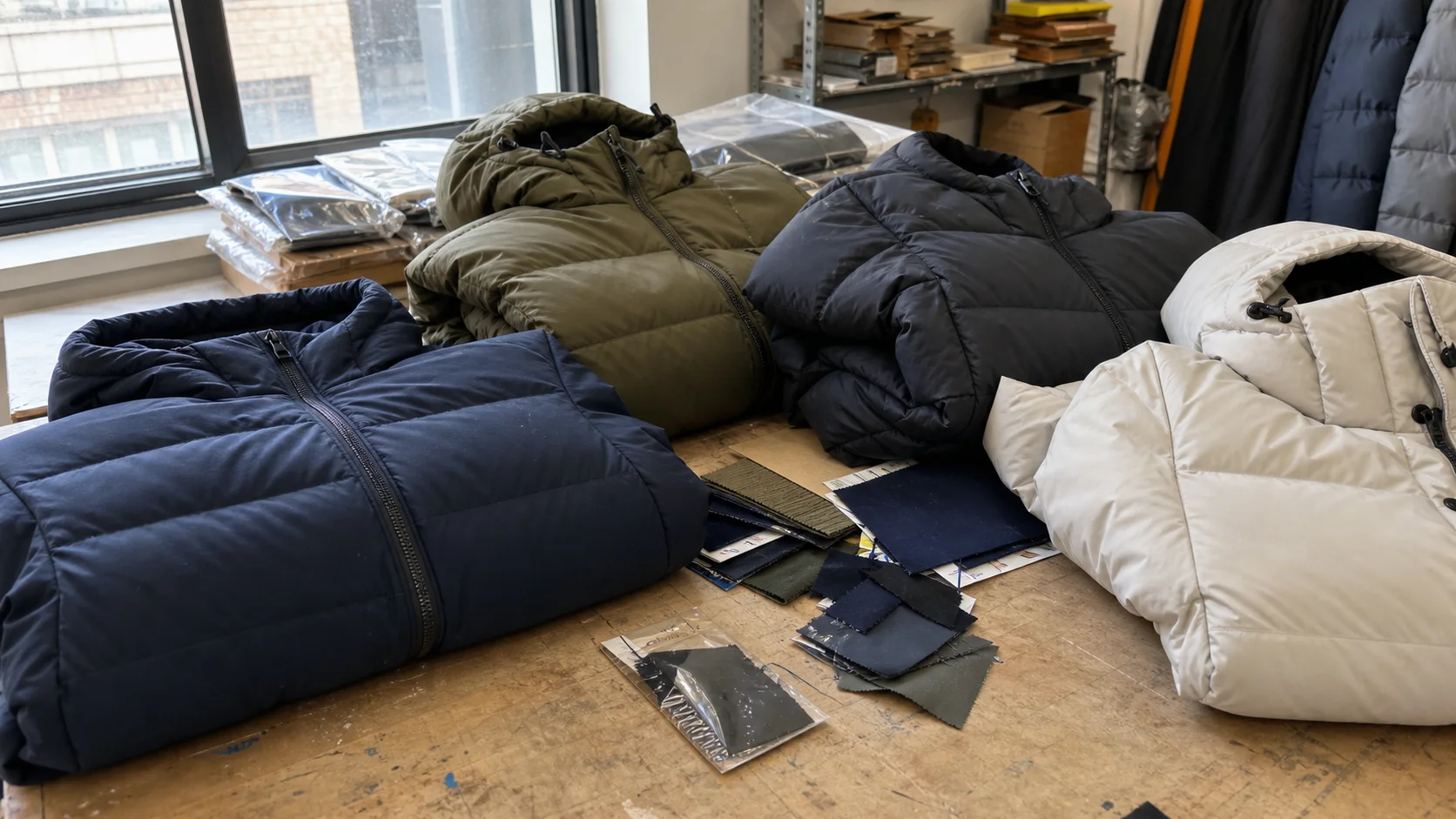
A product-specific outline for clinic purchasing teams evaluating how a thermal parka manufacturer controls fabric, lining, insulation, and...
Thermal Parka Shrinkage Plan for Clinic Buyers - Fabrikn production reference
Clinic purchasing teams buy thermal parkas for a different reason than outdoor retail buyers. The garment has to keep staff warm during patient transport, mobile outreach, ambulance bay coverage, facility maintenance, security rounds, and cold-weather emergency response. It also has to survive repeated institutional laundering, mixed-user handling, and long storage periods without turning into a tight, distorted, or unevenly sized jacket.
That is why shrinkage control should not be treated as a minor technical note. For a clinic or healthcare group, shrinkage affects fit consistency, staff compliance, return rates, inventory planning, and the real cost per wear. A thermal parka that shrinks one full size after five wash cycles can create uniform shortages even when the original order quantity looked correct.
This article outlines a practical shrinkage control plan for clinic purchasing teams working with a thermal parka manufacturer. It focuses on sourcing decisions, fabric and trim specifications, sample approval, MOQ expectations, lead-time dependencies, testing points, inspection risks, and contract language that should be settled before bulk production.
Thermal parkas for clinic teams are not fashion items. They are work garments that must fit over scrubs, fleece layers, uniforms, or light medical outerwear. If shrinkage reduces chest width, sleeve length, or back length, staff may stop wearing the garment or request a replacement. In multi-site clinic systems, that quickly becomes a purchasing and distribution problem.
Shrinkage also changes how the parka performs. A shortened hem can expose the lower back during patient loading. Reduced sleeve length can leave wrists uncovered. A distorted lining can restrict arm movement. If the shell shrinks differently from the lining or insulation, the garment can pucker, twist, or feel tight even if the size label has not changed.
Clinic buyers should separate two concepts: fabric shrinkage and garment shrinkage. Fabric shrinkage is measured on the textile before sewing. Garment shrinkage is measured on the finished parka after laundering or care testing. The second number matters more for purchasing teams because staff wear finished garments, not fabric swatches.
Purchasing judgment: do not accept a supplier’s general fabric shrinkage claim as proof that the finished thermal parka will remain stable. Ask for finished-garment test results on the same shell fabric, lining, insulation package, quilting method, seam construction, and care label planned for your order.
A good shrinkage plan reduces three risks at once: size drift after laundering, uneven appearance across the order, and reordering confusion when replacement units no longer match the original fit.
The first shrinkage control decision happens before fabric testing. Clinic teams need to define how the parka will be used and cleaned. A garment designed for occasional cold-weather wear may not need the same testing as a parka issued to mobile medical staff and washed weekly.
Useful questions include:
These answers affect the care label and the shrinkage tolerance. A home-laundered parka may be tested under domestic wash conditions, while a pooled clinic garment may require more aggressive testing. If the clinic expects tumble drying, do not approve a sample based only on line-dry results.
For a clinic purchasing team, the safest route is to write the use case into the tech pack or purchase specification. A manufacturer cannot reliably control shrinkage against a cleaning method that was never disclosed.
The outer shell is usually the largest factor in visible garment shrinkage. Thermal parkas commonly use woven polyester, nylon, polyester-cotton blends, coated fabrics, laminated fabrics, or high-density synthetic shells. Each behaves differently under washing, drying, steaming, and bonding.
For clinic parkas, synthetic woven shells are common because they offer durability, easier care, and better resistance to moisture than cotton-rich fabrics. Polyester generally has lower wash shrinkage than cotton, but construction still matters. A loose woven fabric can relax after washing. A coated or laminated shell can react poorly to high heat. A mechanical stretch fabric may recover differently across the warp and weft.
Clinic purchasing teams should request the following shell fabric details:
Fabric relaxation is a common source of early shrinkage. Some woven fabrics contract after being unwound, cut, sewn, pressed, washed, or tumble dried. The manufacturer should allow fabric to relax before cutting, especially when the shell has stretch, coating tension, or heavy rolling pressure from the mill.
For clinic buyers, a practical shell fabric shrinkage target is often within 2% to 3% after specified care testing, though the acceptable number depends on fabric type, garment design, and end-use. Finished-garment tolerance should be stated separately. If a supplier promises “no shrinkage,” treat that as a warning sign unless the claim is supported by test reports and realistic tolerance language.
A thermal parka is a layered product. Even if the shell fabric is stable, the full garment can still shrink, distort, or collapse because the lining, insulation, quilting thread, interlining, or seam tapes behave differently.
Common insulation choices include polyester padding, recycled polyester fill, synthetic down-like fiber, fleece bonding, or removable quilted liners. Down and feather insulation can be used in some parkas, but many clinic buyers prefer synthetic insulation because it is easier to specify for repeated care and wet-weather conditions. Synthetic insulation also avoids some allergy and animal-origin questions, though it still needs testing for loft retention and migration.
Important insulation details include:
Lining is another shrinkage risk. A polyester taffeta lining may have low shrinkage, but a brushed tricot, fleece lining, or blended knit lining can move more under heat and washing. If the lining shrinks more than the shell, sleeves may twist or pull. If the shell shrinks more than the lining, the lining may bag out at the hem or cuffs.
Interlinings, pocket bags, storm flaps, waist drawcord channels, and hood facings also matter. These components are easy to ignore during quotation, but they can create localized puckering if their shrinkage behavior differs from the shell.
Purchasing judgment: ask the manufacturer to test the complete layered garment, not only the shell. The risk is not just total shrinkage; it is differential shrinkage between shell, lining, insulation, tape, and trim.
Trim selection can make a stable parka look defective after washing. Zippers, reflective tape, rib cuffs, hook-and-loop closures, drawcords, elastic, snaps, seam tape, logo applications, and labels all respond differently to laundering and drying.
Clinic parkas often need easy-to-grip zippers, secure pockets, ID access, and sometimes reflective details for parking lots or ambulance bays. Each feature adds a possible shrinkage or distortion point.
Trim specifications should cover:
Reflective tape deserves special attention. Some reflective trims are designed for limited wash cycles or specific drying conditions. If the tape shrinks, cracks, or curls, the parka may fail both appearance and safety expectations. The same applies to heat-transfer logos. A transfer that looks clean on the pre-production sample may crack or lift after repeated drying if the application temperature, dwell time, or pressure is wrong.
For clinic purchasing teams, embroidery is often safer than low-grade heat transfer for long-term durability, but embroidery can create puckering on lightweight shells or coated fabrics. The best choice depends on the shell fabric, logo size, budget, and wash expectations.
A thermal parka manufacturer should be able to explain how shrinkage is controlled from fabric sourcing through final inspection. If the answer is vague, the purchasing team should slow down before placing a bulk order.
At minimum, ask for a written shrinkage control plan that includes:
The manufacturer should also clarify whether the garment is designed to be washed before delivery. Most bulk parkas are not garment-washed because washing bulky insulated outerwear increases cost, handling time, drying complexity, and packaging labor. Pre-washing may reduce post-purchase shrinkage, but it can also flatten insulation, affect water-repellent finishes, and increase lead time.
For many clinic orders, the better solution is controlled fabric selection, verified dimensional testing, and realistic care labeling rather than bulk garment washing. Garment washing should only be considered when the parka construction, insulation, trims, and finishes are suitable.
If your team needs help turning these requirements into a sourcing brief, a manufacturer or apparel development partner should be able to support the technical specification process. Fabrikn’s service overview at https://fabrikn.com/services/ is a relevant place to understand how apparel production support can be structured.
Sample approval is where many shrinkage problems can be caught before they become expensive. A clinic buyer should not approve a thermal parka only because the first sample looks warm and fits one staff member. The sample must prove that the design can hold size and shape after the expected care process.
A practical approval sequence looks like this:
Not every order will need every sample stage, especially for small quantities or repeat programs. Skipping the wash test is still risky when the garment is new, the fabric is new, or the clinic has strict laundering requirements.
During sample review, measure the parka before and after care testing. Key points usually include chest width, sweep, center back length, sleeve length, shoulder width, armhole, bicep, cuff opening, hood opening, and zipper length. For a long parka, front length and back length should both be checked because fabric and quilting can pull unevenly.
Photos are useful but not enough. Keep a measurement chart with actual before-wash and after-wash readings. A clear record helps avoid disputes if bulk production later shows size drift.
Clinic purchasing teams do not need to become textile laboratories, but they should understand the basic testing language. Shrinkage is usually reported as dimensional change after washing, drying, dry cleaning, steaming, or heat exposure. The test method should match the care label and real use conditions.
Common testing references may include AATCC, ISO, or other recognized textile test methods depending on buyer location and supplier capability. The exact method should be agreed in writing. Domestic wash, commercial laundry, tumble dry, line dry, and dry clean results can differ significantly.
A sample tolerance table can help clarify expectations:
Area Typical Risk Common Target Range Purchasing Note Shell fabric Relaxation shrinkage, coating reaction, heat distortion Often within 2% to 3%, depending on fabric Ask for lab results on the approved fabric lot where possible. Lining Pulling, bagging, twisting Should be compatible with shell shrinkage Differential shrinkage matters more than the lining number alone. Finished garment Chest, length, sleeve, sweep reduction Often within 3% after stated care, but style-dependent Set garment measurement tolerance by point of measure. Reflective tape Curling, cracking, delamination Must pass agreed wash cycles Use only trim rated for the care method. Heat-transfer logo Cracking, lifting, puckering Must pass agreed wash cycles Confirm application settings before production.The tolerance should not be copied blindly from a T-shirt program. Parkas have bulk, insulation, structured seams, and layered components. A 1 cm change in a T-shirt sleeve may be minor. A 1 cm change combined with lining pull and cuff tension in a parka sleeve can feel more noticeable.
For institutional orders, it is also practical to test more than one sample. One passing sample is useful, but it does not prove consistency across bulk rolls, color lots, or operators. At minimum, test a pre-production sample made from actual bulk materials. For larger orders, ask about random finished-garment testing from production.
MOQ and lead time affect shrinkage control more than many clinic buyers expect. A supplier offering a very low MOQ may rely on available stock fabrics, limited testing, and simplified trim options. That can be useful for a small clinic order, but it may limit control over shrinkage and consistency.
Typical MOQ ranges vary by manufacturer, fabric availability, and customization level:
These are general sourcing ranges, not promises. Some manufacturers accept smaller runs with surcharges. Others set higher MOQs because fabric mills, dye houses, or trim suppliers require minimum commitments.
Lead time also depends on the shrinkage plan. A quick reorder using approved materials may move faster than a first-time program. A new parka that requires lab dips, fabric testing, fit revisions, wash testing, reflective trim approval, and pre-production samples will take longer.
Typical timeline components may include:
The main tradeoff is speed versus certainty. Rushing directly from a first sample into bulk production may protect a seasonal deadline, but it increases the risk of post-wash complaints. A clinic buyer should decide which risk is more expensive: missing part of the cold-weather season or receiving parkas that do not hold size.
For urgent needs, a split strategy can work. Order a smaller quantity from approved stock materials for immediate coverage, then develop a more controlled custom program for the next season. This is often more practical than forcing a complex parka program into an unrealistic production window.
Once the pre-production sample is approved, the shrinkage plan must carry into bulk production. A correct sample does not guarantee a correct shipment. Material substitutions, fabric lot changes, cutting tension, quilting variation, pressing heat, and packing compression can all create differences.
Bulk production controls should include:
Quilting deserves a closer look. Thermal parkas often use quilted linings or quilted insulation panels. If quilting tension is too high, panels may contract before assembly. If stitch spacing varies, the garment can feel uneven and measure inconsistently. Heavy quilting can also reduce effective garment length or width even without laundering.
Pressing is another overlooked point. High heat can affect synthetic shell fabrics, coatings, laminated layers, reflective tape, and heat-transfer logos. The manufacturer should use pressing settings suitable for the materials. A parka is not a dress shirt; aggressive steaming and pressing can create shine, distortion, or bond damage.
Packing also matters. Compressing insulated parkas for too long can reduce loft temporarily and sometimes create creasing. Compression does not usually cause true shrinkage, but it can affect measurement readings and appearance at receiving inspection. If the clinic needs garments ready for immediate issue, packing method and recovery time should be considered.
Final inspection should check more than appearance. A shrinkage control plan needs measurement verification and construction review before shipment. Once parkas are distributed across clinic departments, correcting problems becomes expensive and slow.
Common inspection risks include:
AQL inspection is commonly used in apparel, but the acceptable quality level should match the risk profile of the order. For clinic parkas, major defects should include size measurements outside tolerance, nonfunctional closures, broken seams, incorrect labels, unsafe trims, and visible defects that affect professional appearance.
If the order is large or mission-critical, third-party inspection may be worth considering. For smaller orders, ask the manufacturer for internal inspection records with measurement reports and photos. The records should identify the inspected size, color, quantity, and date. Generic photos of one sample are not a substitute for shipment-level checks.
For purchasing teams that are still selecting a supplier, company transparency matters. Reviewing a supplier’s process, communication style, and production support can reduce preventable issues. Fabrikn’s company background page at https://fabrikn.com/about-us/ can help buyers understand the type of apparel partner they are speaking with before moving into sampling.
A clear checklist helps clinic buyers compare suppliers on more than price. It also protects the purchasing team if staff complaints arise after distribution.
Checklist Item Why It Matters Buyer Action Care method defined Shrinkage depends on wash and dry conditions. State home wash, commercial laundry, tumble dry, line dry, or dry clean expectations. Fabric specs approved Shell fabric drives visible shrinkage and distortion. Approve fiber content, weight, construction, finish, and color. Layer compatibility checked Shell, lining, and insulation can shrink differently. Request finished-garment test results, not only fabric data. Trim wash rating confirmed Reflective tape, logos, and elastic can fail before the shell. Match trims to the care label and required wash cycles. Sample measured before and after care Fit problems must be found before bulk cutting. Keep a measurement chart and approval record. Bulk inspection planned Approved samples do not guarantee shipment consistency. Set AQL, measurement points, and defect categories before production.When reviewing quotations, clinic purchasing teams should also look at what is included. A low unit price may exclude lab testing, extra samples, custom trims, larger size grading, inspection, special packing, or post-wash verification. Those omissions may look like savings until a shrinkage issue appears.
Size range is another planning point. Clinic teams often need inclusive sizing from XS through 4XL or 5XL. Larger sizes require careful grading so that sleeve length, chest width, sweep, and arm mobility remain proportional. Shrinkage can be more visible in extended sizes because staff are less likely to have spare fit room.
If the clinic has a mixed workforce, consider a wearer trial before full rollout. A short trial with core sizes can reveal whether staff need extra room for layers, whether sleeve length is adequate, and whether the parka remains comfortable after laundering. This is not a replacement for technical testing, but it provides practical feedback that lab numbers cannot capture.
The purchase order should not only list quantity, color, and price. It should reference the approved sample, technical specification, care label, measurement chart, shrinkage tolerance, trim specifications, logo placement, packing method, and inspection requirements. If these details stay in email threads, they are easier to miss.
Useful purchase order language may include:
Dispute terms should be realistic. If the clinic requires a strict shrinkage limit after a specific number of wash cycles, the test method and sampling plan must be stated. A vague claim such as “garment must not shrink” is difficult to enforce and not technically sound.
For new buyers, it can be helpful to discuss order scope and technical risk before locking the purchase order. If the parka is for a clinic network, mobile care team, or cold-climate medical program, share the intended use early. Buyers can start that discussion through Fabrikn’s contact page at https://fabrikn.com/contact-us/.
Shrinkage control has a cost, but uncontrolled shrinkage costs more. The budget should allow for proper sampling, material testing, possible fit revisions, and inspection. These costs are usually small compared with replacing a failed outerwear order.
The largest cost drivers include custom fabric, specialized trims, extended size ranges, thermal performance requirements, reflective applications, logo methods, and third-party testing. A clinic team with a tight budget should prioritize the controls that affect fit and care durability first. Decorative details can be simplified if necessary.
For example, choosing a proven stock polyester shell with tested synthetic insulation may be safer than developing a custom cotton-blend shell to match an exact brand texture. Selecting standard zipper pulls may be more practical than custom molded pullers if the MOQ is low. Using embroidery may be better for durability, while heat transfer may be better for lightweight branding if wash requirements are moderate and the transfer quality is verified.
Purchasing judgment: if budget pressure forces tradeoffs, protect the fabric, insulation, trim durability, and measurement controls first. Cosmetic customization should not outrank dimensional stability for clinic outerwear.
A practical shrinkage control plan for clinic thermal parkas can be summarized in six stages.
Write down who will wear the parka, where it will be used, what it must fit over, and how it will be cleaned. Include exposure to rain, snow, vehicle use, disinfectants, and reflective safety needs.
Approve shell fabric, lining, insulation, interlining, thread, zipper, reflective tape, logo method, and care label. Ask whether each material has wash and heat limitations.
Measure the sample before and after the agreed care process. Check not only total shrinkage but also twisting, puckering, lining pull, zipper waviness, insulation clumping, and trim distortion.
Use actual bulk materials and trims. Do not approve bulk cutting based on substitute shell fabric, temporary zippers, placeholder reflective tape, or untested logo applications.
Require fabric relaxation, incoming material checks, cutting controls, quilting tension control, in-line measurements, and pressing limits. Record any approved deviations.
Verify measurements by size and color. Check care labels, trim performance, logo quality, insulation appearance, zipper function, and packing condition. Hold shipment if major measurement failures appear.
This plan is not excessive for clinic outerwear. It is the basic discipline needed when a garment must perform in healthcare operations and remain wearable after care.
Thermal parka shrinkage control is not only a factory issue. It is a purchasing specification issue. Clinic buyers get better results when they define the use case, set care expectations, request finished-garment testing, approve real materials, and inspect bulk production against written tolerances.
The best manufacturer relationship is not the one that promises zero problems. It is the one that can identify where shrinkage may occur, explain how it will be controlled, and document the result before the order ships.
For clinic purchasing teams, the strongest buying position is clear and practical: choose stable materials, test the complete garment, protect the fit, and do not let speed or cosmetic customization weaken the shrinkage plan.
Get a free quote from Fabrikn — your trusted B2B clothing manufacturer with 10+ years of experience. MOQ as low as 200 pieces.
Get a Free Quote →Many clinic parka programs aim for finished-garment dimensional change within about 3% after the agreed care process, but the right tolerance depends on fabric, insulation, construction, and fit requirements. Critical measurements such as chest, sleeve length, and back length should have specific tolerances in the measurement chart.
Both are useful, but finished-garment shrinkage is more important for purchasing approval. A thermal parka includes shell fabric, lining, insulation, quilting, trims, seams, and logo applications. These parts can interact after washing and drying, so fabric data alone is not enough.
A reliable manufacturer should avoid absolute “no shrinkage” claims unless there is a very specific tested context. Most garments have some dimensional change after care. The better approach is to agree on a test method, acceptable tolerance, sample approval process, and inspection standard.
Typical MOQs may range from about 100 to 300 pieces for stock materials and standard trims, while custom fabrics, colors, insulation packages, or branded trims may require 500 to 1,000 pieces or more. Exact MOQ depends on the manufacturer and material suppliers.
Yes, tumble drying can increase shrinkage, distortion, coating damage, reflective tape failure, and logo cracking if materials are not rated for it. If staff or laundry services will tumble dry the parkas, the sample should be tested under that condition before bulk approval.
Synthetic shell fabrics and insulation often offer better dimensional stability than cotton-rich constructions, but they are not risk-free. Coatings, laminations, reflective trims, elastic parts, and heat-transfer logos can still fail under heat or repeated washing.
Final inspection should check measurements, sleeve balance, zipper function, lining twist, reflective tape condition, logo quality, seam strength, care labels, insulation distribution, shade consistency, and packing. Measurement failures should be treated as major defects for clinic uniform programs.
Clinics can reduce risk by using approved stock materials, standard trims, and a tested existing pattern. For urgent winter needs, a smaller immediate order from stable materials may be safer than rushing a fully custom program without proper shrinkage testing.