
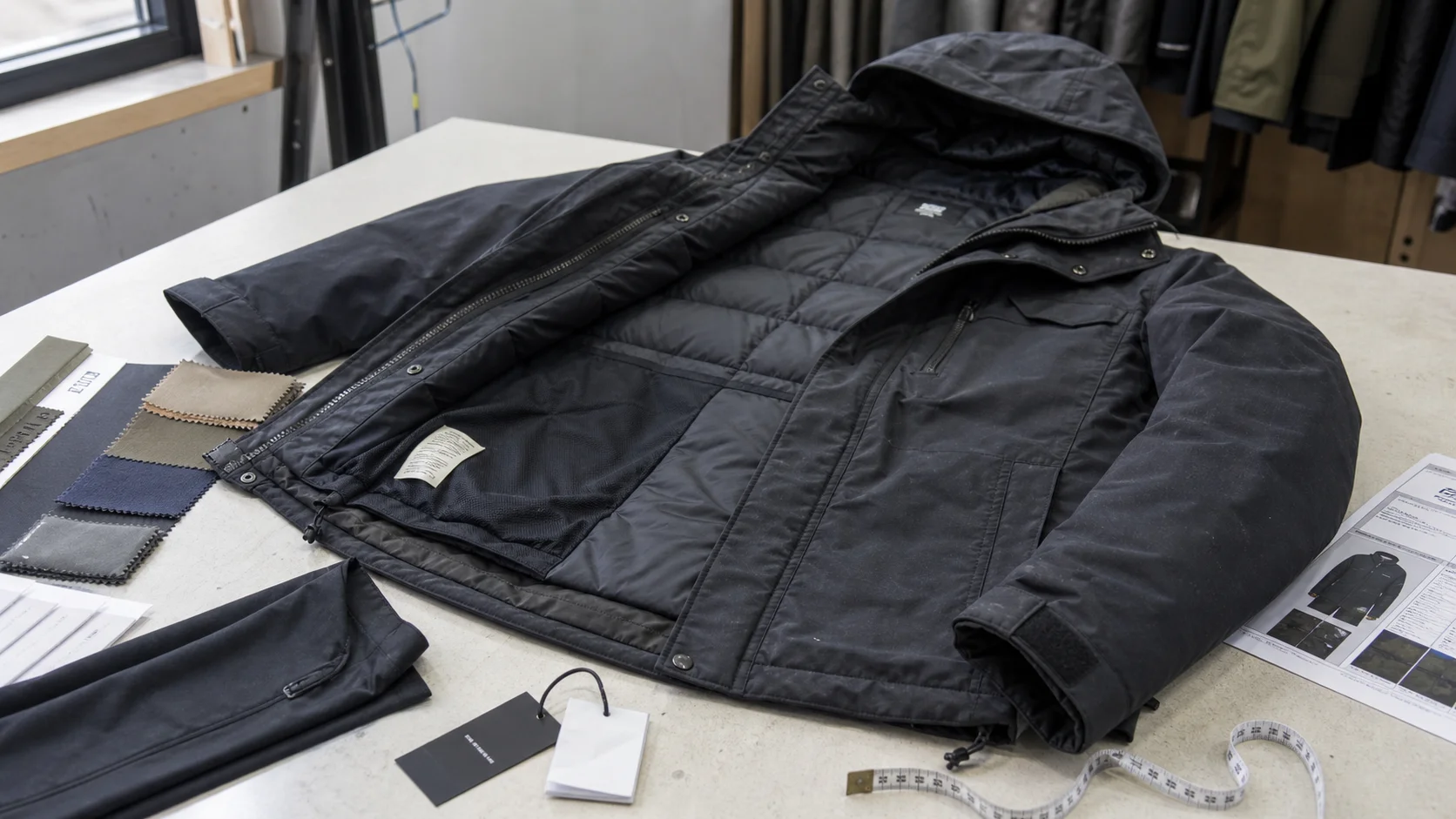
A quality and inspection outline for retail operations teams reviewing thermal parka size grading, fit consistency, insulation allowances, measurement...
Thermal Parka Size Grading Review for Retail Ops - Quality & Inspection manufacturing guide
Thermal parkas are expensive garments to get wrong. A small grading error in a T-shirt may create fit complaints, but a grading error in a padded winter parka can affect arm mobility, layering comfort, zipper function, hood coverage, sleeve pitch, hem balance, and return rates across several size bands. For retail operations teams, size grading is not just a technical pattern issue. It is a commercial control point that influences sell-through, markdown exposure, customer service workload, warehouse returns, and replenishment planning.
This review explains how retail operations teams should evaluate thermal parka size grading before bulk production and again during inspection. It is written for buyers, merchandisers, quality teams, technical product managers, and sourcing teams managing outerwear programs with factories or manufacturing partners.
The practical goal is simple: confirm that the parka fits the intended customer across the full size range, not only on the sample size. That requires a disciplined review of the size chart, pattern grading rules, fabric and insulation behavior, measurement tolerances, construction risks, and production inspection data.
A thermal parka is usually built from multiple interacting components: shell fabric, lining, insulation, zipper placket, storm flap, hood, cuffs, pockets, drawcords, snaps, elastic, and sometimes taped seams or water-resistant finishing. Every layer adds bulk. Bulk changes how a garment wears, how it measures, and how much ease the customer needs.
Retail operations teams should treat grading as a risk area because winter outerwear often carries higher unit cost, higher return cost, and longer production lead times than lighter apparel. If a size run fails after delivery, it is rarely easy to correct. Re-cutting panels or replacing insulation is not practical once goods are sewn, packed, and distributed.
The most common retail issue is not that every size is wrong. It is that certain sizes are commercially weak. For example, the medium may fit well because it was the base sample size, while the extra-small feels too boxy, the extra-large restricts the bicep, or the 2XL has a short front length relative to body width. These problems come from grading rules that were not checked across the full size range.
Good size grading is not simply adding equal increments everywhere. It is preserving fit intent, movement, proportion, and layering comfort across the target customer size range.
For retail operations, this is where technical fit decisions become operational risk. A poor grade can increase returns, distort inventory by size, reduce customer trust, and create pressure on customer service teams. A parka may meet color and fabric expectations, but if the sleeve length, chest width, or armhole balance is off, the customer experience still fails.
Retail operations teams do not need to replace the technical designer or pattern maker. They do need to make sure the size grading review is built into the production calendar and not treated as an optional technical step. The review should happen before purchase order lock, before bulk fabric cutting, and during production quality control.
The strongest retail operations teams ask direct questions early:
These questions matter because the retail calendar often rewards speed. Factories may push to approve the medium sample and proceed to bulk. Buyers may want to avoid another sample round. Sales teams may want line confirmation. The risk is that the grade nest is accepted without enough evidence.
A practical approach is to define size grading review as a required gateway. No bulk cutting should begin until the size chart, graded measurements, fit comments, and sample approvals are documented. If the style includes extended sizing, the review should include at least one smaller size and one larger size, not only the base size.
Teams managing outsourced production can also use structured manufacturing support when internal technical resources are limited. A partner such as Fabrikn’s services team can help brands organize production requirements, quality checkpoints, and supplier communication before bulk orders move forward.
Thermal parkas require more measurement discipline than basic apparel because the shell, lining, and insulation must align. The size chart should include finished garment measurements, not only body measurements. Finished measurements should reflect how the garment is intended to be worn, including room for layers.
The most important measurements depend on the design, but retail operations teams should usually review the following points of measure:
Chest and bicep measurements deserve special attention. Thermal parkas are often returned when customers feel restricted while driving, reaching forward, or wearing sweaters underneath. A parka can look correct standing still but fail during movement. That is why fit testing should include arm lift, forward reach, sitting, hood closure, zipper closure, and hand-pocket use.
Sweep measurement is another common issue. If the bottom hem is too narrow in larger sizes, the parka may ride up when seated or zipped. If the sweep is too wide in smaller sizes, the garment may look oversized and lose thermal efficiency. Retail teams should check whether the hem includes a drawcord, elastic, rib insert, or adjustable tab because these trims affect how customers experience the finished measurement.
Hood grading is often under-reviewed. A hood that fits the sample size may become too shallow in larger sizes or too bulky in smaller sizes. If the hood is insulated, lined with fleece, trimmed with faux fur, or designed to fit over a beanie, the pattern and grade need specific review. The hood opening should also work with the zipper and chin guard. A tight chin area can create poor reviews even when the body fit is acceptable.
Measurement Area Retail Risk Review Priority Chest Too tight for layering or too bulky in small sizes High Bicep and Armhole Restricted movement and sleeve pulling High Sweep Riding up, poor seated comfort, weak silhouette High Hood Poor coverage, tight chin, unstable fit Medium to High Sleeve Length Cold wrist exposure or excessive cuff bulk Medium Pocket Placement Poor hand access across sizes MediumGrading rules define how a pattern increases or decreases from the base size. A simple grade might add a fixed amount to chest, waist, sweep, sleeve, and length between sizes. Thermal parkas usually need more careful handling because bulk, insulation loft, and layering expectations vary across the body.
Retail teams should not assume the factory’s standard grade is right for the brand. Factories often have default rules based on previous customers, local fit blocks, or available pattern systems. Those rules may be acceptable for some styles and unsuitable for others.
The main tradeoff is between proportional appearance and functional ease. A slim urban parka may need controlled sweep and shoulder grading to preserve silhouette. A performance winter parka may need more room at chest, bicep, and armhole to support movement and layering. A fashion parka may tolerate a relaxed body but still require precise sleeve and hood balance.
Size grading should reflect the retail fit promise. If the product page says “relaxed fit,” customers expect room through the body and sleeves. If it says “fitted,” the parka still needs enough ease for insulation and movement. Tight outerwear is rarely forgiving because the customer cannot easily compensate once the zipper is closed.
Extended sizing needs special judgment. A straight continuation of the regular-size grade may not work for 2XL, 3XL, or larger sizes. Larger bodies do not scale evenly in every direction. Armhole shape, shoulder slope, chest depth, abdomen ease, and sweep may need separate rules. Smaller sizes can also suffer when the grade reduces too aggressively. The garment may become too short, the hood too tight, or the sleeve opening too narrow for gloves.
Retail operations should ask for a graded measurement chart showing every size, every point of measure, and the tolerance for each measurement. This chart should be checked against the target customer profile and then compared with fit sample measurements. If the technical team flags an issue, operations should protect the calendar space needed to correct it before bulk cutting.
Thermal parka size grading cannot be separated from material behavior. A pattern that works in a light nylon shell may not fit the same way when built with heavy twill, fleece lining, bonded fabric, high-loft synthetic fill, or down insulation. The thicker the garment, the more internal space is consumed by the materials themselves.
Retail operations teams should confirm the fabric and trim specifications before reviewing the final grade. A size chart approved on one material may become unreliable if fabric weight, lining type, insulation weight, quilting pattern, or seam construction changes later.
Insulation weight is a major fit variable. A 120 gsm synthetic fill behaves differently from 200 gsm fill. Down and synthetic insulation also compress differently during packing, shipping, and wear. The garment may measure within tolerance on the table but feel tighter when worn because internal loft reduces available ease.
Quilting and channel design also affect size. Dense quilting can reduce loft and control bulk, while wide channels may create more puffiness. If the parka has different insulation weights in body and sleeves, bicep and armhole review becomes more important. Sleeve insulation that is too bulky can restrict elbow bend and forward reach.
Trim placement can distort fit across sizes. A fixed-length zipper must match body length. Pocket bags can add bulk at the front body. Heavy snaps can pull on the storm flap. Rib cuffs can tighten sleeve openings. Drawcords can change sweep behavior. Each trim choice should be reflected in the sample review, not only in the bill of materials.
Material Decision Possible Fit Impact Retail Operations Action Higher insulation weight Reduced internal ease Recheck chest, bicep, and armhole Heavy fleece lining More friction over layers Test with sweater or mid-layer Shorter zipper Hem or neck mismatch Confirm zipper length by size Elastic storm cuff Tight wrist feel Check cuff opening and stretch recovery Large pocket bags Front bulk and measurement distortion Measure flat and review worn fitA strong sample approval process reduces grading risk before production money is committed. Retail operations teams should define the workflow clearly with the supplier and internal stakeholders. The number of sample rounds depends on style complexity, factory familiarity with the product type, fabric readiness, and the size range.
For a thermal parka, the approval path usually includes several stages. Not every program uses the same names, but the control points are similar.
The size set sample is the key stage for grading review. A practical size set may include the smallest size, base size, and largest size. For broad ranges, add a mid-large size or extended size. For example, if the range is XS to XXL, review XS, M, XL, and XXL where budget allows. If the range includes 3XL or 4XL, do not assume the XXL result proves the larger sizes.
Sample approval should include both measurement review and fit review. Flat measurements are necessary, but they do not show mobility. A parka should be zipped, worn over the intended layer, and checked during movement. The model or form should reflect the target customer as closely as possible. If only a dress form is available, teams should still conduct movement checks on a live wearer before approval where feasible.
Approval comments should be specific. “Sleeve too tight” is not enough. A useful comment would state the size, point of restriction, movement condition, requested change, and target measurement. For instance, the team may request more bicep width in XL and above, a deeper armhole, or adjusted sleeve pitch. The factory should return updated measurements and revised samples before production proceeds.
Retail operations should also control approval documentation. Each approved sample should be labeled with style number, size, sample stage, date, fabric reference, trim reference, and approval status. Photos should show front, back, side, hood, pocket, cuff, and key fit positions. Measurement reports should match the same sample. Mixed documentation creates disputes later.
Minimum order quantity and lead time affect how much flexibility a team has to correct grading issues. Thermal parkas often involve higher MOQs than simple cut-and-sew garments because factories must source shell fabric, insulation, linings, zippers, snaps, and specialized trims. Quilting, padding, and outerwear sewing lines can also require dedicated production planning.
Typical MOQ ranges vary by supplier, material, and customization level. For basic private-label outerwear with available fabric, MOQs may start around 300 to 500 pieces per color. More customized parkas often require 800 to 1,500 pieces per style or color, especially when fabric is dyed to order, trims are custom branded, or insulation is purchased in bulk. Technical waterproof or performance parkas can require higher MOQs depending on fabric mill requirements and testing needs.
Retail operations teams should treat these ranges as planning references, not guarantees. A supplier may accept a lower MOQ at a higher unit cost, with limited color options, or with standard trims only. A supplier may require higher MOQ if the fabric mill has minimum dye lots, if zipper colors are custom, or if branded snaps need tooling.
Program Type Typical MOQ Range Common Tradeoff Stock fabric parka 300 to 500 pcs per color Lower customization and fewer trim choices Private-label insulated parka 500 to 1,200 pcs per style or color Better branding options with more planning Custom fabric or dyed-to-order parka 800 to 1,500+ pcs per color More control but higher inventory exposure Technical performance parka 1,000+ pcs depending on materials Testing, fabric sourcing, and seam requirements add timeLead times also depend on the readiness of the product. A repeat style using approved patterns and available materials may move faster. A new thermal parka with size set review, lab dips, custom trims, insulation testing, and packaging development needs more calendar space.
A cautious planning range for development and production can look like this:
These timelines can compress when materials are in stock and the factory has open capacity. They can extend when fabric mills are busy, trims require tooling, insulation supply is delayed, testing fails, or sample comments are unclear. Size grading changes late in the process are especially disruptive because they can require pattern revision, marker updates, fabric consumption recalculation, and new size set confirmation.
Retail teams should avoid approving bulk cutting while grading questions remain open. The cost of a delayed approval is usually smaller than the cost of a bad size run. That judgment is not always popular during a tight launch calendar, but it is usually the safer commercial decision for winter outerwear.
Inspection for thermal parkas should include more than visual appearance. A shipment can look clean and still fail size execution. Retail operations teams need a measurement and workmanship plan that covers the full size range, especially high-volume sizes and edge sizes.
Common inspection risks include incorrect grading, uneven insulation distribution, twisting sleeves, inconsistent sleeve length, zipper mismatch, tight cuffs, hood imbalance, and pocket placement drift. Because parkas are bulky, measurement technique matters. Inspectors should measure on a flat surface, smooth the garment without stretching it, and follow the approved measurement manual.
Parkas often need wider tolerances than lightweight apparel, but tolerance should not become a hiding place for poor control. For many outerwear measurements, a tolerance of plus or minus 1 cm may be too strict in some areas and reasonable in others. Chest, body length, and sleeve length may require carefully defined tolerances depending on fabric and construction. Smaller details, such as pocket placement or snap spacing, may need tighter control because visible imbalance affects perceived quality.
The acceptance standard should define major and minor defects. A sleeve measurement slightly outside tolerance may be minor if it does not affect wear and occurs rarely. A size-wide issue where all XL parkas have tight biceps is a major commercial defect. A zipper that cannot close smoothly due to panel mismatch is major. Insulation missing from a hood or sleeve is major. A mislabeled size is major because it creates direct retail and warehouse problems.
Retail operations should request inspection reports that separate measurement defects by size. A combined pass rate can hide a grading problem. If all inspected medium and large units pass but all XXL units fail bicep or sweep, the issue is not random workmanship. It is a size-grade or pattern execution issue that needs escalation.
AQL inspection can be useful, but teams should not rely on generic inspection only. For a thermal parka size grading review, the sampling plan should intentionally include edge sizes and the most commercially important sizes. If the order is heavily weighted toward medium and large, those sizes still matter most for revenue. Edge sizes matter because they reveal whether the grade rule holds.
During production, top-of-production samples can help catch issues before the full run is complete. If the first units show measurement drift, the factory can adjust sewing handling, quilting tension, or pattern execution. Once the full batch is sewn, corrective options narrow quickly.
Size grading errors often become warehouse and customer-service problems. If the product is mislabeled, packed incorrectly, or barcoded with the wrong size, even a well-graded parka can create returns and inventory confusion. Retail operations teams should connect technical size approval with packaging and distribution controls.
The size label, hangtag, polybag sticker, carton marking, and purchase order should all match. This sounds basic, but outerwear programs may include dual sizing, regional sizing, alpha sizing, and extended sizes. A parka sold as women’s XL in one market may need a different size conversion for another market. If size conversions are not controlled, warehouse teams may receive accurate garments that are commercially misidentified.
Packaging can also affect fit perception. Heavy compression during packing may flatten insulation temporarily. Customers may receive a parka that looks thin or misshapen until it recovers. If loft recovery is a concern, packaging instructions should specify folding method, carton density, and whether garments require hanging or airing before display. Retail stores handling winter outerwear should also know whether the product needs recovery time after unpacking.
For ecommerce, size chart accuracy is critical. The customer-facing size guide should match the approved fit intent. If the garment is designed for heavy layering, say so clearly. If it has a relaxed silhouette, explain it without overstating. A customer who expects a close fit may size down and then complain about restricted movement. A customer who expects a very oversized parka may be disappointed by a standard fit. Accurate fit language reduces preventable returns.
The size grading review should continue after the product launches. Retail operations teams can use return data, customer reviews, size exchanges, and sell-through by size to understand whether the grade performed commercially. This data should feed back into the next season’s fit block and size chart.
Useful post-launch signals include:
One or two comments do not prove a grading failure. A pattern across sizes does. If many customers in XL and XXL report tight sleeves, the next development cycle should review bicep, armhole, sleeve pitch, and insulation bulk. If XS and S remain unsold because the body looks too oversized, the smaller-size grade may need less width or better shaping. If customers consistently exchange down, the size chart or fit positioning may be too generous for the market.
Retail operations should create a seasonal fit review after the selling period. The review should include product, technical, ecommerce, customer service, and merchandising input. The output should be a short list of fit block changes and size chart decisions for the next order. This is where a brand turns return pain into better product control.
A thermal parka size grading review works best when it is structured. The checklist below can be used before purchase order placement, before bulk cutting, and during final inspection planning.
This checklist is not a substitute for a full technical package, but it helps retail operations teams keep the right questions visible. The best outcome is not just a passed inspection. It is a size run that sells cleanly, fits the customer promise, and supports fewer avoidable returns.
Retail teams often face a hard decision: accept the grade with minor issues, request another revision, or stop the order until the problem is corrected. The right decision depends on severity, size impact, calendar risk, and customer expectation.
Accept a minor issue when the measurement variance is isolated, within functional comfort, and unlikely to affect customer satisfaction. For example, a small pocket placement variation may be acceptable if it is visually balanced and within agreed tolerance. A slight body length variance may be acceptable in one sample if bulk inspection shows stable control.
Request revision when the issue affects movement, layering, or appearance across a size band. Tight biceps in larger sizes, poor hood coverage, sweep restriction, zipper strain, and sleeve pitch problems are worth correcting. These issues tend to become returns and negative reviews.
Stop or delay bulk cutting when the grade rule itself is unproven or when the size set fails in a commercially important size. This is especially important for ecommerce brands, where customers cannot try the product before purchase. A delayed launch is painful, but a poor fit launch can damage the season and leave inventory trapped in the wrong sizes.
For brands building or refining supplier systems, it can be useful to discuss production readiness before committing to a complex outerwear order. The Fabrikn about us page gives context on the company’s manufacturing and sourcing support, and teams can use the contact page to start a practical discussion about production planning requirements.
Thermal parka size grading review is a retail operations control point, not a back-office technical detail. The base sample only proves one size. The full size range must be checked against real customer use, material behavior, insulation bulk, and production measurement control.
Retail teams should focus on the areas that create the most commercial risk: chest, bicep, armhole, sweep, sleeve length, hood fit, zipper function, and labeling accuracy. They should protect time for size set sampling, insist on clear measurement reports, and require inspection by size. MOQ and lead time pressure should not push teams into approving an unverified grade.
The best purchasing judgment is to correct grading problems before bulk cutting. Once thermal parkas are sewn, packed, and shipped, the available fixes are limited and expensive. A disciplined size grading review gives retail operations teams a better chance of delivering fit consistency, reducing returns, and protecting margin in a high-cost category.
Get a free quote from Fabrikn — your trusted B2B clothing manufacturer with 10+ years of experience. MOQ as low as 200 pieces.
Get a Free Quote →Size grading is the process of increasing or decreasing the base pattern to create the full size range. In thermal parkas, grading must account for insulation bulk, layering ease, movement, hood fit, sleeve comfort, and overall silhouette.
Retail operations teams are responsible for commercial execution. Poor grading can increase returns, disrupt inventory balance, create customer service issues, and reduce sell-through. Reviewing grading before bulk production helps prevent expensive size-related failures.
Chest, bicep, armhole, sweep, sleeve length, body length, hood opening, and hood depth are especially important. Pocket placement, cuff opening, and zipper length should also be checked because they affect usability and customer perception.
At minimum, review the smallest size, base size, and largest size. For wider ranges or extended sizing, add one or more mid-large or plus sizes. The exact size set depends on order value, risk level, and customer size range.
Typical MOQs may range from 300 to 500 pieces per color for simpler programs using available materials, and 800 to 1,500 pieces or more for customized fabrics, trims, or technical construction. Supplier requirements vary, so teams should confirm MOQ early.
A cautious development and production timeline may run from several weeks to several months. Lead time depends on sample rounds, material availability, trim sourcing, testing, factory capacity, and order size. Late grading changes can extend the schedule.
Common risks include incorrect measurements, tight biceps, uneven insulation, sleeve twisting, hood imbalance, zipper misalignment, snap defects, wrong labels, and carton marking errors. Inspection should include multiple sizes, not only the base size.
In many cases, yes. Padded outerwear can be harder to measure consistently because of insulation and bulk. Tolerances should still be controlled and clearly defined by point of measure. Wider tolerance does not excuse repeated size-specific failures.
Factory standard grading rules can be a starting point, but they should be checked against the brand’s fit block, target customer, and material construction. Thermal parkas often need adjustments for bicep, armhole, sweep, hood, and layering ease.
Bulk cutting should be delayed when the size set has not been approved, when a key size fails fit review, or when the graded measurement chart does not match the intended customer fit. Correcting the issue before cutting is usually less costly than managing returns after shipment.