
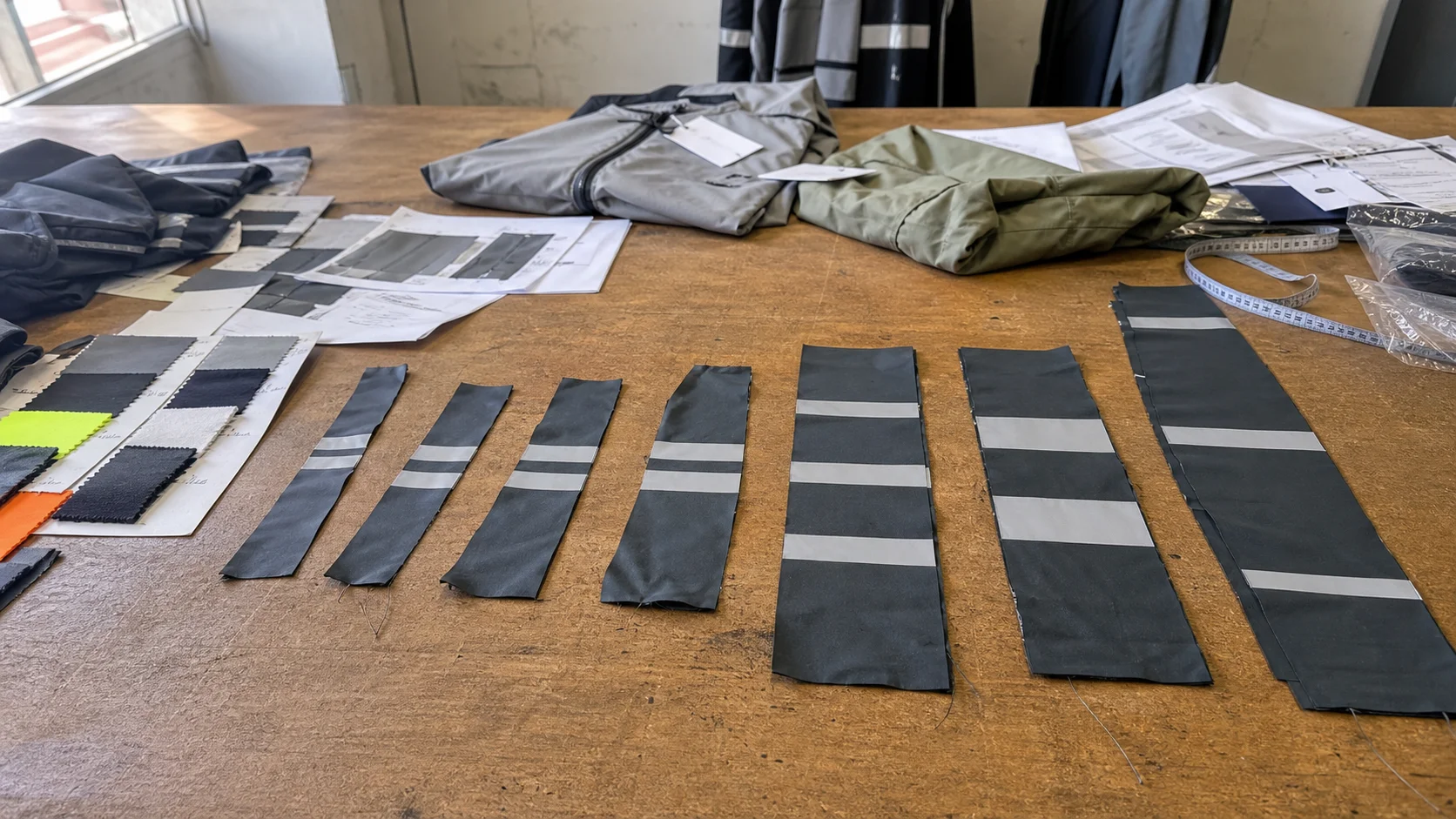
A product-specific outline for food hall operators evaluating wholesale travel coat size grading, fit consistency, staff mobility, layering needs, and...
Travel Coat Size Grading Review for Food Halls - Fabrikn production reference
Wholesale travel coat size grading review for food hall operators is a narrow sourcing topic, but it matters more than many buyers expect. Food halls are not traditional fashion retailers. They sit between hospitality, retail, tourism, event staffing, and branded merchandise. A travel coat ordered for this channel may need to serve several roles at once: staff outerwear, pop-up vendor uniforming, visitor merchandise, seasonal promotional apparel, and sometimes corporate gifting for tenants or partners.
That mixed use creates a size grading problem. A coat that grades well for a boutique rail may not grade well for a food hall team with different body types, layering habits, mobility needs, and laundering expectations. A travel coat that looks clean in size medium can become tight across the shoulders in 2XL, too long in XS, or poorly balanced once insulation, lining, zippers, and pockets are added.
This review looks at practical size grading considerations for wholesale travel coats in the food hall environment. It is written for operators, purchasing teams, merchandisers, hospitality groups, and procurement managers who need to buy outerwear without getting trapped by poor fit, weak samples, or unclear production tolerances.
Size grading is the system used to scale a garment pattern from one base size into smaller and larger sizes. For travel coats, grading affects chest width, shoulder width, sleeve length, body length, armhole depth, sweep, hood size, collar height, pocket placement, and sometimes insulation distribution. The goal is not simply to make each size bigger. The goal is to keep the garment balanced and wearable across the full size range.
Food hall operators usually need practical fit rather than runway fit. Staff may wear a travel coat over a T-shirt in spring, a hoodie in winter, or a vendor apron during a shift. Visitors buying branded merchandise may expect a relaxed, packable coat that works for commuting and travel. A coat that is graded too slim may look polished on a model but fail in daily use.
The risk increases when the order includes extended sizes. Many travel coat patterns are developed around a sample size, often medium or large. If the factory applies a simple linear grade without checking proportions, larger sizes may become wide but not comfortable, while smaller sizes may lose pocket usability or sleeve mobility.
For food hall procurement, the safest travel coat is usually not the trendiest silhouette. It is the coat with a clear measurement chart, realistic layering allowance, stable fabric behavior, and repeatable production tolerances.
Wholesale buyers should review size grading before confirming bulk because corrections after production are expensive. If the coat is intended for staff uniforming, poor grading can create immediate operational complaints. If it is intended for retail merchandise, poor grading can increase exchanges, dead stock, and inconsistent customer reviews.
Food halls have a different outerwear profile from restaurants, hotels, or apparel stores. Operators may buy coats for central staff, security teams, greeters, event crews, cleaning supervisors, delivery coordinators, or branded retail corners. Tenant vendors may also participate in a shared outerwear program if the food hall wants a consistent front-of-house look.
The coat may be worn indoors and outdoors during the same shift. Staff might move between loading zones, curbside pickup areas, patio seating, waste areas, storage rooms, and crowded dining spaces. This means the garment should allow movement without excess bulk. A travel coat needs to feel light enough for transition spaces but protective enough for wind, drizzle, and cooler evenings.
For merchandise, the coat should fit a broad customer base. Tourists and commuters may buy it as a souvenir if it is packable, easy to layer, and not overly logo-heavy. For that reason, many food hall operators choose simple black, navy, olive, charcoal, stone, or branded seasonal colors rather than complex fashion shades.
Each scenario changes the grading decision. Staff uniforming needs predictable fit and repeat replenishment. Merchandise needs a broader size curve and a more retail-friendly silhouette. Promotional coats may prioritize unit cost, but poor grading can still weaken brand perception. The purchasing team should decide the main use before approving the pattern.
Travel coat grading should be reviewed through measurements and wear testing. A flat measurement chart is useful, but it does not show how the coat behaves when someone reaches forward, bends, lifts a box, or wears a hoodie underneath. Food hall operators should request at least one fit sample in the base size and, when budget allows, a size set covering the smallest, middle, and largest ordered sizes.
The chest measurement is one of the most important points in a travel coat. For staff use, a relaxed fit is usually safer than a slim fit. A light woven shell coat may need several inches of garment ease over the body measurement, especially if worn over a sweatshirt. If insulation is added, extra ease may be required because padding reduces internal space.
A typical unisex travel coat for wholesale use may grade 2 inches to 2.5 inches in full chest circumference between alpha sizes, although this depends on the target market and silhouette. A women’s fitted travel coat may use smaller grade increments, while a unisex staff coat may need a wider chest and sweep for layering. Buyers should not accept a grading chart without checking whether the finished garment measurements match the intended wearer profile.
Shoulder width and armhole depth are frequent failure points. If the shoulder grade is too narrow in larger sizes, the coat pulls across the upper back. If the armhole drops too low, the wearer loses mobility when reaching forward. Food hall staff often carry trays, open doors, move signage, or manage outdoor queues, so mobility is not optional.
A raglan sleeve can help with broader fit coverage, but it may look more casual. A set-in sleeve can look sharper, but it requires better pattern control. Buyers should decide whether the coat is primarily uniform outerwear or retail apparel. That decision affects the sleeve construction and the tolerance level needed in inspection.
Sleeve length should be checked in every size range. A common grading mistake is allowing sleeves to become too long in larger sizes or too short in smaller sizes. Adjustable cuffs can reduce fit complaints, especially for unisex coats. Elastic cuffs are lower cost and practical, but they may feel less premium. Hook-and-loop tabs add adjustability but can catch lint and lose strength over time. Snap cuffs look cleaner but offer fewer adjustment points.
Food hall staff may sit, walk, bend, and move through tight service corridors. A travel coat that is too long can bunch at the front when seated. A coat that is too short may expose layers underneath and reduce weather protection. For most food hall applications, mid-hip length is a practical compromise. Longer coats may be useful for security or outdoor host roles, but they can feel restrictive for high-movement teams.
Pocket placement should not drift awkwardly across the size range. On larger sizes, hand pockets may sit too far apart if the pattern is graded without placement control. On smaller sizes, chest pockets can crowd the logo area or interfere with zippers. Food hall coats often need functional pockets for radios, phones, keys, gloves, badges, or small tools. The buyer should review pocket size, pocket opening angle, and reinforcement method before bulk approval.
A wholesale travel coat should have a clear measurement specification before sampling. This is often called a spec sheet, tech pack, or measurement chart. It should list each point of measure, the base size measurement, grade rules for other sizes, and the allowed tolerance in production.
Tolerances should be realistic. Outerwear fabrics, quilting, seam sealing, binding, and lining can affect final measurements. A very tight tolerance may look good on paper but create production disputes. A loose tolerance can allow visible inconsistency between garments. For travel coats, buyers often see tolerances around 0.5 inch for many major points of measure, with tighter expectations on smaller components and slightly wider tolerance on quilted or padded areas. The exact tolerance should be agreed before production starts.
Point of Measure Why It Matters Typical Review Note Chest Width Controls layering comfort and general fit. Check full circumference and ease over intended base layers. Shoulder Width Affects upper-body comfort and appearance. Review especially in XL and above. Sleeve Length Impacts daily wearability and perceived quality. Confirm from center back or shoulder point, depending on style. Body Length Balances weather coverage and mobility. Check sitting comfort and hem position. Sweep Controls fit around hips and lower layers. Important for unisex and extended-size orders. Armhole Depth Influences range of motion. Test reaching forward and overhead movement. Hood Opening Affects weather use and visual balance. Check with drawcords, toggles, or elastic binding.Operators should also confirm whether the size range will be alpha sizing, numeric sizing, or dual sizing. Alpha sizing such as XS to 3XL is common for staff and merchandise programs. Numeric sizing may be appropriate for more tailored coats but can increase SKU complexity. Dual sizing such as S/M and L/XL can reduce inventory risk, though it usually sacrifices fit precision.
Unisex grading simplifies purchasing and inventory. It works well for food hall uniforms when the silhouette is relaxed and adjustable. The tradeoff is that unisex coats may not satisfy every wearer, especially across chest, hip, and sleeve proportions. Gendered grading can improve fit but creates more SKUs and a higher risk of uneven sell-through.
For staff use, a unisex travel coat with good size coverage and adjustable features is often the practical choice. For retail merchandise, the decision depends on brand positioning. If the food hall has a strong apparel program, separate men’s and women’s fits may be worth reviewing. If the coat is a secondary item, unisex sizing usually controls cost and inventory better.
Extended sizing should be planned from the beginning. Adding 3XL or 4XL late in development can create pattern and fabric consumption issues. Larger sizes may require revised pocket scale, zipper length, drawcord length, label placement, and carton packing assumptions. Smaller sizes may require logo downsizing or adjusted placement to avoid overpowering the garment.
Buyers should ask the supplier whether extended sizes are graded from the same base pattern or developed with separate proportional adjustments. A simple grade can work for some casual travel coats, but it is not always enough for padded, lined, or structured outerwear.
Size grading cannot be reviewed separately from fabric and trims. A travel coat made from a crisp woven shell will fit differently from one made with a stretch fabric. A quilted lining reduces internal room. A bonded fabric may feel warmer but less flexible. A packable nylon shell can be convenient for visitors but may show seam puckering and measurement variation more easily.
Water resistance is a common request, but buyers should define the level needed. A basic water-repellent finish may handle light drizzle. A waterproof fabric with taped seams is more technical and more expensive. Food hall operators often do not need mountaineering performance, but they do need realistic protection for outdoor queues, patios, transit, and delivery zones.
Lining changes both comfort and grading. Mesh lining improves breathability but may snag. Taffeta lining slides easily over layers and feels cleaner. Fleece lining adds warmth but can grab sleeves and make the coat feel smaller. Synthetic fill improves warmth but requires enough internal ease and careful quilting control.
For a travel coat intended to pack into a pouch, heavy lining and bulky insulation may work against the product purpose. For staff outerwear in colder climates, warmth may matter more than packability. The right choice depends on the primary use. A food hall with mostly indoor staff should avoid overbuilding the coat. A venue with outdoor host stations may need more protection.
Branding should be placed after reviewing the size set. A logo that looks balanced on size medium may sit too low on XS or too high on 3XL if placement rules are unclear. Embroidery on lightweight shell fabrics can cause puckering unless backing and stitch density are controlled. Heat transfers can work well for smooth branding, but they need wash and adhesion testing.
A disciplined sample process reduces grading risk. Food hall operators do not need to manage every factory detail, but they should insist on a clear approval sequence. Skipping steps may save a few weeks early and cost much more later.
The pre-production sample is especially important. A fit sample made from substitute fabric may not reflect the final coat. Final fabric weight, coating, lining, quilting, zipper stiffness, and trim bulk can all change the feel and measurements. Buyers should treat the pre-production sample as the final checkpoint before production risk becomes serious.
For food hall operators sourcing through a manufacturing partner, it is reasonable to ask for measurement reports with sample submissions. The report should show actual measurements compared with the spec. If measurements are out of tolerance, the supplier should explain whether the sample will be corrected, the spec will be revised, or the tolerance will be adjusted. Silence at this stage is not a good sign.
Teams that need support structuring apparel development can review manufacturing services through Fabrikn’s services page. A clear development process is useful when the coat must balance uniform use, merchandise appeal, and operational deadlines.
Minimum order quantities vary by factory, fabric, trim, color, and customization level. For wholesale travel coats, a simple stock-based program with logo decoration may start around 50 to 100 units per style in some supply chains. A custom cut-and-sew travel coat often starts closer to 300 to 500 units per color, and more technical outerwear may require 800 to 1,000 units or higher if fabric dyeing, custom trims, or special construction are involved.
These are typical planning ranges, not guaranteed terms. MOQ can rise when the order requires custom colors, recycled-certified fabric, waterproof membranes, seam taping, branded zippers, custom lining prints, or extended size sets. MOQ can sometimes be negotiated by using stock fabric, limiting color count, accepting standard trims, or consolidating size ratios.
Lead time depends on the same variables. A stock coat with decoration may be completed in a few weeks if inventory is available and artwork is approved. A custom travel coat may need 8 to 14 weeks after final sample approval, and longer if fabric is dyed, trims are custom-made, or production falls near holiday shutdowns. Shipping method also matters. Air freight is faster but expensive for bulky coats. Ocean freight is cheaper but requires more calendar time.
Food hall operators should work backward from opening dates, seasonal launches, event calendars, and holiday traffic. A rushed outerwear order often leads to compromised samples, limited size review, and expensive freight. If the coat is tied to a grand opening or winter campaign, the development timeline should start months in advance.
Size ratio is a purchasing decision, not just a production detail. A common unisex ratio might lean heavily into M, L, and XL, with fewer XS and 2XL units. Staff uniform programs should be based on actual wearer data whenever possible. Merchandise programs can use sales history from hoodies, T-shirts, or jackets, but coats may fit differently and cost more per unit.
A cautious first order may use broader size coverage with conservative depth in fringe sizes. Reorders can then adjust based on real demand. The tradeoff is that custom outerwear reorders may not be fast, especially if fabric must be re-dyed. If continuity matters, buyers should ask about fabric availability and reorder MOQ before placing the first order.
Travel coats have more inspection points than basic T-shirts or aprons. Food hall buyers should expect a stronger quality-control process because outerwear combines fit, trims, finishing, function, and packaging. A low price is not useful if zippers fail, sleeves measure inconsistently, or water-repellent coating is uneven.
Measurement audits should include multiple sizes. Checking only the base size does not prove the grading is correct. Inspectors should compare finished garment measurements against the approved spec and tolerance. Larger sizes deserve special attention because they use more fabric, show more stress across seams, and often reveal grading shortcuts.
Functional testing should match the product claim. If the coat is sold as water-resistant, the buyer should clarify the test method or at least the expected performance level. If the coat is packable, the sample should be packed and unpacked repeatedly. If the coat is washable, care label claims should be reasonable for the fabric, fill, trims, and decoration.
Food hall environments bring their own wear conditions. Coats may be exposed to cooking odors, light spills, grease transfer from surfaces, repeated storage in lockers, and frequent on-off wear. Very light colors can look good in a presentation but show stains quickly. Matte dark shells may hide wear better, though they can show lint. Shiny shells can feel more retail but may look less uniform in staff use.
Operators should also consider noise and comfort. Some lightweight shell fabrics make a noticeable rustling sound, which may be irritating for front-of-house staff in indoor environments. Stiff coated fabrics can feel protective outdoors but uncomfortable during long shifts. Sampling should include a practical wear review, not just a visual review.
The best travel coat for a food hall is usually a controlled compromise. It should not be so technical that cost and MOQ become hard to manage. It should not be so cheap that the garment fails during the season. It should fit enough people well enough to reduce complaints and simplify distribution.
For staff uniforming, prioritize fit reliability, easy replenishment, dark practical colors, secure pockets, and durable zippers. A relaxed unisex pattern with adjustable cuffs and hem can reduce sizing problems. Branding should be visible but not oversized. If staff will wear the coat daily, spend more attention on mobility, sleeve length, and pocket strength.
For merchandise, prioritize retail presentation, packability, hand feel, logo balance, and size range. A travel coat sold to visitors should feel intentional, not like a generic uniform jacket with a logo added. Fabric choice and finishing matter more here because the customer is comparing it with retail outerwear, not only staff apparel.
For promotional campaigns, prioritize cost control and delivery certainty. A semi-custom or stock-based coat may be the safer choice if the timeline is short. Custom grading reviews still matter, but the buyer may not have enough time for a full size-set correction cycle. In that case, choosing an existing block with proven measurements is often smarter than forcing a new pattern.
Purchasing teams should ask suppliers direct questions before committing: What is the base size? What are the grade rules? Can the supplier provide a full measurement chart? Are extended sizes developed proportionally or separately? What is the tolerance by point of measure? Will the pre-production sample use final fabric and trims? What happens if bulk measurements are outside tolerance?
The answers reveal how seriously the supplier manages outerwear. Vague responses are a risk signal. A strong supplier should be able to discuss fabric behavior, size grading, sample corrections, and production tolerances in practical terms.
Food hall operators comparing development partners can learn more about company background through Fabrikn’s about page or start a sourcing discussion through the contact page. The key is to approach the coat as a product development project, not only a logo decoration order.
A short checklist helps align internal stakeholders before the supplier begins development. This is especially useful when operations, marketing, retail, and finance teams all have input.
This checklist should be converted into a tech pack or supplier brief. A clear brief does not eliminate every production issue, but it reduces misunderstanding. It also gives the buyer a stronger basis for comparing quotes. Two suppliers may quote different prices because they are not quoting the same garment. One may include better trims, tighter inspection, or a more complete sample process. The cheapest quote is only useful if the specification is equal.
Wholesale travel coat size grading for food hall operators is a fit, function, and inventory problem. The coat needs to move well, look consistent, support branding, and cover a broad wearer base. Poor grading can turn a simple outerwear program into a costly complaint cycle.
The strongest buying approach is practical: define the use case, approve the fabric and trim standard, review the base fit, check the size set, confirm tolerances, and inspect bulk production against the approved sample. Food hall teams that treat the coat as operational equipment and retail product at the same time will make better decisions.
For most operators, a relaxed unisex travel coat with durable trims, controlled branding, and a realistic size range will outperform a highly stylized garment. The right coat should not require explanation. Staff should be able to wear it comfortably, visitors should understand its value, and procurement should be able to reorder it without rebuilding the program from scratch.
Get a free quote from Fabrikn — your trusted B2B clothing manufacturer with 10+ years of experience. MOQ as low as 200 pieces.
Get a Free Quote →Travel coat size grading is the process of scaling a coat pattern across sizes while keeping fit, balance, and function consistent. For food hall operators, it matters because staff and customers may need different body coverage, layering room, and mobility than a standard retail buyer.
Many food hall programs use XS to 2XL or XS to 3XL for unisex coats. Staff uniform orders should be based on actual wearer data when available. Merchandise orders should consider customer profile, past apparel sales, and the cost of holding fringe sizes.
A stock coat with logo decoration may start around 50 to 100 units. Semi-custom programs may start around 150 to 300 units. Custom cut-and-sew travel coats often start around 300 to 500 units per color, while technical outerwear can require 800 to 1,000 units or more. Exact MOQ depends on fabric, trims, color, size range, and supplier capacity.
Stock decorated coats may take a few weeks if inventory and artwork are ready. Custom travel coats commonly need 8 to 14 weeks after final sample approval, with extra time for fabric dyeing, trim development, inspection, and shipping. Seasonal peaks and holiday closures can extend the schedule.
Unisex sizing is usually simpler for staff uniforming and mixed-use programs because it reduces SKU complexity. Gendered sizing can improve fit for retail merchandise but increases development, inventory, and replenishment complexity. The right choice depends on whether the coat is primarily operational outerwear or a retail product.
Chest, shoulder width, sleeve length, body length, sweep, armhole depth, and hood opening are key measurements. Pocket placement and logo placement should also be reviewed across sizes because they can shift visually when the pattern is graded.
The buyer should approve a pre-production sample made with final fabric, lining, trims, labels, packaging, and branding. A base fit sample is useful early, but the pre-production sample is the most important reference for bulk production.
Common risks include measurement variance, zipper problems, uneven seams, poor quilting, color shade variation, weak pocket reinforcement, inconsistent logo placement, and packaging damage. Larger sizes and technical details should receive extra inspection attention.
Yes, but the design must balance both needs. Staff coats should prioritize durability, movement, and easy care. Merchandise coats should also consider retail hand feel, packability, and branding appeal. A clean unisex style can work for both if the specification is carefully managed.
Buyers should ask for the base size, full measurement chart, grade rules, production tolerances, fabric details, trim specifications, sample timeline, MOQ, lead time, inspection process, and reorder terms. Clear answers reduce sourcing risk and make quotes easier to compare.