
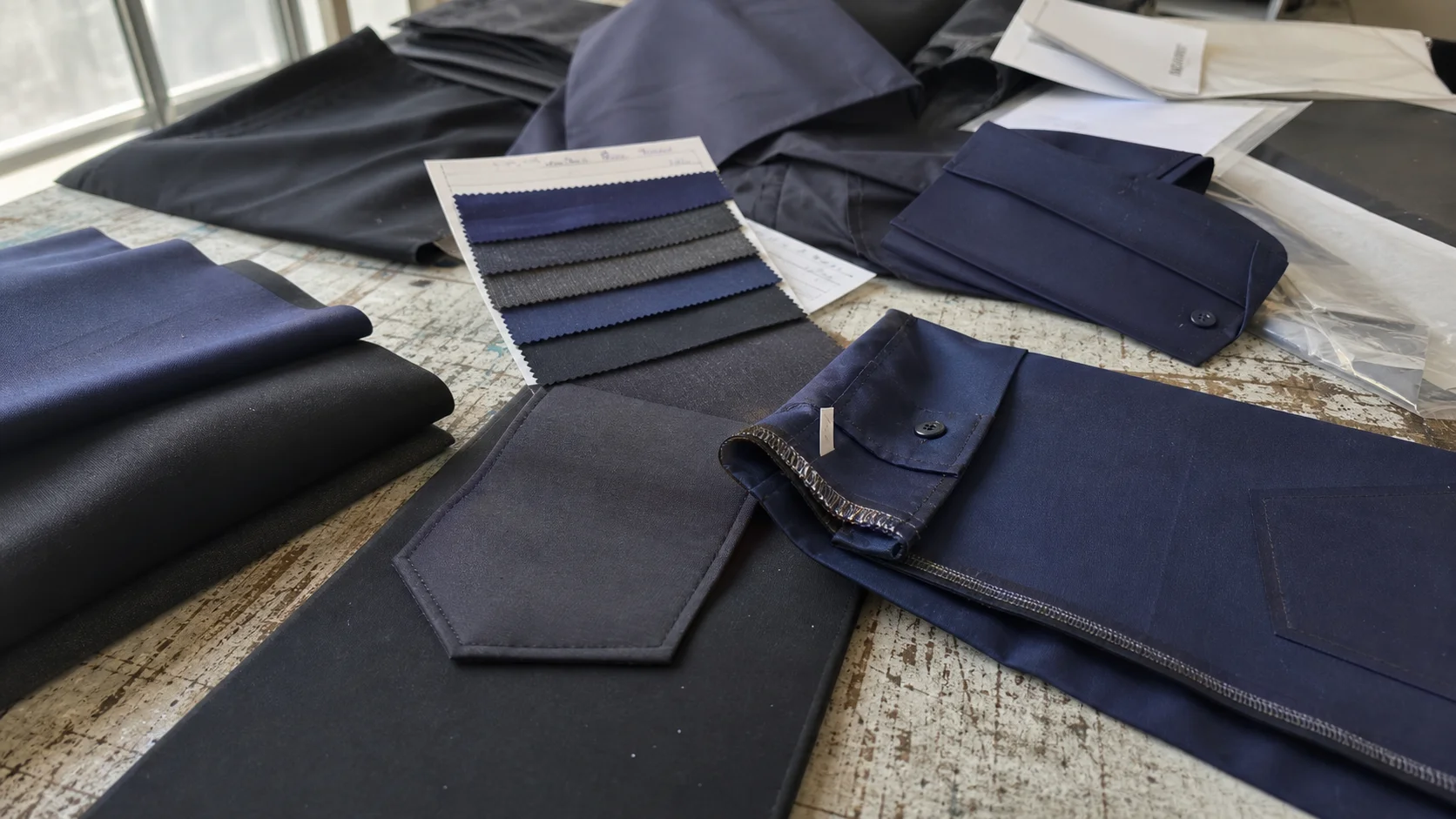
A sourcing-focused outline for security contractors reviewing custom workwear uniform trims, including patches, reflective tape, binding, badges, zippers,...
Uniform Trim Sourcing Review for Security Buyers - MOQ, Cost & Sourcing manufacturing guide
Security contractors often focus first on the visible garment: shirts, trousers, jackets, tactical vests, high-visibility outerwear, caps, and cold-weather layers. That is understandable. Uniforms need to look professional, match brand standards, and hold up across daily patrol, gatehouse, event, retail, industrial, and mobile response work.
The buying risk sits in the smaller components. Zippers, snaps, reflective tapes, badges, hook-and-loop patches, name labels, woven labels, epaulettes, elastic, drawcords, pocket flaps, buttons, ID loops, webbing, piping, and heat-transfer logos can decide whether a security uniform feels durable or cheap. They also affect compliance, replacement frequency, wearer comfort, and the total landed cost.
For a security contractor, trim sourcing is not decoration only. It is operational sourcing. A poor badge attachment can create field complaints. A reflective tape that cracks after washing can create safety and liability concerns. A weak trouser button can turn into a repeat repair problem across hundreds of guards. A zipper with inconsistent sliders can delay delivery during final inspection.
This review is written for buyers sourcing custom workwear uniform trims for security teams, especially when uniforms are produced through an apparel manufacturer rather than bought as blank stock. The aim is practical: understand what trim items matter, what minimum order quantities are realistic, where cost increases appear, how to approve samples, and what inspection risks should be controlled before bulk delivery.
Buyers looking for full-package uniform development can review broader manufacturing capabilities through Fabrikn’s services. For trim sourcing specifically, the strongest outcomes usually come from aligning garment design, trim specification, fabric choice, and production volume before requesting a final quotation.
Security uniforms sit between corporate apparel and workwear. They must look organized and controlled, but they also need practical durability. That combination makes trim selection more demanding than a standard promotional polo or basic office shirt.
Identification trims are the most visible items on a security uniform. They include chest badges, sleeve patches, shoulder patches, woven name labels, embroidered name tapes, printed ID panels, heat-transfer logos, reflective “SECURITY” markings, and removable hook-and-loop insignia.
These trims need brand consistency. Color drift, rough embroidery, weak backing, or uneven placement can make a uniform batch look unprofessional even when the garment construction is acceptable.
Fastening trims are not as visible as patches, but they carry heavy wear. These include zippers, buttons, snaps, hook-and-loop closures, buckles, adjusters, waist tabs, and cord stoppers.
Security staff often wear belts, radios, keys, torches, body cameras, access cards, and sometimes protective equipment. Garments are pulled, stretched, washed often, and worn for long shifts. Fastening trims must be specified for repeated use rather than showroom appearance.
Security contractors working in car parks, warehouses, industrial sites, event venues, logistics yards, or roadside environments often require visibility features. Reflective tape and high-visibility piping are not items to treat casually.
Reflective trim performance depends on tape grade, backing material, stitching method, heat exposure, washing conditions, and garment fabric compatibility. A reflective tape may look acceptable on a sample but fail after repeated laundering if the wrong grade is selected.
Security uniforms are worn for long shifts, so comfort trims matter. Elastic waist inserts, inner waistband tape, neck tape, cuff adjusters, underarm eyelets, mesh linings, drawcords, and soft binding can change wearer acceptance.
These items are easy to under-specify. If the buyer only says “elastic waistband” or “adjustable cuff,” the factory may use a low-cost option that passes visual review but loses recovery after wear and washing.
Packaging and labeling are often treated as final-stage details, but security buyers usually need controlled allocation by site, role, gender, size, and sometimes contract name. Size stickers, barcode labels, carton marks, polybags, hangtags, care labels, and carton packing lists can reduce distribution problems.
A uniform order for one large contractor may need separate packing by region or client account. This should be included early because packing labor, label printing, and carton separation can affect cost and delivery timing.
Minimum order quantity is one of the first cost barriers in custom security uniform trim sourcing. Buyers may want a small uniform run for a pilot contract, but trim suppliers often work with their own batch minimums. The garment manufacturer may accept a lower garment MOQ, while the badge supplier, zipper supplier, or reflective tape supplier requires larger quantities.
For custom workwear, typical garment MOQs can range from 300 to 1,000 pieces per style when fabric and trim are not highly customized. More complex programs with custom dyed fabric, special reflective tape, custom woven patches, or branded hardware may need higher volumes. Trim MOQs can sit above or below the garment MOQ depending on the item.
Trim Type Typical MOQ Range Cost Sensitivity Buyer Note Woven or embroidered patches 300-1,000 pieces per design Medium Small patches are manageable, but multiple designs increase setup cost. PVC badges 500-2,000 pieces per design Medium to high Mold cost and color complexity can push up the opening order. Heat-transfer logos 300-1,000 pieces per artwork Medium Adhesion testing matters more than unit price alone. Reflective tape 500-3,000 meters, depending on grade High Certified or branded tape can require higher minimums and longer lead time. Custom zipper pulls 1,000-5,000 pieces Medium Often not worth customizing unless the program repeats. Branded buttons or snaps 1,000-10,000 pieces Low to medium Economical on recurring programs, inefficient for short runs. Woven main labels 500-3,000 pieces Low Easy to stock for repeat orders if branding remains stable. Barcode or carton labels Flexible, often project-based Low Specification accuracy is more important than MOQ.Buyers should separate garment MOQ from trim MOQ during quotation review. A factory may quote 500 jackets, but the reflective tape supplier may require 2,000 meters. If the jacket uses 1.8 meters per piece, a 500-piece order consumes only 900 meters. The unused balance must be paid for, stored for future orders, substituted with another tape, or negotiated into the supplier’s stock program.
The purchasing decision depends on forecast confidence. If the security contract is long-term and uniform replenishment is expected, buying trim inventory can be reasonable. If the job is a one-off event contract, stock trim or non-branded hardware may be safer.
Low MOQ suppliers can be useful for pilot runs, but they may rely on available stock trims. That can limit color matching, reflective performance, zipper quality, and repeat availability. A buyer may save money on the first order and then face inconsistency on the second order because the same trim is unavailable.
For security uniforms, repeatability is important. A guard team should not receive navy jackets in one batch with bright silver reflective tape and the next batch with dull grey tape. If the uniform program is tied to a client contract, inconsistency can create approval friction.
Purchasing judgment: use low MOQ stock trims for pilots and short-term deployments. Use controlled trim sourcing for recurring security contracts, national rollouts, and uniforms that must remain visually consistent over several replenishment cycles.
Trim cost is rarely only the unit price of a zipper, patch, or tape. The final cost includes setup, sampling, wastage, testing, application labor, quality inspection, and sometimes leftover inventory. A low unit price can still become expensive if it causes rework or field complaints.
Badges, patches, heat transfers, woven labels, and printed logos often require setup. Embroidery needs digitizing. PVC badges may need molds. Woven patches need loom setup. Heat transfers need artwork separation and film preparation.
Setup costs are usually spread across the order. A 300-piece order carries the setup cost heavily. A 3,000-piece order absorbs it more easily. Buyers comparing quotes should ask whether setup is included, charged separately, or waived after a confirmed bulk order.
Security uniforms commonly use black, navy, charcoal, white, yellow, silver reflective, red, royal blue, and high-visibility lime or orange. Brand colors may require Pantone references. Fabric color, thread color, patch background, reflective print, and label artwork should be reviewed together.
Color matching adds risk because different materials absorb dye or print differently. A navy woven patch may not match a navy softshell. A reflective logo may look brighter than expected. Metallic thread can look premium but may reduce durability or create wash issues.
Reflective tape, zipper grade, elastic recovery, snap strength, and hook-and-loop durability vary widely. For security workwear, the cheapest option is often suitable only for light corporate wear.
Upgrading from a basic zipper to a stronger branded or better-grade zipper can increase cost, but it may reduce returns. Choosing a certified reflective tape can raise the trim budget, but it may be necessary if the uniform is used in controlled safety environments.
Some trims are cheap to buy but expensive to apply. Reflective tape requires accurate placement and stitching. Heat transfers need controlled temperature, pressure, and dwell time. Patches require alignment and secure sewing. Hook-and-loop systems add two components and more sewing operations.
When buyers compare quotes, they should look at the finished garment price rather than the trim price alone. A low-cost trim that adds multiple sewing steps may not reduce total cost.
Testing can include wash tests, rub tests, pull tests, peel tests, reflectivity checks, colorfastness review, and metal detection requirements where applicable. Not every order needs formal laboratory testing, but security buyers should at least request practical sample testing for trims that carry functional risk.
Rejections create hidden cost. If a patch color is wrong after bulk production, replacement is expensive. If reflective tape peels after heat application, garments may need rework or scrapping. If snaps pull out, the issue may not appear until after delivery.
A good trim specification prevents loose interpretation. It does not need to be overcomplicated, but it must give the factory enough detail to source consistently and inspect correctly.
Security buyers should prepare a trim sheet for each garment style. The trim sheet can be part of the technical pack or a standalone sourcing document. It should include trim type, material, dimensions, color, placement, supplier preference if any, performance requirement, and approval status.
Specification Field What to Include Why It Matters Trim description Example: 25 mm black hook-and-loop tape Avoids generic substitutions. Material Nylon, polyester, PVC, metal, resin, cotton tape, reflective film Controls durability and wash behavior. Size Width, length, thickness, patch dimensions, zipper length Prevents fit and placement errors. Color reference Pantone, fabric standard, approved lab dip, or physical swatch Reduces shade variation across components. Placement Measurement from seam, pocket, shoulder, hem, or center front Supports consistent appearance across sizes. Performance requirement Wash cycles, peel strength, reflectivity, pull strength, stretch recovery Sets the basis for testing and inspection. Approval sample Physical sample, photo record, supplier reference, date approved Creates a control standard for bulk production.Trim decisions should not be made separately from fabric selection. A heavy metal zipper may be wrong for a lightweight security shirt. A stiff woven patch may pucker on stretch fabric. Heat-transfer logos may not bond well to certain coated rainwear fabrics. Elastic waist panels may shrink differently from the trouser shell fabric.
Key compatibility checks include:
Security contractors often need multiple garment categories in one program: polos, woven shirts, trousers, softshell jackets, hi-vis vests, rain jackets, caps, and sometimes tactical-style items. The same logo trim may not work equally well across every fabric. A woven patch can work on jackets and shirts, while a heat-transfer logo may be better for rainwear. A removable patch may be useful on tactical vests but unnecessary on standard polos.
Placement errors are common when trim instructions are too general. “Logo on left chest” is not enough for a professional production order. The factory needs measurement points and size grading guidance.
For example, a chest patch can be specified as centered above the left pocket, with the lower edge 10 mm above the pocket opening. If the garment has no pocket, the patch may be measured from the shoulder seam and center front. Back reflective wording should be centered horizontally and placed at a fixed distance from the back neck seam or yoke seam.
Large-size grading requires attention. A placement that looks centered on a medium size may look too high or too close to the armhole on larger sizes. Buyers should approve placement on at least one core size and review photos or samples for size extremes when the uniform range includes both small and extended sizes.
Security buyers can source trims in several ways. The best route depends on order size, brand control, technical requirements, and internal purchasing capacity.
Factory-sourced trims are usually the simplest route. The garment manufacturer sources the trims, includes them in the garment quotation, and manages delivery into production.
This route reduces buyer workload and can improve coordination. The factory understands sewing requirements, application process, and production timing. The tradeoff is less direct control over trim supplier selection unless the buyer requests detailed trim references and approvals.
Buyer-nominated trims are useful when a security contractor already has an approved badge supplier, required reflective tape, specific zipper brand, or branded labels used across several manufacturers.
This route gives stronger consistency, but it adds coordination risk. The nominated supplier must deliver on time, in the correct quantity, and in packaging that the garment factory can use. If the buyer supplies trims late, the garment factory may not be responsible for the delay.
A hybrid approach is common for security uniform programs. The factory sources standard trims, while the buyer nominates critical brand or compliance trims. This keeps purchasing efficient while protecting the items that matter most.
For buyers developing a new uniform program, it is often worth discussing the sourcing model early with a manufacturing partner. A quick conversation through Fabrikn’s contact page can help clarify whether the project should use stock trims, custom trims, or a mixed approach based on volume and timeline.
Sample approval is where security uniform trim problems should be found. Bulk production is the wrong time to discover that the sleeve patch is too stiff, the reflective transfer peels, or the zipper pull feels weak.
A practical approval process includes several stages. Not every project needs all stages in full depth, but skipping them increases risk.
The buyer should first review digital artwork, logo size, wording, color references, placement concept, and trim type. This stage is low cost and catches obvious mistakes.
A strike-off is a physical pre-production sample of the trim. For embroidery, it shows stitch density, thread color, edge finish, and backing. For woven patches, it shows detail sharpness and hand feel. For heat transfers, it shows print quality and film thickness. For reflective tape, it shows appearance and backing quality.
Buyers should not approve custom trim based only on a digital mockup. Digital artwork does not show texture, sheen, thickness, edge quality, or actual color behavior under light.
The trim should be applied to an actual garment sample or the correct fabric panel. This step is especially important for heat transfers, reflective tapes, embroidered patches, and pocket closures.
Review the sample for pucker, stiffness, alignment, stitch quality, adhesive marks, edge lifting, and comfort. A patch that looks good loose may look heavy on a thin shirt. A heat transfer that looks smooth on a flat swatch may distort across a pocket seam.
Security uniforms are washed frequently. A basic wash review should be performed before bulk production for any new trim combination. The exact wash standard depends on the buyer’s market and garment claim, but even a simple internal wash test can reveal obvious failures.
The pre-production sample should use bulk-intended fabric, bulk-intended trims, correct labels, correct packaging references where possible, and approved placement. This sample becomes the production standard.
Buyers should keep one approved sample and ensure the factory keeps one matching sample. Photos are useful, but physical approval samples are stronger for trim color, texture, and hand feel.
Trim lead time can control the entire uniform delivery schedule. Garment sewing may be ready, but production cannot start if reflective tape, patches, labels, or zippers are missing.
Typical lead times vary by supplier, season, customization level, and logistics route. As a cautious guide, standard stock trims may take 3-10 days to source after confirmation. Custom woven or embroidered patches may take 7-20 days after artwork approval. PVC badges can take 15-30 days because of mold and curing steps. Reflective tape may take 7-30 days depending on grade and availability. Custom hardware can take 20-45 days or longer.
Trim Item Typical Lead-Time Range Main Dependency Planning Advice Stock buttons and basic zippers 3-10 days Color and size availability Confirm early if using non-standard color. Custom woven labels 7-15 days Artwork approval and loom schedule Approve label artwork before garment sample finalization. Embroidered patches 7-20 days Digitizing, thread matching, stitch density Request strike-off before bulk patch production. PVC patches 15-30 days Mold creation and color approval Use only when volume and brand value justify setup. Reflective tape 7-30 days Grade, certification, supplier stock Lock tape grade before quoting the final garment price. Custom zipper pulls or hardware 20-45 days Mold, plating, finishing, approval Avoid for urgent orders unless already stocked.Many uniform delays are not caused by production alone. They happen because artwork is not approved, badge wording changes, legal or client approval is pending, or the buyer has not confirmed whether a trim should be reflective, embroidered, or removable.
Security contractors may also need end-client approval. A uniform for a shopping center, public venue, logistics operator, or industrial site may require logo placement review by the client. That approval should happen before bulk trim is ordered.
Security uniforms are often tied to contract start dates. New site launch, seasonal event, tender award, or contract renewal can compress the schedule. Trim sourcing should begin as soon as the uniform design direction is confirmed, not after the purchase order is fully finalized.
If the order includes multiple garment types, prioritize trims shared across styles. Woven labels, patches, reflective tape, and zipper standards can be approved once and used across several items. This reduces duplicate sampling and supports consistency.
Inspection should not only count garments and check stitching. Trim inspection is essential for security uniforms because many issues are visible, functional, or safety-related.
Badges and logos should be inspected for spelling, color, placement, alignment, size, edge quality, and secure attachment. Back wording such as “SECURITY” must be centered and consistent across all sizes.
Common defects include tilted patches, wrong sleeve side, inconsistent thread color, loose embroidery threads, heat-transfer bubbling, and patch edges lifting after pressing. For removable patches, the hook-and-loop base must align cleanly with the removable insignia.
Reflective trim should be checked under direct light and normal light. Inspectors should review continuity, placement, stitching, edge condition, and surface damage. Reflective tape should not be scratched, contaminated with oil, distorted by pressing, or sewn with skipped stitches.
If compliance is required, the buyer should define the test standard and documentation requirement before production. A factory visual check is not a substitute for specified certification where safety claims are being made.
Zippers should run smoothly without catching. Sliders should be correct and consistent. Top stops and bottom stops should be secure. Buttons should be firmly attached with correct thread tension. Snaps should be tested for open-close function and pull-out risk.
For trousers, waistband trims deserve extra attention. Security staff often attach belts and equipment, so the waistband button, hook, bar tack, belt loops, and pocket fastenings face more stress than casual wear.
Wrong size labels create operational problems. A shirt labeled large but cut as medium can disrupt uniform distribution. Carton packing errors can slow a contractor’s launch because warehouse staff must sort goods manually.
Inspection should verify care label content, size label accuracy, country-of-origin marking where required, barcode accuracy if used, polybag labeling, carton count, and contract-specific packing instructions.
Inspection Area Common Risk Control Method Patch placement Uneven or incorrect position Use measurement points and approved sample. Reflective tape Peeling, cracking, dull appearance Check tape grade, application method, and wash result. Zippers Catching, weak slider, wrong length Perform functional checks during inline and final inspection. Snaps and buttons Pull-out or loose attachment Use pull checks and review reinforcement. Labels Wrong size or care content Compare against tech pack and packing list. Packaging Mixed sizes or wrong site allocation Inspect carton marks and ratio packing before shipment.Not every trim needs premium sourcing. A disciplined buyer spends where failure is costly and saves where the trim has low performance risk.
Security contractors should usually protect budget for reflective trim, zippers, patches, trouser waistband components, and any branding visible to the public. These items affect safety, professional appearance, and daily wear.
A slightly better zipper on a jacket can be worth the cost because zipper failure is obvious and frustrating. Stronger patch attachment is worth it because loose badges look poor. Certified reflective material may be necessary where the uniform is used in active traffic, industrial, or low-light environments.
Plain care labels, standard polybags, non-branded internal binding, basic drawcord tips, and common buttons can often use reliable stock options. There is little value in custom-branded hardware for a small or urgent uniform order unless the brand standard requires it.
Custom zipper pulls, molded logo snaps, and highly specialized badges can look premium, but they raise MOQ and increase replacement complexity. For many security buyers, clean standard trims with strong application quality produce a better commercial outcome.
A security contractor sourcing multiple garments should standardize trims where possible. Use the same woven label across shirts and jackets. Use one approved reflective tape grade across hi-vis garments where suitable. Use consistent patch dimensions across jacket, vest, and shirt if placement allows.
This reduces MOQ pressure and simplifies replenishment. It also improves visual consistency across the team.
Uniform programs rarely end with the first shipment. New employees, damaged garments, seasonal weather, and contract expansion create replenishment demand. Trim sourcing should support reorders without forcing a full redesign.
Buyers should ask whether approved trims can be held as standards, whether leftover custom trims can be stored, and whether reorder pricing changes at smaller quantities. If a supplier cannot repeat the same trim reliably, the first order may be cheaper but the program may become harder to manage.
For buyers reviewing manufacturing partners, company background and sourcing approach can be considered alongside price. A general overview is available on Fabrikn’s about page, while project-specific questions should be handled with the actual garment type, trim list, quantity, and delivery deadline in hand.
A practical trim sourcing workflow keeps the project controlled without adding unnecessary bureaucracy. The following sequence works well for most custom security workwear programs.
This process helps buyers avoid late-stage surprises. It also gives the manufacturer a clearer basis for sourcing, costing, and scheduling.
Different security uniform projects need different trim strategies. A one-size approach often creates waste.
For pilot orders, keep trims simple. Use stock zippers, standard labels, and low-MOQ patches where possible. Avoid custom hardware and high-MOQ trim unless the pilot must exactly match a future rollout.
The goal is to test fit, appearance, wearer feedback, and client acceptance. Premium trim decisions can be finalized after the pilot if volume is confirmed.
A new contract launch needs better planning. The uniform must arrive on time and look consistent. Buyers should approve critical trims early and avoid last-minute artwork changes.
Reflective markings, badges, and site-specific labels should be locked before bulk production. If the contract has a fixed start date, simplify trims rather than chasing custom features that might delay delivery.
For recurring programs, trim standardization pays off. Custom labels, controlled badge standards, approved reflective tape, and higher-grade zippers can be justified because they support repeat consistency and lower complaint rates.
MOQ is less of a problem when reorders are expected. The buyer can hold trim inventory or allow the manufacturer to plan repeat sourcing against a forecast.
Custom workwear uniform trim sourcing for security contractors should be reviewed as a cost, MOQ, and risk-control issue rather than a styling detail. The strongest buying decisions come from knowing which trims carry operational risk and which can remain standard.
For most security buyers, the priority order is clear: protect branding accuracy, reflective performance, fastening durability, labeling accuracy, and reorder consistency. Save money on trims that do not affect function, public presentation, or distribution control.
A good quotation should show more than a garment price. It should make clear what trim quality is assumed, what MOQs apply, what samples will be approved, what lead-time dependencies exist, and what inspection checks will be used before shipment. If those points are vague, the buyer is not yet comparing real production offers.
Direct purchasing judgment: a slightly higher uniform price with controlled trim standards is often cheaper than a low initial quote that creates patch rework, reflective failure, zipper complaints, or inconsistent reorders.
Get a free quote from Fabrikn — your trusted B2B clothing manufacturer with 10+ years of experience. MOQ as low as 200 pieces.
Get a Free Quote →Typical MOQs vary by trim type. Woven or embroidered patches often start around 300-1,000 pieces per design. Reflective tape may require 500-3,000 meters depending on grade. Custom hardware can require 1,000-10,000 pieces. Garment MOQ and trim MOQ should be reviewed separately because they are not always aligned.
Prioritize reflective tape, zippers, badges, patches, waistband components, snaps, buttons, and any visible branding. These trims affect safety, appearance, wearer satisfaction, and field durability. Lower-risk trims such as plain care labels, standard polybags, and internal binding can often use reliable stock options.
They can be worthwhile for large recurring programs, but they are often inefficient for small or urgent orders. Custom hardware increases MOQ, sampling time, and replacement complexity. Standard good-quality hardware is usually the better choice for pilot orders or short-term security contracts.
Reflective tape should be selected based on use environment, visibility requirement, wash expectation, and compliance needs. Buyers should confirm whether sew-on tape, heat-transfer film, segmented tape, or reflective print is suitable. If safety compliance is claimed, define the required standard and documentation before bulk production.
A practical process includes digital artwork review, physical trim strike-off, garment sample with applied trim, wash or application review, and final pre-production sample approval. Custom trims should not be approved based only on digital mockups.
Common delays include late artwork approval, patch wording changes, reflective tape availability, custom mold production, supplier MOQ negotiation, end-client approval, and late delivery of buyer-nominated trims. Approval timing often delays projects more than sewing capacity.
Sometimes, but not always. A woven patch may work well on shirts and jackets but feel too stiff on lightweight polos. A heat-transfer logo may work for rainwear but not for textured fleece. Each trim should be checked against the garment fabric, placement, and wash process.
Standardize trims across styles, use stock trims for low-risk components, avoid custom hardware on small orders, approve shared labels across garments, and forecast reorders where possible. Do not cut cost first from reflective trims, main zippers, visible patches, or high-stress fastening points.
Final inspection should check patch placement, logo spelling, reflective trim condition, zipper function, snap and button strength, label accuracy, barcode or carton labels, size sorting, and packing by site or role. Trim inspection should be included in the inspection checklist, not treated as a visual afterthought.
Factory-sourced trim is simpler and usually better for standard components. Buyer-nominated trim is stronger for controlled branding, compliance-sensitive reflective tape, licensed badges, or serialized items. A hybrid model is often the best option for security uniform programs.