
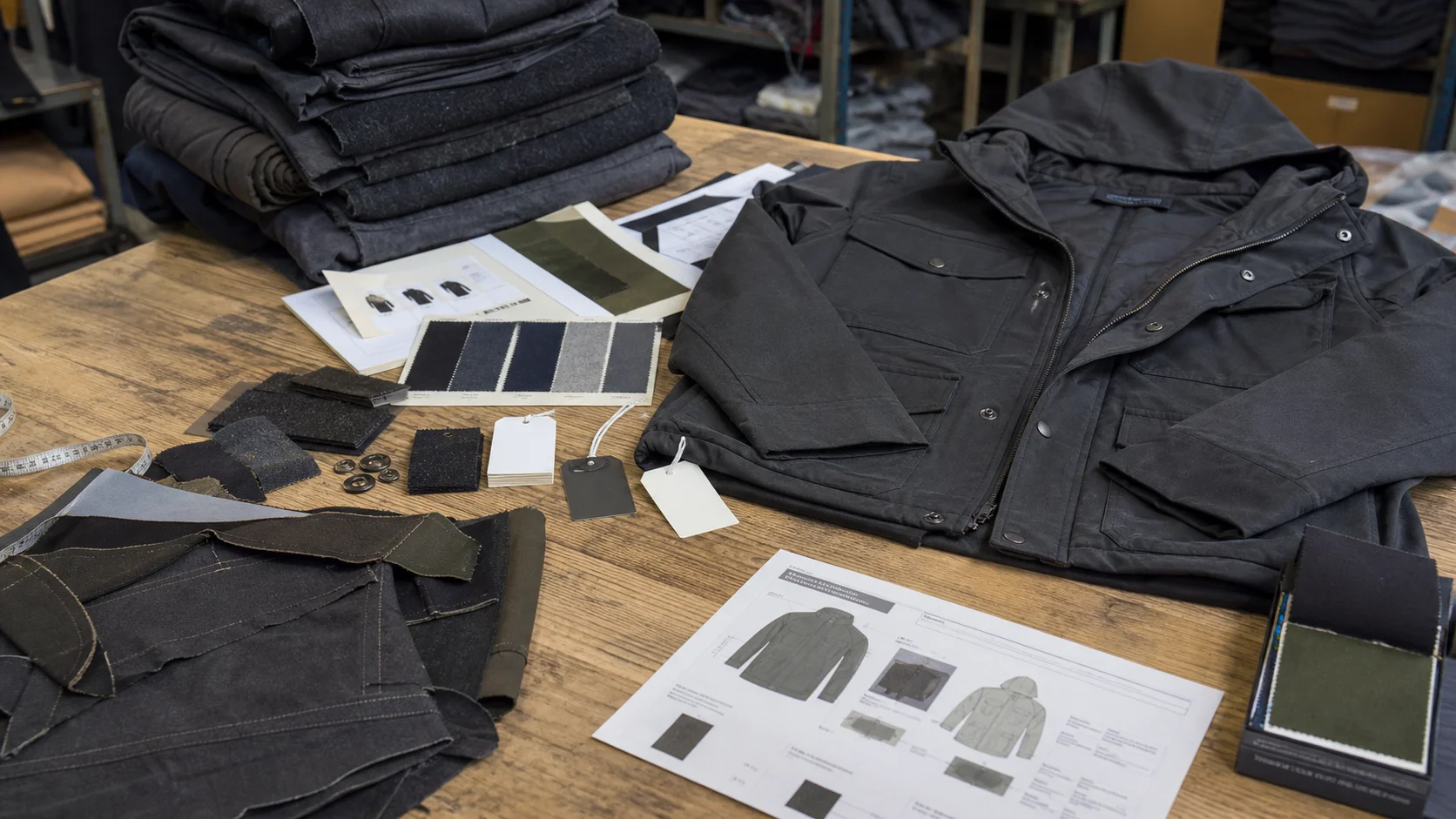
A practical shrinkage control framework for fitness club buyers sourcing warehouse coats, covering fabric selection, wash testing, pattern allowances, and...
Fitness club buyers often focus on warmth, fit, and branding when sourcing warehouse coats, yet shrinkage control is where many programs get expensive. A coat that fits correctly on the sales floor can become a return risk after the first wash if the fabric, construction, or finishing stage is not controlled from the start. For club buyers placing repeat orders, a shrinkage plan is not a technical extra. It is part of the buying spec.
This article covers a practical shrinkage control plan for warehouse coat programs made for fitness clubs, with attention to the realities of apparel sourcing: fabric choice, trim behavior, sample approval, lab testing, production tolerances, and inspection risks. It is written for buyers who need predictable results, not theoretical textile advice.
Warehouse Coat Shrinkage Control Plan for Club Buyers - Outerwear & Jackets manufacturing guide
Warehouse coats for fitness clubs sit in a difficult product category. They need to look clean and branded enough for staff use, but they also need to survive repeated laundering, storage, and daily wear. Shrinkage affects all of that. A coat that shortens in body length, tightens through the chest, or pulls at the sleeves will lose its professional appearance quickly.
For club buyers, the impact is not limited to comfort. Shrinkage can distort logo placement, reduce pocket usability, expose lining issues, and create size inconsistency across a multi-location order. If the same size varies after washing, staff uniforms stop looking coordinated. That weakens brand presentation and forces replacement buying sooner than planned.
The shrinkage discussion should start before bulk fabric is approved. Waiting until post-production inspection means the issue is already expensive. The better approach is to define acceptable shrinkage limits, test them on the intended fabric, and confirm the finishing process is stable enough for repeated washes.
Shrinkage control is not just a fabric question. It is a combined decision about fiber content, yarn behavior, garment construction, washing method, and how much dimensional change the buyer can tolerate in real use.
A buyer-facing shrinkage plan should define the product at four levels: fabric, garment construction, testing method, and approval standard. If any one of these is vague, the factory can meet the written spec while still delivering a coat that performs poorly after laundering.
Fiber content drives basic shrinkage behavior. Cotton-rich coatings usually shrink more than synthetics. Polyester shells are more stable, while brushed or fleece-backed fabrics can change more after washing because of pile movement and mechanical agitation. If the coat uses bonded layers, the lamination adhesive and substrate stability matter as much as the face fabric.
For club buyers, common fabric choices include polyester twill, polyester-cotton blends, softshell constructions, and quilted shells with synthetic fill. Each has different shrinkage behavior. A polyester-cotton twill may feel more natural and easier to wear, but it usually needs tighter washing control than a 100% polyester shell. A softshell may hold shape better, but seam behavior and membrane stability need confirmation.
The pattern should include shrinkage allowance where needed, based on test results rather than guesswork. A factory that cuts to a generic body measurement without verifying post-wash change is taking a shortcut. Buyers should ask how the pattern was adjusted after wash testing and whether sleeve length, body length, and chest circumference were rechecked against tolerance after the garment was washed and dried according to the intended care method.
Not all shrinkage testing is equal. A coat that holds dimension in a gentle wash can still fail in a warm industrial wash or tumble-dry environment. Club buyers should define the intended care route early: home laundering, commercial laundry, or mixed use. If staff uniforms will go through commercial cleaning, the test method must match that use case. Otherwise, the approval is not meaningful.
The acceptance threshold should be written into the purchase agreement. Many outerwear programs work with a tighter tolerance on critical measurements such as body length and sleeve length, and a slightly wider tolerance on less visible measures. The point is not to chase zero shrinkage, which is unrealistic in many constructions. The point is to keep the change within a range that does not hurt fit or appearance.
Control Point What Buyers Should Ask For Typical Risk if Ignored Fiber content Exact composition, yarn type, and any finishing treatments Unexpected shrinkage or distortion after wash Construction Seam type, interlining, lining, bonded layers, and trim behavior Seam puckering, panel twist, and poor drape Testing method Agreed wash cycle, drying method, and measurement standard Approval based on the wrong care scenario Tolerance Written allowable shrinkage by key measurement Arguments after production and inconsistent rejection decisionsA shrinkage control plan is easier to execute when the product is designed with stability in mind. That does not mean every warehouse coat needs premium technical fabric. It means the buyer should understand which material and construction choices create avoidable risk.
Polyester is generally more dimensionally stable than cotton-rich fabric. For fitness clubs that need a uniform look over many wash cycles, polyester shell fabrics often reduce reordering headaches. The tradeoff is hand feel. Some polyester fabrics can look too synthetic if the surface texture and finishing are poor. Buyers should ask for swatches and washed samples, not just unwashed hand samples.
Polyester-cotton blends offer comfort and a more natural appearance, but shrinkage control becomes more sensitive to finishing quality. A blend can look acceptable in the first sample and still change shape after wash if the pre-shrink process is weak or inconsistent. If a club buyer wants a blend, the spec should ask for pre-shrunk fabric documentation and post-wash measurement results on the actual garment, not only fabric swatches.
Many buyers focus on the shell and overlook the lining. That is a mistake. If the shell is stable but the lining shrinks, the garment may pucker, pull at the hem, or feel tight after washing. Interlinings, fusible components, and pocketing fabric should be tested as part of the full garment. Trims such as elastic tape, rib cuffs, and drawcords can also change after washing, which affects the final fit.
Heavy seams can distort after laundering if stitch density, seam allowance, or thread tension is inconsistent. Outerwear with topstitching, quilting, or panel construction needs balanced stitch settings. Buyers should not assume shrinkage is only about fabric composition. A poorly balanced seam can pull the garment out of shape even when the fabric itself performs well.
Water-repellent finishes, coatings, printed logos, and bonded details can react differently to heat and detergent. Some finishes hold well in a lab wash but degrade under repeated real-world laundering. If the coat includes performance finishes, the buyer should confirm whether the finish is part of the shrinkage control discussion or a separate durability target.
If a supplier needs to present a technical package or a production method statement, buyers can usually ask for it through a structured sourcing process such as the services page. When the program also needs factory capability review or product development support, an overview of the supplier’s background on the about page can help establish whether the team handles these checks routinely.
Sample approval is where shrinkage control should be proven, not promised. For club buyers, the sample path should be documented clearly so there is no confusion between a styling sample and a production-ready approved sample.
The first sample should confirm the design direction, but it should not be treated as final shrinkage evidence unless it has already been washed and measured. Buyers sometimes approve a visual sample because the fit looks right on the hanger. That approach is weak. The fabric may behave very differently after the first wash.
A proper approval step uses at least one wash-tested sample, and in many cases a size set across key sizes. This helps reveal whether shrinkage changes scale differently across the grading range. A small size can tolerate less dimensional loss than a large one in visible terms, so buyers should check whether grading stays balanced after wash.
The factory should provide a before-and-after measurement report using the agreed wash method. The report should cover the garment points that matter most for outerwear: chest, body length, sleeve length, shoulder width, cuff opening, and hem opening if relevant. Buyers should review the numbers, not only the verbal explanation.
Numerical tolerance alone is not enough. The garment should still look good on body after washing. A coat may pass measurement limits but still feel twisted, stiff, or distorted because of poor construction balance. If possible, the fit review should be done on the same garment after the wash cycle so the appearance and measurement data match the real condition.
The approved sample should match the planned production fabric, trim, and wash route. A sample made from a different batch, different finishing process, or different trim supplier can give a false sense of control. Buyers should confirm that the approved sample is representative of the bulk order before the PO moves into production.
A sample that looks good before wash but has no wash record should not be treated as an approved reference for bulk production.
Once production starts, the plan should shift from approval to discipline. Shrinkage control in bulk is mostly about consistency: consistent fabric lots, consistent cutting, consistent finishing, and consistent wash verification.
Fabric lot variation can change shrinkage behavior. Buyers should ask whether the bulk production will use the same lot as the approved sample or whether lot-to-lot variation will be checked. If multiple lots are unavoidable, the factory should test each lot or at least set a documented approval standard for incoming inspection.
Some fabrics are pre-shrunk, compacted, or relaxed before cutting. That is useful, but buyers should still ask what process was used and whether it is repeatable. A vague “pre-shrunk fabric” claim is not enough. The process should be traceable because the quality of that step directly affects final size stability.
If fabric is cut too quickly after delivery without adequate relaxation, dimension changes can appear later. For woven outerwear fabrics, relaxing the fabric before cutting helps reduce hidden tension. This matters more when coats are panel-heavy or use large body pieces, where small shifts show up as fit problems after washing.
Production teams should monitor thread tension, stitch density, and needle selection. Tight stitching can cause seam pucker after washing, while loose stitching can lead to weak seams and distortion. Buyers often focus on fabric claims and forget that a stable fabric can still produce an unstable garment if the sewing room is not controlled.
For higher-risk fabrics or urgent repeat orders, some programs benefit from in-line dimensional checks on pilot pieces from the bulk line. That is not always necessary, but it is a useful protection when the coat has complex layering, bonded components, or a tighter size tolerance for a club uniform program.
Packing too early can create shape issues that look like shrinkage when the problem is actually residual moisture or heat retention. Garments should be fully cooled and conditioned before packing. This is especially important for coats with padding, quilting, or coated surfaces that retain heat longer than standard woven garments.
When the buyer needs direct sourcing coordination, line review, or sampling management, the supplier’s contact process should be clear and easy to use. A standard route like the contact page is useful when timelines are tight and approvals need to move fast.
Inspection is where shrinkage issues often surface too late. A strong inspection plan reduces the chance of receiving a shipment that looks acceptable in cartons but fails after first use.
A coat can pass visual inspection and still fail measurement after laundering. Buyers should add washed measurement verification to the quality plan for any program where staff uniforms will be laundered repeatedly. If full washing during inspection is impractical, at least confirm that pre-production testing has already established stable performance with the approved fabric and construction.
One side can shrink or distort more than the other if the sewing or pressing process is uneven. This may not be obvious on a hanger. Inspection should include symmetry checks on sleeve length, pocket placement, collar alignment, and hem straightness after wash testing or simulated laundering.
Elastic cuffs, drawcords, snaps, zippers, and Velcro all affect final performance. If a trim shrinks, shrivels, or loses recovery, the garment can feel smaller even when the shell fabric is stable. Buyers should ask whether trims were tested under the same wash method as the garment body.
Club logos are often the visible reason the program exists. A logo that shifts position because the garment shrinks unevenly weakens the branded presentation. Embroidery, heat transfer, and print all react differently to laundering. Buyers should check whether logo tolerance was included in the measurement plan.
Inspection Item What to Verify Common Failure Mode Body length Post-wash measurement against approved spec Coat looks short or uneven at hem Sleeve length Both sleeves measured after wash One sleeve appears tighter or shorter Chest width Allowable shrinkage and fit on body Reduced mobility and poor layering space Trims Elastic, zippers, snaps, tapes, and labels Distortion or poor recovery after launderingClub buyers often want controlled shrinkage and fast delivery at a low MOQ. Those goals can conflict. A tight shrinkage spec may require extra testing, more careful fabric sourcing, and longer production lead time. That is normal. The mistake is expecting all three: low MOQ, short lead time, and aggressive dimensional stability, without paying for the controls that make the result possible.
Typical MOQ ranges for custom warehouse coats vary widely by factory and construction. A simpler outerwear program may start around 300 to 500 pieces per color or style, while more technical or customized coats can require 800 to 1,000 pieces or more. Buyers should treat those numbers as rough sourcing ranges, not guarantees. Fabric availability, print or embroidery complexity, and lining requirements can push the MOQ higher.
Lead time usually depends on fabric procurement, lab testing, sample approval, and production queue. A basic program with stable fabric may move faster than a coat that needs custom-dyed material, bonded layers, or special trims. A buyer who changes the spec late in the process should expect delay. Shrinkage control is one of the first areas affected by late changes because every adjustment may require retesting.
Cost tradeoffs are straightforward. Better pre-shrink control, tighter testing, and more consistent fabric add cost. That cost is usually cheaper than returns, replacements, and brand damage after delivery. For club buyers, the correct question is not “Can the supplier make it cheaper?” It is “What is the cost of instability over a full season of use?”
A practical shrinkage control plan can be kept simple if the buyer asks the right questions before PO placement. The checklist below works as a sourcing gate, not a technical spec replacement.
When a supplier can support this level of control, the buying process is easier to manage. A capable outerwear partner should be able to explain the service flow, the sampling path, and the production checks in a way that aligns with club uniform buying. For buyers comparing supplier structure, the best starting point is usually a clear service outline such as services, followed by a quick capability review and direct contact if the program needs clarification.
Specification wording matters. Vague language invites interpretation. Clear language forces alignment.
Useful wording for a warehouse coat program might include the following principles:
That language does not need to be complicated. It needs to be specific enough that the factory cannot substitute a different assumption later.
If the budget is limited, buyers should prioritize shrinkage stability in the body fabric, sleeve length, and collar or neckline behavior. Those are the dimensions most visible to end users. Pocket distortion and hem twist are the next tier because they affect daily utility and perceived quality. Decorative details matter, but they should never come before the structure that determines fit.
For fitness clubs, the best warehouse coat program is usually the one that balances durability, easy care, and predictable sizing. A coat that survives laundering but feels too heavy may not be practical. A coat that looks sharp but shrinks unpredictably will cost more over time. The right choice sits between those extremes.
Get a free quote from Fabrikn — your trusted B2B clothing manufacturer with 10+ years of experience. MOQ as low as 200 pieces.
Get a Free Quote →There is no universal number that fits every program. Many buyers aim for low single-digit shrinkage on critical dimensions, but the actual tolerance should match the fabric, construction, and wash method. A commercial-laundry garment needs tighter definition than a lightly used staff coat.
Both stages matter, but final approval should be based on the washed sample if shrinkage risk is part of the program. A visual sample can confirm style and fit direction, while a wash-tested sample confirms stability.
No. Pre-shrunk fabric helps, but it does not remove the need for garment-level testing. Sewing, pressing, lining, trim selection, and finish can all affect the final result.
Polyester-dominant shells are usually the safest starting point. Blends can work well if they are properly pretreated and tested. Cotton-rich fabrics generally need more caution and tighter wash control.
It depends on the product, but buyers should expect extra time for lab testing, sample revisions, and approval if the coat includes blends, bonded layers, or customized trims. Shortening that window usually increases risk.
Start with the supplier’s service scope, sample process, and ability to manage measurement control. A direct capability review through the about page and a clear enquiry route through contact are practical first steps when the program needs more than a standard catalog quote.
Warehouse coat shrinkage control is a sourcing discipline, not a post-shipment correction. Club buyers who define the fabric, testing method, sample approval path, and inspection criteria early are far more likely to receive outerwear that keeps its fit and presentation through repeated use.