
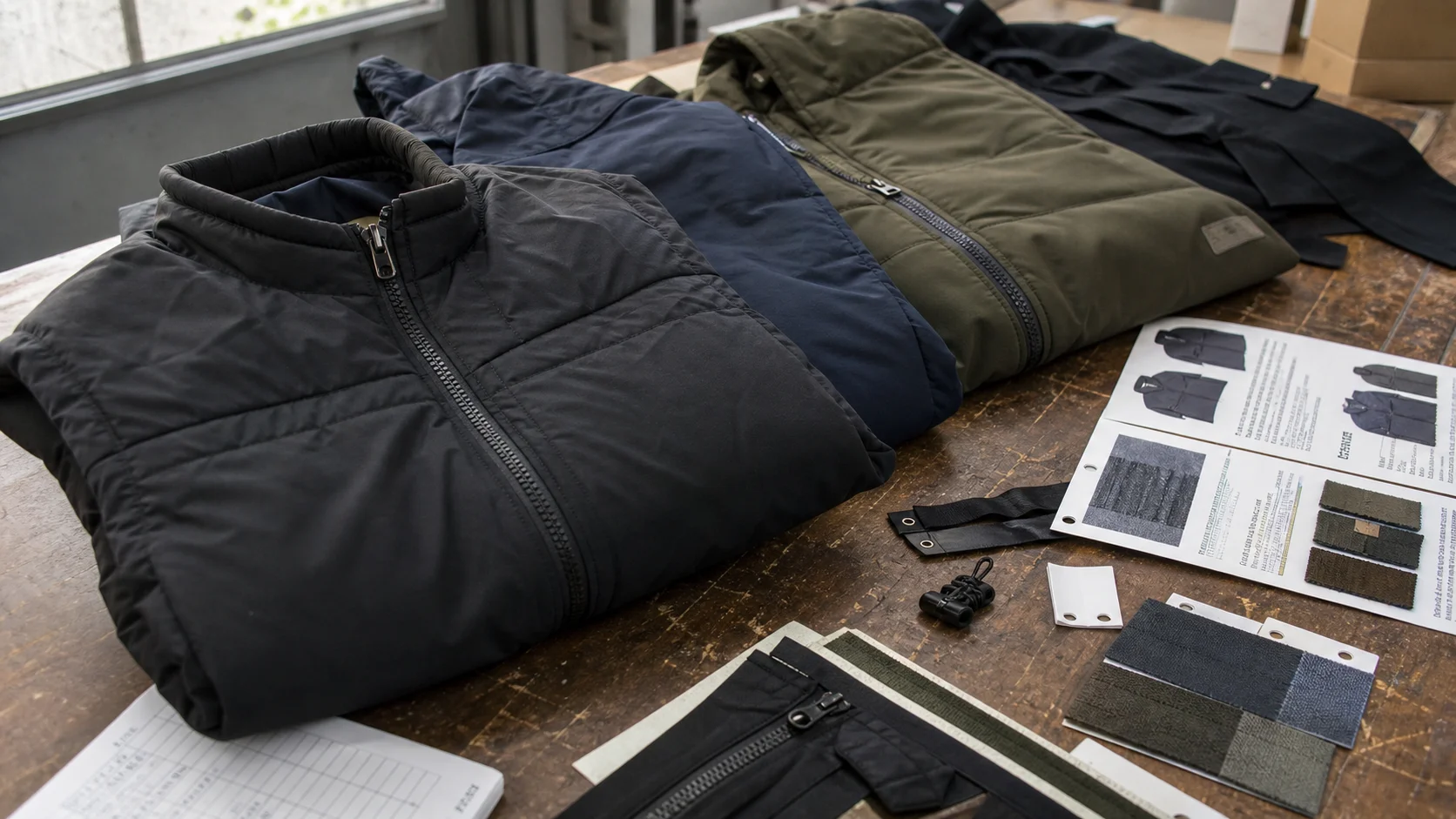
A practical SEO outline for restaurant groups sourcing warehouse coats, focused on shrinkage control, sizing stability, fabric testing, laundering...
Restaurant groups buying warehouse coats need more than a product line and a price list. Shrinkage control starts before the first bulk order is placed and continues through fabric selection, cutting, washing, packing, warehousing, and store-level issue. In outerwear, even a small percent of dimensional loss can distort fit, create uneven replenishment, and push replacement costs higher across multiple locations.
This guide sets out a practical warehouse coat supplier shrinkage control plan for restaurant groups. It is written for sourcing teams, operations managers, and procurement buyers who need dependable garment performance across repeated use, cleaning cycles, and seasonal stock rotation. The focus is on what can be specified, measured, approved, and checked in real purchasing terms.
Warehouse Coat Shrinkage Control Plan for Restaurants - Fabrikn production reference
Warehouse coats used by restaurant teams usually fall between back-of-house utility wear and branded workwear. They may be worn in prep rooms, dry storage, receiving areas, commissaries, and cooler zones. In these environments, the garment is not simply decorative. It must hold size, allow movement, and remain presentable after repeated laundering or industrial cleaning.
Shrinkage affects more than comfort. It changes sleeve length, body length, shoulder balance, and chest ease. A coat that shrinks too much can become tight across layered uniforms. A longer coat that shortens after wash may no longer provide the coverage the group intended. Across a chain, inconsistent shrinkage creates uneven fit between locations and complicates size reorders.
For restaurant groups, the commercial risk is easy to understand. A small defect rate may be tolerable in fashion retail. In workwear supply, it quickly becomes a service issue. Stores can end up holding the wrong size mix, while procurement faces claims, rush reorders, and avoidable write-offs.
Shrinkage control is not a finishing detail. It is part of the garment’s commercial specification, especially when the coats will be washed often and distributed across multiple sites.
The shrinkage plan should begin with use-case clarity. A warehouse coat for a restaurant group can mean different things depending on role, climate, and cleaning process. Some teams need lightweight coats for hot kitchens and receiving areas. Others need heavier coats for cold storage or outdoor deliveries. The wash method may be domestic, industrial, or tunnel laundry. Each one changes shrink risk.
Before issuing a spec, procurement should confirm these variables:
This matters because shrinkage tolerance is not the same across all use cases. A coat worn occasionally in dry storage can tolerate a little more dimensional movement than a standard issue coat washed two or three times a week. If the washing process is aggressive, the garment needs conservative shrink allowances from the start.
Fabric choice is the main lever in shrink control. Cotton-rich fabrics generally feel good and are breathable, but they can shrink more unless properly pretreated. Polyester-rich blends usually offer better dimensional stability and faster drying, which is useful for restaurant groups managing frequent turnover.
Common fabric directions for warehouse coats include:
Trim selection can also affect shrink performance. Tapes, interlinings, cuffs, and pocket bags should be matched to the main fabric in heat tolerance and wash behavior. A stable shell fabric paired with poor-quality trim can still produce twisting, puckering, or seam distortion after laundering.
Restaurant buyers should also check whether the coat includes:
There is always a tradeoff. A lower-cost fabric may win on price but lose on dimensional control. A premium blend may reduce shrink complaints and replacement cycles, but the unit cost can be higher. For restaurant groups, the right answer is usually the fabric that gives predictable performance across the full wash life, not the cheapest cloth per meter.
A proper spec sheet is the supplier’s working document and the buyer’s control tool. If the garment is intended for restaurant warehouse use, the spec should do more than list dimensions. It should set shrinkage tolerance, wash method, measurement points, and acceptance criteria.
Useful spec elements include:
Spec Area What to Define Why It Matters Fabric composition Fiber blend, yarn count, weave, finish Sets the base shrink behavior Wash test method Domestic or industrial wash temperature, drying method, number of cycles Tests real-life garment performance Dimensional tolerance Allowed change in chest, body length, sleeve length, and hem width Prevents unexpected fit loss Seam and trim standard Thread type, stitch density, trim heat resistance Reduces twisting and failure after wash Packing condition Folding method, polybag type, carton count, moisture protection Protects garments during storage and transitFor dimensional control, buyers often ask for shrinkage limits by garment area. A practical starting point is to set different tolerances for woven coats and performance blends based on the planned wash method. The exact tolerance should be agreed with the supplier and tied to test reports, not assumed from a catalog description.
It is also wise to specify the measurement method. Size charts should be based on clear points such as center back length, chest width, sleeve length, shoulder width, and cuff opening. When these points are undefined, disputes become subjective. That is where supplier and buyer often disagree after bulk delivery.
Shrinkage control should be treated as a sample approval process, not a one-time confirmation. A restaurant group buying from a warehouse coat supplier should expect at least three checkpoints: development sample, size set or pre-production sample, and bulk reference sample.
A practical sample sequence looks like this:
Each sample stage should include a wash-and-measure step. If the coat is expected to be washed in a specific way at restaurant level, that process should be replicated as closely as possible during testing. A garment may look acceptable on the hanger but still fail after laundering if the shell, lining, or trim responds differently to heat and moisture.
Buyers should insist on approved reference samples being retained by both sides. That gives the supplier a standard to build against and gives the restaurant group a basis for claims if the bulk shipment diverges. The approved sample should be labeled with date, fabric batch if relevant, size, and any agreed wash result.
Sample approval should also include labeling and care instructions. If the care label says one thing and the operating laundry does another, shrink problems are almost guaranteed. The garment must be matched to the actual cleaning route, not just the ideal route.
Once the style is approved, shrink control depends on factory discipline. A supplier that understands restaurant group replenishment should manage raw material consistency, cutting accuracy, stitching consistency, and finishing control. These are all linked to dimensional stability.
Important bulk controls include:
Finishing is often overlooked. Excessive heat in pressing or finishing can temporarily mask or amplify shrink issues. A coat that looks perfect at packing may change once it sees moisture and heat again. The supplier should use finishing parameters that match the end-use wash cycle instead of relying on cosmetic appearance alone.
Bulk production should also include in-line checks. Waiting until final inspection is too late. If the factory notices collar roll, sleeve imbalance, or panel distortion early, corrective action is still possible. If not, the shipment can fail as a whole or require selective rework, which slows delivery and raises costs.
The word “warehouse” in the title matters. Shrinkage control is not only about washing. It also includes how coats are stored, packed, and issued from the warehouse to restaurant locations. Heat, moisture, compression, and poor carton management can affect fabric condition before the first use.
Warehouse best practices for restaurant groups include:
If the supplier is also handling warehouse fulfillment, the packing method should support quick issue and reduced handling damage. Clear size separation is especially useful when restaurant groups distribute garments across many sites. Mixing sizes in a carton may be efficient for some buyers, but it increases picking errors and makes stock reconciliation harder.
Distribution planning should also allow for reserve stock. Restaurant groups often need replacement garments after wash loss, size changes, or staff turnover. If the original order was placed too tightly against opening dates, the group may have to reorder before wear data is fully known. That is a common cause of rushed production and weaker quality control.
Inspection for shrinkage control should go beyond garment appearance. A clean seam and neat topstitching do not guarantee dimensional stability. The inspection plan should combine visual review, measurement review, and wash-test review.
Common risks include:
It is sensible to check AQL-style visual quality and separate dimensional checks. A coat can pass appearance inspection and still fail after a standard wash cycle. For restaurant groups, that means the inspection plan should be built around use, not just cosmetics.
Third-party inspection can help, but only if the instruction set is detailed. The inspector needs the approved sample, measurement points, tolerance limits, and wash conditions. Without those, the report may be useful for basic defects and less useful for shrink control.
Restaurant groups often ask how low the MOQ can go for a custom warehouse coat. The answer depends on the supplier, fabric source, decoration method, and size spread. For many custom outerwear programs, MOQ can range from a few hundred pieces per style and color to several thousand units when special fabrics or trims are involved. Smaller runs are possible, but they usually carry higher unit costs.
Lead time also depends on the shrink control requirements. If the supplier must source a special pre-shrunk fabric, run lab testing, and complete wash approvals before bulk production, the schedule will be longer than a standard stock program. Buyers should expect the timeline to depend on:
There is a useful commercial rule here: faster is not always cheaper. A rushed order can pass on paper and still produce claims later if shrink testing was compressed or skipped. In a restaurant network, the real cost includes replacement garments, staff frustration, and admin time spent chasing corrections.
For buyers comparing suppliers, the strongest offer is not always the lowest unit price. It is the one that ties acceptable shrinkage to measurable control steps and can support repeat ordering without redesigning the fit every season.
Before placing a warehouse coat order, restaurant groups should use a checklist that focuses on control, not sales language. A supplier should be able to answer these points clearly:
Suppliers with a stronger process will usually speak in terms of test method, tolerance, and production control. That is a better sign than broad promises about “premium quality.” Restaurant groups need measurable consistency, especially when garments are issued through a warehouse model across many branches.
If you are comparing manufacturing options, it can help to review broader service capabilities first. Fabrikn’s service overview is a useful starting point for understanding how development, sampling, and production support may fit a custom outerwear program: https://fabrikn.com/services/. For direct project questions, the contact page is available here: https://fabrikn.com/contact-us/. Company background and positioning can be reviewed on the about page: https://fabrikn.com/about-us/.
If the goal is a dependable program for restaurant groups, the plan should look like this:
This approach is practical because it aligns production reality with restaurant operations. It does not rely on perfect garments. It sets guardrails so that shrinkage, if it occurs, stays within an agreed limit and does not break the uniform program.
A warehouse coat supplier shrinkage control plan for restaurant groups should be built around use, wash behavior, and repeatability. The best results come from clear fabric selection, disciplined sampling, reliable bulk production, and careful warehouse handling. When these parts are specified correctly, the garment remains usable across a longer life cycle and the restaurant group avoids unnecessary replacements.
For procurement teams, the key judgment is straightforward: control is worth paying for when the coats are intended for multi-site issue and frequent cleaning. A slightly higher unit cost can be justified if it reduces shrink-related claims, replacement orders, and fit complaints across the network.
Get a free quote from Fabrikn — your trusted B2B clothing manufacturer with 10+ years of experience. MOQ as low as 200 pieces.
Get a Free Quote →Acceptable shrinkage depends on fabric type, wash method, and fit requirements. Buyers should not rely on a generic percentage. The right approach is to set a written tolerance for body length, sleeve length, and chest width after the intended wash cycle.
Pre-shrunk or sanforized fabrics can reduce dimensional movement, especially for cotton-rich coats. Even then, the sample should be wash tested. Pre-shrunk does not mean shrink-proof.
MOQ varies by supplier and fabric choice. Many custom outerwear programs start in the low hundreds per style and color, while special fabric or trim requests can raise the minimum. Buyers should ask for MOQ by size run, decoration method, and fabric availability.
Use the same washing method expected in daily operations, then measure key points on the garment before and after washing. Check chest, body length, sleeve length, and any trim or embroidery areas that may distort.
Uneven shrinkage usually comes from inconsistent wash temperatures, drying methods, storage conditions, or garment lots. Different laundry practices across restaurant sites can create different results even when the coats are identical.
Fabrikn’s service pages provide a starting point for reviewing development and production support options. For project-specific questions, use the contact page to discuss fabric, fit, and sample requirements before placing a bulk order.