
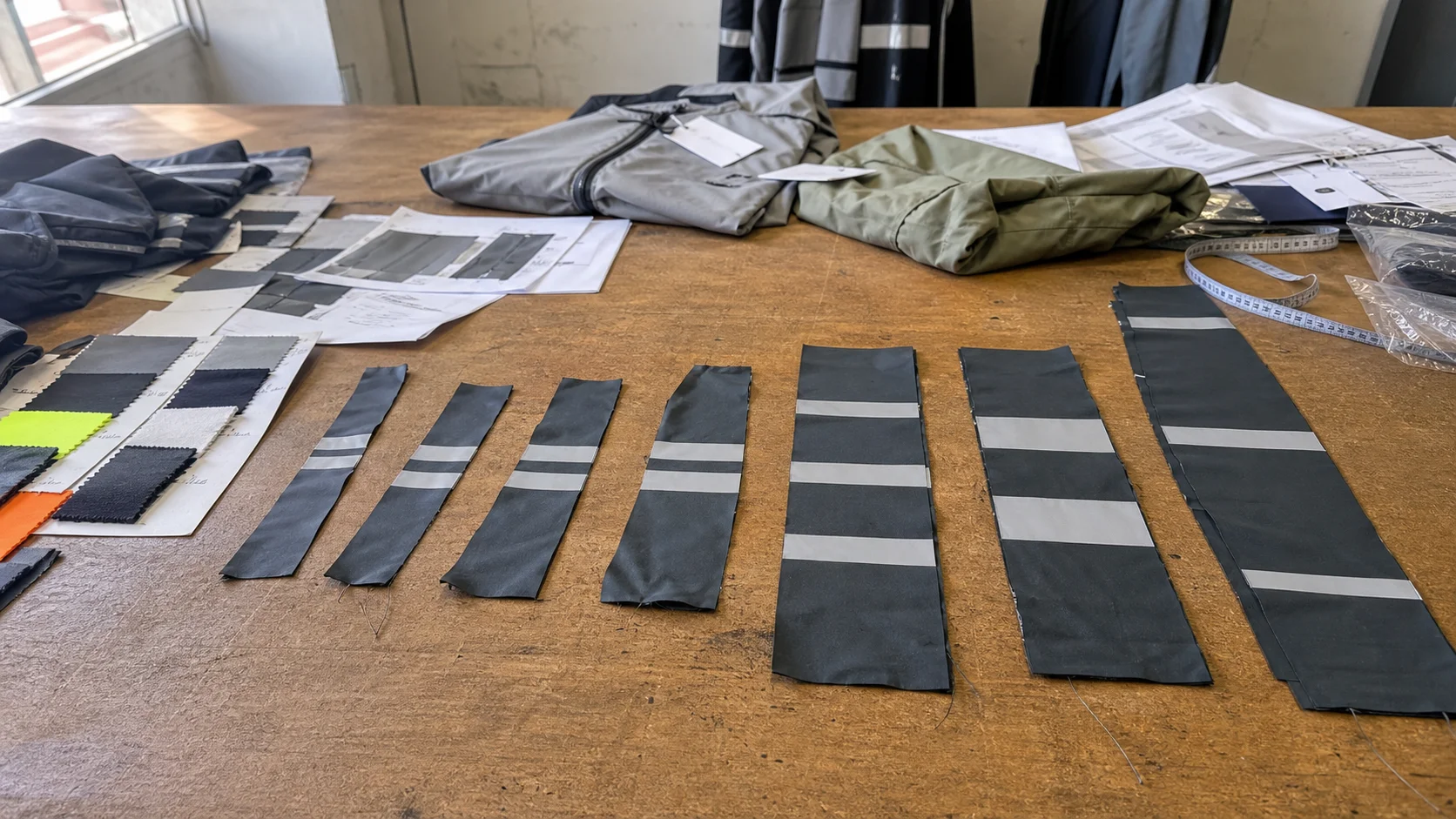
A buyer-focused breakdown of warehouse coat size grading for fitness clubs, covering fit blocks, grade rules, sample review points, and the most common...
For fitness club buyers, warehouse coat size grading is not a fashion exercise. It is a practical fit problem with a cost problem attached to it. A coat that fits a receptionist, maintenance lead, or floor team member on paper can still fail in use if the grade rule is too aggressive, the sleeve length drifts across sizes, or the garment shrinks after laundering. In club operations, those mistakes turn into returns, complaints, and extra sample rounds. The better approach is to review size grading as part of the buying decision, not as a back-end technical detail.
This article looks at warehouse coat size grading from a buyer’s point of view, with a specific focus on fitness clubs that source outerwear for staff, security, facilities, or retail resale. The goal is straightforward: reduce fit risk, protect margin, and choose a size run that can actually be replenished without confusion. If you are working with a private label program or a club-branded outerwear line, the same logic applies. For broader sourcing support, see our services and contact us if you need a product review before sampling.
Warehouse Coat Size Grading Review for Buyers - Fabrikn production reference
Size grading is the step where one approved base size is expanded into a full size range. A medium warehouse coat becomes small, large, XL, and beyond by applying controlled measurement changes at key points. In theory, grading should preserve the intended fit shape across sizes. In practice, the quality of the grade determines whether the coat still feels like the same product at every size.
Warehouse coats are usually boxier than tailored outerwear, but that does not make grading easier. A work coat often needs room for layering, mobility, and utility pockets. If the grader simply increases width without respecting shoulder balance, armhole depth, or sleeve cap shape, the larger sizes can start to hang poorly. Small sizes can become too cramped in the upper back. That is where buyer review matters.
Fitness club buyers should think of the coat as a uniformed outer layer or a premium resale item. Either way, the fit needs to be consistent, repeatable, and acceptable to a broad staff population. A size chart alone does not guarantee this. A grading rule sheet and a approved fit sample do.
Fitness clubs do not usually buy warehouse coats for runway-level style. They buy for function, brand presentation, comfort, and cost control. Staff may wear coats at loading bays, during early opening shifts, in parking areas, or while moving stock. Some clubs also sell branded outerwear in pro shops. In both cases, the buyer needs a grading plan that reduces the chance of odd fit complaints across different body types.
There are a few reasons this category deserves attention:
Buyer judgment should be pragmatic. A slightly more expensive coat with a stable grading system can outperform a cheap style that only fits well in one or two sizes. The first cost is not the full cost. Grading quality affects sell-through, staff acceptance, and repeat ordering.
Warehouse coat grading should not be evaluated by chest width alone. That metric is important, but it does not reveal the full fit picture. Buyers should review the pattern measurements that influence comfort, layering, and appearance.
This is usually the first measurement buyers notice. It controls overall circumference and determines whether the coat can layer over a uniform or hoodie. For a fitness club environment, a little extra room is often necessary, but too much creates a sloppy look. The decision point is whether the coat is for indoor staff, cold-storage handling, or outdoor transit. Each use case calls for a different ease level.
Shoulders affect drape and movement more than many buyers realize. If the shoulder grade is too narrow, the coat can pull across the upper back. If it is too wide, the sleeve head drops and the coat looks oversized even when the chest is correct. For warehouse coats used by club staff, shoulder balance should be checked in motion, not just standing still.
Sleeve length is one of the most common reasons size grading fails. A coat can fit the torso and still be rejected because the cuffs ride up when the wearer reaches forward. The buyer should ask whether sleeve length increases at a steady rate across sizes and whether cuff construction allows a small amount of functional forgiveness.
Coat length matters when the product is used for coverage, warmth, or a more polished club-uniform look. Short bodies can appear boxy, while overly long bodies interfere with movement or sitting. Buyers should confirm whether the graded length reflects the intended use. A warehouse coat for facility staff may justify more length than a lightweight club-branded transitional jacket.
Armhole depth and bicep circumference influence reach and layering. A coat with a tight bicep may pass a flat measurement check and still fail once the wearer bends or lifts. This is a common issue in workwear-style outerwear because grading sometimes favors chest growth while ignoring sleeve mobility.
If the coat includes a high collar or hood, grading must preserve the opening proportions. A larger size should not feel like the neck opening has expanded out of scale. The hood should still sit correctly, and the collar should not collapse after size ups. These details are especially visible in branded club apparel, where the product is part of the customer-facing environment.
Good grading is not just “add the same amount everywhere.” It is a controlled pattern expansion that keeps the garment shape coherent. Buyers do not need to draft the pattern, but they should understand the logic well enough to challenge weak specs.
A practical grading review starts with the base size. That base should be approved after fit testing, not accepted because it looks close enough. Once the base fit is right, the grader should apply increments that reflect the fabric, intended use, and target wearer profile. For a warehouse coat, increments often need to be larger in the chest than in the collar, and slightly more generous in the upper sleeve than in the cuff.
There is no single universal grading rule that works for every coat. A fleece-lined coat, a quilted jacket, and a canvas chore-style coat behave differently. Fabric bulk changes how much space is actually available to the wearer. Lining and insulation add thickness, and that must be considered in the pattern, not assumed later.
Buyer rule of thumb: if the size chart looks clean but the fit sample feels restrictive under layering, the grading rule is probably too tight for real use.
Buyers should also review the size run strategy. If a fitness club’s workforce skews toward medium through XXL, a weak small size may not matter as much as a weak XL and 2XL. A retail program may need a broader spread in the lower sizes and more precision in the midrange. The size mix should reflect actual demand, not generic industry assumptions.
Size grading cannot be evaluated in isolation from the material package. Fabric weight, weave structure, lining type, and trim all affect fit consistency. A coat that is stable in sample form can shift after production if the fabric shrinks, relaxes, or responds to washing differently than expected.
For warehouse coats, buyers should review these material issues closely:
Heavy fabrics can mask poor grading because they hold shape during the first fitting. That can be misleading. Once the garment is worn and washed, the differences between sizes become more obvious. A buyer should ask for fabric shrinkage data and understand whether the graded measurements already include shrink allowance or depend on post-production adjustment.
Trim selection also matters. Thick zippers, storm flaps, snaps, and pocket reinforcements can change the way the coat hangs. If the product includes embroidery or heat-transfer branding for a club logo, the decoration area should be checked against the size grade. A logo placed correctly on medium may look off-center or too low on 3XL if the grading map is not planned carefully.
For brands that want support on product development and sourcing coordination, a page like about us can help buyers understand the kind of sourcing structure they are working with. The point is not marketing language. It is whether the sourcing partner can manage spec discipline, sampling, and production follow-through.
The sample process is where size grading decisions should be tested, not guessed. A buyer should not approve a warehouse coat from a tech pack alone, especially if the coat is intended for a fitness club setting where different body shapes and layering habits are common.
A workable approval process usually includes these steps:
Buyers should be cautious about approving samples that have been pinned, clipped, or loosely finished in a way that cannot be reproduced in production. A sample is only useful if it reflects the real manufacturing method. If the factory plans to change the lining, interlining, or finishing process, the fit must be reviewed again.
It is also sensible to ask for a graded size set or at least representative sample sizes when the order size or risk justifies it. One base sample can hide grading problems that only appear in the edges of the range, especially in 2XL and above. For a fitness club buying program, those edge sizes often matter because staff inventories are not evenly distributed.
Warehouse coats are often more complex than basic knitwear, so minimum order quantities and lead times depend on fabric availability, trim sourcing, decoration method, and how many sizes are included. Buyers should treat MOQs as a planning variable, not a fixed promise.
Typical MOQ ranges vary widely by supplier and construction. A simple, unbranded coat might start around 300 to 500 pieces per color if the mill and trim package are readily available. A custom-branded or insulated style can require higher volumes, especially if the fabric has to be woven or dyed to order. Size range expansion can also push minimums up when the factory has to cut more size variants or carry more trim inventory.
Lead time depends on the slowest element in the chain. If the shell fabric is stock, the zipper is standard, and the label artwork is already approved, production can move faster. If the coat requires custom fabric development, special lining, or new logo placement, the calendar extends quickly. Buyers should allow time for:
The best sourcing decisions are made with realistic calendar control. If a fitness club needs coats before a seasonal transition or event launch, the buyer should build in extra time for sample approval. Rushing grading review usually produces a product that costs more in rework than it would have cost to slow down at the start.
Even when the grading sheet is solid, production can still drift. Inspection should confirm that the approved size logic survived manufacturing. The most common problems are measurement inconsistency, cutting variation, and assembly tolerance issues. In outerwear, these problems often show up as sleeve imbalance, hem unevenness, zipper drift, or a size that feels off even when it passes on paper.
Buyers should pay attention to these inspection risks:
Measurement tables alone do not catch all defects. A coat can pass chest width and sleeve length and still fail in overall wear because the armhole is too shallow or the back length has been shortened during production. An inspector should check not only the raw numbers but the garment on-body appearance and movement.
For a buyer, the key question is whether the factory can reproduce the approved fit across the full run. If the first sample is acceptable but the production batch is inconsistent, the grading system is not reliable. That is a sourcing risk, not a styling issue.
Use the checklist as a buying filter, not a filing exercise. If a supplier cannot explain the grading logic clearly, or the sample process feels rushed, that is a signal to slow down. Good outerwear sourcing usually looks a little boring on paper because the questions are already answered before bulk order placement.
For fitness club buyers, the best warehouse coat is rarely the one with the most features. It is the one that grades cleanly, fits the target wearer group, and holds its shape in actual use. A modest design with stable sizing will usually outperform a more elaborate coat that looks good in one sample size and becomes unpredictable elsewhere in the range.
Tradeoffs are unavoidable. A looser fit may improve layering but weaken the silhouette. A heavier shell may increase warmth but reduce comfort in indoor transitions. A lower MOQ may help test demand but force narrower size options. Good sourcing work is about choosing which compromise is acceptable for the club’s use case and budget.
Fitness club programs often work best when the buyer defines the coat’s job in plain language. Is it for facilities staff moving between indoor and outdoor spaces? Is it a staff uniform layer? Is it a retail product that members will buy for casual wear? Once that decision is clear, the grading spec becomes easier to judge. A coat that suits a maintenance team may not be the right one for merchandise sales, and the size curve should reflect that distinction.
If the sourcing process needs a structured starting point, a supplier with product development and sampling support can help reduce avoidable mistakes. The useful part is not the sales pitch. It is whether the team can hold spec discipline from concept through production and inspection.
Get a free quote from Fabrikn — your trusted B2B clothing manufacturer with 10+ years of experience. MOQ as low as 200 pieces.
Get a Free Quote →Size grading converts one approved base size into the rest of the size range while preserving fit and proportions. For warehouse coats, the goal is to keep the jacket wearable across small to extended sizes without distorting the shape.
Chest width, shoulder width, sleeve length, body length, armhole depth, and cuff or hem recovery matter most. Buyers should also review how the coat fits with the clothing worn underneath.
MOQ varies by supplier, fabric, and decoration method. A simple style may begin around 300 to 500 pieces, while custom outerwear can require more. The real MOQ depends on fabric sourcing, trim availability, and the number of sizes and colors.
Samples can use different finishing methods, looser tolerances, or handwork that is not repeated in bulk. Fabric shrinkage, cutting variation, and lining tension can also change the final fit after approval.
No. Fitness club buyers should prioritize layering comfort, staff usability, and consistency over trend-led shaping. A practical workwear fit is usually more useful than a narrow or highly styled fashion fit.
At minimum, one base fit sample and one pre-production sample are common. Larger programs may justify a graded size set or a few critical sizes to check whether the grading logic holds across the range.
Inconsistent grading across sizes is a frequent problem, especially when sleeves, shoulders, or body length do not scale evenly. The result is a coat that passes measurement checks but still feels wrong on the wearer.
Start with the intended user, the layering requirement, and the base size fit. A sourcing partner can then build the measurement table, review the sample, and decide whether the grade rules are realistic before bulk production begins.