
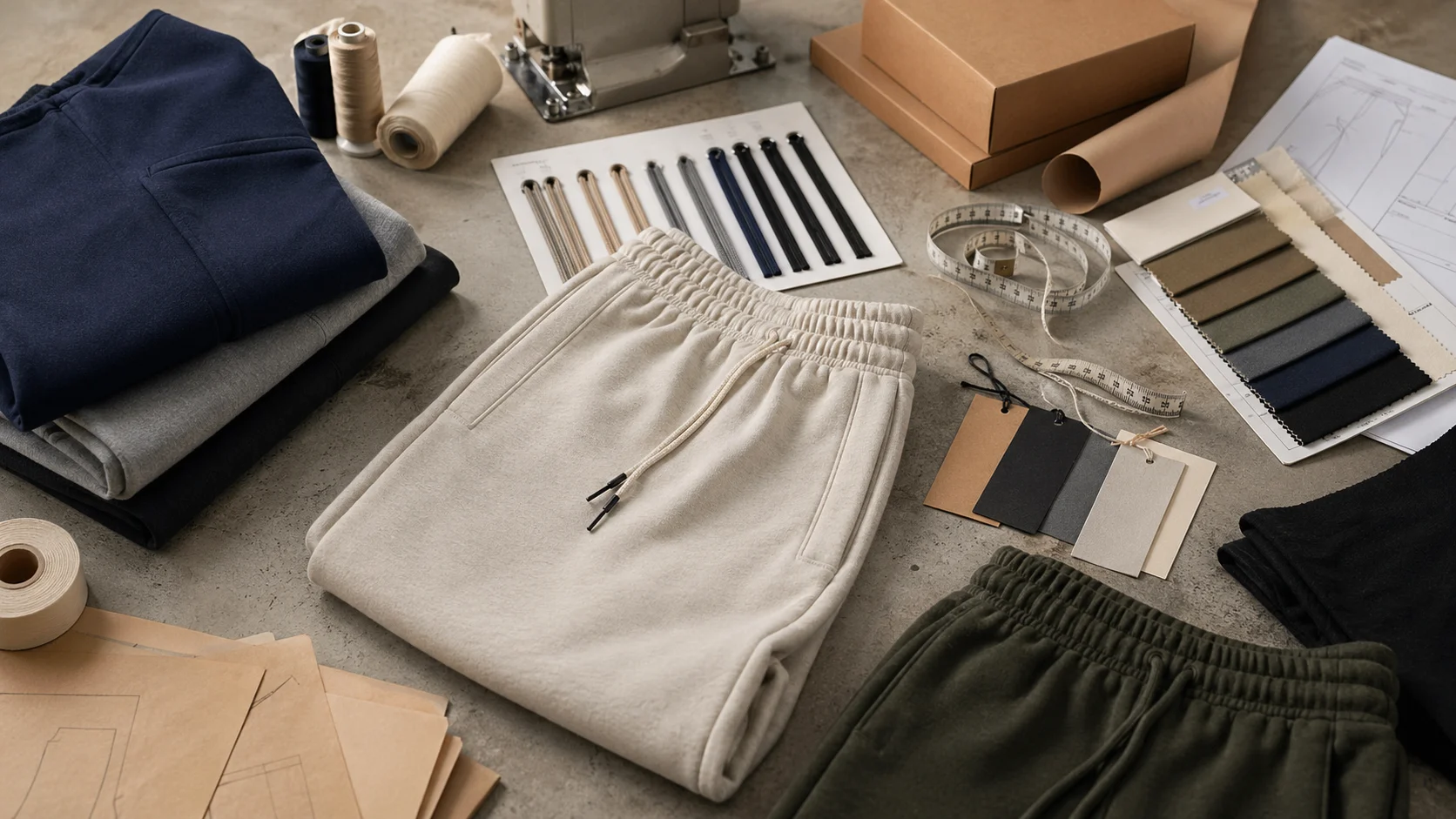
Affects Clothing Manufacturing Price compared by sample evidence, fabric or trim specs, MOQ, AQL terms, cost lines, delivery timing, and rework responsibility.
Fast answer: Affects Clothing Manufacturing Price: Tech Pack, Sample Gate, MOQ, and QC Terms should be judged by production evidence, not by a generic sourcing promise. The buyer needs sample proof, cost breakdowns, QC checkpoints, and delivery buffers in writing.
Ask for recent sample photos, measurement tolerances, fabric or print test assumptions, decoration test notes, packing examples, and a named inspection checkpoint. These details show whether the team can repeat an approved sample at bulk volume.
Separate garment cost, decoration, labels, packaging, sampling, testing, freight, and rush charges. Clear cost lines make it easier to reduce colorways, adjust size depth, or reserve more time for sampling.
If you are building a fashion brand, one of the first questions you will ask is simple: what affects clothing manufacturing price? The answer is important because production cost directly shapes your retail pricing, profit margins, minimum order strategy, and growth plan. Whether you are launching a startup collection or scaling an established apparel line, understanding how manufacturers calculate costs helps you make smarter decisions from the very beginning.
Clothing manufacturing price is not determined by one single factor. It is usually the result of a combination of material selection, garment complexity, order size, labor, sampling requirements, finishing, logistics, and even the timing of your order. Two garments that look similar on a customer-facing website can have very different production costs behind the scenes.
For brands that want to stay competitive, learning what drives price is essential. It allows you to compare factory quotes more effectively, reduce unnecessary expenses, and choose production partners that align with your goals. If you are exploring manufacturing options, you can learn more about our production support on the Fabrikn services page or get in touch through our contact us page.
The biggest cost driver in most apparel projects is fabric. The type of textile you choose has a major impact on the final manufacturing price, and the difference between fabric options can be substantial. Natural fibers, synthetic blends, performance materials, and specialty textiles all come with different sourcing costs, minimum order requirements, and handling needs.
For example, cotton jersey is usually more affordable than premium organic cotton or technical performance fabric. Silk, wool, sustainable recycled textiles, and custom-developed fabrics often cost more because they involve complex sourcing, limited availability, or stricter quality standards.
Material quality also matters. Higher-quality fabrics may cost more per meter, but they can improve garment durability, comfort, and perceived value. Some brands choose lower-cost fabric to meet a target budget, while others invest in premium material because it supports their brand positioning and justifies a higher retail price.
The weight, weave, stretch, and finish of the fabric also influence price. Heavier fabrics use more raw material, and specialty finishes such as anti-pilling, water resistance, or brushed textures can add extra cost.
The more complex a garment is, the more expensive it is to manufacture. A basic T-shirt with a simple cut and minimal trim will almost always cost less than a multi-panel jacket, tailored dress, or technical activewear piece.
Complexity increases cost because it requires more pattern work, more sewing steps, more time on the production floor, and often more skill from the sewing team. Additional details such as lining, pleats, darts, pockets, zippers, collars, cuffs, embroidery placements, or layered construction all raise labor and material usage.
Design complexity also affects the approval process. Intricate garments may require multiple prototype rounds to ensure the fit, drape, and construction are correct. That development work adds to the total project cost, especially if a brand is still refining the product.
From a manufacturing standpoint, simple design decisions can make a big difference. A change in seam type, pocket placement, or closure system can influence both production speed and labor efficiency.
Order quantity is one of the most important factors affecting clothing manufacturing price. In general, larger orders reduce the cost per unit because fixed expenses can be spread across more garments. This is known as economies of scale.
Manufacturers often have setup costs for cutting, pattern preparation, machine setup, sample approvals, and administrative work. Whether you order 100 pieces or 10,000 pieces, some of those costs remain similar. With a larger order, the per-piece share of those costs becomes much smaller.
Low quantities typically lead to a higher unit price because factories still need to invest the same time and resources into setup. Small brands often feel this cost more sharply, especially when they are testing the market or launching a new style.
That said, very large orders can also require more cash flow, more storage space, and more inventory risk. So while higher volume lowers unit cost, it is not always the right move for every brand.
Before full production begins, most apparel projects require development work. This stage includes pattern making, size grading, sampling, fit corrections, and sometimes technical package creation. These steps are critical to producing a garment that fits well and meets design expectations, but they also add to the overall cost.
Sampling can involve several rounds. A first sample may reveal fit issues, construction concerns, or material mismatches. Each revision adds time and expense. For brands creating entirely new styles, development can take longer and cost more than for repeat orders of existing products.
Pattern making is especially important for custom garments. If a factory needs to create a new pattern from scratch, that work is part of the product cost. Size grading, which adjusts the base pattern across multiple sizes, also adds technical effort.
Some manufacturers include limited sampling in their service offering, while others charge separately for every stage. Brands should always clarify what is included in a quote so they do not underestimate their pre-production budget.
Labor is another major component of clothing manufacturing price. Sewing, cutting, pressing, inspection, and assembly all require skilled workers, and labor rates vary significantly by country and region.
Factories in markets with higher wages will often have higher production costs, but they may offer advantages such as faster communication, easier oversight, and shorter shipping distances. Factories in lower-cost manufacturing regions may offer more competitive unit prices, though the final savings can be reduced by freight, tariffs, quality risks, or longer lead times.
It is also important to consider labor skill level. A lower hourly wage does not always mean a better deal if production quality is inconsistent or if the factory struggles with more technical garments. Experienced teams may cost more but can reduce defects, speed up production, and improve efficiency.
For brands comparing sourcing destinations, the question should not only be “where is the cheapest labor?” but rather “which production location offers the best total value for my product, timeline, and brand goals?”
Custom decoration and finishing can significantly affect manufacturing price. A plain garment is usually less expensive than one with screen printing, embroidery, heat transfers, applique, garment dyeing, washing treatments, or specialty finishing.
Printing costs vary based on the number of colors, print size, print placement, and method used. For example, screen printing may be economical for large quantities, while digital printing may be better for detailed artwork or smaller runs. Embroidery often costs more than simple printing because it requires digitizing the design and more machine time.
Finishing treatments can also increase cost. Acid wash, enzyme wash, soft wash, distressing, and pigment dyeing require extra processing and can affect yield, consistency, and lead time. These techniques may be essential for the look and feel of the garment, but they should be planned carefully in the budget.
Packaging may seem like a small part of the project, but it can influence the total manufacturing price more than many brands expect. Standard folding and polybagging may be inexpensive, but premium packaging, branded inserts, custom hangtags, tissue paper, or gift-ready presentation can quickly increase costs.
Labeling also matters. Neck labels, size labels, care labels, country-of-origin labels, and barcode stickers all require production and application. If a garment has special compliance requirements, the factory may need to include additional information or use approved materials for labeling.
Compliance can add cost in industries where safety, content disclosure, or regulatory standards are strict. Children’s wear, performance apparel, and products sold into multiple markets may require additional checks or certifications.
These expenses are often worth it because packaging and labeling influence customer perception and retail readiness. However, they should be included early in your cost planning process rather than added at the end.
The speed of production can affect price. If a brand needs an urgent turnaround, the manufacturer may need to prioritize the order, adjust production schedules, use expedited shipping, or pay overtime labor costs. This can raise the total manufacturing bill.
Standard timelines are usually more cost-efficient because factories can plan material sourcing and floor capacity in advance. Rush orders often require more operational effort and carry a higher risk of error. In some cases, a short lead time may also limit fabric choices because stock availability becomes more important than ideal sourcing.
Brands should plan ahead whenever possible. Longer lead times usually provide more flexibility in sourcing and can help reduce avoidable premiums. If you need help planning a production timeline, our team can discuss it through contact us.
Quality control is a necessary part of manufacturing and has a direct effect on price. Inspections, measurement checks, testing, and defect correction all require time and resources. Strong quality control can increase upfront costs, but it helps prevent larger losses later from returns, complaints, or unsellable inventory.
Factories may inspect raw materials, monitor in-line production, and conduct final checks before shipment. The level of quality control needed depends on the product type and brand expectations. Higher-end fashion, children’s apparel, and technical garments often require stricter inspection standards.
If defects are found during production, the factory may need to repair, remake, or replace items. Those corrections may be covered by the supplier or billed separately depending on the contract and cause of the issue. Clear communication and approved specifications can reduce costly misunderstandings.
Manufacturing price should not be viewed in isolation from logistics. Shipping, customs duties, import taxes, and freight charges can significantly affect the final landed cost of your clothing.
Air freight is faster but more expensive than sea freight. Full container shipments can be cost-effective for large volumes, while smaller shipments may benefit from consolidation. The destination market, trade rules, and tariff structure can also change the landed cost dramatically.
Brands that focus only on factory price may underestimate the true cost of goods. A low production quote can become less attractive if logistics and duties are high. That is why experienced brands evaluate the total landed cost rather than the factory cost alone.
Not all factories quote the same way. A supplier’s experience, specialization, and capabilities can all influence clothing manufacturing price. A factory that specializes in basic cut-and-sew T-shirts may offer lower pricing for simple products, while a factory with advanced technical capabilities may charge more for precision work and complex construction.
Experienced manufacturers often deliver better communication, smoother development, and more reliable production outcomes. That expertise can reduce hidden costs caused by mistakes, delays, and quality issues. In many cases, paying a little more for the right partner saves money over the full product lifecycle.
Brands should also consider whether a factory can handle the full scope of the project. Some manufacturers provide pattern development, sourcing, sampling, production, finishing, packaging, and logistics support. A more complete service can reduce coordination costs and simplify the process. To learn more about who we are, visit our about us page.
Clothing manufacturing price is also influenced by broader market conditions. Changes in cotton prices, fuel costs, shipping rates, currency exchange rates, and global supply chain disruptions can all affect the quote a brand receives.
When raw material prices rise, factories may pass those increases on to clients. Sudden demand spikes or shortages can also make certain fabrics or trims harder to source, which raises cost. Currency changes may impact international sourcing, especially when suppliers and buyers operate in different regions.
Because these factors are often outside a brand’s control, it is wise to build some pricing flexibility into your planning. Quotes can change over time, especially if approvals are delayed or sourcing conditions shift.
Understanding what affects clothing manufacturing price is only the first step. The next step is learning how to manage those factors without sacrificing quality or brand identity.
Here are practical ways to control costs:
The best cost strategy is not always the cheapest option. It is the option that creates the strongest combination of product quality, consistency, pricing power, and brand value.
At Fabrikn, we help brands navigate the many variables that shape apparel production pricing. From fabric sourcing and sampling to full-scale manufacturing support, we focus on creating a process that is transparent, efficient, and aligned with your commercial goals.
If you are trying to understand where your product fits in terms of budget, complexity, and production feasibility, our team can help you evaluate options and plan a more accurate manufacturing strategy. Start by reviewing our services, then reach out through the contact us page to discuss your project.
Choosing the right manufacturing partner can make a major difference in both cost control and product success. When you know what affects clothing manufacturing price, you can ask better questions, compare quotes more effectively, and build a stronger foundation for your brand.
Get a free quote from Fabrikn — your trusted B2B clothing manufacturer with 10+ years of experience. MOQ as low as 200 pieces.
Get a Free Quote →In most cases, fabric choice is the biggest factor, followed closely by garment complexity and order quantity. Premium materials, complex construction, and small production runs typically increase unit cost the most.
Small orders cost more per piece because setup, sampling, and operational expenses are spread across fewer units. Larger orders reduce the unit cost by improving manufacturing efficiency and lowering the impact of fixed costs.
Yes, usually. More panels, trims, closures, and construction steps require additional labor and time. Simpler designs are generally less expensive to produce.
Decoration adds cost based on method, size, placement, and artwork complexity. Embroidery often costs more than basic printing, and special finishing treatments can also raise the overall price.
No. You should look at the total landed cost, which includes manufacturing, shipping, duties, packaging, and any related logistics costs. The lowest factory quote is not always the lowest total cost.
Fabrikn helps brands evaluate materials, production methods, lead times, and order structures so they can make informed cost decisions. If you want to discuss your project, visit our contact us page.