
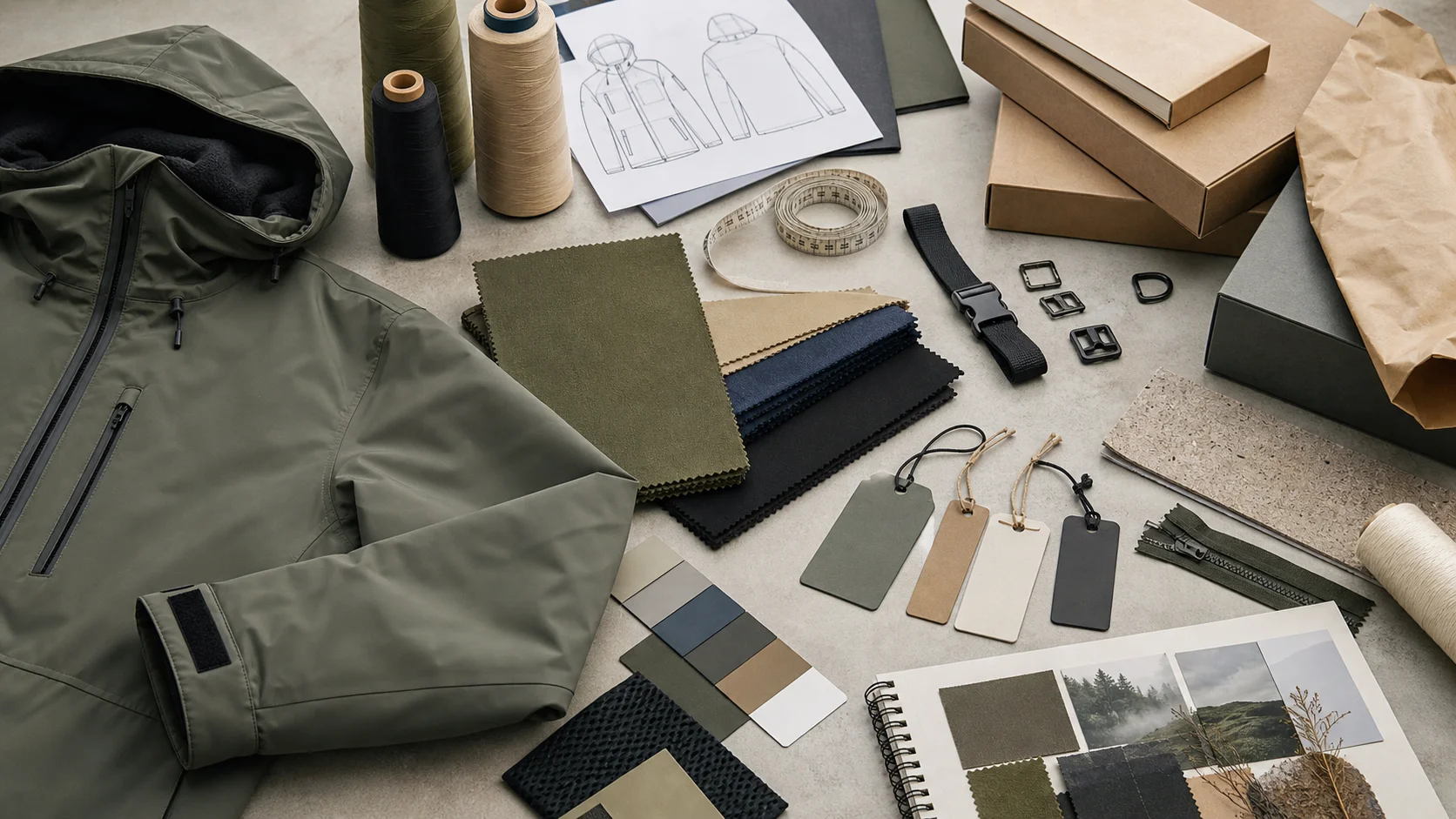
Information Goes on A Composition Label compared by sample evidence, fabric or trim specs, MOQ, AQL terms, cost lines, delivery timing, and rework...
Fast answer: Information Goes on A Composition Label: Material, Print, MOQ, and QC Terms should be judged by production evidence, not by a generic sourcing promise. The buyer needs sample proof, cost breakdowns, QC checkpoints, and delivery buffers in writing.
Ask for recent sample photos, measurement tolerances, fabric or print test assumptions, decoration test notes, packing examples, and a named inspection checkpoint. These details show whether the team can repeat an approved sample at bulk volume.
Separate garment cost, decoration, labels, packaging, sampling, testing, freight, and rush charges. Clear cost lines make it easier to reduce colorways, adjust size depth, or reserve more time for sampling.
What Information Goes on a Composition Label?When you buy or manufacture clothing, one of the smallest details can have one of the biggest impacts: the composition label. If you have ever checked the inside of a shirt, jacket, or pair of trousers, you have likely seen a small fabric label listing fiber content, country of origin, and care information. This is the composition label, and it plays a crucial role in compliance, transparency, branding, and customer trust.
For apparel brands, retailers, wholesalers, and private label businesses, understanding what information goes on a composition label is essential. The label is not just a regulatory requirement. It is also a communication tool that tells customers how a garment is made, how to care for it, and where it comes from. In the B2B clothing industry, getting this right helps reduce returns, avoid legal issues, and strengthen product presentation.
In this guide, we will explain exactly what information goes on a composition label, why it matters, and how to make sure your labels meet industry standards. If you are developing a clothing line and need production support, you can also explore our services or learn more about our company on the About Us page.
A composition label is a garment label that identifies the materials used in a product. It is usually sewn into the inside of a garment and provides key information about the fabric content, garment origin, and in many cases, care instructions. Depending on the market and product type, composition labels may also be referred to as fiber labels, content labels, or textile labels.
The main purpose of a composition label is to give consumers and regulators a clear understanding of what the product is made from. This matters because different fibers have different properties, performance levels, maintenance needs, and pricing implications. For example, a product made from 100% cotton behaves differently from one made from a polyester-cotton blend or a wool-rich knit.
In many countries, textile labeling is legally required. Even when a label is not strictly mandatory for every product category, most brands include one because it supports transparency and professionalism. A well-designed composition label shows that your brand is accountable and attentive to detail.
The exact requirements can vary by country and product category, but most composition labels include several core details. Below are the most common types of information found on a composition label.
The most important element of a composition label is the fiber content. This identifies the materials used in the garment and usually includes the percentage of each fiber by weight. For example:
The order of listed fibers is generally based on weight, from the highest percentage to the lowest. This helps buyers understand the product’s composition and expected performance. If a garment contains multiple materials, each one should be accurately stated.
Fiber content is essential because it informs the customer about softness, stretch, durability, breathability, and care requirements. It is also important for people with allergies or sensitivities, as well as retailers who need accurate product descriptions.
In many markets, simply listing the fiber names is not enough. The label should also show the percentage of each material used. This creates transparency and ensures the garment is not misleadingly presented.
For example, a label that says “Cotton Blend” is too vague in most commercial settings. A better version would be “70% Cotton, 30% Polyester.” This specific breakdown helps customers compare products and makes it easier for brands to comply with legal requirements.
When working with trims, linings, embroidery, mesh panels, or secondary components, the label may need to indicate the dominant fibers and any significant non-textile parts, depending on the regulations in the selling market.
Many composition labels also include the country of origin, such as “Made in China,” “Made in Portugal,” or “Made in Bangladesh.” This tells the customer where the garment was manufactured or assembled, depending on local labeling rules.
Country of origin is important for customs, trade, and consumer transparency. It can also affect how a brand is perceived. Some customers place value on products made in certain regions due to craftsmanship, ethical manufacturing, or supply chain preferences.
For brands sourcing internationally, this information should be consistent with import and export documentation. If your production involves multiple countries, be sure to confirm which location qualifies as the official country of origin under applicable rules.
Strictly speaking, care instructions are sometimes handled on a separate care label rather than the composition label itself. However, in many garments the two are combined. These instructions explain how to wash, dry, iron, and clean the item properly.
Common care symbols and instructions may include:
Clear care guidance helps customers preserve the garment’s quality and reduces the risk of shrinkage, fading, or damage. For manufacturers and brands, that means fewer complaints and returns.
Although not always required by law, many composition labels include the brand name or trademark. This supports branding consistency and helps the garment feel polished and professional.
Including your brand name can also help with product identification if the label is visible after purchase. It reinforces your brand presence each time the customer wears or washes the item.
Some labels also include size information or style references. While this is more common on hangtags or main labels than on composition labels, it can be useful for production and inventory control.
In B2B manufacturing, style codes and size references are often used internally to ensure accurate order fulfillment. If included on the label, they should not clutter the main compliance details or reduce readability.
Depending on the market and the product, a composition label may also display certification marks or regulatory identifiers. Examples can include organic textile certifications, recycled content claims, or other approved marks.
These claims must be truthful, documented, and compliant with the standards of the market where the garment is sold. Misuse of certifications can create legal and reputational risks, so brands should verify all supporting evidence before printing labels.
Composition labels are small, but their impact is significant. They serve several business and consumer purposes that go beyond basic compliance.
Customers want to know what they are buying. A clear composition label helps them make informed decisions about comfort, quality, sustainability, and care. Transparent labeling builds trust and can influence repeat purchases.
Knowing the fabric content and washing instructions helps customers care for garments properly. This can extend product life and improve satisfaction. A shirt that is washed according to the label is more likely to maintain shape, color, and texture.
Many countries have strict rules about textile labeling. A missing or inaccurate composition label can result in fines, product recalls, customs issues, or rejected shipments. For manufacturers and brands, compliance is not optional.
High-quality labels signal professionalism. When a garment has clean, accurate labeling, it reflects well on the brand and suggests attention to detail across the production process.
Incorrect fabric expectations often lead to returns. If a customer believes a garment is cotton-heavy but discovers it is mostly polyester, disappointment is likely. Accurate labels help prevent such misunderstandings.
Labeling rules vary by country, region, and product type. What goes on a composition label in one market may not be sufficient in another. For brands selling internationally, compliance should be reviewed carefully before production begins.
In general, textile labeling laws may require:
Some markets also require labels to be written in the local language. Others may have specific formatting rules regarding font size, placement, or terminology. If your business sells across multiple regions, it is best to create compliant label versions for each destination market.
It is also important to ensure the label matches the actual product specification. The information on the composition label should be based on verified material data from your supplier, fabric mill, or production team. Guesswork is not acceptable in labeling.
To create effective composition labels, brands should follow a few practical best practices.
Always rely on verified fabric specifications from the supplier or production house. If a garment uses multiple panels or components, confirm how each material should be described on the label.
Labels should be easy to read and simple to understand. Avoid cluttering the label with too many details. Focus on the legally required and consumer-relevant information.
Choose font sizes, print methods, and materials that remain readable after repeated washing and wearing. A label that fades quickly defeats its purpose.
Different garments may require different labeling approaches. A basic t-shirt may need a simple fiber and care label, while a technical sportswear item may need more detailed material breakdowns or special instructions.
Before printing, confirm the rules in each target market. A compliant label in one country may not meet the requirements of another.
Composition labels should remain attached and legible through the product’s expected life cycle. Test sewing, heat transfer, or woven label options based on the garment’s use and target market.
Even experienced brands can make mistakes when preparing composition labels. Here are some of the most common issues.
Terms like “mixed fibers” or “cotton blend” are often too vague. Use specific fiber names and percentages instead.
Never round percentages carelessly or estimate material content. Even small inaccuracies can cause compliance problems and customer confusion.
Leaving out country of origin details may lead to customs or retail compliance issues, depending on the market.
If your garments are sold internationally, spelling and translation errors can make the label look unprofessional and possibly non-compliant.
Labels that are too small, too faint, or poorly printed can become unreadable after washing. This reduces usefulness and may violate labeling standards.
Too much information on one small label can make it hard to read. If necessary, separate the composition label from the care label or use multiple labels within the garment.
The information on a composition label can vary slightly depending on the product category. Here are some examples of how labeling needs may differ.
These usually have straightforward fiber content, such as cotton, polyester, or blends. The label often includes basic care instructions and country of origin.
Sportswear may include elastic fibers like spandex or elastane, moisture-wicking materials, or special performance blends. Accuracy is especially important because customers often buy these items based on function.
Outerwear may require more complex labeling if it contains shell fabric, lining, padding, and trims made from different materials. Each component may need to be considered carefully.
Knit garments often involve wool, acrylic, cotton, or blended fibers. Since knitwear can shrink or stretch if cared for incorrectly, care instructions are especially important.
Children’s apparel must meet all relevant labeling laws and should be especially clear and durable. Safety, comfort, and washability matter greatly in this category.
For clothing brands and retailers, creating compliant and professional labels is part of a broader production strategy. At Fabrikn, we support B2B apparel projects with manufacturing solutions designed to help brands move from concept to finished product with confidence.
If you are developing a new collection, need help with garment production, or want to improve packaging and labeling quality, our team can assist with the process. You can explore our full range of capabilities on our services page or get in touch directly through our contact us page.
Whether you are building a private label line, expanding into new markets, or refining your existing product presentation, accurate labeling is a key part of success. Labels should reflect the quality of your product and support your brand’s compliance needs.
Get a free quote from Fabrikn — your trusted B2B clothing manufacturer with 10+ years of experience. MOQ as low as 200 pieces.
Get a Free Quote →In most cases, a composition label should include the fiber content, the percentage of each material, and often the country of origin. Some garments also include care instructions and brand information.
Not always. A composition label focuses on the material makeup of the garment, while a care label explains how to wash and maintain it. In many products, the two are combined into one label.
Most apparel products sold commercially require some form of textile labeling, but the exact rules depend on the country and product type. It is best to check the regulations for each target market.
Some abbreviations may be allowed, but they must be recognized and compliant in the target market. Using unclear or unofficial abbreviations can create confusion and compliance issues.
Incorrect labels can lead to customer complaints, product returns, customs problems, fines, or even recalls. Accuracy is essential for both legal and commercial reasons.
You can read more about our company on the About Us page or reach out through our contact us page to discuss your apparel project.