
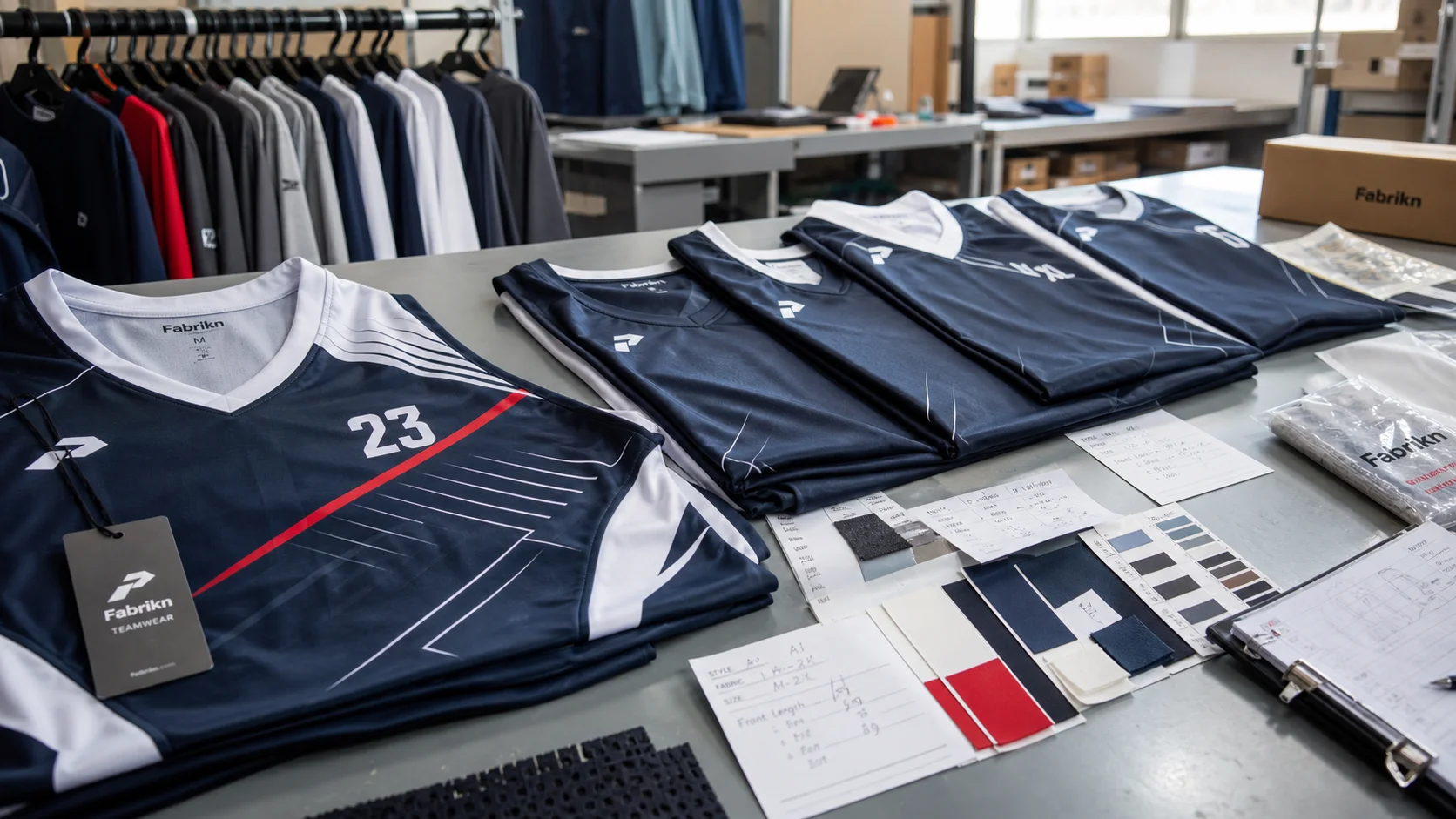
Information Is Required on Clothing Labels compared by sample evidence, fabric or trim specs, MOQ, AQL terms, cost lines, delivery timing, and rework...
Fast answer: Information Is Required on Clothing Labels: Material, Print, MOQ, and QC Terms should be judged by production evidence, not by a generic sourcing promise. The buyer needs sample proof, cost breakdowns, QC checkpoints, and delivery buffers in writing.
Ask for recent sample photos, measurement tolerances, fabric or print test assumptions, decoration test notes, packing examples, and a named inspection checkpoint. These details show whether the team can repeat an approved sample at bulk volume.
Separate garment cost, decoration, labels, packaging, sampling, testing, freight, and rush charges. Clear cost lines make it easier to reduce colorways, adjust size depth, or reserve more time for sampling.
Clothing labels may look small, but they play a major role in product compliance, customer trust, and brand presentation. Whether you are launching a private label apparel line, manufacturing garments for retail, or producing custom promotional clothing, understanding what information is required on clothing labels is essential. The exact requirements can vary by country and product type, but most clothing labels must include details that help buyers identify the product, care for it properly, and trace its origin.
For brands and manufacturers, label compliance is not just a legal checkbox. It can affect customs clearance, retail approval, consumer confidence, and even your reputation in the market. A missing fiber content statement, unclear care instructions, or incomplete country-of-origin declaration can create costly delays and compliance issues.
In this guide, we explain the information commonly required on clothing labels, how labeling rules work, and what brands should consider when designing labels for domestic and international markets. If you manufacture apparel or are planning a new collection, this article will help you understand the essentials of clothing label compliance.
Clothing labels serve three main purposes: compliance, consumer information, and branding. On the compliance side, labels help ensure that garments meet legal requirements for sale in different markets. On the consumer side, they tell buyers what the product is made of, how to care for it, and where it was produced. On the branding side, labels communicate quality, professionalism, and identity.
For apparel brands, labels are part of the product experience. A clear, well-designed label can reinforce trust and help customers feel confident about their purchase. On the other hand, a label that is incomplete or difficult to read can create confusion or make a product appear less premium.
Manufacturers and fashion brands should treat labeling as an integral part of product development, not as an afterthought. The earlier you consider label content and placement, the easier it will be to avoid compliance issues later.
The exact information required on clothing labels depends on the country where the product is sold, but most regulations require some combination of the following:
One of the most common requirements is a clear statement of the garment’s fiber content. This tells consumers what materials were used to make the product, usually expressed as percentages. For example, a shirt might be labeled as:
60% Cotton, 40% Polyester
If the garment is made from multiple materials, the label should list them in descending order by weight. This helps consumers understand the fabric composition and compare products more easily. Accurate fiber content is especially important for apparel sold in regulated markets.
Care instructions explain how to wash, dry, iron, and clean the garment properly. They are often presented using standard symbols, written instructions, or both. Common care details include:
Care labels help extend the life of the garment and reduce customer complaints. They also reduce the likelihood of damage caused by improper washing or cleaning.
Many clothing labels must include the country where the garment was manufactured or assembled. This is commonly referred to as the country of origin. For example, a label may state “Made in China,” “Made in Vietnam,” or “Made in Bangladesh.”
Country-of-origin labeling is important for customs, import compliance, and consumer transparency. In some markets, this information must be clearly visible and permanently attached to the product.
Although not always a legal requirement in every region, most clothing labels include the brand name or trademark. This identifies the manufacturer, brand owner, or private label customer and supports product recognition.
For brands building a strong identity, label placement and typography matter. The brand name should be legible and consistent with your overall packaging and product presentation.
In some markets, clothing labels may need to identify the manufacturer, importer, distributor, or another responsible party. This is especially relevant for products sold internationally. The purpose is to ensure accountability if there are quality issues, safety concerns, or regulatory questions.
Depending on the market, this may be listed as a company name, registered business address, or care of an importer.
Size labels are not always regulated in the same way as fiber content or origin, but they are essential for retail and consumer convenience. Common size information includes numerical or alphabetical sizing such as S, M, L, XL, or 38, 40, 42.
In some categories, accurate sizing and size labeling are critical to reducing returns and improving customer satisfaction. Size should be easy to read and consistent with the brand’s sizing system.
Some labels or internal product tags include style numbers, batch codes, or lot numbers. While these may not always be required on the visible garment label, they are valuable for inventory control, traceability, and recall management.
For manufacturers handling large production runs, these codes help track product shipments and identify specific production batches if any issues arise.
Certain clothing items may require special warnings or usage instructions. For example, flame-resistant garments, children’s sleepwear, or products with specific chemical treatments may need extra safety information. These warnings help consumers use the garment properly and safely.
If a garment has special performance features, those claims should be supported and clearly stated in compliance with relevant regulations.
Clothing labels come in several forms, and each may serve a different purpose. Many apparel items use more than one label type to meet both legal and branding needs.
Brand labels display the brand name or logo and are often sewn into the neckline, waistband, or side seam. These labels help create recognition and reinforce the garment’s identity.
Care labels focus on washing and maintenance instructions. These are often required by law and are placed where they are easy to find but not too intrusive.
Size labels help customers quickly identify the fit and are often integrated with brand or care labels.
Composition labels list the fiber content of the garment. These are important for consumer transparency and legal compliance.
Hang tags are removable tags attached to clothing items at the point of sale. They can carry marketing messages, pricing, barcode data, and extra product details, but they usually do not replace permanent compliance labels.
Clothing label requirements vary from country to country, which is why brands selling internationally need to review the rules for each target market. A label that is compliant in one country may not be compliant in another.
In the U.S., apparel labels commonly need to show fiber content, country of origin, and manufacturer or dealer identity. Care instructions are also widely expected, and in many cases, they are regulated. Labels must be accurate, permanent, and easy to understand.
In the EU, textile products generally require fiber composition labeling. Consumer information must be clear and truthful, and language requirements may apply depending on the country of sale. Additional product compliance rules may also apply.
The UK has labeling standards similar to those in the EU, though local requirements should be checked carefully, especially for imported goods and products sold through retail channels.
Canada has bilingual labeling considerations in many cases, especially for consumer-facing information. Fiber content, care instructions, and origin may all be relevant depending on the product and distribution channel.
Other markets may have their own textile labeling laws, safety standards, or language requirements. If your apparel brand sells across borders, it is important to confirm label requirements before production begins.
For brands that need support with apparel manufacturing and labeling decisions, working with an experienced partner can make the process easier. Learn more about our production capabilities at Fabrikn Services.
Good label design balances compliance, readability, durability, and brand aesthetics. The following best practices can help ensure your labels meet both legal and commercial expectations.
Use a font size and style that consumers can read easily. Avoid overly decorative fonts for compliance information, especially on small labels where space is limited.
Labels should withstand repeated washing and wear. Printed or woven labels are common choices for permanent garment identification, while hang tags are better for promotional details.
Labels should be positioned where consumers can find them easily but where they will not create discomfort. Common locations include the neck, side seam, waistband, or inner hem.
Label claims must match the actual product. If a garment is 60% cotton and 40% polyester, that exact ratio should be reflected on the label. Mislabeling can lead to legal issues and customer returns.
If you sell in different regions, you may need multilingual labels or market-specific versions. Designing with flexibility in mind can reduce production costs and simplify inventory management.
Clothing labels should align with your broader packaging strategy. Brand consistency across labels, tags, boxes, and inserts helps create a professional customer experience. If you are planning a complete packaging and product presentation strategy, you can also explore our About Us page to learn more about Fabrikn’s manufacturing approach.
Even experienced brands can make mistakes when managing garment labeling. Some of the most common issues include:
These mistakes can be costly, especially when production volumes are high. A small error repeated across thousands of garments can lead to re-labeling, delays, or rejected shipments.
Staying compliant starts with understanding the laws that apply to your product and sales channels. Brands should build a label compliance checklist early in the development process and review it before bulk production begins.
An experienced clothing manufacturer can help ensure that labels are designed and produced correctly. They can advise on label construction, material options, placement, and common compliance issues.
Before approving samples or bulk orders, verify that the label includes the correct content, spelling, brand details, and care symbols. This step can prevent expensive mistakes later.
Labels should be tested for wash resistance, print quality, and stitching durability. If a label fades or detaches quickly, it may fail to meet consumer expectations or regulatory standards.
Maintain documentation for fiber content, supplier specifications, and production approvals. Records help support compliance claims and make future reorder processes easier.
If you need direct support with apparel production or want to discuss your labeling requirements, you can contact Fabrikn for guidance.
At Fabrikn, we understand that clothing labels are more than a finishing touch. They are a key part of product compliance, brand identity, and customer experience. As a B2B clothing manufacturer, we work with brands to create garments that are production-ready, retail-ready, and aligned with market requirements.
Whether you need custom label support, private label apparel production, or help coordinating packaging details, our team can assist with planning and execution. We support brands that need reliable manufacturing solutions and clear communication throughout the process.
To learn more about our capabilities, visit our services page, or reach out through our contact page.
Get a free quote from Fabrikn — your trusted B2B clothing manufacturer with 10+ years of experience. MOQ as low as 200 pieces.
Get a Free Quote →Most clothing labels require fiber content, care instructions, country of origin, and often brand or manufacturer information. Requirements can vary by country and product type.
In many markets, yes. Care instructions are commonly required or strongly expected because they help consumers maintain the garment properly.
In many countries, yes. Country-of-origin labeling is a common requirement for apparel sold in retail and imported into regulated markets.
Sometimes, but not always. Many garments use multiple labels to separate brand identity, care instructions, and compliance details. The label format must still meet legal requirements.
Incorrect labels can lead to customs delays, product recalls, fines, retail rejection, or customer complaints. Accuracy is essential.
In many cases, yes. Compliance-related garment labels are usually required to be durable and attached in a way that lasts through normal use and washing.
Both can be used, depending on your market and branding strategy. Symbols can save space, while written instructions can improve clarity.
Check the rules for each sales market, verify product details carefully, and work with an experienced clothing manufacturer who understands apparel labeling requirements.
Clothing labels may be small, but they carry a lot of responsibility. When designed correctly, they protect your business, inform your customers, and strengthen your brand. By understanding what information is required on clothing labels, you can create products that are ready for market and compliant across key sales regions.