
A Full Package Clothing Manufacturer compared by sample evidence, fabric or trim specs, MOQ, AQL terms, cost lines, delivery timing, and rework responsibility.
Fast answer: A Full Package Clothing Manufacturer: Material, Print, MOQ, and QC Terms should be judged by production evidence, not by a generic sourcing promise. The buyer needs sample proof, cost breakdowns, QC checkpoints, and delivery buffers in writing.
Ask for recent sample photos, measurement tolerances, fabric or print test assumptions, decoration test notes, packing examples, and a named inspection checkpoint. These details show whether the team can repeat an approved sample at bulk volume.
Separate garment cost, decoration, labels, packaging, sampling, testing, freight, and rush charges. Clear cost lines make it easier to reduce colorways, adjust size depth, or reserve more time for sampling.
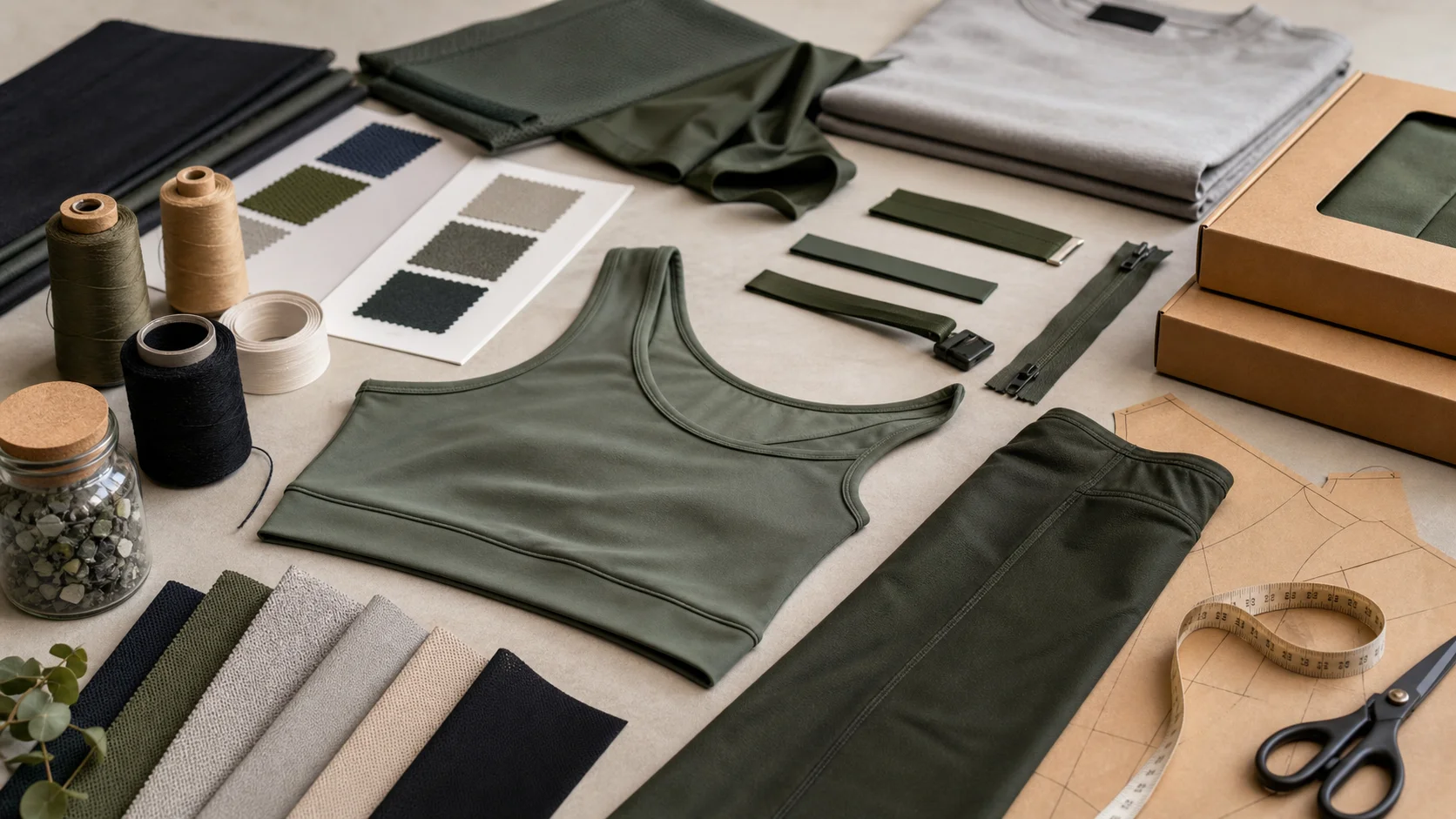
On a humid morning in Dongguan, I watched one team turn a sketch, a fabric swatch, six trim cards, two fit corrections, and a final carton label into a nearly finished order before lunch. That is the simplest answer to what is a full package clothing manufacturer: a factory that takes a product from development through packing, not just sewing. If you have ever wondered what is a full package clothing manufacturer in practice, think of one partner coordinating the steps that would otherwise be scattered across several suppliers. In that building, the brand dealt with one primary contact, and the usual coordination load dropped from 5-7 contacts to 1.
The real difference, though, sits deeper than convenience. Fewer handoffs mean fewer chances for a dye lot to miss the spec, a button to arrive late, or a size label to mismatch the carton count. I’ve seen brands lose 3-4 weeks because the fabric source, trims supplier, and sewing unit were speaking different languages, literally and operationally. When one partner owns more of the chain, the calendar usually shrinks.
Cut-and-sew is narrow. The brand buys the fabric, sends the tech pack, and the factory cuts, stitches, and finishes the order. A full package supplier takes on the earlier and messier work: pattern making, fabric sourcing, trim buying, sampling, production, quality control, and packing. The difference is not semantic. It changes who pays for errors, who absorbs lead time risk, and who solves the dozen small problems that appear before bulk production.
In one Bangladesh plant I visited, a cut-and-sew room had 48 machines and a tight production rhythm, but the fabric had already been negotiated elsewhere. In Vietnam, a full package team was comparing 3 knit mills, 2 button suppliers, and 4 packaging options for a 1,500-piece order. Slower on paper. Cleaner in practice. The brand got tighter costing, fewer purchase orders, and one accountable timeline.
Small brands usually fail for one boring reason: they run out of bandwidth. A two-person team cannot manage yarn counts, lab dips, testing, packaging, freight, and compliance while also selling and building a customer base. Full package gives those brands an operating structure they can actually carry. It is especially useful for labels with MOQ 300-1,000 pieces, where one mistake can wipe out margin.
There is another reason mid-price labels use this model: tighter cost control. I have seen founders source fabric themselves and pay more than a factory would have paid on a $2.50-4.00 per yard knit because they lacked volume leverage. A full package partner can often buy more intelligently, even after adding its own margin, because it already has mill relationships, freight habits, and minimums mapped out. The buyer gives up some control, yes. But it often gains predictability.
A full package clothing manufacturer is a supplier that handles the product from development to delivery. In practical terms, the factory manages product development, pattern making, fabric and trim sourcing, sampling, bulk production, quality control, and finishing. The brand still sets the direction. It approves fit, materials, compliance targets, and payment terms. The factory turns that brief into physical goods.
This model removes 3-6 production steps from the brand side, depending on how much design work the buyer hands over. That is why many founders search for what is a full package clothing manufacturer after their first season goes sideways. Fewer spreadsheets. Fewer freight surprises. One person to chase when the sample is late. That is not laziness. It is survival.
CMT means cut, make, trim. The brand supplies the fabric, trims, and often the pattern or tech pack, and the factory assembles the order. OEM is broader and can include original development, though the term is used loosely across countries. Private label usually means the factory offers pre-developed styles that the brand rebrands, often with smaller design input. You can pair that model with private label clothing services if you need speed over custom engineering.
Full package sits closer to a turnkey model. It is not fully hands-off, because the brand still owns the concept and approves every milestone, but the supply chain burden shifts to the factory. For a brand comparing $8.00 CMT hoodies to $9.25-10.50 full package quotes, the higher number may actually be cleaner once freight, sample waste, and sourcing errors are counted.
Included: development support, pattern drafting, fabric sourcing, trim sourcing, proto samples, fit samples, sales samples, pre-production samples, bulk cutting and sewing, finishing, inspection, and packing. Not included: brand strategy, final commercial approvals, retail pricing, and legal compliance decisions that belong to the buyer. A factory may advise on rules for a children’s line, but the brand still owns the specification sheet and certification path. For example, custom baby clothing manufacturing requires stricter testing than a basic adult tee.
When I ask founders who owns the standard, many say “the factory.” That answer is dangerous. The brand must still define fit tolerance, color approval, carton marks, labeling language, and performance targets. Skip those, and the factory fills the blanks with its own habits. Those habits are not always aligned with your margin, your market, or your customer.
Development is where full package either saves a season or slows it down. The chain usually starts with a concept brief, then pattern making, proto sample, fit sample, sales sample, pre-production sample, and bulk approval. I have watched that sequence move in 10-14 days in a fast Turkish factory and stretch to 5-7 weeks when a mill had no stock of the chosen rib. The factory is not just sewing. It is solving logistics before the first carton ships.
Delays usually come from fabric mill lead times, trim minimums, lab testing, and fit revisions. A rib knit in 320 GSM French terry may look ordinary, but if the mill’s minimum is 800 kg and the brand needs 220 kg, the calendar and the cash flow both wobble. Treat development as sourcing work as much as design work.
The tech pack is the starting signal. From there, the factory makes a pattern, sews a proto sample, revises fit, creates a sales sample for market validation, then produces a pre-production sample that should match bulk exactly. In my experience, brands that approve a sample in one round usually have clearer specs and tighter tolerances than those that need four rounds. Clear math helps. So does discipline.
One brand I worked with wanted a relaxed sweatshirt with enzyme wash, 2x2 rib, and tonal embroidery. The first sample arrived in 12 days, but the second took 19 because the embroidery density was too heavy for the fleece. Normal. And exactly why full package only works well when the buyer stays responsive. Approval delays can cost more than sample fees.
Material sourcing is where many projects quietly go off track. The factory may propose a mill, request lab dips, order swatches, and run shrinkage or colorfastness tests before bulk approval. According to OEKO-TEX, testing and certification matter because chemical compliance is tied to both safety and market access. Not paperwork for its own sake. A gatekeeper for shipment.
Here’s what most people miss: the cheapest mill quote often becomes the most expensive once MOQ, wastage, and rework are counted. I have seen a $1.40/yard offer lose to a $1.75/yard option because the cheap mill required 1,200 yards, had a 14-day delay, and failed shade continuity on the third cut. Asia often moves faster on sourcing, while many European units offer stronger compliance files but longer lead times.
Full package pricing is not one number. It is a stack. You are paying for design support, sourcing fees, sampling charges, fabric, trims, labor, overhead, testing, packaging, and freight. A basic hoodie program can carry $150-500 in sample and development costs before bulk even starts, depending on how many rounds the fit takes. The final unit price then reflects region, complexity, and order size.
Compared with CMT, full package often looks 8%-20% higher on the quote sheet. That can be misleading. If the factory sources the wrong knit, forces a rerun, or misses a trim minimum, the landed cost rises fast. I have audited programs where the brand saved 6% on the initial unit price but lost 11% in rework, air freight, and dead stock. Cheap paperwork is not cheap production.
CMT pricing usually exposes labor clearly. A factory might charge $2.10 to sew a T-shirt or $4.80 for a fleece hoodie, while the brand handles fabric and trims. Full package folds those material decisions into the quote. In China, a private-label jersey tee may land around $3.20-5.50 full package at volume. Vietnam often sits slightly higher on some categories, but can be stronger on consistency. Bangladesh can be the lowest on labor-heavy basics. Turkey and Portugal usually carry stronger European access and faster replenishment, with higher labor costs. The United States can be efficient for 50-300 piece reactive runs, though fabric cost is often the swing factor.
I visited a factory in Porto that quoted a sweatshirt at €11.80 ex-works with 150 pieces MOQ, and a similar build in Dhaka came in near $7.40 at 1,000 pieces. The difference was not only labor. It was fabric availability, overhead, and export logistics. Regions do not just price differently. They behave differently.
MOQ changes everything. At 100-300 pieces, the low-MOQ premium can push a unit price up by 15%-35%. At 1,000-3,000 pieces, pricing usually settles into a mid-volume sweet spot where fabric buys, marker efficiency, and trim costs become more favorable. At 10,000+, the factory can optimize cutting waste, bundle sewing lines, and negotiate mills harder.
Fabric choice matters just as much. Organic cotton jersey, recycled polyester fleece, and enzyme-washed denim all sit in different cost bands. A 180 GSM basic tee is not the same as a brushed 400 GSM heavyweight hoodie. If your line includes hats, the economics shift again, and custom hat manufacturing may price very differently from apparel because structure, brim inserts, and embroidery drive the cost stack.
Buyer chart concept:
Trade data from the U.S. International Trade Administration shows how regional sourcing choices affect lead time, freight routes, and duty exposure. That matters because the quote is never the whole story. The shipment is part of the cost.
Due diligence starts before the Zoom call ends. Ask whether the factory has audited compliance, an in-house development team, a fabric sourcing network, sample turnaround data, communication benchmarks, and export experience in your target market. A factory that answers quickly with specifics is usually easier to manage later. A factory that answers vaguely will stay vague when the order is late.
Do not stop at certificates. Ask for proof of past programs: lab reports, shipment records, defect rates, and case studies with order size and timeline. I would rather see one clean 1,200-piece shipment record with a 1.8% defect rate than five framed certificates on the wall. Paper can be copied. Operations cannot be faked for long.
Start with hard questions. What is the sample turnaround time, in days? What is the MOQ by fabric type? Which mills are already approved? Who writes the spec comments? How are revisions tracked? What happens if a fabric test fails? How is price adjusted if yarn costs move by 10%? The answers should be specific, not promotional.
Ask for the factory’s typical workflow on a 300-piece test run and a 3,000-piece repeat order. The best suppliers can explain the difference between those two programs without hiding behind “it depends.” If they cannot, they probably lack the internal systems to manage both. A low-volume startup and a repeat retail program are not the same animal.
Warning signs are easy to spot once you have walked enough floors. Vague pricing. No written QC process. Refusal to share MOQ details. Weak language around compliance. Promises of 7-day sampling on a complex style that needs pattern development, wash testing, and custom trims. I have seen brands lose entire seasons because they trusted speed over evidence.
One more sourcing-specific truth: a factory with 20 suppliers on its books is not automatically better than one with 5 reliable mills. I would rather see narrow, repeatable relationships than a long list of contacts that nobody can actually control. Consistency beats network size when deadlines are tight.
Startups benefit the most when they have limited staff and need fewer moving parts. Growing labels use full package to scale seasonal drops, reorder winners, and reduce operational strain. Established retailers often use it for repeat basics, regional capsules, or speed-to-market programs where a 6-8 week cycle matters more than perfect cost transparency. The model fits best when the brand wants control over the product, not the plumbing.
Knits, denim, basics, athleisure, and private-label essentials are usually the strongest fit. Technical outerwear, PPE, and ultra-luxury handwork can demand specialist machinery, certification, or artisan labor that a general full package factory may not handle well. A $20 retail basic has room for sourcing efficiency. A $300 fashion piece with unusual trims and hand finishes often needs a more specialized setup.
For rigidly constructed categories, I often steer brands toward cut and sew manufacturing only when they already have material control or niche technical needs. Otherwise, full package is usually the cleaner first move.
Start with a stronger brief. Define the product, target price, MOQ, compliance needs, delivery date, quality benchmarks, and fabric target before you send an inquiry. I have seen brands waste 2-3 weeks because they asked factories to quote a hoodie without specifying weight, wash, or fit. A sloppy brief invites sloppy replies.
Send one standardized inquiry pack to every candidate so you can compare responses on cost, timing, and development support. Include the tech pack, reference images, size range, target market, and expected order ladder, such as 300, 800, and 2,000 pieces. Then sample two to three suppliers, not ten. Too many samples create noise, not clarity.
Test fabric, fit, stitching, wash performance, and packaging consistency. For denim, compare stone wash against enzyme wash. For fleece, check pilling after 3 wash cycles. For jersey, test shrinkage and twisting. You do not need a laboratory on payroll, but you do need a method. Data beats gut feel every time.
Negotiate the boring parts now. Who owns the pattern? Who pays for failed samples? What happens if cotton rises by 12%? How is freight handled if the ship date slips by 10 days? Lock those terms in writing. If you are sourcing accessories or extras, build the same discipline into packaging and trims. If you are comparing category specialists, custom hat manufacturing shows how a narrower product can still require strict controls.
When I worked with a brand moving from one-off production to repeat seasonal orders, the winning supplier was not the cheapest. It was the one that documented every approval in 24 hours, kept samples organized, and could explain why one fabric cost 9% more but reduced wastage by 6%. That is the kind of math that keeps a margin alive.
It is a manufacturer that handles development, sourcing, sampling, production, quality control, and packing. You still approve the product and standards, but the factory manages most of the supply chain.
Costs vary by region, fabric, and order size. A basic tee might run $3.20-$5.50 full package in Asia at volume, while development and sampling can add $150-$500 before bulk production starts.
Many factories start at 100-500 pieces for simpler styles, though specialty fabrics or custom trims can push MOQs higher. Heavy fleece, denim, and babywear often require larger material commitments.
Simple styles can move in 2-4 weeks. Complex products with multiple fit rounds, fabric testing, or custom trims often take 5-8 weeks before bulk can begin.
In cut-and-sew, the brand supplies the materials and the factory assembles the garment. In full package, the factory also sources materials, manages sampling, and coordinates more of the production process.
Ask for lab reports, shipment records, defect rates, MOQ terms, and a written QC process. Certificates help, but live production records tell you how the factory actually performs.
Yes. Many do, especially for basics and repeat styles. If you want faster launches with less development work, private label clothing services can be a practical fit.
It works best for knits, denim, basics, athleisure, and other repeatable categories. It is less suited to highly technical outerwear, regulated PPE, or highly artisanal luxury pieces.
Use one brief, one tech pack, and one sample request. Compare quoted price, sample timing, communication speed, MOQ, and who owns patterns and failed-sample costs.
Keep the first order small, test two to three suppliers, and approve fabric, fit, and packaging in writing. A 300-piece pilot usually teaches more than a rushed 3,000-piece launch.