
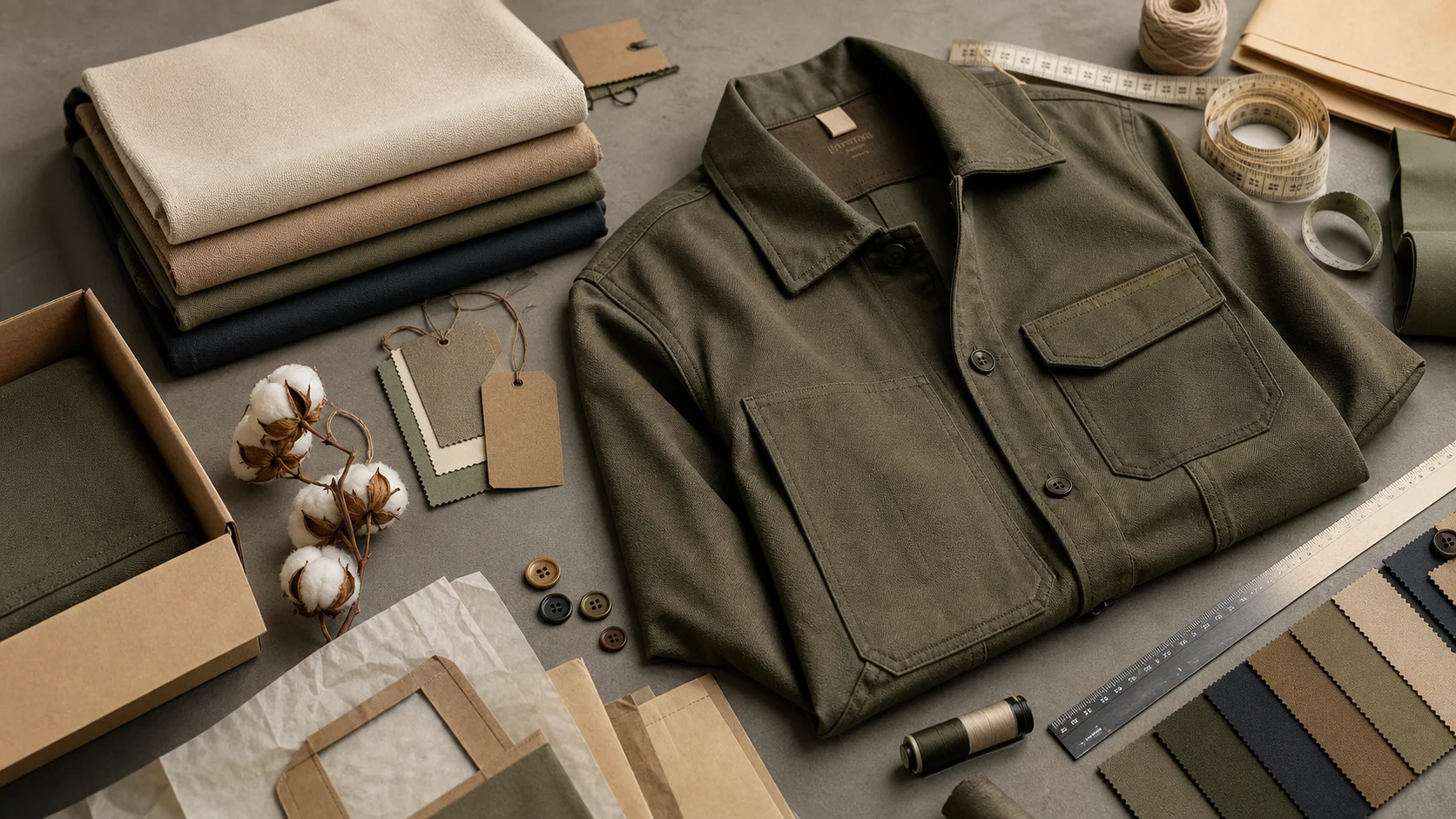
Grading in Clothing Manufacturing compared by sample evidence, fabric or trim specs, MOQ, AQL terms, cost lines, delivery timing, and rework responsibility.
Fast answer: Grading in Clothing Manufacturing: Tech Pack, Sample Gate, MOQ, and QC Terms should be judged by production evidence, not by a generic sourcing promise. The buyer needs sample proof, cost breakdowns, QC checkpoints, and delivery buffers in writing.
Ask for recent sample photos, measurement tolerances, fabric or print test assumptions, decoration test notes, packing examples, and a named inspection checkpoint. These details show whether the team can repeat an approved sample at bulk volume.
Separate garment cost, decoration, labels, packaging, sampling, testing, freight, and rush charges. Clear cost lines make it easier to reduce colorways, adjust size depth, or reserve more time for sampling.
A tank top once passed fit in size S, then came back from bulk with a chest grade split by 12 millimeters on one side and 8 on the other. The sample was clean. Production was not. That tiny inconsistency turned into returns, rework, and three weeks of delay.
Here’s the reality behind what is grading in clothing manufacturing: think of it as the careful translation of a master pattern into a full size range, keeping proportions, construction, and fit intent intact. Miss the rule by 1 cm at the chest on a close-to-body knit, and the issue travels through every size.
In Guangzhou’s Panyu district, factories running Gerber AccuMark and Lectra Kaledo alongside modular Santoni circular knitting machines reference every point in CAD and on the table before tightening the grade rules. In Dhaka, where many brands source 180 GSM, OEKO-TEX Standard 100-certified organic cotton jersey, even a 500-MOQ order that takes 18-22 business days from cutfile to packed cartons can drift if operators skip the double-check.
Bangladesh, Turkey, Portugal, Vietnam — same story, different floor. One technician in Savar grades quickly from a spreadsheet and moves on; another in Istanbul regrades every dart with a second pair of eyes because a 2 cm swing can turn a fitted tee from snug to unwearable. The output may ship from Ho Chi Minh City, but the grade rules were laid down by a team that might never have touched the fabric in person. Certified factories in Guangzhou and Dhaka keep WRAP, BSCI, and GRS traceability alive so each handoff has someone to answer to.
The damage often shows up after launch, not at sampling. Samples usually pass through the best hands. Bulk production rarely does. Once the grader applies rules inconsistently, the size run drifts: a medium chest grows 1 cm, the length shrinks by 0.5 cm, and the armhole starts biting at larger sizes. Returns rise. Markdowns follow. Rework can run $0.80-$4.00 per piece on simple tops and much more on tailored items, translating into $2.50-$4.00 per unit at 500 MOQ if the factory ships the faulty bundle back to Istanbul or Dhaka, reruns the laser-cut grade, and threads everything through Juki and Brother flatlock lines again.
For buyers, the risk is more than a bad fit chart. A weak grade can multiply across 5 sizes, 8 markets, and 2 seasons. I’ve seen brands absorb 12%-18% return rates on products that passed development but failed consistency. That’s a cost line many teams never forecast when approving a last-minute sample cut on a Zünd CNC route in Guangzhou while the bulk run lands in Ho Chi Minh City.
What is grading in clothing manufacturing? Grading adjusts a pattern between sizes while keeping the style’s proportions and fit intent intact. If the base size is a medium, grading tells the supplier how much to add or subtract at the bust, waist, hip, shoulder, sleeve length, inseam, and other critical points. Technical work, not guesswork.
The base size matters because every grade grows from that anchor. From there, the pattern maker uses grade rules, also called grade increments, to define how much each measurement shifts from one size to the next. A size specification sheet records those values with numbers such as chest width, body length, sleeve opening, and front rise. On factory audits in Guangzhou and Dhaka, the strongest teams explain every millimeter. The weak ones just recite size labels.
Grading and fitting get tangled up all the time during development. Fitting tests whether the garment looks and wears correctly on a body or fit model. Grading tests whether that same fit logic can be carried cleanly across the full range. A perfect sample in size M means little if the XL pulls at the shoulder or the XS collapses in the neckline.
Pattern points move differently depending on the garment. Bust and waist changes might split between side seams and darts. Hip growth often concentrates at side seams for trousers or spreads through panels on dresses. Shoulder points may shift only a few millimeters. Sleeve length can increase at the cap and cuff. Inseam changes tend to follow wearability rather than a strict mathematical ratio. The best teams in Ho Chi Minh City’s industrial parks still start bridal separates with paper, aluminum rulers, hip curves, and handheld delineators before hopping onto digital nests.
The workflow usually follows a rhythm, though not always without hiccups:
When brands lean on private label clothing services, locking this process early makes sense because the supplier often repeats styles across 3, 4, or 5 size ranges. One weak grade rule and the mistake spreads through multiple seasons.
Compliance-minded teams align quality expectations with standards from Textile Exchange, OEKO-TEX, and U.S. guidance at trade.gov. Many suppliers also carry GOTS, WRAP, BSCI, and GRS certificates, proving that the 100% recycled polyester knits or organic cotton poplins they grade meet global traceability requirements.
What is grading in clothing manufacturing compared with sizing and fit? Grading, sizing, and fit are separate jobs. Connected, yes. Interchangeable, no. Sizing is the label strategy — deciding whether the garment wears S-XL, 2/4/6/8, or 38/40/42. Grading is the technical process that moves the pattern through those labels. Fit is how it feels on a body.
Two brands can sell a size medium and deliver wildly different experiences. One may target a 38-inch chest with 67 cm body length. Another may use a 40-inch chest and 70 cm body length under the same label. That 2-4 cm shift shows up across US, EU, and Asian expectations, especially in tops, denim, and tailored wovens. I measured it in factories from Los Angeles to Ho Chi Minh City and even in Istanbul’s garment districts where denim is graded in 0.5 cm increments.
So a size chart is not the same as a grade rule. A chart tells the customer what the product should measure. A grade rule tells the factory how to move from one size to the next. When those two documents disagree, the buyer pays later in returns, comments, and replacement orders.
Premium brands often need tighter grading control than mass-market labels. Shoppers paying $120 for a knit dress or $280 for a blazer notice a 7 mm shoulder imbalance or 1 cm sleeve discrepancy faster than someone buying a $14 tee. Precision becomes part of the brand promise, especially when fabrics are dual-certified by OEKO-TEX Standard 100 and GOTS and stitched on industrial Juki and Yamato machines tuned in Istanbul’s factories.
Poor grade rules distort the length-to-width relationship. A tee might grow wider by 2 cm per size but only lengthen by 0.5 cm. By XL, the shirt looks boxy and short. The same flaw in trousers can leave the rise feeling off in larger sizes while smaller ones still pass. I saw this in one production run where everything else hit the spec, yet shoppers still returned pieces that never felt right.
A strong brief makes the supplier's job narrower and the quote more reliable. For what is grading in clothing manufacturing? buyer’s, include the target customer, sales channel, expected order quantity, size range, decoration needs, packaging requirements, and delivery market. Then call out the details most likely to affect the result, especially MOQ, line capacity, and pattern control.
The brief should also explain what cannot change. Some brands care most about hand feel, some about price, some about launch timing, and some about retail compliance. When those priorities are not written down, suppliers tend to optimize for whatever is easiest to quote. Clear priorities help the factory make better tradeoffs before the first sample is cut or printed.
Ask the supplier to respond with assumptions, not just a price. A useful reply states MOQ, sample route, production capacity, inspection plan, packing method, and freight handoff. If the answer is vague, the project may still work, but it needs a tighter pre-production stage before money and calendar pressure build up.
The best time to catch problems is before the pre-production sample is approved. Check measurements, color, placement, material behavior, shrinkage, construction, labels, and packaging in the same review instead of approving each item in isolation. Many bulk issues are not caused by one dramatic mistake; they come from several small unchecked assumptions.
For what is grading in clothing manufacturing? buyer’s, pay special attention to QC checkpoint, export packing, and communication rhythm. These details often look minor in an email but become expensive once cutting, printing, sewing, packing, or shipping begins. A simple checklist with owner, due date, and approval status keeps the brand team and factory aligned.
Bulk production should not start until the supplier can explain how the approved sample becomes a repeatable production standard. That means reference sample storage, line instructions, inline checks, final inspection, and defect handling. A factory that can describe this process clearly is usually safer than one that only promises speed.
Price differences are useful only when the quotes cover the same work. Compare sample cost, material source, trims, decoration, packaging, testing, inspection, and freight assumptions. A low unit price can become expensive if it excludes items the brand needs before launch.
Timeline promises deserve the same scrutiny. Ask what happens if the first sample needs revision, whether materials are in stock, when the production slot is reserved, and how export packing is handled. The most reliable supplier is often the one that gives a realistic calendar instead of the fastest optimistic answer.
Before making the final decision, write down the specification, approval owner, delivery expectation, and the one or two risks that would cause the most trouble if missed. For what is grading in clothing manufacturing? buyer’s, this usually means checking MOQ, line capacity, pattern control, and the support process after the order is placed.
This last review does not need to be complicated. It simply makes the decision easier to repeat, easier to explain, and easier to verify when the finished product or jewelry arrives.
One useful way to pressure-test the decision is to ask what would happen if the order had to be repeated in six months. The answer should still be clear: the same MOQ, the same line capacity, the same acceptance standard, and the same communication path. If a second order would depend on memory or guesswork, the first order is not documented well enough yet.
Another useful check is to separate preference from requirement. Preference is the look, wording, or finish the brand likes. Requirement is the measurement, tolerance, certificate, material, or delivery condition that cannot fail. Good buying decisions keep both visible, so the final choice is not pushed around by the last email, the cheapest quote, or the prettiest sample photo.
Finally, ask who owns each approval. A project with one accountable owner for sample review, one owner for final content or artwork, and one owner for delivery sign-off usually moves faster than a project where every decision is shared loosely across a team. Clear ownership reduces delays and makes the finished result easier to judge.