
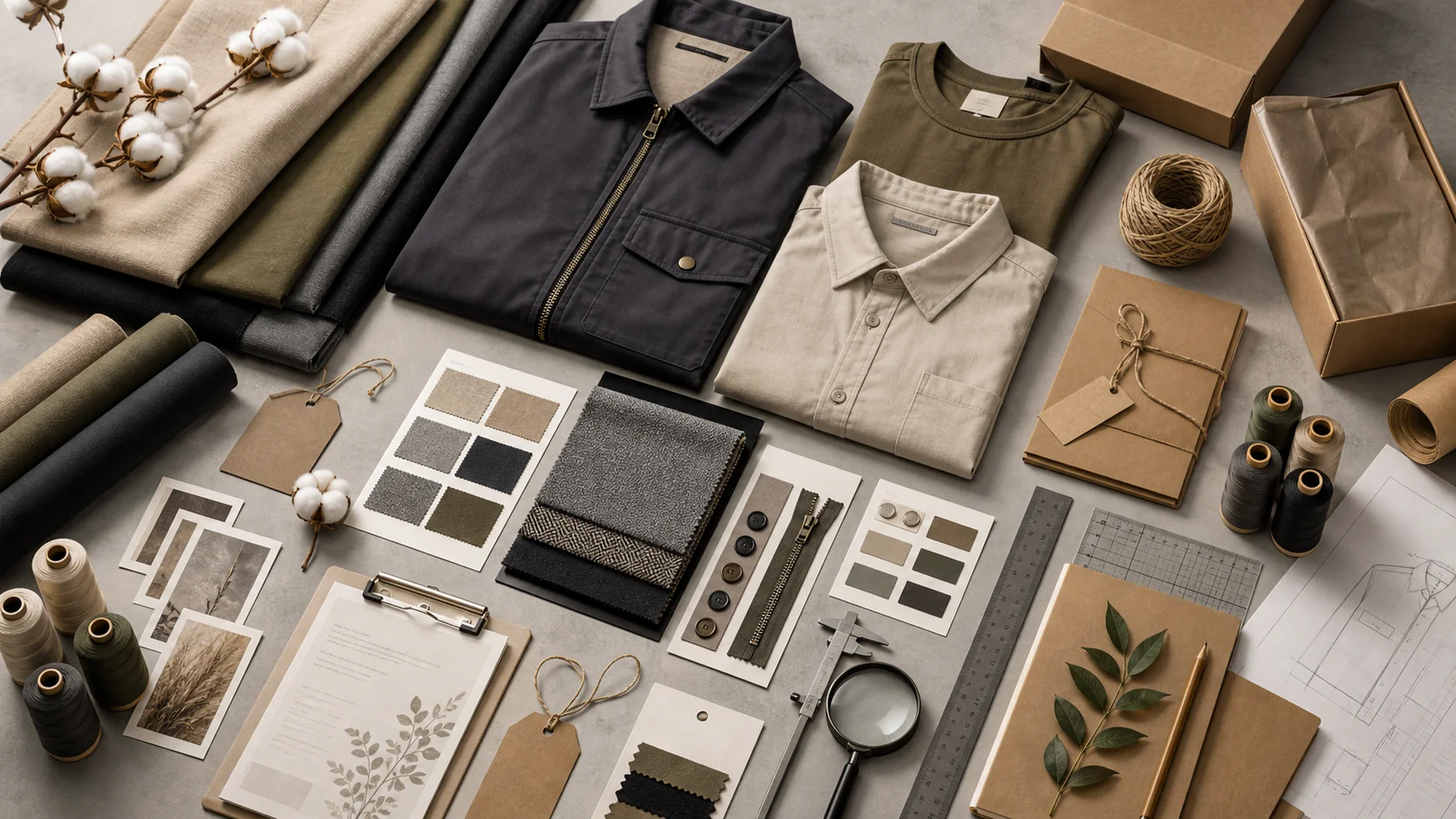
ODM Clothing Manufacturing compared by sample evidence, fabric or trim specs, MOQ, AQL terms, cost lines, delivery timing, and rework responsibility.
Fast answer: ODM Clothing Manufacturing: Tech Pack, Sample Gate, MOQ, and QC Terms should be judged by production evidence, not by a generic sourcing promise. The buyer needs sample proof, cost breakdowns, QC checkpoints, and delivery buffers in writing.
Ask for recent sample photos, measurement tolerances, fabric or print test assumptions, decoration test notes, packing examples, and a named inspection checkpoint. These details show whether the team can repeat an approved sample at bulk volume.
Separate garment cost, decoration, labels, packaging, sampling, testing, freight, and rush charges. Clear cost lines make it easier to reduce colorways, adjust size depth, or reserve more time for sampling.
If you’re building an apparel brand, you’ve probably come across the term ODM and wondered how it differs from OEM, private label, or full custom manufacturing. Understanding what ODM clothing manufacturing is can help you choose the right production model, reduce development time, and bring products to market faster.
ODM clothing manufacturing is especially valuable for startups, fast-growing labels, and established brands that want a quicker path from concept to finished product. Instead of starting from scratch, brands can work with a manufacturer that already has proven garment designs, fabric options, and production know-how. The result is a more efficient development process with less risk and lower upfront investment.
In this guide, we’ll break down what ODM means in apparel, how it works, its advantages and limitations, how it compares to OEM manufacturing, and how to decide whether it’s the right model for your business.
ODM stands for Original Design Manufacturing. In the clothing industry, ODM clothing manufacturing refers to a production model where the manufacturer creates pre-developed apparel designs, patterns, and product concepts that a brand can customize and sell under its own label.
In simple terms, the manufacturer does much of the development work for you. The brand then selects from existing styles and may adjust details such as fabric, color, trims, sizing, branding, labels, and packaging. The finished garments are produced and sold under the brand’s name.
Unlike a fully custom manufacturing model, ODM allows apparel companies to speed up product development because they are not starting with a blank page. This makes ODM attractive for brands that want to launch collections quickly without investing heavily in design and technical development.
ODM is common in categories like t-shirts, hoodies, sweatshirts, activewear, loungewear, children’s clothing, and basics where the market often values speed, consistency, and price efficiency.
The ODM process usually begins when a brand reviews the manufacturer’s available designs or product catalog. These may include ready-made garment templates, sample pieces, or concept collections that have already been tested for fit, construction, and production feasibility.
Once a style is selected, the brand typically collaborates with the manufacturer to refine the product. Possible changes may include:
After the final specifications are approved, the manufacturer proceeds with sampling, confirmation, bulk production, quality control, and shipping. Because the base design already exists, the timeline is usually shorter than with a fully custom development project.
This workflow gives apparel brands a faster route to market while still allowing some degree of product differentiation. It is especially useful when seasonal timing matters or when a brand wants to test consumer demand before investing in a larger collection.
Many apparel brands compare ODM with OEM, so it helps to understand the difference clearly.
OEM stands for Original Equipment Manufacturing. In clothing, OEM means the brand provides the design, and the manufacturer produces the garments according to the brand’s specifications. The manufacturer does not typically own the design.
ODM, on the other hand, means the manufacturer provides the design foundation. The brand customizes and sells the product, often under its own label.
Here’s a simple comparison:
If your brand wants complete creative control and a highly distinctive product, OEM may be better. If you want faster product launch, lower development costs, and proven styles, ODM may be the smarter option.
ODM clothing manufacturing offers several strong advantages, especially for brands that need flexibility and speed.
Because the manufacturer already has a product base, you can move from concept to production much faster than with a custom-from-scratch process. This is useful for trend-driven categories and seasonal launches.
Designing patterns, creating multiple samples, and testing fit can be expensive. ODM reduces many of these steps because the manufacturer has already completed much of the development work.
Pre-developed styles are typically based on existing production experience. That means fewer surprises in fit, construction, and manufacturing feasibility.
Startups often struggle with design development, tech packs, sample revisions, and production planning. ODM gives new brands a simpler way to launch products without building an in-house development team.
When a manufacturer offers ODM styles, those garments have often been tested or refined through previous production runs. This can improve consistency and reliability.
If you’re launching a new collection or entering a new category, ODM allows you to test customer response before making a larger investment in custom development.
While ODM has many advantages, it is not the best fit for every brand. There are also some limitations to consider.
Because the starting point is a pre-existing design, your product may not be as unique as a fully custom garment. If strong originality is central to your brand identity, ODM may feel restrictive.
Some ODM styles may be adapted by multiple brands, which can reduce exclusivity in the market. This is why customization and branding choices matter.
You may not be able to make major changes to the silhouette, structure, or construction. If you need highly specific functional features or a very precise fit, OEM may be better.
In crowded categories, brands using similar base products may struggle to stand out unless they focus on branding, storytelling, packaging, pricing, or distribution strategy.
Understanding these limitations helps brands set realistic expectations and choose the right production model for their goals.
ODM is a strong option for several types of apparel businesses:
If your focus is getting a quality product to market quickly with controlled development costs, ODM can be an excellent fit.
ODM works particularly well for apparel categories that benefit from standardized construction and repeatable production. These products often include:
These categories are ideal because they usually have stable market demand and can be customized effectively through fabric, fit, color, and branding.
Choosing the right partner is critical. Not all manufacturers offer the same level of design support, quality control, or communication. Here are the key factors to evaluate.
Look for a manufacturer that specializes in the type of apparel you want to produce. A partner with strong expertise in your category is more likely to understand fit, materials, and market expectations.
Ask how much customization is available. Can you change the fabric, trim, label, stitching, or packaging? The best ODM partners offer enough flexibility to help your products align with your brand.
Always review samples before placing a bulk order. This is your chance to evaluate construction, finishing, fit, and overall product quality.
Clear communication can save time and prevent mistakes. A good manufacturer should be easy to reach and able to guide you through the ODM process.
Make sure the supplier can handle your order volume and support future growth. Capacity planning matters, especially if you expect repeat orders or seasonal peaks.
Ask about inspections, defect handling, and production checks. Consistent quality is essential for brand trust and customer satisfaction.
Even though ODM is faster than OEM, lead times still vary depending on materials, order size, and customization. Confirm timelines early so your launch schedule stays on track.
If you are evaluating a production partner, you can learn more about our capabilities at Fabrikn services or reach out directly through our contact page.
Although every factory operates differently, the ODM process usually follows these stages:
This process is more streamlined than full product development and can be especially helpful for brands that want to maintain a consistent cadence of new releases.
ODM clothing manufacturing is often more cost-efficient than custom development, but total pricing still depends on several factors.
Premium fabrics usually cost more than standard materials. The choice of knit, woven, performance, or blended fabric can significantly affect pricing.
The more adjustments you make to an ODM style, the more it may cost. Simple branding changes are usually affordable, while more extensive modifications may increase development and production costs.
Larger quantities often reduce the per-unit cost. Smaller orders may be more expensive per piece because setup and production overhead are spread across fewer garments.
Garments with multiple panels, specialty stitching, or technical features may cost more to produce than simpler basics.
Custom hangtags, labels, polybags, boxes, and inserts can add to the total cost of each unit.
Understanding these cost drivers helps you build more accurate margins and improve your pricing strategy.
At Fabrikn, we support apparel brands with manufacturing solutions designed for scalability, quality, and efficiency. Whether you are exploring ODM, OEM, or private-label production, our goal is to help you move from idea to finished product with confidence.
We understand that every brand has different needs. Some want speed and simplicity. Others need more customization and technical support. Our team works to align production with your business goals so you can launch better products, reduce delays, and improve consistency.
If you want to learn more about our company and how we work, visit our About Us page. You can also explore our services or get in touch through the contact page.
One of the biggest advantages of ODM clothing manufacturing is that it helps brands grow with more agility. As your business evolves, you may need to test new categories, respond to customer feedback, or create seasonal collections faster than your competitors. ODM gives you a practical structure to do that without overextending your internal resources.
For many brands, ODM is not just a production shortcut. It is a strategic tool. It allows teams to focus on marketing, sales, distribution, and brand building while the manufacturer handles much of the development work. This can be especially useful when your brand is scaling and every launch needs to be efficient.
Although ODM simplifies manufacturing, brands still need to manage the process carefully. Some of the most common mistakes include:
A successful ODM project requires clear communication, product knowledge, and realistic expectations. When those elements are in place, the model can deliver strong results.
ODM is ideal if you want a faster, more efficient route to market and are comfortable working from a manufacturer’s existing design framework. It is especially effective if your main priorities are speed, cost control, and lower development complexity.
However, if your brand strategy depends on highly original silhouettes, advanced technical features, or complete product ownership from the start, OEM may be a better fit. The right choice depends on your goals, budget, and launch timeline.
A helpful way to decide is to ask yourself these questions:
If you answer yes to most of these, ODM could be a smart manufacturing model for your apparel brand.
So, what is ODM clothing manufacturing? It is a production model in which the manufacturer develops the base design, and the brand customizes and sells the finished product under its own label. For apparel brands, ODM offers a practical balance of speed, cost efficiency, and product reliability.
By understanding how ODM works, its benefits, its limitations, and how it compares with OEM, you can make better decisions for your product line and brand strategy. Whether you’re launching a startup collection or expanding an established apparel business, ODM can help you move faster without sacrificing quality.
If you’re ready to explore manufacturing options for your next collection, Fabrikn is here to help.
Get a free quote from Fabrikn — your trusted B2B clothing manufacturer with 10+ years of experience. MOQ as low as 200 pieces.
Get a Free Quote →ODM means Original Design Manufacturing. In clothing, it refers to a manufacturer that creates or supplies pre-developed apparel designs that brands can customize and sell under their own label.
They are related, but not exactly the same. Private label usually means selling products under your own brand name, while ODM is the manufacturing model that often makes private label production faster by using pre-existing designs.
The main advantage is speed. ODM allows brands to launch products faster because the base design and technical development are already in place.
Yes. Most ODM products can be customized through fabric, color, labels, trims, sizing, branding, and packaging, although the level of customization depends on the manufacturer.
Neither is universally better. ODM is better for faster launches and lower development costs, while OEM is better for fully custom designs and greater product originality.
T-shirts, hoodies, sweatshirts, activewear, loungewear, and other basics are often ideal for ODM because they are easier to standardize and customize efficiently.
Look for a partner with experience in your product category, strong sample quality, clear communication, flexible customization options, and dependable quality control processes.