
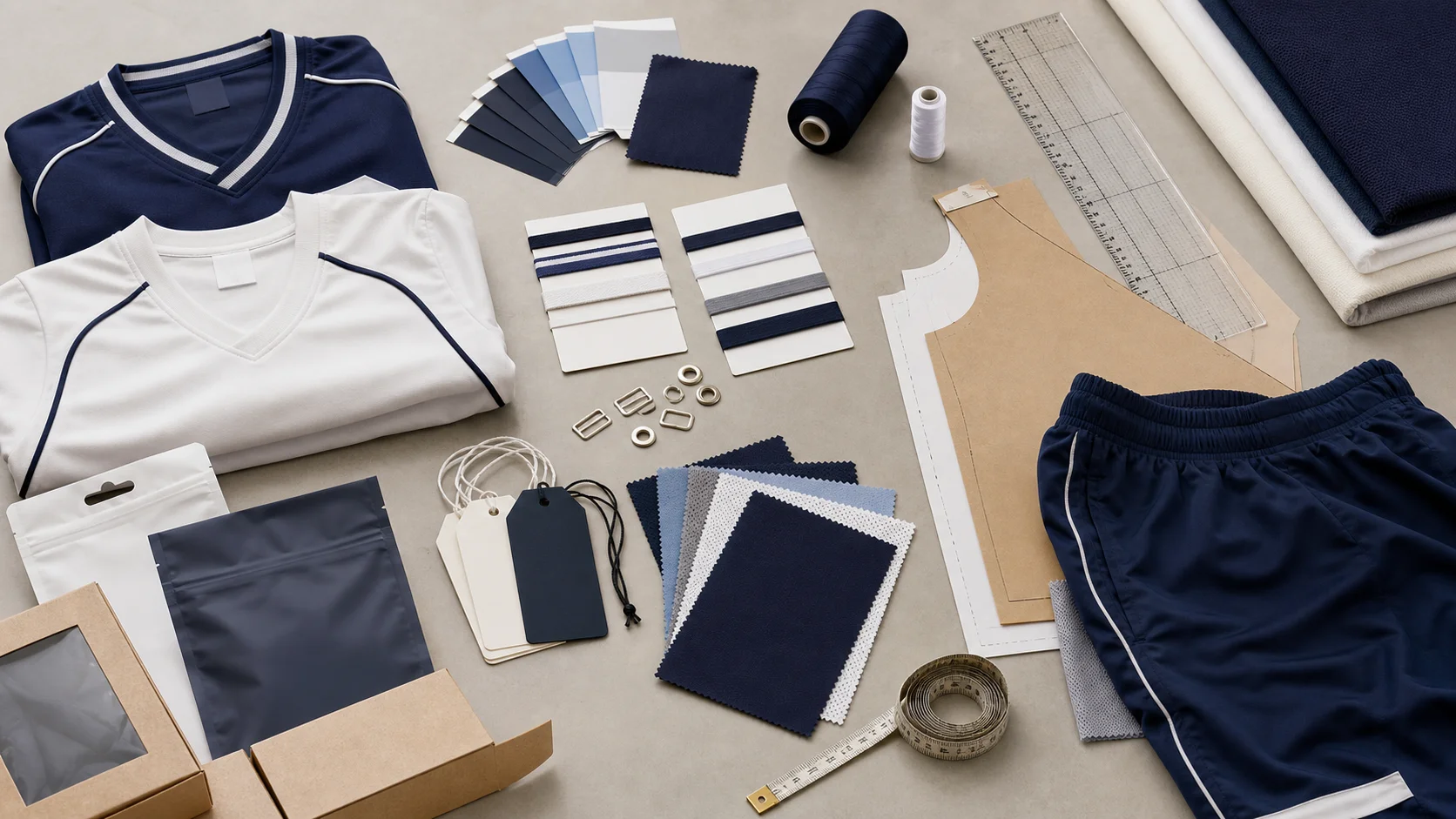
Required On Clothing Composition Labels with checks for samples, fit, MOQ, QC evidence, pricing terms, and delivery risk.
Fast answer: Required On Clothing Composition Labels: Text, Placement, Material, and MOQ should be judged by production evidence, not by a generic sourcing promise. The buyer needs sample proof, cost breakdowns, QC checkpoints, and delivery buffers in writing.
Ask for recent sample photos, measurement tolerances, fabric or print test assumptions, decoration test notes, packing examples, and a named inspection checkpoint. These details show whether the team can repeat an approved sample at bulk volume.
Separate garment cost, decoration, labels, packaging, sampling, testing, freight, and rush charges. When every cost line is visible, it becomes easier to reduce colorways, adjust size depth, or reserve more time for sampling.
Clothing composition labels may look like a small detail, but they carry major importance for fashion brands, private label businesses, retailers, and manufacturers. These labels tell consumers exactly what fibers are used in a garment, helping them make informed buying decisions and care for the item properly. They also play a key role in meeting legal requirements in many markets.
If you are developing apparel for domestic or international sale, understanding what is required on clothing composition labels is essential. Incorrect or incomplete labeling can lead to customs delays, compliance issues, product recalls, or damaged brand trust. This guide explains the key requirements, best practices, and common mistakes so you can create compliant, professional labels for your clothing line.
Clothing composition labels are the garment labels that disclose the fiber content of a product. They usually appear inside the garment and identify the materials used, such as cotton, polyester, wool, viscose, nylon, or elastane. In many cases, they may also include the percentage breakdown of each fiber.
These labels are part of the broader packaging and product labeling system used in apparel manufacturing. While style labels and brand labels help identify the product and brand, composition labels focus on material transparency and regulatory compliance.
For many brands, composition labeling is also linked to care labeling, country of origin labeling, and brand identification. If you are planning a new apparel line, you may want to review Fabrikn’s manufacturing services to see how proper labeling can be built into the production process from the start.
Composition labels are important for several reasons beyond simple product information.
In short, a composition label is not just a small sewn-in tag. It is a product specification that supports compliance, customer confidence, and supply chain efficiency.
The exact requirements for clothing composition labels vary by country or region, but most regulations focus on three core elements: fiber names, fiber percentages, and truthful representation of the product’s material makeup.
The label must identify the fibers used in the garment using accepted generic fiber names. For example, “cotton,” “polyester,” “wool,” and “spandex” or “elastane” are commonly used. In many jurisdictions, you must use the official generic name rather than a trade name or marketing term.
For instance, a label should say “polyester” instead of a brand-specific fiber name. The goal is to keep the label clear and universally understandable.
Most clothing composition labels must list the percentage of each fiber by weight, especially when a garment contains multiple fibers. The percentages should add up to 100% unless the label is written under a specific exemption or special rule.
Example:
This tells the customer exactly how the garment is made. If there is a small amount of other fiber, some countries allow grouped terms such as “other fibers,” but the rules for this are specific and must be followed carefully.
Fibers are often listed in descending order by weight, meaning the largest component appears first. This is the standard approach in many markets and helps buyers understand the garment’s primary material composition.
Many regions require fiber names to follow standardized naming conventions. For example, “elastane” may be used in some markets, while “spandex” is accepted in others. The exact term should match the destination market’s legal requirements.
Labels often need to be presented in the official language of the market where the garment is sold. This can mean translating fiber content into one or more languages depending on the destination.
Composition information must be easy to read and permanently attached or otherwise durable enough to last through normal use and care. If a label fades, peels, or becomes unreadable, it may fail compliance standards.
The content printed on the label must match the garment exactly. Even small discrepancies can be considered misleading. This includes fabric panels, linings, trims, and decorative components if regulations require them to be disclosed.
Understanding what is required on clothing composition labels means recognizing that compliance is market-specific. Different countries and trade regions have their own rules.
In the United States, textile fiber products must generally disclose fiber content using generic fiber names and percentages, following Federal Trade Commission requirements. Labels must be accurate, easy to understand, and properly attached. The rules may also involve care instructions and country of origin disclosures.
The European Union requires fiber composition labels under textile regulations that specify how fibers must be named and presented. Labels should use approved generic fiber names and be truthful, clear, and legible. If a garment is sold across multiple EU countries, multilingual labeling may be needed.
The UK follows its own textile labeling approach after Brexit, and brands should confirm current requirements before selling. In general, labels should remain accurate, durable, and consistent with market expectations for fiber naming and presentation.
Canada has specific textile labeling requirements for fiber content and language presentation. Labels often need to appear in both English and French, and the composition claims must be correct and supported by the actual fiber content of the garment.
Many other countries also regulate textile composition labeling. Requirements may differ on language, percentage disclosures, exemptions, and how blends are described. Before exporting, brands should verify destination-specific rules to avoid compliance risk.
Because regulations differ from one market to another, working with an experienced manufacturing partner can help reduce costly mistakes. If you are preparing to scale into new regions, consider starting a conversation through Fabrikn’s contact page.
Creating a compliant clothing composition label involves more than listing fabric names. It requires careful planning across product development, production, and packaging.
The first step is to confirm the exact materials used in the garment. This includes shell fabric, lining, filling, trims, and any significant decorative components. The bill of materials should be approved before labels are printed.
When a product contains blended or uncertain materials, fiber testing can help confirm the correct percentages. This is especially useful for compliance-sensitive markets or for garments made with recycled or mixed-content fabrics.
Always check the destination market’s approved fiber terminology. A word that is accepted in one country may not be the preferred term in another.
Some markets allow minor rounding differences, but you must still ensure the label is accurate overall. Avoid rounding that would make the total misleading.
A clean label is easier for customers and regulators to understand. Avoid unnecessary promotional language inside the composition section. The goal is factual disclosure, not marketing copy.
Composition details on the physical label should match the product page, hangtag, packaging, and wholesale documentation. Inconsistent claims can create consumer complaints or compliance issues.
Even experienced brands can make errors when labeling garments. Here are some of the most common mistakes seen in clothing composition labeling.
To keep clothing composition labels accurate and professional, brands should follow a structured compliance process.
Do not treat labeling as an afterthought. Labels should be planned when the garment is being developed, not after production is complete.
Your manufacturer should know the label requirements before cutting begins. This avoids last-minute changes and wasted materials.
Keep a record of materials, supplier specifications, test reports, and approved artwork. If compliance questions arise, documentation will help support your claims.
Different colors, finishes, and versions of a garment may use different materials. Each SKU should be checked separately.
If you sell across multiple countries, design your labeling system to adapt to local laws. This may involve translated versions, country-specific labels, or region-specific packaging inserts.
Labeling errors often come from poor communication between design, sourcing, and production teams. A knowledgeable manufacturer can help align your packaging and garment specs with compliance needs. To learn more about Fabrikn’s company background and production approach, visit our about us page.
Fabrikn supports B2B clothing brands with manufacturing services designed to improve quality, consistency, and compliance. From product development to packaging details, our approach helps brands build garments that are ready for market.
Because clothing composition labels are part of the overall product and packaging process, having the right manufacturing partner matters. Fabrikn can help ensure label details are aligned with the approved materials, production specifications, and export requirements.
If your brand needs support with apparel manufacturing, private label production, or packaging-ready garment development, Fabrikn can be a strong partner for bringing your collection to market efficiently.
Clothing composition labels typically must show the fiber content of the garment using approved generic fiber names, along with accurate percentages by weight. Depending on the market, labels may also need to meet language, legibility, and durability requirements.
Most apparel products sold in regulated markets require some form of fiber content disclosure. However, exact rules vary by country, product type, and exemption category, so brands should always check the relevant market requirements.
In most cases, no. Composition labels generally require standardized generic fiber names rather than brand or trade names. Marketing language can appear elsewhere, but the fiber declaration must remain factual and compliant.
Yes, in many markets the fiber percentages are required, especially when the garment is made from more than one fiber. The percentages should reflect the actual content of the garment.
Not always. Different countries have different rules for language, terminology, and disclosure format. If you sell internationally, you may need market-specific labels.
Incorrect labels can lead to customs delays, product recalls, fines, retailer rejections, or consumer complaints. A wrong label can also damage brand credibility.
Ultimately, the brand or importer is usually responsible for ensuring accuracy, but manufacturers, suppliers, and compliance teams all play a role in getting the label right.