
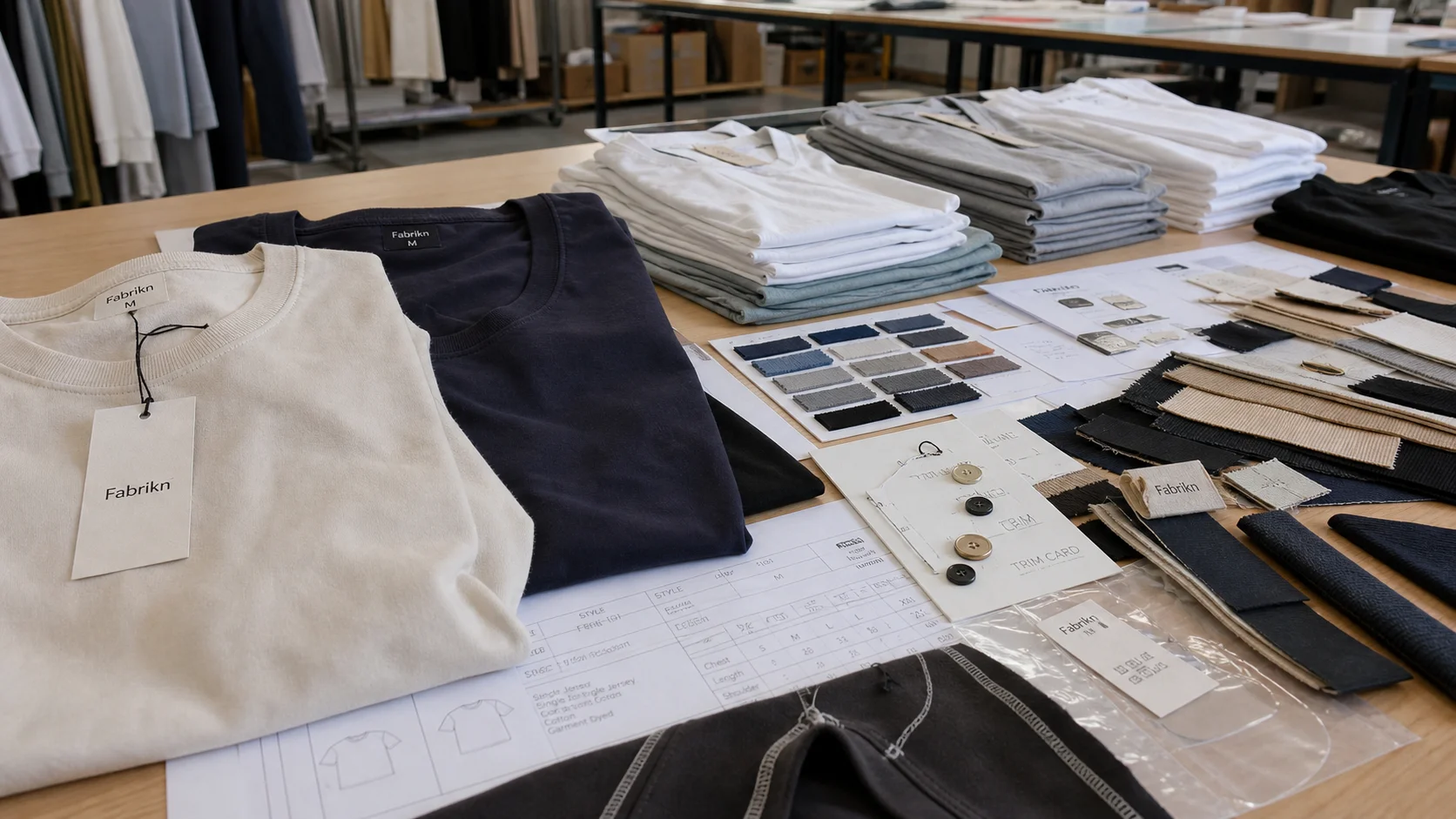
Unpacking ODM Apparel with checks for samples, fit, MOQ, QC evidence, pricing terms, and delivery risk.
Fast answer: Unpacking ODM Apparel: Meaning, Benefits, and Manufacturing Insights should be judged by production evidence, not by a generic sourcing promise. The buyer needs sample proof, cost breakdowns, QC checkpoints, and delivery buffers in writing.
Ask for recent sample photos, measurement tolerances, fabric or print test assumptions, decoration test notes, packing examples, and a named inspection checkpoint. These details show whether the team can repeat an approved sample at bulk volume.
Separate garment cost, decoration, labels, packaging, sampling, testing, freight, and rush charges. When every cost line is visible, it becomes easier to reduce colorways, adjust size depth, or reserve more time for sampling.
In the competitive world of fashion and apparel, brands are always looking for efficient, innovative, and scalable ways to bring new collections to market. Original Design Manufacturer (ODM) apparel plays a pivotal role in helping companies accelerate product development while accessing specialized expertise and manufacturing infrastructure. Whether you're a startup searching for a partner to bring your vision to life or an established label aiming to expand your offerings, understanding the meaning and benefits of ODM apparel is essential.
Fabrikn, a trusted clothing manufacturer, helps brands navigate the complexities of outsourcing apparel manufacturing by offering comprehensive ODM services tailored to business goals. As you explore the role of ODM apparel, this article will provide clarity on the definition, the typical manufacturing process, strategic advantages, and what it takes to collaborate with an ODM partner effectively.
ODM stands for Original Design Manufacturer. In the context of apparel, ODM refers to a type of contract manufacturing arrangement where the manufacturer not only produces garments but also owns the original design or technical specifications. Unlike a traditional manufacturing relationship where the client provides complete design and technical instructions (as seen in OEM partnerships), ODM manufacturers provide ready-made designs or collaborate in the design development phase.
When a brand works with an ODM apparel manufacturer, the supplier’s design team may propose concepts, create tech packs, source materials, and even provide prototype samples prior to production. This approach allows brands to benefit from the manufacturer’s research, trend knowledge, and engineering capabilities while reducing the time and resources they would otherwise spend on design development.
From a strategic standpoint, the meaning of ODM apparel revolves around speed, innovation, and shared creative ownership. Many emerging brands particularly value ODM partners because they can quickly launch a line without needing an in-house design team or extensive pattern-making expertise. The manufacturer’s insights on fabrics, fit, and construction become a valuable extension of the brand’s own creative direction.
The short version: ODM apparel combines manufacturing prowess with design capability, offering a comprehensive service for brands that seek efficiency and collaborative innovation.
The ODM apparel manufacturing process is structured to maximize agility and ensure the final garments meet both aesthetic and technical requirements. While every partnership may vary based on brand needs, the typical workflow includes the following stages:
At the onset, the ODM manufacturer collaborates with the brand to understand the target audience, seasonal trends, branding, and performance parameters. This may involve mood boards, color palettes, and sketches shared between teams. Brands can provide inspiration references, while the ODM team contributes technical design suggestions, fabric recommendations, and pattern refinements.
One of the key advantages of working with an ODM apparel manufacturer is access to vetted material suppliers. Fabrikn’s sourcing team, for example, leverages long-standing relationships to procure fabrics, trims, and embellishments that align with the design intent and production timeline. This ensures the quality meets regulatory standards and consumer expectations alike.
After design finalization and material selection, the ODM manufacturer produces first samples or prototypes. These samples allow the brand to assess fit, feel, and overall execution. Depending on feedback, the manufacturer may revise patterns, adjust constructions, or modify fabric blends. Effective communication during this stage is crucial to reduce iteration cycles and foster alignment.
Once the sample is approved, the manufacturer prepares for mass production. This includes creating detailed grading charts, preparing production markers, scheduling manpower, and establishing quality checkpoints. Another detail: timely procurement of materials and accessories is coordinated to avoid bottlenecks during production ramps.
Quality control is a hallmark of successful ODM partnerships. Fabrikn implements strict inspection protocols throughout the production run, from in-line checks to finishing inspections. Testing may cover seam strength, colorfastness, dimensional accuracy, and compliance with regulatory standards. Any discrepancies are addressed immediately to ensure consistent output.
After production completion, garments undergo final finishing, pressing, and packaging as per brand specifications. ODM manufacturers often assist with labeling, hangtags, and custom packaging. The final step involves logistics coordination, whether the apparel is shipped to the brand’s warehouse or directly distributed to retailers.
This structured process highlights why many brands prefer the ODM model—comprehensive oversight, integrated capabilities, and the ability to pivot quickly when market demands shift.
Brands that partner with ODM apparel manufacturers enjoy a variety of strategic benefits. Here are some of the most compelling advantages:
These benefits collectively provide an efficient route for brands to expand their collections while focusing on marketing, sales, and brand-building.
Understanding how ODM apparel differs from traditional OEM (Original Equipment Manufacturer) relationships is essential for selecting the right manufacturing model.
Both models have their merits, but ODM apparel stands out when brands need a partner to handle both design creation and manufacturing execution, especially during early stages or when introducing frequent styles.
Choosing the right ODM clothing manufacturer requires due diligence, communication, and an alignment of goals. Here are key considerations when evaluating potential partners:
Review the manufacturer’s history, capabilities, and portfolio. Does the partner specialize in the types of garments you need—e.g., athleisure, tailored apparel, outerwear? Fabrikn’s experience across diverse categories enables us to adapt to varying style requirements with precision.
Assess the level of design assistance the manufacturer can provide. Do they have in-house stylists, pattern makers, and technical designers who can collaborate with your team? Strong design support means you can iterate quickly and make informed decisions about fabrics, trims, and construction.
Request insights into the quality management systems, certifications, and inspection protocols. Transparent communication about quality metrics ensures expectations align. Reliable ODM partners maintain documentation for auditability and compliance.
Clear communication is vital for successful collaborations. Manufacturing partners should provide regular updates, transparent timelines, and accountability for every stage. A dedicated project manager helps maintain visibility and facilitates quick resolution of issues.
Consider your brand’s growth trajectory. An ODM partner must be able to scale production volumes while maintaining flexibility for smaller releases or custom orders. Discuss future roadmap scenarios and ensure the manufacturer can adapt accordingly.
When partnering with Fabrikn, brands benefit from a holistic approach—from initial design ideation to final shipment, we ensure clarity at every touchpoint. Interested in learning more about our capabilities? Visit our services page.
ODM apparel manufacturers are at the forefront of exploring new technologies and sustainable practices. Here are emerging trends shaping the future of ODM partnerships:
Brands increasingly demand eco-conscious fabrics, recycled fibers, and transparent supply chains. ODM partners who prioritize sustainability can help brands meet regulatory expectations and win consumer loyalty. Fabrikn emphasizes responsible sourcing and partners with suppliers to trace fabric origins and minimize environmental impacts.
Digital tools enable faster sampling and reduce waste. ODM manufacturers adept at 3D prototyping can present virtual samples, saving time and costs associated with physical iterations. This innovation facilitates remote collaboration, especially when traveling between factories and design teams is not feasible.
With trends changing rapidly, agile production capabilities are essential. ODM manufacturers invest in efficient production lines, modular workflows, and skilled personnel to handle short-run collections and on-demand orders without compromising quality.
Regulatory landscapes in different global markets demand strict compliance with labor, safety, and environmental standards. ODM partners with rigorous compliance frameworks reduce risk for brands entering new markets.
Staying attuned to these innovations enables brands to be proactive rather than reactive, elevating their offerings while meeting modern consumer expectations.
Get a free quote from Fabrikn — your trusted B2B clothing manufacturer with 10+ years of experience. MOQ as low as 200 pieces.
Get a Free Quote →A strong brief makes the supplier's job narrower and the quote more reliable. For unpacking odm apparel, include the target customer, sales channel, expected order quantity, size range, decoration needs, packaging requirements, and delivery market. Then call out the details most likely to affect the result, especially MOQ, line capacity, and pattern control.
The brief should also explain what cannot change. Some brands care most about hand feel, some about price, some about launch timing, and some about retail compliance. When those priorities are not written down, suppliers tend to optimize for whatever is easiest to quote. Clear priorities help the factory make better tradeoffs before the first sample is cut or printed.
Ask the supplier to respond with assumptions, not just a price. A useful reply states MOQ, sample route, production capacity, inspection plan, packing method, and freight handoff. If the answer is vague, the project may still work, but it needs a tighter pre-production stage before money and calendar pressure build up.
The best time to catch problems is before the pre-production sample is approved. Check measurements, color, placement, material behavior, shrinkage, construction, labels, and packaging in the same review instead of approving each item in isolation. Many bulk issues are not caused by one dramatic mistake; they come from several small unchecked assumptions.
For unpacking odm apparel, pay special attention to QC checkpoint, export packing, and communication rhythm. These details often look minor in an email but become expensive once cutting, printing, sewing, packing, or shipping begins. A simple checklist with owner, due date, and approval status keeps the brand team and factory aligned.
Bulk production should not start until the supplier can explain how the approved sample becomes a repeatable production standard. That means reference sample storage, line instructions, inline checks, final inspection, and defect handling. A factory that can describe this process clearly is usually safer than one that only promises speed.
Price differences are useful only when the quotes cover the same work. Compare sample cost, material source, trims, decoration, packaging, testing, inspection, and freight assumptions. A low unit price can become expensive if it excludes items the brand needs before launch.
Timeline promises deserve the same scrutiny. Ask what happens if the first sample needs revision, whether materials are in stock, when the production slot is reserved, and how export packing is handled. The most reliable supplier is often the one that gives a realistic calendar instead of the fastest optimistic answer.
ODM apparel means the manufacturer offers not only production capabilities but also design ownership or contribution. It encompasses concept development, sampling, material sourcing, and manufacturing, allowing brands to leverage the manufacturer’s creative and technical expertise.
ODM isn’t inherently better than OEM—it depends on your brand’s needs. ODM is ideal when you want design assistance and faster execution, whereas OEM might suit brands with established in-house design teams that require precise control over specifications.
Start by outlining your product goals, target consumers, and budget. Reach out to a potential ODM partner like Fabrikn to discuss capabilities. Evaluate their design support, quality standards, and communication processes. You can begin the conversation via our contact us page to explore next steps.
Yes, most ODM apparel manufacturers accommodate custom labeling, hangtags, and packaging to maintain your brand identity. Early discussions should detail branding elements to ensure coordinated execution during production.
Minimum order quantities vary by manufacturer and garment type. While some ODM partners may require larger runs, others—like Fabrikn—offer flexible MOQ options to support small capsule collections or pilot launches. Discuss your order volumes in detail to find the best solution.
Explore the about us page to learn more about Fabrikn’s expertise, values, and approach to partnering with brands at every stage of their growth.