
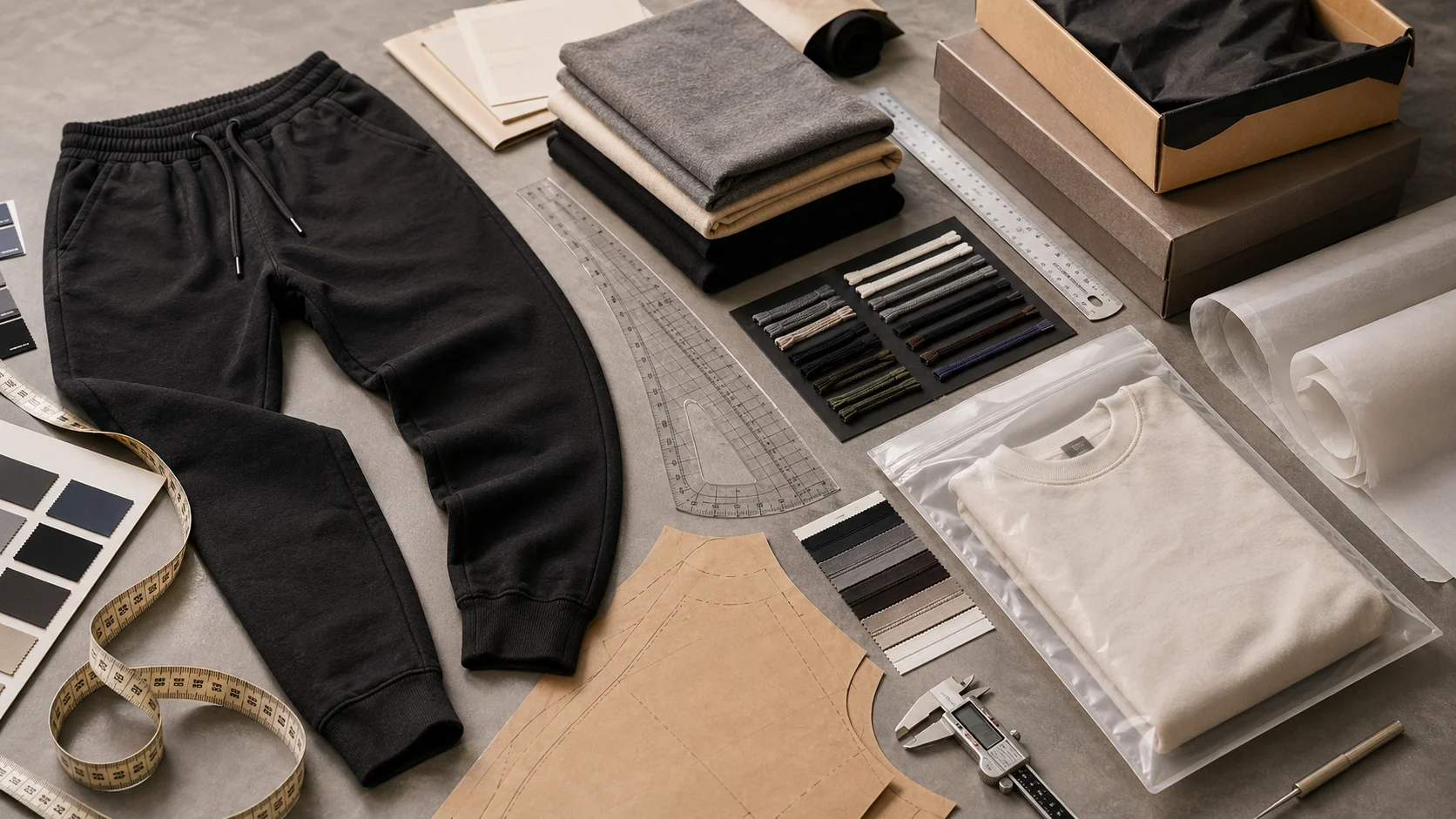
Wrap Certification for Clothing Factories compared by sample evidence, fabric or trim specs, MOQ, AQL terms, cost lines, delivery timing, and rework...
Fast answer: Wrap Certification for Clothing Factories: Tech Pack, Sample Gate, MOQ, and QC Terms should be judged by production evidence, not by a generic sourcing promise. The buyer needs sample proof, cost breakdowns, QC checkpoints, and delivery buffers in writing.
Ask for recent sample photos, measurement tolerances, fabric or print test assumptions, decoration test notes, packing examples, and a named inspection checkpoint. These details show whether the team can repeat an approved sample at bulk volume.
Separate garment cost, decoration, labels, packaging, sampling, testing, freight, and rush charges. Clear cost lines make it easier to reduce colorways, adjust size depth, or reserve more time for sampling.
WRAP certification is one of the most recognized social compliance standards in the global apparel and textile industry. WRAP stands for Worldwide Responsible Accredited Production, and it is an independent, nonprofit certification program that verifies whether clothing factories operate in a legal, ethical, and humane way.
For fashion brands, retailers, and sourcing teams, the question “what is WRAP certification for clothing factories?” usually comes down to this: it is a trusted third-party assurance that a factory meets globally accepted standards for lawful manufacturing, safe working conditions, fair treatment of workers, and responsible workplace management.
In simple terms, a WRAP-certified clothing factory has been audited against a set of principles that cover labor rights, health and safety, environmental compliance, and ethical business practices. This certification is especially important for brands that want to reduce supply-chain risk and build a more transparent, sustainable manufacturing model.
As consumers become more aware of labor conditions and environmental impact, ethical sourcing has become a business priority rather than a marketing trend. Brands that partner with certified factories often find it easier to demonstrate compliance, protect their reputation, and align with sustainability goals. If you are exploring manufacturing partnerships, you can learn more about Fabrikn’s capabilities on our services page.
The apparel supply chain is complex. A single garment may pass through multiple countries, suppliers, and subcontractors before it reaches the customer. This complexity creates risk: labor violations, unsafe workplaces, unauthorized subcontracting, poor recordkeeping, and environmental negligence can all damage a brand’s credibility.
WRAP certification helps solve this challenge by providing a standardized framework for responsible production. Instead of relying only on self-declarations or limited internal checks, brands can work with factories that have been audited by an accredited, independent organization.
WRAP matters because it addresses the most common concerns in garment manufacturing:
For buyers, WRAP certification is not just about compliance. It is also about long-term business stability. A factory that follows recognized ethical standards is more likely to maintain consistent quality, retain workers, and meet production commitments with lower operational risk.
WRAP certification is built around 12 principles that cover the core areas of ethical manufacturing. These principles are designed to ensure that factories operate responsibly and in line with local laws and internationally accepted workplace standards.
Factories must comply with all applicable laws and regulations in the country where they operate, including labor, safety, and environmental requirements.
No worker may be forced, bonded, trafficked, or otherwise compelled to work against their will.
Factories must not employ children under the legal minimum working age. Documentation and age verification are essential.
Workers must be treated with dignity and respect. Physical abuse, verbal abuse, intimidation, and sexual harassment are not tolerated.
Employees should receive wages and benefits that meet legal requirements. Wage records must be accurate and transparent.
Factories must manage working hours within legal limits and ensure rest periods, overtime management, and timekeeping practices are fair and documented.
No employee should face discrimination based on gender, race, religion, nationality, age, disability, or other protected characteristics.
Workplaces should be safe, with emergency exits, protective equipment, fire prevention systems, training, and hazard controls in place.
Workers must be allowed to join or form associations and engage in lawful collective bargaining where permitted by local law.
Factories must comply with environmental laws and reduce harmful waste, pollution, and resource misuse.
Factories should operate honestly in customs matters, including import and export documentation.
Facilities must maintain secure operations that protect workers, materials, and shipments without violating human rights.
Together, these 12 principles make WRAP a broad and practical standard for assessing whether a clothing factory is operating responsibly. They also help brands evaluate whether a potential supplier aligns with their ethical sourcing policy.
Many sourcing teams ask how WRAP compares with other certifications such as BSCI, SEDEX, SA8000, or ISO-based management systems. While each program has its own focus, WRAP is particularly well known in the apparel and sewn-products industries because it is tailored to garment manufacturing.
Here is a simple way to understand the difference:
WRAP is not the only ethical manufacturing framework, but it is one of the most practical certifications for clothing factories because it is specifically designed for the apparel sector. For many brands, WRAP serves as an accessible and credible baseline for responsible sourcing.
Achieving WRAP certification requires a factory to go through a structured audit and compliance process. The process typically includes preparation, document review, facility inspection, worker interviews, corrective actions, and final certification review.
The factory reviews its labor practices, safety procedures, payroll records, age verification documents, and facility conditions. This stage often includes training managers and staff to understand compliance expectations.
The factory submits its application and schedules an audit with an accredited WRAP auditor. The timing of the audit may depend on the factory’s current compliance readiness.
Auditors inspect the factory floor, review documents, and interview workers and management. They look for evidence that the factory meets WRAP principles in practice, not just on paper.
If issues are found, the factory must address them within a defined timeframe. This may involve improving fire safety, updating records, correcting wage calculations, or strengthening workplace policies.
Once the factory meets the required standards, WRAP grants certification. Depending on the audit outcome, certification may be valid for a defined period and subject to renewal audits.
This process encourages ongoing improvement rather than one-time compliance. For brands, that means the certification is not simply a badge; it is evidence of a factory’s commitment to responsible operations.
Partnering with a WRAP-certified factory can provide meaningful advantages for fashion brands, wholesalers, startups, and private-label businesses. These benefits go beyond ethics and can directly support growth, trust, and operational efficiency.
In today’s market, sourcing decisions are evaluated not only on price and lead time but also on integrity. A WRAP-certified supplier can help a brand meet internal ESG targets and respond to growing stakeholder expectations. If you are considering a manufacturing partnership, contact our team through contact us.
Sustainable fashion is often associated with organic fibers, recycled materials, and lower-carbon production. However, sustainability is not only about materials. It also includes the social dimension of manufacturing: safe workplaces, fair pay, legal employment, and responsible factory governance.
WRAP certification supports sustainable fashion by strengthening the social side of sustainability. A garment cannot truly be called sustainable if it is made in unsafe conditions or through exploitative labor practices. Ethical production is part of the same responsibility framework as reduced waste and cleaner chemistry.
That is why more brands now view certification as part of a larger supply-chain strategy. They want factories that can support:
WRAP is particularly valuable for brands that want to move beyond vague sustainability claims and into verifiable action. It gives sourcing teams a concrete standard to assess factory behavior, and it helps customers see that ethical manufacturing is built into the production process.
Not every WRAP-certified factory is the same. Certification is an important signal, but brands should still evaluate a factory’s capabilities, communication, product quality, and fit for their business model.
Here are a few key questions to ask:
It is also wise to review the factory’s broader values and manufacturing philosophy. A certified facility that also invests in long-term worker well-being, process improvement, and customer service can be a more reliable partner than one that treats certification as a checkbox.
At Fabrikn, we encourage brands to ask detailed questions and understand how ethical manufacturing is implemented in daily operations. You can read more about our company on our about us page.
As a B2B clothing manufacturer, Fabrikn understands that modern brands need more than production capacity. They need manufacturing partners who can help them deliver quality, consistency, and responsible sourcing. Ethical manufacturing is not an add-on; it is part of the foundation of a resilient apparel business.
Our approach to manufacturing focuses on transparency, communication, and practical support for brands navigating compliance and production requirements. Whether you are building a new label or expanding an established collection, working with a manufacturer that understands ethical standards can help streamline your sourcing process.
We believe the best manufacturing relationships are built on trust and accountability. That is why we encourage brands to evaluate factory standards carefully and prioritize partners who take labor, safety, and responsible production seriously.
Get a free quote from Fabrikn — your trusted B2B clothing manufacturer with 10+ years of experience. MOQ as low as 200 pieces.
Get a Free Quote →WRAP certification means the factory has been audited and verified against a set of ethical and legal standards covering labor practices, safety, compliance, and responsible production.
WRAP is especially popular in the apparel and sewn-products industry, although its principles can apply to similar manufacturing environments as well.
No certification can guarantee perfection. However, WRAP provides strong third-party evidence that a factory is committed to responsible practices and has passed an independent audit.
Brands care because it reduces sourcing risk, supports ethical compliance, strengthens reputation, and helps align manufacturing with sustainability goals.
WRAP supports sustainable fashion by addressing the human and social aspects of production, including fair labor, workplace safety, and responsible factory management.
Yes. If a factory fails to maintain standards or address audit issues, certification can be suspended, denied, or not renewed.
You can search for certified manufacturers, review their compliance documents, and ask direct questions about their audit history and production capabilities. You can also reach out to Fabrikn through our contact us page for support.