
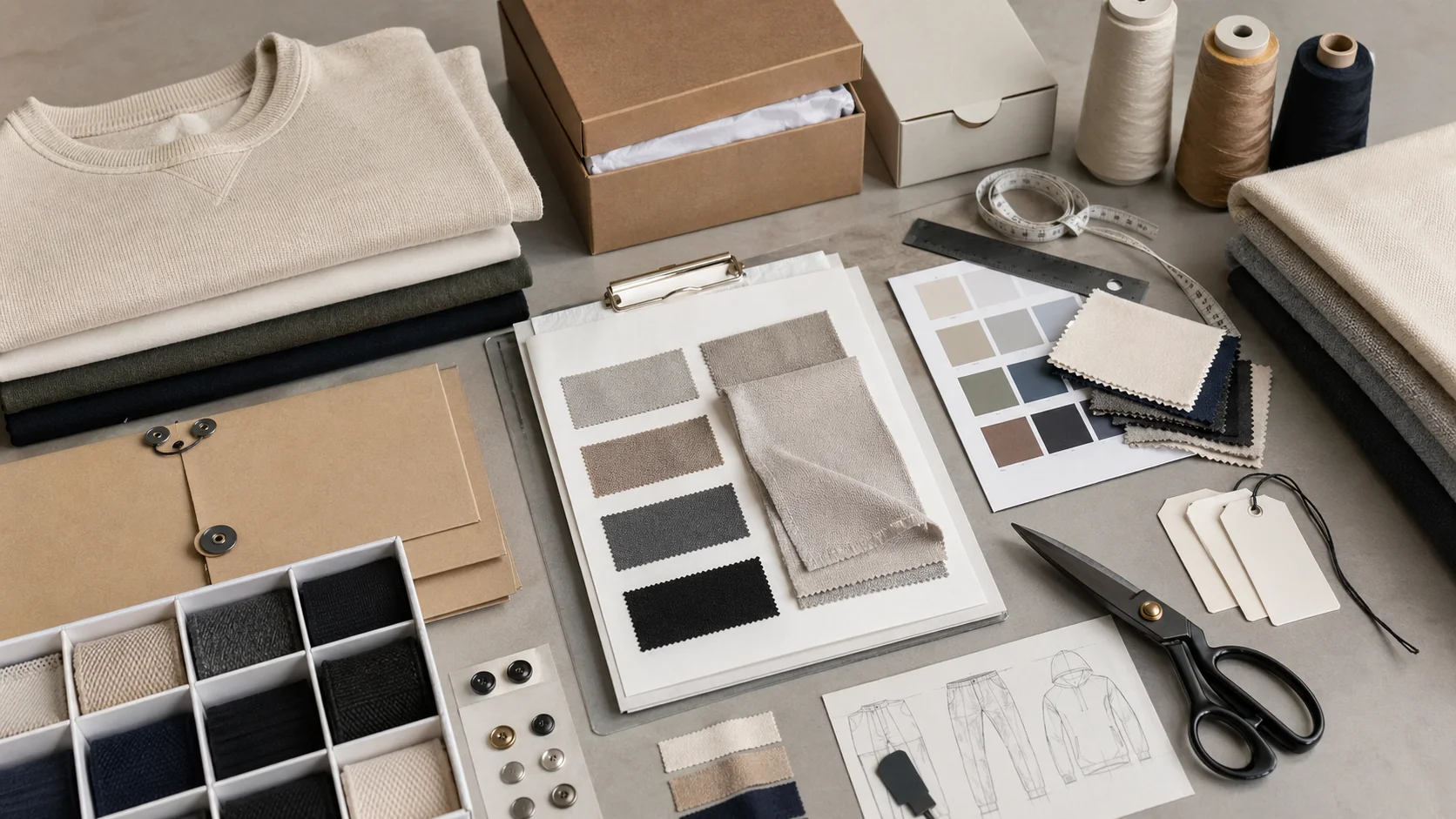
To Ask About Payment Terms When Sourcing Clothing Manufacturers compared by sample evidence, fabric or trim specs, MOQ, AQL terms, cost lines, delivery...
Fast answer: To Ask About Payment Terms When Sourcing Clothing Manufacturers: Sample Evidence, MOQ, Capacity, and Rework Terms should be judged by production evidence, not by a generic sourcing promise. The buyer needs sample proof, cost breakdowns, QC checkpoints, and delivery buffers in writing.
Ask for recent sample photos, measurement tolerances, fabric or print test assumptions, decoration test notes, packing examples, and a named inspection checkpoint. These details show whether the team can repeat an approved sample at bulk volume.
Separate garment cost, decoration, labels, packaging, sampling, testing, freight, and rush charges. Clear cost lines make it easier to reduce colorways, adjust size depth, or reserve more time for sampling.
When sourcing clothing manufacturers, payment terms are one of the most important topics to clarify early. They affect your cash flow, production schedule, order risk, and overall supplier relationship. Yet many brands focus only on sampling, lead times, and minimum order quantities, while leaving payment discussions until the end. That can create avoidable confusion, unexpected costs, and delays once production begins.
If you are building a new apparel line or scaling an existing one, you need to understand exactly how a manufacturer expects to be paid, when payments are due, what milestones trigger invoices, and whether any deposits are refundable. The more detailed your questions, the easier it becomes to compare manufacturers fairly and choose a partner that fits your business model. For a broader look at how a manufacturing partner supports your brand, explore our services and learn more about our approach on the about us page.
Payment terms do more than determine when money leaves your account. They define the financial rhythm of your production process. In clothing manufacturing, where raw materials, labor, sampling, and shipping all happen in stages, payment structure can significantly impact your margins and launch timeline.
Clear terms help you:
In many cases, a manufacturer’s payment policy also signals how organized and transparent they are. A partner who can clearly explain deposit percentages, balance timing, and payment methods often has a more professional process overall. If you want to discuss your sourcing needs directly, you can always reach out through our contact us page.
Before signing anything, ask direct and specific questions. The goal is not only to know the price, but also to understand the full financial commitment. Here are the essential questions every brand should ask when sourcing clothing manufacturers.
Most clothing manufacturers ask for an upfront deposit before they begin sourcing materials or moving into production. Ask what percentage is required and what that deposit covers. A common range is 30% to 50%, but this varies by manufacturer, order size, material complexity, and your relationship history.
You should also ask whether the deposit applies to the total order value or only to production costs. In some cases, sampling fees, pattern development, and lab dips are billed separately.
Some manufacturers request the final balance before production starts, while others allow payment before shipment or upon completion. This detail matters because it affects your liquidity and your exposure if there are production delays. Ask for a clear schedule with exact trigger points, such as:
Sampling often has a separate fee structure from bulk production. Ask whether sample costs are deducted from the final order or charged independently. Some manufacturers charge full sample fees upfront, while others apply sample charges as credits once you place the main production order.
Not all manufacturers accept the same payment methods. Ask whether they take bank transfer, wire transfer, credit card, PayPal, or other payment platforms. Also confirm whether there are fees associated with specific methods. For international sourcing, bank transfer is often standard, but it may come with bank charges and longer processing times.
International manufacturers may invoice in USD, EUR, GBP, or local currency. Ask which currency they use and whether exchange rate fluctuations could affect your final cost. This is especially important if your brand operates in a different country than the factory.
Some established brands may qualify for net 15, net 30, or even longer terms. However, new brands usually need to pay deposits and balances upfront. Still, it is worth asking if credit terms are available after multiple successful orders. Favorable terms can become more realistic once trust is built.
Ask whether late payment fees apply and how they are calculated. Also find out what happens if payment is delayed due to a banking issue, customs delay, or internal approval process. A fair manufacturer should outline a reasonable grace period and a clear escalation process.
This is one of the most important questions to ask. If you cancel an order after paying a deposit, will any portion be refunded? The answer often depends on whether the manufacturer has already purchased materials or started production. Ask what is refundable, what is non-refundable, and under what conditions.
Payment terms are not only about deposits and balance invoices. If you request changes after approving samples or after production begins, ask how those changes will be billed. Small revisions can affect labor, materials, and shipping, so you need to know whether changes create a new invoice or are deducted from your remaining balance.
Sometimes manufacturers quote production separately from shipping, customs duties, labeling, or packaging. Confirm whether your quote is ex-factory, FOB, CIF, or delivered. This can have a major impact on your true landed cost.
Understanding standard payment structures helps you evaluate quotes more effectively. While every factory is different, clothing manufacturing usually falls into a few common payment models.
This is the most common structure. The buyer pays a deposit, often 30% to 50%, to secure production and cover initial material costs. The remaining balance is due at a later milestone, usually before shipment. This model offers a balance between supplier security and buyer flexibility.
Some manufacturers, especially smaller factories or those working with first-time customers, require 100% payment in advance. This reduces risk for the factory but places more financial pressure on the brand. It may be acceptable for small orders or highly customized items, but it is less ideal for larger production runs.
In this model, the order cost is split across project stages such as sample approval, raw material purchase, production start, quality inspection, and shipment. This can be useful for complex programs because it aligns payments with progress. However, it requires careful documentation and strong communication.
Brands with a strong order history may be offered net terms, where payment is due after goods are delivered or after an agreed period. This arrangement helps with working capital management but is typically reserved for long-term partnerships with proven reliability.
Not every payment term is automatically good or bad, but certain patterns should make you pause. Watch for these warning signs when discussing financial terms with a potential manufacturer.
Transparency is critical. If a factory avoids clear answers, that may indicate poor communication, weak internal controls, or an attempt to shift risk onto your brand. A reliable manufacturer should be able to explain every payment stage with confidence.
Negotiating payment terms is not just about getting the lowest deposit. It is about creating a structure that supports both parties and reduces risk. Strong negotiation is based on clarity, professionalism, and trust.
Manufacturers are more likely to offer flexible terms to buyers who communicate clearly, ask detailed questions, and show they understand the production process. Share your brand background, target order volumes, timeline, and growth plans. Serious buyers often receive better treatment.
If your project includes lengthy sampling, fabric sourcing, or custom trims, ask whether payment can be aligned with those steps. This reduces pressure on both sides and creates a fairer structure.
If you plan to place recurring orders, mention that upfront. Manufacturers may be willing to improve terms if they see long-term potential. Even if the first order requires a standard deposit, follow-up orders may qualify for more favorable payment schedules.
A lower deposit is not always better if the factory charges higher shipping, setup, or sample fees. Evaluate the entire commercial package, including quality, lead time, communication, and support. The cheapest payment structure can become expensive if it creates production problems later.
If you are placing a seasonal order, producing for a launch event, or coordinating with retail deadlines, explain your situation. Manufacturers may be willing to adjust due dates or split balances if they understand the business impact.
Never rely on memory for payment terms. Every important detail should be documented in your purchase order, manufacturing agreement, or supplier contract. Written terms protect both parties and reduce the chance of dispute.
Your written agreement should include:
If possible, ask for pro forma invoices at each stage so you can match payments to milestones. This creates a paper trail and helps your finance team track the order accurately. It is also wise to confirm that the written terms match the quotation exactly before making any transfer.
Payment terms are more than a financial detail; they are a signal of how a manufacturer operates. A factory that offers clear, consistent terms likely has more structured systems, better documentation, and stronger client management. That can translate into smoother production and fewer surprises.
When evaluating fit, consider whether the payment structure matches your business stage. For example:
Ultimately, the best manufacturer is not always the one with the lowest deposit. It is the one whose payment process supports your growth, protects your cash flow, and makes production easier to manage. If you are still comparing potential partners, reviewing a manufacturer’s capabilities on their services page and understanding their company background on about us can help you assess whether they are the right fit.
Asking the right questions about payment terms when sourcing clothing manufacturers can save time, reduce risk, and improve your chances of a successful production run. From deposits and balances to refunds, late fees, and shipping costs, every financial detail matters. The more clearly you define the terms before production starts, the fewer surprises you will face later.
Approach payment discussions as part of a larger sourcing strategy. Compare manufacturers based on transparency, professionalism, communication, and flexibility—not just price. A trustworthy factory will welcome detailed questions and provide clear answers. If you are ready to start a conversation, visit our contact us page to discuss your project.
Get a free quote from Fabrikn — your trusted B2B clothing manufacturer with 10+ years of experience. MOQ as low as 200 pieces.
Get a Free Quote →A typical deposit is often between 30% and 50%, but it depends on the manufacturer, the size of the order, and the complexity of the product. Custom garments or first-time orders may require a higher upfront payment.
In most cases, no. Full upfront payment can increase your risk unless you are working with a highly trusted partner or placing a very small order. A staged payment structure is usually safer.
Yes, payment terms are often negotiable, especially if you can demonstrate reliability, larger future order potential, or a strong understanding of the production process. Negotiation is more effective when based on professionalism and clear communication.
New brands usually benefit from clear deposit-plus-balance terms, transparent milestone schedules, and written agreements that explain refund policies and change costs. These reduce risk while you build trust with the supplier.
Deposits help manufacturers cover material purchases, labor scheduling, and sample development costs. They also reduce the risk of canceled orders after production has begun.
Ask for a written breakdown before moving forward. If the manufacturer cannot explain the terms clearly, consider it a warning sign. Clarity is essential for a smooth sourcing relationship.