
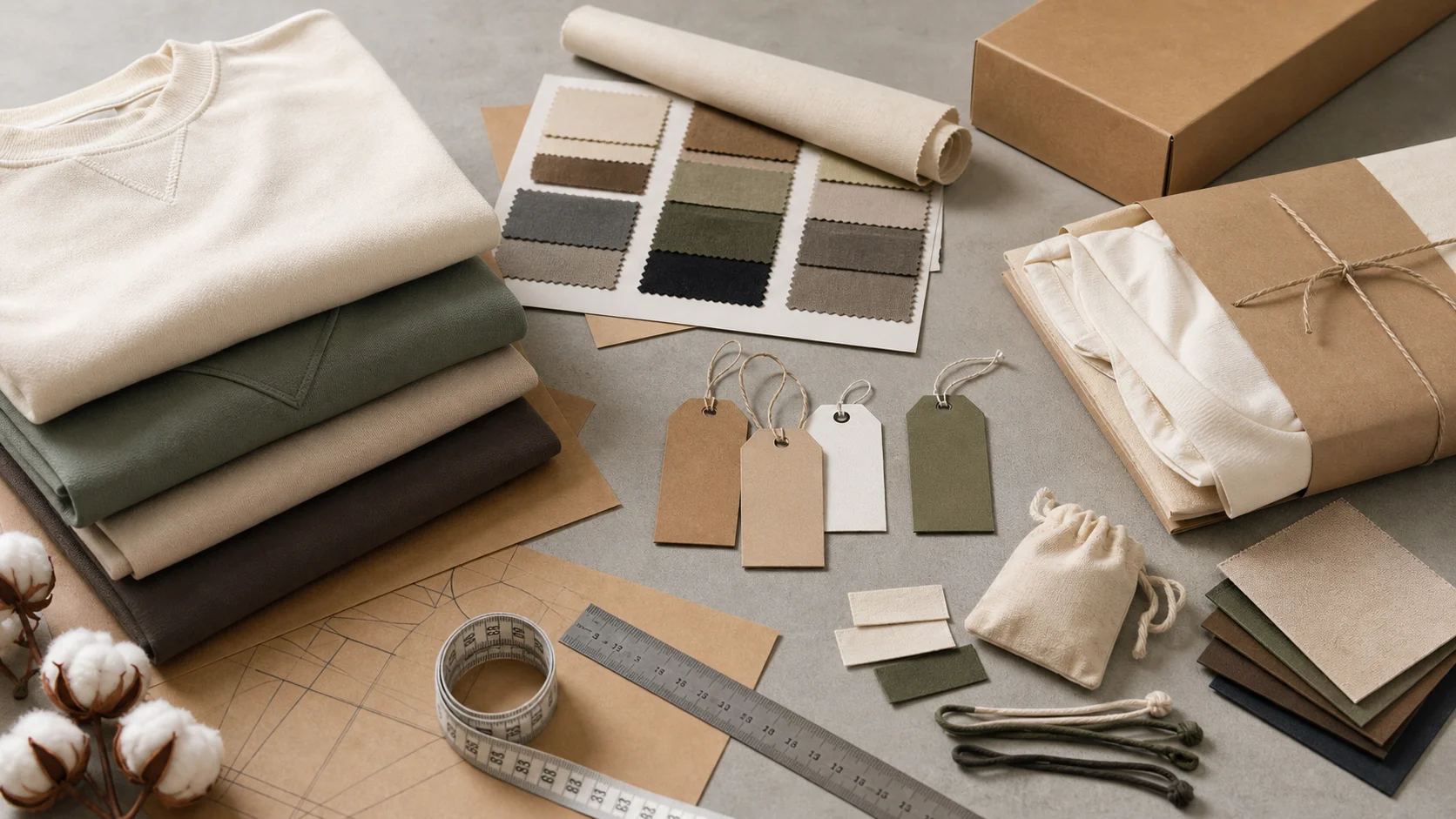
To Ask A Clothing Manufacturer About Payment Terms compared by sample evidence, fabric or trim specs, MOQ, AQL terms, cost lines, delivery timing, and...
Fast answer: To Ask A Clothing Manufacturer About Payment Terms: Sample Evidence, MOQ, Capacity, and Rework Terms should be judged by production evidence, not by a generic sourcing promise. The buyer needs sample proof, cost breakdowns, QC checkpoints, and delivery buffers in writing.
Ask for recent sample photos, measurement tolerances, fabric or print test assumptions, decoration test notes, packing examples, and a named inspection checkpoint. These details show whether the team can repeat an approved sample at bulk volume.
Separate garment cost, decoration, labels, packaging, sampling, testing, freight, and rush charges. Clear cost lines make it easier to reduce colorways, adjust size depth, or reserve more time for sampling.
If you are sourcing apparel for a new brand, scaling an existing label, or launching a private label collection, payment terms can shape the success of the entire project. Why ask clothing manufacturer about payment terms at all? Because the answer tells you how to protect cash flow, reduce risk, and keep production moving on schedule.
Clothing manufacturing is a multi-step process. It often includes sampling, fabric sourcing, pattern development, cutting, sewing, finishing, packaging, and shipping. A typical cut-and-sew program for 500 units can land around $2.50-4.00 per unit for a basic cotton tee or tank in Guangzhou, while more complex hoodies with fleece, rib cuffs, embroidery, and garment dyeing may run higher. Standard lead times are often 18-22 business days after sample approval and fabric confirmation, though custom dyeing, printing, or wash testing can extend that timeline.
Each step requires labor, materials, and planning. That means payment terms are not just a finance issue. They are part of how the manufacturer manages production capacity and how you manage your budget. For example, a factory in Dhaka might source 180-220 GSM combed cotton jersey for tees, while a knit supplier in Ho Chi Minh City may use automatic collar ribbing machines, 4-thread overlock machines, and flatlock coverstitch machines to complete activewear or loungewear orders. In Istanbul, mills and CMT factories often handle premium loopback terry, brushed fleece, and compact cotton with tighter construction standards.
Clear terms help prevent misunderstandings, delays, and disputes. They also help you compare suppliers more accurately. A lower unit price may look attractive, but if the factory requires a large upfront deposit, charges separately for every sample, or demands full payment before shipment, the actual cost may be much higher than expected. Certifications can also affect cost and confidence: GOTS for organic cotton programs, OEKO-TEX Standard 100 for chemical safety, GRS for recycled polyester, WRAP for socially responsible production, and BSCI for supply-chain compliance.
Can you afford to guess?
Before you sign a purchase order or move forward with development, you should know exactly when payments are due, what each payment covers, what happens if plans change, and how refunds or credits are handled. You should also understand whether the manufacturer offers flexibility for repeat orders, larger quantities, or long-term partnerships.
If you are still evaluating manufacturing partners, you can explore Fabrikn’s services to see how a structured production process can support your brand.
When speaking with a clothing manufacturer, start with direct, practical questions. The goal is not to interrogate the factory. It is to understand the full financial structure of the relationship.
These questions help you identify whether the manufacturer is transparent, organized, and experienced. A reliable supplier should answer them clearly and in writing. If responses are vague or inconsistent, that is a sign to dig deeper before committing. Ask for specifics such as whether the factory is operating as a CMT line, an FOB supplier, or a full-package partner, and whether the production floor uses Gerber or Lectra CAD pattern systems, automatic fabric spreading machines, 12-needle coverstitch units, or laser cutting for precision panels.
One of the first things to confirm is the deposit requirement. Many clothing manufacturers ask for an upfront payment before starting sampling or bulk production. This deposit shows commitment and helps the factory cover material purchases, labor scheduling, and development costs.
Common deposit structures include:
The exact structure depends on the manufacturer, the size of the order, whether you are a new customer, and whether the items are standard or custom made. New brands often face stricter terms because the factory is taking on more risk. Reputable manufacturers may reduce deposits for repeat clients or larger commitments. For example, a factory in Guangzhou may ask for 30% upfront on a 2,000-unit reorder, while a Dhaka supplier working on a first-time 500 MOQ may request 50% before fabric booking and the remaining 50% before shipment.
Ask what the deposit covers. In some cases, it applies only to production. In others, it may also include fabric booking, dyeing, pattern development, or sample creation. You should also ask whether the deposit is refundable if the order is canceled before materials are purchased or production begins. On custom programs using yarn-dyed knits, reactive dyeing, screen printing, heat transfer labels, or garment washing, deposits may be used immediately to secure fabric and production slots.
This is especially important in apparel, where fabric sourcing and custom trims can be non-returnable. If the factory buys materials immediately after payment, your flexibility may be limited. Make sure you understand that timeline before sending funds. Ask for a proforma invoice that itemizes shell fabric, lining, zippers, snaps, woven labels, hangtags, polybags, carton export packing, and any barcode sticker setup fees.
Many brands focus on the deposit and final balance, but milestone payments can be just as important. Some manufacturers structure payments around production stages, especially for larger orders or custom apparel programs.
Typical milestones may include:
Milestone-based payment terms can be useful because they distribute risk and keep both sides accountable. They also give you better visibility into the progress of the order. But they only work when communication is tight and the paperwork is clean. Ask what proof is provided at each step, whether that is photos, inspection reports, or production updates. A manufacturer might share cutting markers from a CAD system, sewing-line output from a 30-40 machine module, or in-line QC reports covering stitch density, seam allowance, colorfastness, and measurement tolerance.
If a manufacturer requests payment before shipping, ask whether goods will be held until the balance clears. That is standard in many cases. You should also clarify whether third-party inspections or quality checks can happen before final payment. Some brands want to inspect goods before releasing the balance, especially on first orders. Common inspection checkpoints include fabric gsm verification, shrinkage testing, pilling tests, needle detection, and final carton count.
To avoid confusion, ask whether milestone dates are fixed by calendar date or tied to manufacturing progress. A clear schedule can help you plan inventory, launch timing, and retail delivery expectations. For instance, a sample approval on day 5, fabric in-house by day 10, cutting by day 13, sewing by day 17, and packing by day 21 is a common cadence for a straightforward order in Ho Chi Minh City or Istanbul.
Payment terms are not only about timing. They are also about how payments are made. Different manufacturers accept different payment methods, and some are more convenient or secure than others.
Ask the manufacturer which payment methods they accept, such as:
For international clothing production, wire transfers are still common, but they are not the only option. Some suppliers are comfortable with card payments for samples or small orders. Others may prefer bank transfer for bulk production because it is easier to reconcile with their accounting system. The right method depends on order size, the country involved, and how much trust has already been built.
Currency matters too. Ask whether the manufacturer quotes in USD, EUR, GBP, CNY, or local currency. And check whether exchange rate changes affect the final invoice. A quote in USD may look simple, but if the supplier settles fabric or labor costs in another currency, you may want a buffer for fluctuations. It is also worth asking who pays intermediary bank fees, because those charges can quietly eat into your margin.
If you are sending funds across borders, confirm the bank details by a second channel. A short message or call can save you from a costly mistake. Real manufacturers do not mind careful buyers. They expect it.
Sampling is where a lot of brands get surprised. The first sample rarely reflects the final bulk price because development takes time, and that time costs money. A manufacturer may charge for pattern making, fit corrections, fabric sourcing, tech pack interpretation, labeling tests, or sample stitching. In many cases, sample fees are separate from production costs, and that should be made clear early.
Ask whether the following are billed separately:
Some of these costs are one-time charges. Others may be repeated if you change the design after approval. That is why it helps to lock in your tech pack before development starts. If you keep changing the neckline, rib, stitch count, or print placement, the sample bill will keep climbing.
Ask how many sample rounds are included. One free revision is common in some programs, but not everywhere. And if the factory builds a custom wash or dye test, there may be no way to reuse that work for another client. On more technical pieces, like molded accessories, bonded seams, or complex outerwear hardware, tooling charges can be substantial and may need to be paid before anything else moves.
Late payment policies deserve a close look. They are easy to ignore until something slips. Then they matter a lot.
Ask what happens if a balance is paid late. Some manufacturers charge penalties. Others place the order on hold until payment arrives. A few may stop production altogether if deadlines are missed. None of that is unusual, but you should know the rules before you are under pressure.
Look for clarity on:
If a late payment is caused by a bank delay, ask whether the manufacturer can accept proof of transfer while funds are clearing. Some will, some will not. It depends on their cash flow and how much trust is in the relationship.
The same goes for disputes. If you are holding payment because of a quality issue, say so immediately and back it up with photos, inspection notes, or test results. Silence creates tension fast. A direct conversation usually solves more than a long email thread.
Negotiating payment terms is normal. It does not mean you are difficult. It means you are trying to run a sane business.
The best approach is simple: be respectful, specific, and realistic. If you want a lower deposit, explain why. If you need more time before the final balance, say so early. Manufacturers are more open to flexibility when they see that you are organized and likely to reorder.
A few things can help:
Do not push for terms that shift all risk onto the factory. If a supplier has to buy fabric, pay staff, and reserve production space, they need some protection too. A good negotiation leaves both sides with something workable.
And if the manufacturer says no, that is not the end of the conversation. You can ask what would make them comfortable. Sometimes the answer is a smaller discount, a shorter payment window, or a better history on the next order.
A few warning signs show up again and again. If you see them, slow down.
One red flag on its own may not mean much. A few together is another story. Ask for written terms, a proforma invoice, and a clear order timeline before sending money. If the manufacturer avoids those basics, walk away.
Keep your payment terms in writing. Every time. Even if the conversation was friendly and easy, the written version is what matters when memory gets fuzzy.
It also helps to keep your paperwork tidy:
Startups should be especially careful with cash flow. It is tempting to spend too much upfront on development, samples, and rush fees. But an order that looks affordable on paper can get expensive fast once you add freight, duties, packaging, inspection costs, and currency movement.
If you are new to manufacturing, ask for a simple payment roadmap before you commit. A clear path beats a cheap quote with hidden surprises.
Brands work with Fabrikn because the process is straightforward. The team lays out costs, timing, and expectations early, so there is less guessing later. That matters when you are managing samples, production, and launch deadlines at the same time.
Fabrikn also helps brands understand what they are paying for. That includes development, production, and the steps in between. No mystery math. No awkward surprises halfway through the order.
If you want a better sense of how that works in practice, take a look at Fabrikn’s services. It is a good starting point if you want a manufacturing partner that keeps the paperwork as clear as the production schedule.
What is the most common payment term for clothing manufacturers?For new clients, 30% to 50% upfront is common, with the balance due before shipment.
Are sample fees usually refundable?Usually not. Sample fees often cover labor and development time, so they are separate from bulk order costs.
Can payment terms be negotiated?Yes, especially for repeat orders, larger quantities, or long-term partnerships.
Should I pay before quality inspection?That depends on the agreement. Many brands inspect goods before releasing the final balance, and it is worth asking for that option.
What payment method is safest?It depends on the order and the supplier, but bank transfer, escrow, and documented payment platforms are commonly used. Always verify the recipient details before sending funds.