
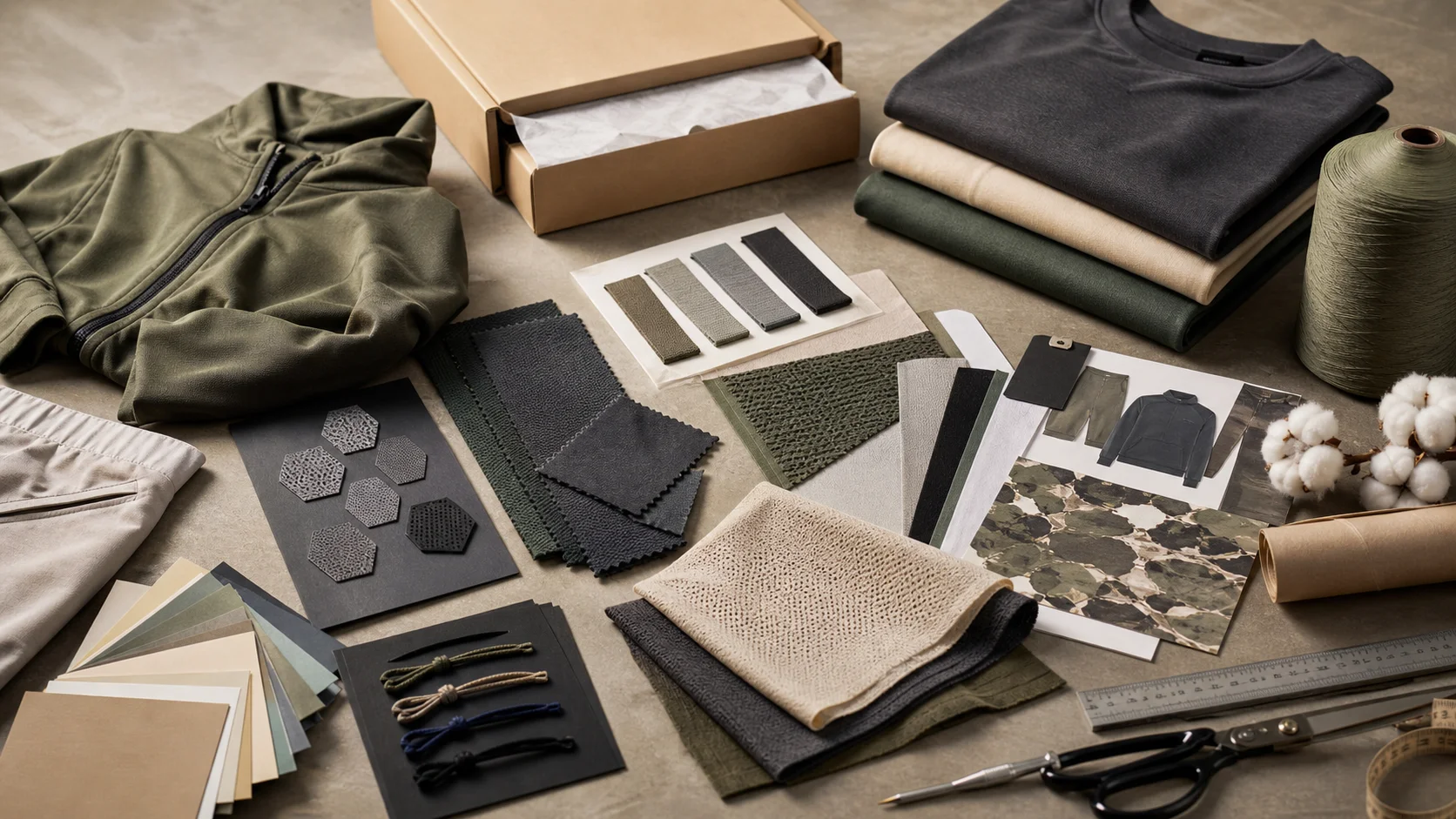
To Include in A Tech Pack for B2B Garment Production compared by sample evidence, fabric or trim specs, MOQ, AQL terms, cost lines, delivery timing, and...
Fast answer: To Include in A Tech Pack for B2B Garment Production: Sample Evidence, MOQ, Capacity, and Rework Terms should be judged by production evidence, not by a generic sourcing promise. The buyer needs sample proof, cost breakdowns, QC checkpoints, and delivery buffers in writing.
Ask for recent sample photos, measurement tolerances, fabric or print test assumptions, decoration test notes, packing examples, and a named inspection checkpoint. These details show whether the team can repeat an approved sample at bulk volume.
Separate garment cost, decoration, labels, packaging, sampling, testing, freight, and rush charges. Clear cost lines make it easier to reduce colorways, adjust size depth, or reserve more time for sampling.
If you are developing apparel for wholesale, private label, or custom manufacturing, one document can make or break your production process: the tech pack. A well-prepared tech pack gives your garment manufacturer the exact information needed to produce your product accurately, efficiently, and consistently. Without it, even a strong design concept can lead to delays, sampling errors, inconsistent sizing, and costly revisions.
For B2B garment production, the tech pack is more than just a design file. It is the operational blueprint that connects your creative vision to factory execution. Whether you are launching a new clothing line, scaling an existing collection, or sourcing a new production partner, understanding what to include in a tech pack for B2B garment production is essential.
This guide explains every major element of a production-ready tech pack, why each section matters, and how brands can use it to streamline communication with manufacturers. If you are exploring full-service apparel manufacturing support, you can also review Fabrikn’s services page for more details.
A tech pack, short for technical package, is a document that contains all the product information a factory needs to make a garment. It usually includes technical sketches, measurements, materials, construction details, labeling instructions, colorways, artwork specifications, and packaging requirements.
In B2B garment production, tech packs are used by brands, product developers, sourcing teams, and manufacturers to align expectations before sampling and bulk production begin. The clearer and more complete the tech pack, the easier it is for the factory to quote accurately, develop samples, and produce garments that match the brand’s standards.
Think of the tech pack as the single source of truth for your product. It removes ambiguity and reduces the chance of misunderstanding between your team and the production partner.
Tech packs are important because garment production involves many moving parts. A product may require multiple materials, trims, embellishments, fits, and packaging steps. If any detail is missing or unclear, the result can be incorrect sampling, production delays, or unexpected costs.
For brands, a strong tech pack can:
For manufacturers, a tech pack makes it easier to assess feasibility, estimate materials, understand construction requirements, and produce garments efficiently. When both sides work from the same detailed reference document, production becomes smoother and more predictable.
A complete tech pack for B2B garment production should include the following core sections:
Depending on the product type, your tech pack may also include graded specs, fit comments, wash instructions, compliance details, and country-specific labeling information.
Every tech pack should begin with basic product details so the manufacturer can quickly identify the style. This section typically includes the style name, style number, season, collection, gender category, product type, and date.
For example, a sportswear brand might list: “Men’s Performance Hoodie, Style No. MPH-2401, SS25 Collection.” This helps the factory organize files and track development progress across multiple products.
Include brand name, buyer name, and contact details if the tech pack will be shared across multiple departments or vendors. Clear identification reduces mix-ups during sampling and bulk production.
Flat sketches are one of the most important parts of a tech pack. These are clean, professional line drawings that show the garment from multiple angles, usually front and back, and sometimes side views or detailed close-ups.
Technical sketches should show all major garment features, such as:
Unlike fashion illustrations, flat sketches are not meant to be artistic. They are meant to be precise and functional. If a detail exists on the final garment, it should appear in the sketch.
The bill of materials, often called BOM, lists every fabric, trim, and component used in the garment. This section helps the manufacturer understand exactly what is needed to produce the product.
Your BOM should include:
The more precise your BOM, the easier it is for the manufacturer to source accurate materials and calculate costs. If you already know suppliers or approved material references, include those as well.
If your garment will be produced in multiple colors, add each colorway to the tech pack. Colorways should be named clearly and supported by accurate color references such as Pantone codes, lab dip approvals, or supplier standards.
Include which components change by colorway and which remain constant. For example, a black hoodie may use white drawcord tips, while a navy version uses matching tonal trims. These details are important because color differences can affect sourcing, production planning, and inventory management.
When exact color matching matters, specify the preferred standard and whether the factory should submit lab dips or strike-offs for approval before production.
Measurement specifications are critical in garment production because fit is one of the most common reasons for product rejection. Your tech pack should include a measurement chart with all key points of measure, often called POMs.
Common POMs may include:
Each measurement should include the base size, allowable tolerance, and grading rule if relevant. If the garment will be made in multiple sizes, provide the full size range and note whether the fit is intended to be slim, regular, oversized, or relaxed.
A tech pack without accurate measurement details creates risk for inconsistent sampling and bulk production. For B2B brands, this can lead to returns, rework, and lost customer trust.
This section explains how the garment should be assembled. It tells the manufacturer exactly how the pieces should be sewn, finished, and reinforced.
Construction notes might include:
Even if your sample looks correct visually, the internal construction must also be specified. Different methods affect durability, fit, and production efficiency. A factory may interpret an incomplete instruction differently, so precision here is essential.
If your garment includes graphics, logos, embroidery, appliqué, woven patches, or any decorative application, the tech pack should clearly state placement, size, and artwork file requirements.
Include:
It is also useful to note whether the artwork should be approved as a digital proof, strike-off, or physical sample before production. This prevents mistakes that can be expensive to correct after bulk printing or embroidery begins.
Brand labels, care labels, size labels, hangtags, and other branding elements should be included in the tech pack. These items are part of the product experience and often required for retail or wholesale compliance.
Specify the following:
If your brand sells in multiple markets, labeling should meet the requirements of each destination country. A manufacturer with strong experience in B2B production can help flag these details early.
Packaging may seem secondary, but it is important in wholesale and retail production. Your tech pack should explain how each garment should be folded, packed, and boxed.
Packaging details may include:
Packaging instructions are especially important for e-commerce-ready garments, retail distribution, or export shipments. They help prevent damage and ensure products arrive presentation-ready.
A professional tech pack should also define quality expectations. This may include stitching quality, fabric performance, colorfastness, shrinkage limits, wash durability, or defect tolerance.
If the product must pass specific tests, mention them in the tech pack. Examples include:
Quality standards are particularly important for performancewear, children’s clothing, uniforms, and export-ready items. They help the factory understand the target benchmark before production starts.
Tech packs are living documents. As designs evolve through sampling, comments, and approvals, you should track every revision. Include version numbers, dates, and notes on what changed.
This makes it easier for both your team and the manufacturer to know which version is current and approved. It also prevents old information from being used accidentally during production.
If your manufacturing process includes sample approvals, include a section for sign-off status or approval signatures. This creates accountability and supports a cleaner development workflow.
Even experienced brands can make mistakes when preparing a tech pack. Some of the most common issues include:
Another common mistake is assuming that a visual reference or sample alone is enough. While samples are helpful, they do not replace a detailed tech pack. Manufacturers need written specifications to reduce interpretation errors.
To create an effective tech pack for B2B garment production, follow these best practices:
It also helps to work closely with your production partner early in development. A manufacturer can often point out missing details, suggest better construction methods, or advise on sourcing limitations before sampling begins.
If you need support from an experienced apparel production team, you can reach out through Fabrikn’s contact page.
Once your tech pack is ready, share it with the manufacturer at the quote or sampling stage. A well-structured tech pack helps the factory understand your product quickly and provide a more accurate response.
When working with a manufacturer, make sure to:
Manufacturing is a collaborative process. The more transparent and detailed your documentation, the better the outcome. If you want to learn more about Fabrikn’s approach and company background, visit our about us page.
Knowing what to include in a tech pack for B2B garment production is one of the most valuable skills a clothing brand can develop. A complete tech pack improves communication, reduces development errors, supports better costing, and helps manufacturers produce garments that meet your expectations.
At minimum, your tech pack should include style details, technical sketches, a bill of materials, colorways, measurements, construction instructions, artwork placements, labeling, packaging, quality standards, and revision tracking. The more precise the document, the smoother the production process.
If you are preparing for your next collection and want a reliable B2B clothing manufacturing partner, Fabrikn is ready to help you move from concept to production with clarity and confidence.
Get a free quote from Fabrikn — your trusted B2B clothing manufacturer with 10+ years of experience. MOQ as low as 200 pieces.
Get a Free Quote →A tech pack provides all the technical and production details needed to manufacture a garment accurately. It acts as the blueprint for sampling, costing, and bulk production.
Yes, many manufacturers offer tech pack support or development guidance. However, brands should still ensure the document reflects their design intent, brand standards, and target market requirements.
A tech pack should be detailed enough that a factory can understand the product without needing constant clarification. Include measurements, construction notes, materials, trims, artwork placement, labeling, and packaging instructions.
Yes. Each garment style should have its own tech pack because construction, sizing, materials, and branding details can vary from product to product.
An incomplete tech pack can lead to incorrect samples, delayed approvals, misquoted costs, production errors, and rework. The more complete the document, the lower the risk.
Absolutely. Any approved change should be reflected in the latest version of the tech pack so the factory works from current information during bulk production.