
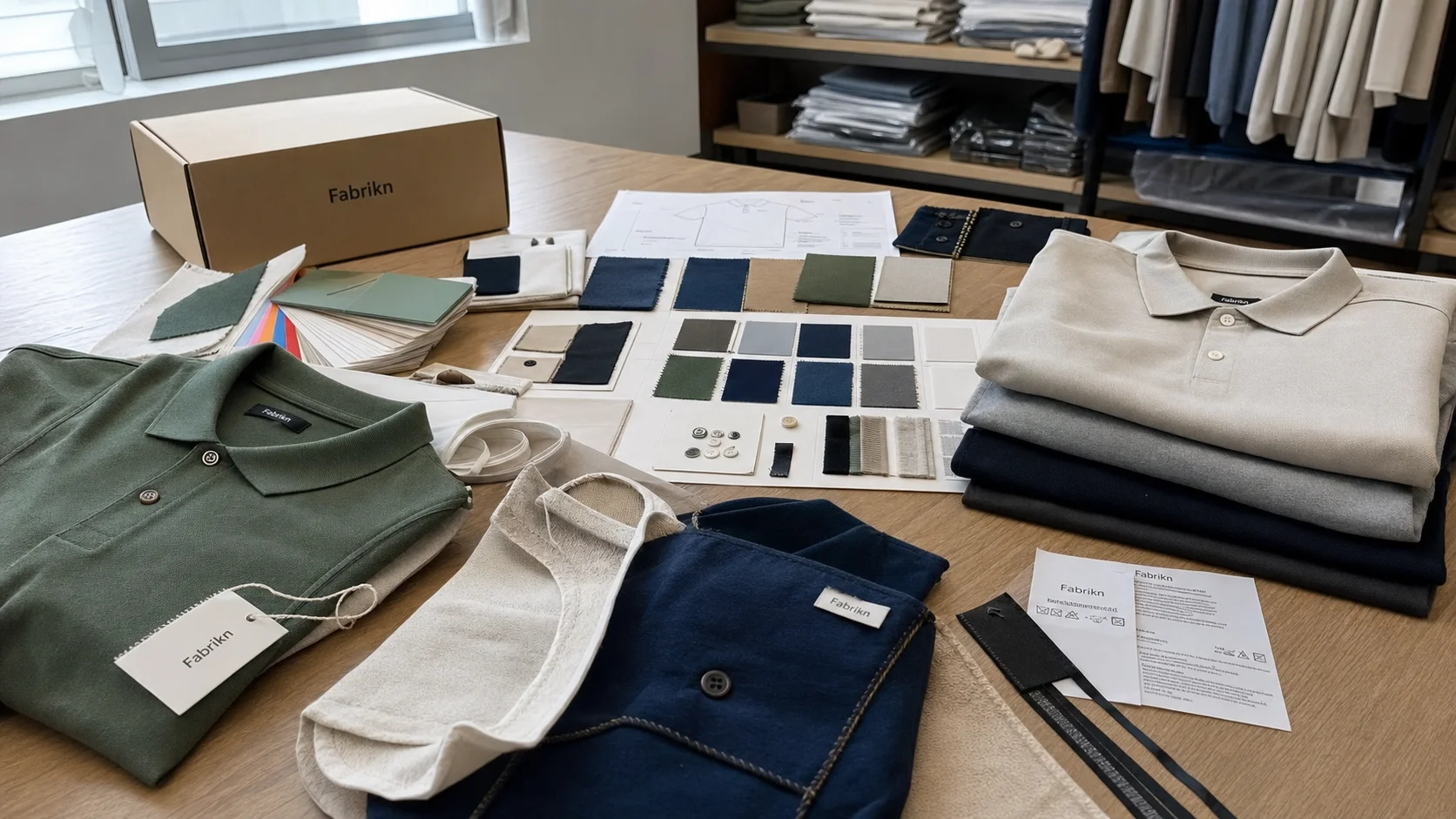
To Look for When Choosing A Factory for Custom Sizing compared by sample evidence, fabric or trim specs, MOQ, AQL terms, cost lines, delivery timing, and...
Fast answer: To Look for When Choosing A Factory for Custom Sizing: Tech Pack, Sample Gate, MOQ, and QC Terms should be judged by production evidence, not by a generic sourcing promise. The buyer needs sample proof, cost breakdowns, QC checkpoints, and delivery buffers in writing.
Ask for recent sample photos, measurement tolerances, fabric or print test assumptions, decoration test notes, packing examples, and a named inspection checkpoint. These details show whether the team can repeat an approved sample at bulk volume.
Separate garment cost, decoration, labels, packaging, sampling, testing, freight, and rush charges. Clear cost lines make it easier to reduce colorways, adjust size depth, or reserve more time for sampling.
Custom sizing apparel is no longer a niche requirement. More brands, retailers, corporate buyers, and uniform programs are looking for better fit, broader inclusivity, and garments tailored to specific end users. Whether you are building a size range for a fashion label, creating team apparel, or developing uniforms for a corporate client, the factory you choose will directly affect the final fit, customer satisfaction, and return rates.
Choosing the right manufacturing partner is especially important because custom sizing is more complex than standard cut-and-sew production. It requires pattern expertise, fit testing, grading knowledge, fabric consistency, and strong communication throughout the development process. A factory that handles custom sizing well can help you turn fit challenges into a competitive advantage.
If you are evaluating manufacturing partners, it helps to understand not only what they can produce, but how they approach fit, consistency, and communication. To learn more about our manufacturing capabilities, you can explore our services page.
The first thing to look for is direct experience. A factory may be excellent at standard apparel production but still struggle with custom sizing programs. Custom sizing requires a different skill set, especially when a client needs multiple fits, special measurements, or size adjustments across different product categories.
Ask the factory whether they have worked on:
You should also ask for examples of past projects. A reliable factory should be able to explain how they managed fit challenges, how many sampling rounds were needed, and what improvements were made during development. Experience matters because custom sizing often involves problem-solving, not just production.
A strong factory should be able to help you create or refine a size system that makes sense for your market. This includes understanding how measurements are translated into patterns and how those patterns are graded across different sizes. Without a reliable size system, you may end up with inconsistent fits, overlapping sizes, or products that do not align with customer expectations.
Look for a factory that can support:
Factories with technical expertise will ask detailed questions about your target customer, product use case, fabric stretch, and fit preference. For example, an athletic garment needs different sizing logic than a structured jacket or a corporate uniform shirt. The right factory should help you define the sizing framework rather than simply following a generic size chart.
The sample stage is one of the most important parts of custom sizing apparel manufacturing. A factory with a strong fit development process will save you time, money, and frustration later in production. Sampling is where you discover whether the garment truly fits the intended user, whether the measurements are accurate, and whether the design behaves as expected in real wear.
When reviewing a factory’s sampling process, ask:
A professional factory should not treat sampling as a one-time step. It should be a collaborative process with clear documentation. The best partners provide detailed comments, measurement reports, and pattern updates after each revision. This reduces the risk of production errors and improves the chances of consistent sizing across the full order.
Custom sizing apparel must be consistent from piece to piece and from size to size. If the fit changes unexpectedly during bulk production, customer trust can drop quickly. That is why quality control is a key factor when selecting a factory.
Ask the factory how they manage quality control at every stage, including:
For custom sizing programs, the factory should have measurement tolerances clearly documented. This means they should know how much variation is acceptable for each point of measurement. A factory that applies strong QC standards will reduce returns, rework, and customer complaints.
If you want to learn more about our company values and approach to manufacturing, visit our about us page.
Custom sizing does not always mean small-volume production. In many cases, brands need customized sizing at scale. A factory must be able to balance technical precision with production capacity so your project can grow without losing fit consistency.
Before committing, ask about:
The right partner should be able to support both pilot runs and larger orders. If your business plans to expand or introduce new size ranges over time, it is important to choose a factory that can scale with you. A factory with limited capacity may deliver good samples but struggle with deadlines once bulk orders begin.
Custom sizing apparel depends not only on patterns, but also on material behavior. Fabric stretch, shrinkage, weight, and recovery all influence how the garment fits. A good factory should understand how material choices impact sizing and should be able to recommend suitable fabrics and trims for your design.
When evaluating a factory, ask whether they can source:
They should also be able to test how materials behave after washing, wear, and repeated use. This is especially important for garments that must hold their shape over time, such as uniforms, activewear, or tailored basics. A factory with strong sourcing capabilities can prevent sizing issues caused by poor fabric selection.
Clear communication can make the difference between a smooth development process and a costly series of mistakes. Custom sizing apparel requires detailed back-and-forth, especially when discussing fit preferences, size adjustments, and technical specifications.
Look for a factory that offers:
You should feel confident that the factory understands your requirements and can translate them into production-ready garments. A factory that asks smart questions, provides recommendations, and responds quickly is far more valuable than one that simply says yes to everything.
If you are ready to discuss your project directly, you can reach out through our contact us page.
For many businesses, especially those supplying corporate, retail, or institutional clients, compliance is non-negotiable. You should confirm that the factory follows relevant labor, safety, and environmental standards.
Depending on your market, you may want to check for:
Compliance is not just about reducing risk. It also helps protect your brand reputation and supports long-term supplier relationships. A factory that is transparent about its certifications and operating standards is generally a safer choice for custom sizing apparel.
Custom sizing apparel often comes with higher development costs than standard products. That is expected, because the factory is investing time into pattern work, grading, sampling, and adjustments. However, you should still understand exactly what you are paying for.
Ask for a breakdown of:
Be cautious of unusually low pricing. In custom sizing, low quotes can sometimes signal weak fit development, poor material selection, or hidden costs later in the process. A reliable factory should be transparent about what is included and what may be charged separately. In many cases, paying a little more upfront can save much more in reduced defects and returns.
Even a technically skilled factory is not the right partner if they cannot meet your deadlines. Lead time matters because custom sizing projects often involve multiple approval stages before bulk production can begin.
Ask the factory to explain:
You should also ask how they handle delays. A dependable factory will communicate early if issues arise and will offer realistic timelines rather than overpromising. Reliability is especially important if your products are tied to launch dates, seasonal sales, or corporate events.
Before making a final decision, use a structured set of questions to compare factories. This will help you identify which partner is best equipped for custom sizing apparel.
A factory’s answers will tell you a lot about their capability. Clear, specific answers usually indicate experience and professionalism. Vague or overly simple answers may suggest they are not prepared for a custom sizing program.
Choosing a factory for custom sizing apparel is a strategic decision that affects product quality, customer satisfaction, and long-term brand success. The best factory is not just a production vendor. It is a manufacturing partner with technical expertise, strong communication, reliable quality control, and the ability to scale with your business.
When comparing suppliers, focus on proven experience, fit development, sample accuracy, production capacity, material knowledge, compliance, pricing transparency, and lead time reliability. These factors will help you avoid costly mistakes and build apparel that fits your market properly.
If you are looking for a manufacturing partner that understands custom apparel development, explore our services or contact our team through the contact us page to start your project.
Get a free quote from Fabrikn — your trusted B2B clothing manufacturer with 10+ years of experience. MOQ as low as 200 pieces.
Get a Free Quote →Custom sizing apparel refers to garments made using a specific size system, fit profile, or measurement chart that is tailored to a brand, customer group, or end user rather than using only standard off-the-shelf sizing.
Because custom sizing requires pattern development, grading, fit testing, and measurement control. A factory with experience can reduce errors and create more consistent results.
It depends on the complexity of the garment, but a good factory should be prepared for multiple rounds if needed. The goal is to get the fit right before bulk production.
Ask how the factory checks fabric, cutting accuracy, sewing tolerances, final measurements, and bulk consistency. You should also ask about measurement tolerances for each size.
Yes, a strong factory should be able to support size chart development, grading, and fit adjustments based on your target customer and product type.
Look for consistent communication, technical support, transparency, compliance, reliable lead times, and the ability to scale production as your business grows.