
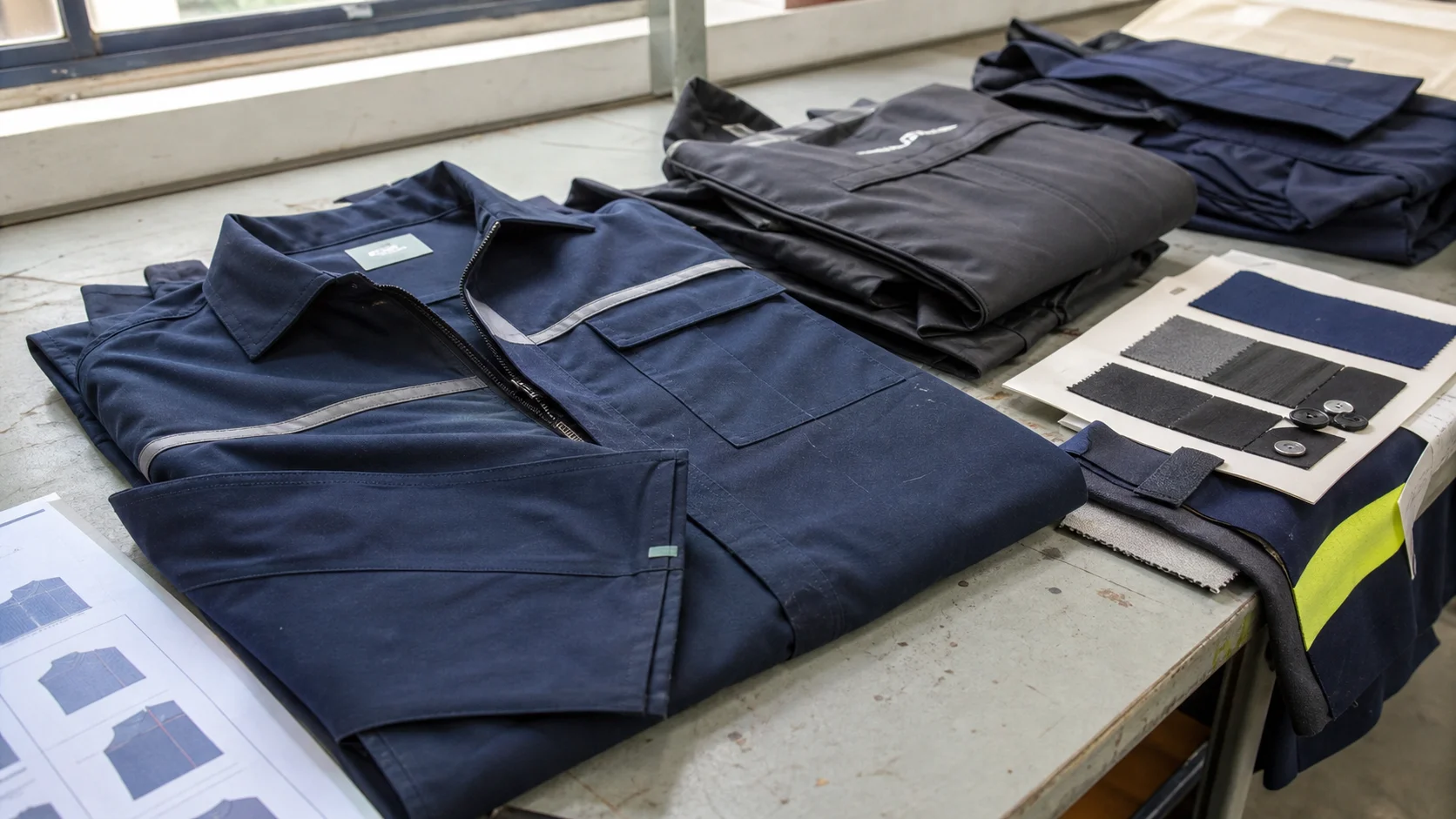
A focused SEO outline for facilities service brands evaluating colorfastness testing on white label uniforms, with practical checks for wash durability,...
White Label Uniforms Colorfastness Testing Buyers Guide - Fabrikn production reference
Colorfastness is one of the quiet failure points in white label uniforms. A garment can look correct on day one and still fail in service after repeated washing, perspiration, abrasion, or exposure to cleaning chemicals. For facilities service brands, that failure is not cosmetic only. It affects brand presentation, replacement cost, and how much confidence a buyer has in the supplier behind the label.
This guide covers how to evaluate white label uniforms colorfastness testing in a way that fits real purchasing work. The focus is on facilities service brands, where uniforms are washed often, exposed to friction, and expected to keep a clean, consistent appearance across large teams. The right testing plan is not about asking for every lab method under the sun. It is about matching the testing to the garment’s fabric, decoration method, laundering program, and service environment.
Facilities service brands rely on uniforms that hold up under repeated washing, movement, and contact with detergent, sanitizer, disinfectant residue, and sweat. Colorfastness is the measure of how well the fabric, print, embroidery thread, or trim keeps its color and avoids bleeding or staining other materials.
In this category, the purchase risk is practical. Dark polos can crock onto light undershirts. Navy pants can fade unevenly after industrial laundering. Reflective trims can hold dye differently than the main body fabric. Screen prints may look stable at first but break down after heat or repeated wash cycles. Once this happens across a team, the brand image looks inconsistent and the buyer ends up replacing inventory early.
For white label programs, the issue is sharper because the garment may be sold under a brand that does not control the factory directly. The customer will judge the label, not the mill behind it. That makes testing part of brand protection, not just a technical checkbox.
A uniform program that skips colorfastness review is usually not saving meaningful money. It is pushing the cost into returns, complaints, replacements, and lost confidence later.
Buyers should not ask only, “Is it colorfast?” The useful question is, “Colorfast under which conditions?” Facilities uniforms face a mix of service conditions that can damage color in different ways. Testing needs to reflect that use pattern.
This checks whether dye stays in the fabric after laundering. It is central for shirts, pants, fleece, and jackets. If a garment will be washed frequently, buyers should ask for test data after repeated wash cycles, not just a single wash result.
This measures color transfer through dry or wet rubbing. It matters for dark fabrics, pigment-dyed goods, printed decoration, and garments worn against belts, aprons, harnesses, or equipment straps. Wet crocking often exposes weak dye fixation faster than dry crocking.
Sweat can alter dye behavior, especially in areas under the arms, back, and collar. This is relevant for service teams working long shifts, outdoors, or in hot environments. A garment can pass wash testing and still bleed or shift color under perspiration exposure.
If uniforms are used outdoors, stored near windows, or worn in bright environments, fading from light exposure matters. This applies more to polos, outerwear, and visible top layers than to inner garments.
Facilities uniforms are often layered. A dark outer layer can stain a light base layer, collars, or pocket linings. Any contrast trim, binding, or mixed-fabric construction raises the risk.
White label uniforms often carry logos through screen printing, heat transfer, embroidery, or woven labels. Each decoration method has its own failure mode. Prints can crack, migrate, or fade. Embroidery thread can shift in shade. Heat transfers can lose adhesion or gloss. Buyers should confirm that the decoration method has been tested on the actual garment fabric, not just on a swatch.
Different suppliers may reference different lab standards. The point is not to become a testing lab yourself. The point is to know what the result means and whether the supplier is showing consistent evidence across samples and production lots.
Test Area Common Reference What Buyers Learn Wash fastness AATCC / ISO wash methods How color holds up after laundering and whether adjacent fabrics stain Rub fastness AATCC Crocking / ISO rubbing tests Whether surface dye transfers through dry or wet abrasion Perspiration fastness AATCC / ISO perspiration methods How sweat exposure affects shade and staining Light fastness ISO light exposure methods How quickly the color fades in light exposureBuyers do not need to insist on a specific standard in every case, but they should insist that the test method is named, the grading scale is shown, and the result is tied to the exact fabric construction being ordered. A supplier who only says “pass” without test conditions is not giving enough information for a commercial decision.
Colorfastness starts with material choice. Two uniforms can look similar on a line sheet and behave very differently in wash testing.
Polyester-cotton blends often perform better than some all-cotton constructions on wash stability and dimensional retention, though the exact result depends on the dye system and finishing. They are common in facilities uniforms because they balance appearance, durability, and laundering tolerance.
Cotton can deliver comfort, but it may fade faster or show shade variation more clearly after repeated washing. Brushed surfaces can also hold and release dye differently, which can affect both wash and crocking performance.
These can improve color consistency in certain programs. They are worth considering for higher-exposure items, though they may increase cost or limit available colors. Buyers should compare the durability gain against the price and MOQ implications.
Colorfastness problems often show up in trims before the base fabric fails. Zipper tape, pullers, reflective tape, contrast piping, and sewing thread should all be checked. A mismatched trim can bleed into the main fabric or create visible shade differences after laundering.
For decoration and printing, the chemistry matters. Plastisol prints, water-based inks, sublimation, heat-transfer films, and embroidery threads each respond differently to heat and washing. Facilities service brands should ask for wash-tested decoration samples on the final fabric rather than accepting a generic decoration claim.
Good purchasing practice is layered. Do not approve a bulk order from a photo or a line drawing alone. Build the approval around physical samples and documented test results.
Lock the fabric composition, fabric weight, yarn type, dye method, trim list, and decoration method. If a supplier changes any of these after sampling, test results may no longer apply.
For dyed garments, lab dips or color references should be approved before bulk dyeing. For printed items, strike-offs or print panels should be checked under the expected lighting conditions. Color can look acceptable in a sample room and still drift once scaled.
The pre-production sample should reflect the final fabric, construction, trims, thread, labels, and decoration. This is the point where buyers should insist on wash and rub testing if the program is sensitive to color loss.
A report that belongs to another color, another fabric weight, or another season is not enough. The report should identify the exact sample, date, method, and result.
For large programs or demanding end users, a small pilot order is often worth the delay. It gives the buyer a better picture of how the garments behave under the actual laundering routine used by the facility or its laundry partner.
The cleanest approval path is usually not the fastest one. For uniforms with frequent washing, a two-step approval can save a buyer from very expensive field failures.
MOQ varies by garment type, fabric, decoration method, and whether the supplier is sourcing stock fabric or developing a custom program. In white label uniforms, practical MOQ ranges often start around 300 to 1,000 pieces per color or style for simpler cut-and-sew programs, and can move higher when custom fabric, custom trims, or specialty decoration are involved. Some suppliers will quote lower entry quantities, but the tradeoff is usually weaker pricing, fewer options, or slower turnaround.
Lead time depends on more than sewing. It includes fabric sourcing, dyeing, decoration setup, lab testing, sample approval, and inspection. If colorfastness testing is part of the plan, buyers should assume extra time for lab submission and revision. A simple repeat order may move faster, but a new fabric or new decoration method adds risk and usually adds calendar days.
Testing can also affect cost structure. Skipping lab work may reduce the quote, but the savings are often narrow relative to the expense of rework or replacement. A more disciplined buyer will decide where testing is mandatory and where it can be scaled down. For high-visibility uniforms, the right answer is usually to test more, not less.
Colorfastness problems are not always visible in a routine pre-shipment inspection. Some failures show only after laundering or after wear in the field. That means the inspection plan should include both visual and evidence-based checks.
Even when the color looks correct in bulk, lot-to-lot variation can appear once garments are stacked, washed, or compared under uniform lighting. This matters for replenishment programs where old and new deliveries are worn together.
Collars, shoulders, elbows, knees, and pocket areas often fade differently from the rest of the garment. Uneven fading can make a uniform look older than it is.
Printed logos may soften, crack, or change shade after washing. Heat transfers can show edge lift. Buyers should ask for wash-tested decoration approval, not just a visual sign-off.
Contrast elements and synthetic trims can bleed into the main fabric. This is easy to miss in one sample and easier to see after repeated laundering.
Wet crocking is a common weak point. A garment that looks stable in dry handling may still transfer color when damp, which is a problem for service garments used around light surfaces or light underlayers.
A strong supplier should answer these questions without delay or deflection:
Suppliers who can give specific answers tend to be easier to manage in production. Suppliers who stay vague often create trouble later when the first bulk order is already committed.
For facilities service brands, decoration is not separate from colorfastness. It is part of the same commercial risk. The logo may be the most visible feature on the garment, and it is usually the first thing a customer notices when quality slips.
Embroidery is generally durable, but the thread shade must still be checked. Heavy stitch density can distort fabric and affect wash appearance. Screen printing is economical and clean for many logos, yet it can become brittle or fade if the ink system is not matched to the fabric and laundering conditions. Heat transfers can deliver sharp branding details, but they are more dependent on proper application temperature, pressure, and wash validation.
Buyers in the decoration and printing category should also confirm placement. A logo close to a seam, hem, or high-friction area is more exposed to wear. The result can be premature fading, cracking, or edge lift even when the base garment performs well.
For buyers reviewing suppliers like fabrikn.com/services/, the useful question is not whether a factory can decorate a uniform. It is whether the decoration method has been aligned with the fabric, wash routine, and end-use risk.
Colorfastness testing should be treated as a control point, not a luxury. That said, not every program needs the same intensity of testing.
Spend more on testing when the uniforms are dark colored, heavily laundered, highly visible, or worn by teams in front of customers. Spend more when the decoration is complex, when mixed fabrics are used, or when replenishment over time matters. Also spend more if the buyer cannot easily absorb rework, because uniform failures are expensive when the first batch has already been distributed.
Control cost by simplifying the construction where possible. Limit the number of contrast trims. Avoid unnecessary mixed-fabric panels. Choose a decoration method that suits the fabric instead of forcing the cheapest print process onto every garment. Keep the approved color range tight. A broad color palette can look appealing in a catalogue and create friction in production.
For brands that need support in sourcing and testing decisions, it helps to work with a supplier team that can translate test results into production requirements. A starting point is often a conversation through fabrikn.com/contact-us/, especially when the program involves multiple garment types or ongoing reorders. Buyers who want to understand the supplier’s production philosophy before requesting samples should review fabrikn.com/about-us/ as well.
The best white label uniform programs do not chase the highest test score on paper. They ask whether the garment will still look presentable after real wash cycles, real wear, and real reorders.
Get a free quote from Fabrikn — your trusted B2B clothing manufacturer with 10+ years of experience. MOQ as low as 200 pieces.
Get a Free Quote →Colorfastness is the ability of a fabric, print, embroidery thread, or trim to keep its color during washing, rubbing, perspiration, and light exposure. In uniforms, it is a durability and brand presentation issue, not just a textile spec.
Wash fastness and rub fastness usually matter most. Facilities uniforms are washed often and exposed to friction from movement, tools, belts, and layered clothing. Perspiration fastness and light fastness matter more when the garments are used in hot or outdoor conditions.
Typical MOQ ranges often start around 300 to 1,000 pieces per style or color, though the real number depends on fabric sourcing, decoration method, and whether the order uses stock or custom materials. Lower MOQs are sometimes possible, but the pricing and testing flexibility may be tighter.
Yes. The logo, thread, transfer, or print can fail before the base garment does. Decoration should be tested on the final fabric and with the final application process.
It depends on the number of rounds needed. Basic lab testing may add a small amount of time, while sample revisions, custom dye development, and pilot approvals can add more. Buyers should account for this early rather than trying to recover time after the order is placed.
One of the biggest risks is assuming that a garment that looks good in a sample will behave the same after repeated laundering. Shade variation, wet crocking, and trim bleed often appear only after use.
Colorfastness testing is worth handling early, clearly, and with enough discipline to match the end use. For white label uniforms in facilities service, that usually means a short list of the right tests, a disciplined sample approval path, and enough production control to keep the first order and the reorder looking the same.