
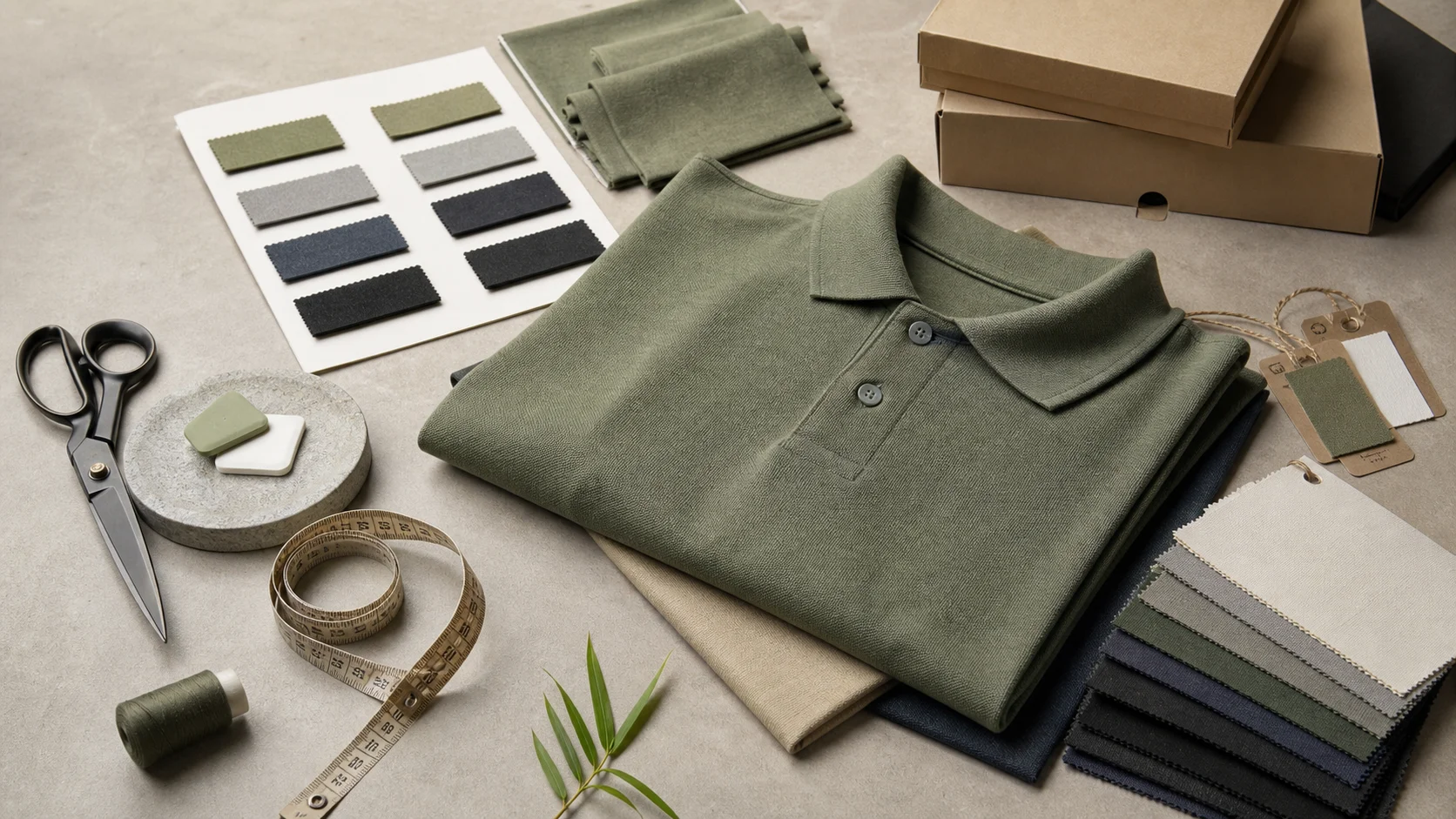
Wholesale Clothing Manufacturing Contract Red Flags with checks for samples, fit, MOQ, QC evidence, pricing terms, and delivery risk.
Fast answer: Wholesale Clothing Manufacturing Contract Red Flags: Samples, Cost Lines, QC, and Delivery Risk should be judged by production evidence, not by a generic sourcing promise. The buyer needs sample proof, cost breakdowns, QC checkpoints, and delivery buffers in writing.
Ask for recent sample photos, measurement tolerances, fabric or print test assumptions, decoration test notes, packing examples, and a named inspection checkpoint. These details show whether the team can repeat an approved sample at bulk volume.
Separate garment cost, decoration, labels, packaging, sampling, testing, freight, and rush charges. When every cost line is visible, it becomes easier to reduce colorways, adjust size depth, or reserve more time for sampling.
Signing a wholesale clothing manufacturing contract is one of the most important steps in building a successful apparel brand. Whether you are launching a private label clothing line, scaling a fashion startup, or expanding an established retail business, your manufacturing agreement shapes product quality, production timelines, pricing, and long-term profitability. A strong contract protects both sides. A weak contract can create delays, unexpected costs, quality issues, and legal disputes that harm your brand reputation.
Many brands focus heavily on samples, fabrics, and price quotes, but overlook the contract language that governs the relationship. That is where problems begin. The biggest wholesale clothing manufacturing contract red flags are often hidden in vague wording, one-sided clauses, or missing protections. If you know what to watch before you sign, you can avoid costly mistakes and choose a manufacturer that supports your growth.
In this guide, we will break down the most common contract red flags in wholesale clothing manufacturing, explain why they matter, and share practical ways to protect your business. If you are still evaluating manufacturing support, you can also explore Fabrikn’s services to see how a professional clothing manufacturing partner can help streamline production.
A manufacturing contract is more than a formality. It is the foundation of your working relationship. In wholesale apparel production, the contract should clearly define product standards, order quantities, payment schedules, lead times, inspection rights, and responsibilities if something goes wrong.
Without a precise agreement, small misunderstandings can become expensive disputes. For example, if the contract does not define acceptable quality tolerances, the manufacturer may consider a flawed garment acceptable while your buyers do not. If delivery timelines are not specific, the factory may miss a launch date that affects your retail season. If pricing terms are unclear, you may face surprise charges that reduce your margins.
For B2B apparel businesses, the contract is also a signal of professionalism. Clear terms indicate that the manufacturer understands compliance, risk management, and long-term partnerships. Confusing, rushed, or heavily one-sided contracts often suggest deeper operational problems.
One of the biggest wholesale clothing manufacturing contract red flags is a lack of detailed product specifications. If the contract simply mentions “T-shirts,” “hoodies,” or “women’s dresses” without precise measurements and materials, you are exposed to major risk.
A proper contract should include:
Without these details, the manufacturer has too much room to interpret your design. That can lead to inconsistent fit, poor fabric handfeel, or garments that do not match your approved sample. Always make sure the contract references technical packs, spec sheets, and approved samples as part of the agreement.
Pricing should never be left open-ended. If a contract does not explain exactly what is included in the quoted price, you may end up paying for sampling, labeling, packaging, fabric sourcing, testing, revisions, freight handling, or rush fees that were never fully disclosed.
Watch for language such as “subject to change based on production needs” without clear limits or approval requirements. That wording can be used to justify unexpected increases later. A fair contract should identify:
Transparency is especially important in wholesale manufacturing because margins can be thin. A contract with hidden costs can damage profitability even if the per-unit price looks attractive at first glance.
Quality control is one of the most important issues in apparel manufacturing, yet many contracts treat it too casually. If the agreement does not define inspection standards, defect thresholds, or the process for handling rejected goods, you may be forced to accept substandard inventory.
Strong quality terms should cover:
A manufacturer that resists quality control language may be trying to avoid accountability. Your contract should make it clear that approved samples are the benchmark for bulk production. If there is a mismatch between the sample and the final shipment, the agreement should state exactly how the issue will be handled.
Promises of extremely fast production can sound appealing, especially when you need to meet a market launch or seasonal deadline. But if the contract contains unrealistic lead times without penalties or contingency planning, you may be setting yourself up for failure.
Lead times in clothing manufacturing depend on fabric sourcing, sample approvals, production capacity, and shipping methods. If a manufacturer guarantees unusually short turnaround times without explaining how they will achieve them, that is a warning sign. The risk is not only delays, but rushed production that compromises quality.
The contract should define:
Reliable manufacturers provide realistic timelines and communicate proactively if something changes. If you need help assessing whether a supplier is operationally ready, consider contacting a trusted apparel partner through Fabrikn’s contact page.
Sampling is the bridge between design and production. If a contract does not clearly describe how samples are developed, revised, approved, and archived, there is a high chance of confusion later.
Sampling red flags include:
For wholesale clothing manufacturing, sample approval should be documented in writing. This helps prevent disputes about fit, construction, and finishing. A professional contract will specify whether the sample is a prototype, pre-production sample, or top-of-production reference. Those distinctions matter when evaluating whether the bulk order meets expectations.
Payment terms can tell you a lot about the manufacturer’s approach to risk. A contract that demands full payment upfront without any safeguards may be a red flag, especially if you are working with a new supplier. On the other hand, a manufacturer may also be too lenient if the terms are so vague that payment triggers are unclear.
Common payment structures in wholesale apparel include deposits, milestone payments, and final balances due before shipment or after inspection. The right structure depends on the relationship and order size, but the contract should always state:
Be careful with clauses that penalize the buyer heavily while giving the manufacturer broad discretion to delay or alter production. Balance is key. A fair agreement protects cash flow without exposing either side to unreasonable risk.
In fashion and apparel, intellectual property matters. Your designs, tech packs, prints, logos, labels, and brand assets are valuable business property. If the contract does not clearly state who owns what, you may lose control of your work or face unauthorized reuse later.
Important ownership clauses should address:
This is especially important if your brand is developing custom collections or signature silhouettes. A manufacturer should not be able to recycle your designs for another customer. If the contract is silent on IP protection, ask for revisions before signing.
Disputes happen in manufacturing. The question is whether the contract provides a fair and efficient process for resolving them. If the agreement is vague about dispute resolution, you could spend too much time and money dealing with conflicts over defects, delays, or missed commitments.
Look for clear language on:
A contract that forces you into a difficult jurisdiction or expensive process without good reason can be a serious liability. The best agreements create a practical path to resolution and encourage both parties to fix problems quickly and professionally.
Every business relationship should have a clear exit strategy. If a wholesale clothing manufacturing contract does not explain how either party can terminate the agreement, you may be stuck in a bad arrangement with little leverage.
Termination clauses should cover:
Without an exit clause, you may face production lock-in or inventory risk. If the manufacturer stops performing, you need a way to move on without unnecessary legal complications. A good contract makes the transition process predictable and fair.
A manufacturing contract should not only cover product and price. It should also define how communication happens. When there is no clear accountability structure, projects can become chaotic, with missed emails, delayed approvals, and confusion about who is responsible for next steps.
Look for terms that define:
Good communication is one of the strongest indicators of a reliable manufacturing partnership. If a manufacturer is slow to answer questions or avoids clarifying contract language before signing, that behavior may continue after the order is placed.
Before you sign any wholesale clothing manufacturing agreement, take a structured approach to review. Do not rely on verbal promises alone. Put everything in writing and make sure the contract matches your production goals.
Here are practical steps to reduce risk:
It is also wise to evaluate the manufacturer’s broader credibility. Review their experience, production capacity, and communication style. Learn more about Fabrikn’s background on the about us page to understand how an experienced manufacturing partner approaches reliability and quality.
Sometimes the best decision is to walk away before signing. If a manufacturer refuses to clarify key terms, rushes you into signing, or repeatedly changes the agreement without explanation, those are strong indicators of future problems.
You should seriously reconsider the partnership if you notice:
Trust your instincts, but back them up with documentation. If something feels off before production begins, it usually becomes more difficult after money is paid and materials are ordered.
The best manufacturing relationships are built on transparency, responsiveness, and shared expectations. A trustworthy wholesale apparel partner will not avoid detailed contract language. Instead, they will welcome it because it protects both sides and supports consistent results.
When evaluating a partner, ask whether they:
A strong contract is part of a strong relationship. It should give you confidence that your garments will be produced to spec, on time, and with the level of professionalism your customers expect.
Wholesale clothing manufacturing contract red flags are often easy to miss when you are focused on launching or scaling your product line. But the details in your agreement can have a major impact on cost, quality, timelines, and brand reputation. Vague specifications, hidden fees, weak quality control, unrealistic deadlines, and missing ownership clauses are all warning signs that should be addressed before you sign.
By reviewing the contract carefully and insisting on clear, balanced terms, you can protect your business from preventable mistakes and build a more dependable supply chain. The right manufacturer will understand the importance of transparency and be willing to put clear commitments in writing.
If you are looking for a manufacturing partner that values clarity, quality, and communication, explore Fabrikn’s services or reach out through contact us to start a conversation.
Get a free quote from Fabrikn — your trusted B2B clothing manufacturer with 10+ years of experience. MOQ as low as 200 pieces.
Get a Free Quote →The biggest red flags include vague product specifications, hidden costs, weak quality control terms, unrealistic lead times, missing IP protection, and one-sided payment clauses.
Yes, especially for larger orders or long-term agreements. A lawyer can help identify risky language and ensure the contract protects your business interests.
A good contract should include product specifications, pricing, quality standards, lead times, sample approval procedures, payment terms, IP ownership, dispute resolution, and termination clauses.
Look for clear communication, detailed documentation, realistic timelines, transparent pricing, and a willingness to define responsibilities in writing.
Yes. In many cases, contract terms are negotiable. If anything is unclear or unfair, request revisions before signing.
Sample approval sets the standard for bulk production. It helps ensure the finished goods match your design, fit, and quality expectations.