
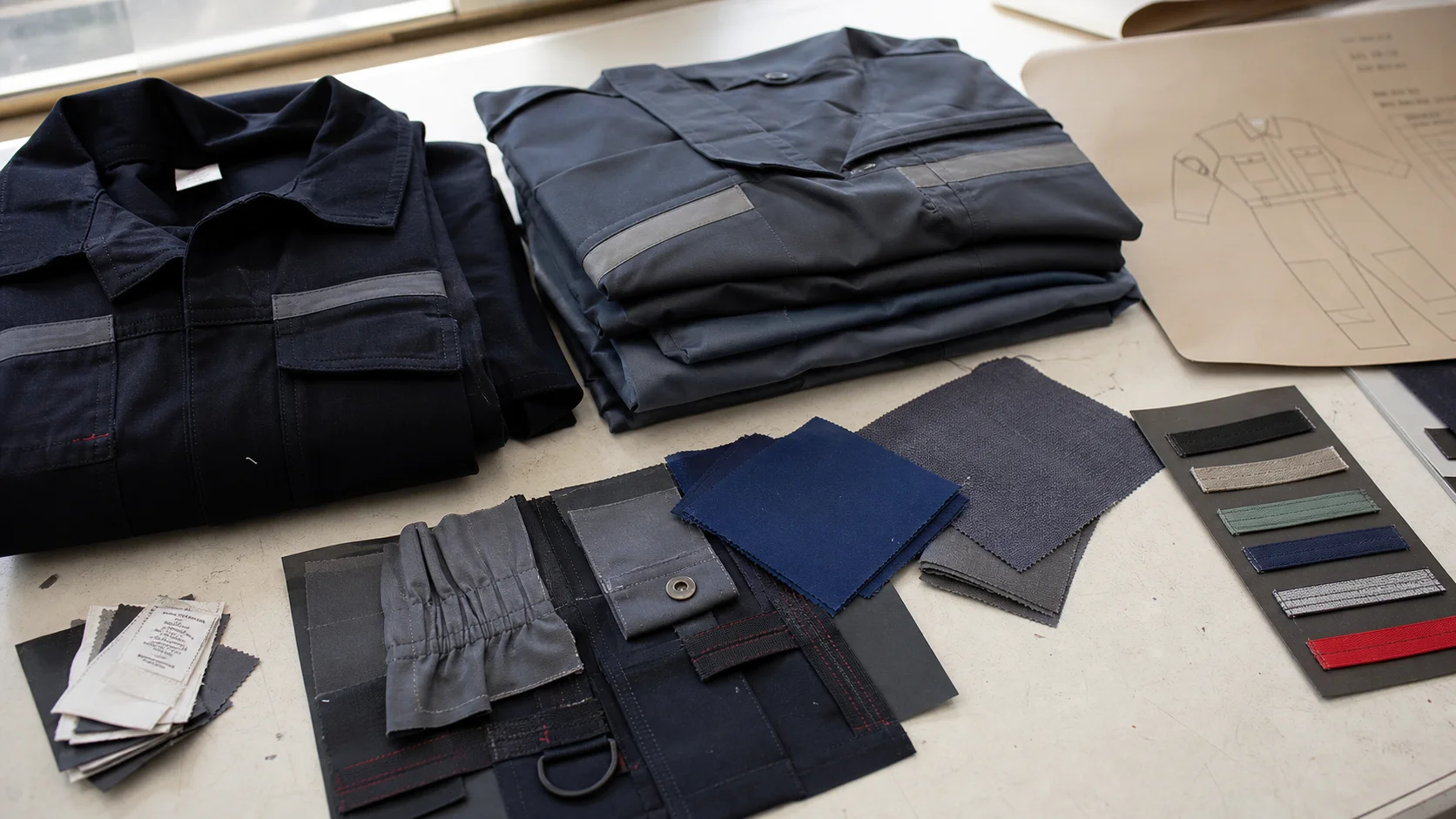
A product-specific outline for restaurant groups sourcing wholesale coveralls, focused on AQL inspection points, defect categories, fit consistency, fabric...
Coverall AQL Checklist for Restaurant Buyers - MOQ, Cost & Sourcing manufacturing guide
Restaurant groups buying wholesale coveralls need more than a low unit price and a clean product photo. A coverall is a work garment that moves through kitchens, receiving areas, dish rooms, maintenance zones, prep stations, commissaries, and sometimes customer-facing back-of-house corridors. If the garment fails after a few washes, shrinks out of size, bleeds dye, or restricts movement, the purchase becomes an operational problem rather than a uniform solution.
An AQL inspection checklist gives restaurant buyers a practical way to control that risk before bulk goods ship. AQL stands for Acceptable Quality Limit. In apparel sourcing, it is used to decide how many finished garments should be inspected from a production lot and how many defects can be accepted or rejected by severity. It does not guarantee that every garment is perfect. It gives buyers a structured, repeatable method to judge whether the shipment meets the agreed quality level.
For restaurant groups, the checklist should be built around real usage: frequent laundering, long shifts, bending and reaching, food safety expectations, consistent branding, and size coverage across many employees. A generic garment inspection sheet is usually too weak. Coveralls need their own checkpoints for fabric, seams, closures, pockets, labeling, shade consistency, shrinkage, fit, and packing accuracy.
This guide explains how to build a wholesale coverall AQL inspection checklist for restaurant groups, what to specify before production, where defects usually appear, and how MOQ, cost, and lead time tradeoffs affect the inspection plan.
Coveralls sit in a different category from standard staff shirts or aprons. They cover more of the body, use more fabric, carry more seams, and include more functional details. A single defect can affect comfort, hygiene, appearance, or safety. For example, a weak crotch seam can split during a shift. A loose snap can fall into a food-handling area. A poorly positioned pocket can interfere with bending or carrying stock. A tight shoulder can make the garment unacceptable even if the fabric looks fine.
AQL inspection is especially useful when restaurant groups order for multiple locations. One central buyer may place an order for hundreds or thousands of units, then distribute them across different restaurants. If the shipment arrives with inconsistent sizing or shade variation, the issue becomes harder to isolate. Stores may receive mixed quality, replacements may not be available, and staff adoption can suffer.
Restaurant operators also tend to reorder uniforms. A good AQL checklist protects the first order and creates a standard for repeat production. The goal is not to inspect randomly for the sake of paperwork. The goal is to set a measurable quality baseline that the supplier, buyer, and inspection team can all follow.
Practical buying judgment: if the coverall will be worn daily and washed frequently, treat it as a performance garment. A weak inspection standard may save a small amount upfront but can create higher replacement costs later.
An AQL inspection checklist only works if the product requirements are clear before production begins. Inspectors cannot fairly reject a garment for “poor fabric” if the buyer never specified fabric composition, weight, shrinkage tolerance, color standard, or finish. For restaurant coveralls, the tech pack or purchase specification should be detailed enough to remove guesswork.
At minimum, restaurant buyers should define the garment type, fabric, trims, construction, measurements, branding, packaging, and compliance requirements. For larger programs, include approved reference samples and signed pre-production samples. These become the standard against which bulk goods are checked.
Spec Area What to Define Why It Matters Fabric Composition, GSM or oz weight, weave, color, finish, shrinkage tolerance Controls comfort, durability, laundering performance, and appearance Trims Zippers, snaps, buttons, elastic, thread, labels, reflective tape if used Prevents weak closures, loose parts, and mismatched trims Measurements Size chart, tolerances, grading, inseam, torso length, sleeve length Reduces fit complaints across staff sizes Construction Stitch type, seam allowance, bartacks, pocket placement, reinforcement points Supports durability during long shifts and repeated washing Branding Logo position, embroidery colors, print method, label artwork Protects restaurant brand consistency Packing Folding method, polybag, carton marking, size ratio, location allocation Improves warehouse receiving and store distributionBuyers sourcing through a manufacturing partner can often streamline this specification work before sampling. For example, fabrikn’s apparel manufacturing services page outlines the types of production support buyers typically need when moving from concept to bulk order.
AQL levels vary by buyer risk tolerance, product complexity, and order value. In apparel, many importers use General Inspection Level II with different AQL limits for critical, major, and minor defects. The exact standard should be agreed with the supplier before the purchase order is issued.
A common apparel approach is:
For restaurant coveralls, this is often a reasonable starting point. Critical defects should have zero tolerance because they can affect safety, compliance, or food-service suitability. Major defects affect usability, durability, fit, or saleable condition. Minor defects are small appearance issues that do not affect function but still need limits.
Defect Class Suggested AQL Examples for Coveralls Buyer Action Critical 0 Needle fragments, sharp metal, loose snap risk in food areas, wrong safety label, severe contamination Reject or quarantine until fully investigated Major 2.5 Broken zipper, open seam, wrong size label, severe shade variation, measurement out of tolerance Fail shipment if above acceptance number Minor 4.0 Light thread ends, small washable mark, slight puckering, minor label skew Accept only within agreed limitSome restaurant groups choose tighter major defect limits for launch orders or executive-approved brand uniforms. Others accept standard limits for non-customer-facing utility garments. The tradeoff is cost and time. Tighter AQL can mean more inspection hours, more rework, and more supplier pushback on price.
A useful checklist should be specific enough for inspectors to apply consistently. It should not rely on vague phrases such as “good quality” or “normal sewing.” The checklist below can be adapted for restaurant group procurement, especially when buying wholesale coveralls for kitchen teams, maintenance staff, dishwashing crews, commissary workers, and receiving teams.
Quantity issues are easy to underestimate. A shipment can pass visual quality checks and still fail operationally if the size ratio is wrong. Restaurant groups usually need predictable size coverage across locations. Too many small sizes and not enough larger sizes can delay rollouts, especially when uniforms are tied to opening schedules or seasonal staffing.
Conformity defects often come from production changes that were not communicated. A factory may substitute a zipper, adjust pocket size, alter stitch density, or use a different fabric batch to meet production timing. Some substitutions may be harmless, but restaurant buyers should not accept unapproved changes blindly.
Restaurant coveralls are often ordered in black, navy, charcoal, khaki, white, or brand-specific colors. Dark colors hide small marks but can show shade variation between panels. White and light colors show stains, dirty handling, and uneven finishing more easily. If the garment is customer-visible, appearance standards should be tighter.
Coveralls carry stress across the torso and seat. The crotch seam, underarm seam, and pocket corners deserve special attention. These areas fail first when staff bend, lift, climb steps, kneel, or reach overhead. A garment can look acceptable on a hanger and still fail under movement if reinforcement is weak.
Closures are a frequent source of returns. Zippers can jam if the tape is poor or the placket is sewn too tightly. Snaps can detach if the post is not properly set. Buttons can loosen after laundering if the thread is weak. For food-service environments, loose trims are not just an annoyance; they can become a contamination risk.
Restaurant buyers should be selective with pockets. More pockets can improve utility for maintenance or receiving staff, but they also increase sewing time, inspection points, and defect risk. For kitchen use, too many open pockets may trap debris or create hygiene concerns. A clean pocket layout is usually better for culinary teams, while utility crews may need more functional storage.
Fabric choice has a direct effect on cost, comfort, durability, and laundering performance. Many restaurant coveralls use cotton, polyester-cotton blends, or stretch blends. Each has tradeoffs.
Fabric Type Typical Benefit Common Risk Purchasing Judgment 100% cotton twill Breathable, traditional workwear feel Higher shrinkage, slower drying, more wrinkling Good for comfort, but specify shrinkage and laundering tests clearly Poly-cotton twill Durable, easier care, stable color Can feel warmer depending on weight and blend Often the safest bulk option for restaurant groups Stretch woven blend Better movement and comfort Higher cost, stretch recovery risk, more complex testing Useful for premium programs, but inspect fit and recovery closely Lightweight poplin Cooler and lower cost Less abrasion resistance, may look less structured Works for light-duty roles, not ideal for heavy utility work Heavier workwear twill Strong and durable Can be hot in kitchens and cost more to ship Better for maintenance and warehouse roles than hot prep areasFor restaurant use, fabric weight often falls in the approximate range of 160 to 280 GSM, depending on role and climate. Lightweight coveralls may sit around 160 to 200 GSM. More durable workwear styles may sit around 220 to 280 GSM or higher. Buyers should not select weight by number alone. A tightly woven 220 GSM fabric may perform better than a loose 260 GSM fabric.
Key fabric inspection points include:
Trim inspection should cover zippers, snaps, buttons, thread, labels, elastic, drawcords, reflective elements, and packaging materials. Trim substitutions are common when suppliers face availability issues. The buyer should approve substitutions before bulk production, not discover them during final inspection.
Coveralls are harder to fit than shirts because torso length, rise, shoulder width, sleeve length, inseam, and seat ease all interact. A size medium might measure correctly at the chest but still feel short in the torso when the wearer bends or reaches. For restaurant groups with many body types, fit should be validated before bulk approval.
The AQL checklist should include a measurement table with points of measure, tolerances, and inspection method. Typical tolerances may range from plus or minus 0.5 cm for small details to plus or minus 2 cm for larger body measurements. Tolerances must be realistic. Overly tight tolerances can cause unnecessary inspection failures, while loose tolerances can allow poor fit into the shipment.
Point of Measure Why It Matters Typical Tolerance Guidance Chest width Affects comfort and layering Often +/- 1 cm to 1.5 cm Waist width Affects movement and appearance Often +/- 1 cm to 1.5 cm Shoulder width Affects reaching and upper-body movement Often +/- 1 cm Sleeve length Affects safety, comfort, and presentation Often +/- 1 cm Torso length Critical for bending and lifting Often +/- 1.5 cm to 2 cm Inseam Affects walking comfort and safety Often +/- 1.5 cm to 2 cm Leg opening Affects footwear compatibility Often +/- 0.75 cm to 1 cmFit approval should happen before production, not during final inspection. The final inspection can verify measurements, but it cannot fix a poor pattern. If the torso is too short across the full production lot, rework may be impossible. For this reason, restaurant buyers should request size-set samples before bulk cutting, especially for first-time orders.
Direct sourcing judgment: if the supplier resists size-set sampling on a new coverall program, the buyer is taking on avoidable fit risk. Coveralls have too many fit variables to rely on one medium sample.
Workmanship defects determine whether the garment survives daily use. In restaurant environments, coveralls may be washed after every shift or several times per week. Small sewing weaknesses become visible quickly. The AQL checklist should classify workmanship defects by severity so inspection decisions do not depend on personal opinion.
Defect Likely Classification Reason Open crotch seam Major Affects wearability and durability Needle fragment or sharp object Critical Safety and contamination risk Loose snap likely to detach Critical or Major Potential food-area contamination and garment failure Broken zipper Major Garment cannot function as intended Skipped stitches at pocket corner Major Stress point may fail during use Untrimmed thread under 2 cm Minor Appearance issue if not excessive Wrong size label Major Creates distribution and fit problems Small washable chalk mark Minor May not affect use if removableBuyers should be cautious with “minor” thread issues. A few short thread ends may be acceptable, but long loose threads near seams can signal poor finishing. Loose threads near snaps, zippers, and pockets may also get worse after washing. The inspection standard should define what is acceptable by length, location, and frequency.
Restaurant uniforms live in the laundry cycle. Final inspection catches visible defects, but some problems only appear after washing. That is why the product approval process should include wash testing before bulk production. AQL inspection should then verify that production remains consistent with the tested sample.
Typical laundry-related risks include shrinkage, twisting, shade fading, seam puckering, logo damage, zipper corrosion, snap loosening, and label deterioration. White coveralls may also show yellowing or poor stain release. Dark coveralls may show lint attraction, fading, or crocking.
Common test expectations may include:
Exact test methods depend on market, buyer requirements, and garment claims. A restaurant group should avoid making performance claims such as flame resistance, antimicrobial protection, or special stain release unless the product has appropriate test support. Standard kitchen work coveralls are not automatically protective equipment.
For bulk procurement, it is reasonable to require a wash-tested pre-production sample and keep it as the approved reference. If the supplier changes fabric mill, dye lot, finishing process, or trims after testing, the test result may no longer represent production.
Uniform branding errors can be costly because they are visible and difficult to repair. Embroidery in the wrong thread color, logo placement that shifts between sizes, or a misspelled woven label can make otherwise usable coveralls unacceptable for a restaurant group. The checklist should include precise brand standards.
Care labels deserve careful attention. If the garment requires commercial laundering but the label only supports domestic wash, staff or laundry vendors may use the wrong process. If tumble drying causes excessive shrinkage, the label should not imply it is safe unless testing supports it.
Packaging may look like a warehouse issue, but it affects rollout speed. Restaurant groups often need to distribute uniforms quickly to new stores, seasonal teams, or replacement stock rooms. Poor carton marking causes unnecessary sorting labor and can delay store readiness.
Minimum order quantity is one of the first questions restaurant buyers ask, but it should not be separated from quality control. Lower MOQ can be useful for pilots and small restaurant groups, while higher MOQ often improves unit cost and gives suppliers more room to source fabric efficiently. The right MOQ depends on fabric availability, customization level, size range, color, and branding.
Typical MOQ ranges for wholesale coveralls vary widely:
These are broad commercial ranges, not guarantees. A supplier may accept lower MOQ at a higher price, especially for repeat buyers or simple designs. A mill-dyed color may force higher MOQ even if the garment factory is willing to sew fewer units. Buyers should ask whether the MOQ is driven by fabric, trims, dyeing, cutting efficiency, or factory production planning.
Buying Scenario MOQ Implication Cost Impact Inspection Impact Pilot order for 3 to 5 locations Lower MOQ preferred Higher unit cost likely Inspection can focus on fit, wash, and defect patterns Multi-location rollout Medium to high MOQ practical Better unit cost possible Full AQL inspection recommended before shipment Custom brand color Fabric MOQ may dominate Lab dips, dyeing, and testing add cost Shade consistency becomes a key risk Premium stretch coverall MOQ depends on fabric supplier Higher fabric and sampling cost Fit, recovery, and seam strength need closer checksCost should be reviewed as a full landed and operating cost, not only the ex-factory unit price. A cheaper coverall that shrinks, fades, or loses snaps after ten washes may cost more over a six-month uniform cycle. Inspection cost is also part of the equation. For a high-volume order, third-party inspection can be inexpensive compared with the cost of receiving defective goods across many restaurant locations.
Buyers looking for a sourcing partner should evaluate whether the manufacturer can support specification development, sampling, production management, and quality control. A short introduction to the company and sourcing approach is available on fabrikn’s about us page.
A strong AQL inspection starts with disciplined sample approval. If sample approval is rushed, final inspection becomes a fight over expectations. Restaurant coveralls should usually go through several approval stages before bulk cutting.
The development sample checks the concept: style, fabric direction, fit idea, pocket layout, and general construction. It may not use final trims or final fabric, but any differences should be clearly recorded. This stage is useful for comparing fabric weights, deciding between zipper or snap closure, and testing how the coverall feels in movement.
The fit sample should be made close to the intended pattern and fabric. For coveralls, fit testing should include sitting, reaching, bending, walking, lifting arms, and kneeling if relevant to the role. Buyers should check torso length carefully. A coverall that feels fine standing still may pull at the shoulders or seat during work.
A size set checks grading across the range. This is important for restaurant groups because staff sizes can vary widely. If the order includes XS through 4XL, do not assume grading is correct based on a medium sample. Large sizes may need proportion changes, not just wider panels.
The pre-production sample should represent final bulk production: approved fabric, color, trims, labels, branding, stitch types, and finishing. This is the most important approval sample. It should be signed or digitally approved before bulk cutting.
At least one approved sample should be washed according to expected care conditions. Record shrinkage, color change, seam appearance, and closure performance. Keep this as a reference for later discussions. If the bulk garments behave differently, there may be a production consistency issue.
Buyers should document approval comments clearly. “Make better” is not a production instruction. “Increase torso length by 2 cm on all sizes and adjust sleeve length grading accordingly” is much more useful.
Lead time for wholesale coveralls depends on fabric availability, customization, sample rounds, testing, production capacity, inspection scheduling, and shipping method. Restaurant groups often underestimate how long custom uniform programs take, especially when branding and size sets are involved.
Typical lead-time ranges may look like this:
Sampling can add several weeks if approvals are slow or changes are significant. Fabric testing can also affect timing. A failed shrinkage or colorfastness test may require fabric changes, washing process changes, or new samples. Buyers should leave enough calendar space for corrections.
Timeline Driver Risk Buyer Control Point Lab dip approval Brand color delays Approve color standard early and avoid late shade changes Size-set approval Fit issues found late Review full size range before bulk cutting Trim sourcing Substituted zippers, snaps, or labels Lock trim specs and require approval for changes Inspection booking Shipment waits at factory Book inspection when production completion date is reliable Carton allocation Wrong store distribution Send final packing breakdown before packing startsRestaurant openings, seasonal hiring, and training schedules should be mapped backward from the required in-store date. If uniforms must arrive before a new restaurant opening, the buyer should build in buffer for inspection failure, rework, and freight delays. A program that has no recovery time is already risky before production begins.
An inspection report should help the buyer make a commercial decision quickly. It should not just list random defects. A good report includes order details, sampling plan, AQL level, defect classification, photos, measurement results, carton checks, packaging checks, and final pass or fail recommendation.
The buyer should review three things first:
If the shipment fails, the next decision is whether to reject, rework, sort, accept with concession, or reinspect. This depends on defect severity and operational urgency. A few loose threads may be trimmed. Wrong size labels across hundreds of units may require full sorting and relabeling. Broken zippers or severe measurement failures may not be commercially repairable.
Inspection Result Possible Buyer Decision Commercial Consideration Pass with minor defects within limit Approve shipment Keep defect photos for supplier scorecard Fail due to repairable workmanship Require rework and reinspection Confirm who pays for reinspection and delay costs Fail due to wrong labels or packing Require sorting or relabeling Protect distribution accuracy before shipment Fail due to critical defect Quarantine and investigate Do not ship until safety risk is resolved Fail due to fit or measurement issue Assess whether rework is possible Pattern or cutting errors may be difficult to fixBuyers should write reinspection terms into the purchase agreement. If the supplier fails final inspection, who pays for rework, storage, and reinspection? Clear terms prevent delays when goods are already packed.
For buyers planning a new coverall program or reviewing supplier options, it is worth discussing the inspection plan before placing the order. The fabrikn contact page is the right next step for restaurant groups that want to clarify MOQ, sampling, production, and quality-control requirements.
The following checklist can be used as a working template. It should be adapted to the exact garment, order quantity, buyer standard, and market requirements.
Inspection Area Checkpoint Pass Standard PO Details Style, color, size range, quantity, delivery terms Matches purchase order and approved documents AQL Plan Inspection level and defect limits General Level II, Critical 0, Major 2.5, Minor 4.0 unless otherwise agreed Quantity Total units and carton count No unexplained shortage, overage, or mixed carton issue Assortment Size and color breakdown Matches order and packing list Fabric Composition, weight, shade, hand feel Matches approved sample and specification Trims Zippers, snaps, buttons, thread, labels Correct type, color, function, and attachment Measurements Chest, waist, shoulder, sleeve, torso, inseam Within approved tolerance Workmanship Seams, stitches, bartacks, pockets, hems No defects above AQL acceptance number Closures Zipper or snap function Works smoothly and securely Branding Logo, embroidery, print, placement Matches approved artwork and placement tolerance Labels Size, care, fiber, country of origin Correct, legible, and securely attached Packing Polybag, carton marks, folding, barcode Matches packing instructions Safety Needle control, sharp objects, loose metal parts No critical defects allowedA wholesale coverall AQL inspection checklist is not only a quality-control document. It is a sourcing discipline. It forces the buyer to define what matters, gives the supplier a clear target, and creates a fair decision method before goods leave the factory.
The strongest restaurant uniform programs usually control four areas early: fit, fabric, trims, and laundering performance. These areas drive most real-world complaints. Final inspection then confirms whether the supplier executed the approved standard. It should not be the first time the buyer discovers that the torso is too short, the zipper is weak, or the fabric shrinks heavily.
For MOQ and cost planning, buyers should balance flexibility against consistency. A small pilot order can reduce risk before a national rollout, but low MOQ often comes with higher unit cost and fewer fabric options. A larger order can improve pricing, but only if the specifications and inspection plan are strong enough to protect the investment.
The practical rule is simple: approve slowly, produce clearly, inspect before shipment. Restaurant groups that follow this process usually have fewer receiving surprises and better long-term uniform performance.
Get a free quote from Fabrikn — your trusted B2B clothing manufacturer with 10+ years of experience. MOQ as low as 200 pieces.
Get a Free Quote →Many apparel buyers use General Inspection Level II with Critical 0, Major 2.5, and Minor 4.0 as a starting point. Restaurant groups may tighten the standard for customer-visible uniforms, high-volume rollouts, or garments with safety-related trims. The agreed AQL level should be written into the purchase order or quality agreement.
Critical defects include needle fragments, sharp metal, severe contamination, unsafe loose trims, incorrect required safety information, or any issue that could create a safety or food-contamination risk. Critical defects should normally have zero tolerance.
Typical MOQ can range from about 50 to 300 units for stock or lightly customized coveralls, 300 to 800 units for custom color or fabric programs, and 500 to 1,500 units or more for fully custom cut-and-sew coveralls. Actual MOQ depends on fabric, trims, color, size range, and supplier capacity.
Full inspection may be useful for high-risk repairs, urgent launches, or previous supplier problems, but most bulk orders use AQL sampling. AQL inspection checks a statistically selected sample and determines whether the lot meets the agreed quality limit. It is more efficient than checking every unit, but it still requires a clear checklist and defect classification.
Poly-cotton twill is often a practical choice because it balances durability, care performance, and cost. Cotton can be more breathable but may shrink and wrinkle more. Stretch blends improve comfort but usually cost more and need closer testing. The best fabric depends on role, climate, laundering method, and expected wear cycle.
Final inspection should usually happen when production is complete and most goods are packed, often at least 80 percent packed and 100 percent finished. If the order is inspected too early, packaging, assortment, and final finishing issues may be missed. For large orders, inline inspection can also help catch problems before final packing.
Restaurant buyers should consider development samples, fit samples, size-set samples, pre-production samples, and wash-tested reference samples. The pre-production sample should represent final fabric, trims, branding, labels, and construction before bulk cutting starts.
Common failures include measurement issues, shade variation, weak seams, broken or stiff zippers, loose snaps, wrong labels, poor logo placement, fabric stains, skipped stitches, and incorrect size ratios. For restaurant groups, packing and distribution errors can be just as disruptive as sewing defects.
Some defects can be reworked, such as loose threads, minor seam repairs, relabeling, or carton sorting. Other defects are difficult or uneconomical to fix, including major shrinkage, wrong fabric, severe shade mismatch, poor pattern fit, or widespread cutting errors. Buyers should require reinspection after rework.
Buyers can reduce risk by writing clear specifications, approving size sets, wash-testing samples, locking trim details, confirming packing instructions, and agreeing on AQL standards before production. A well-prepared checklist gives suppliers fewer excuses and gives buyers a stronger basis for shipment decisions.