
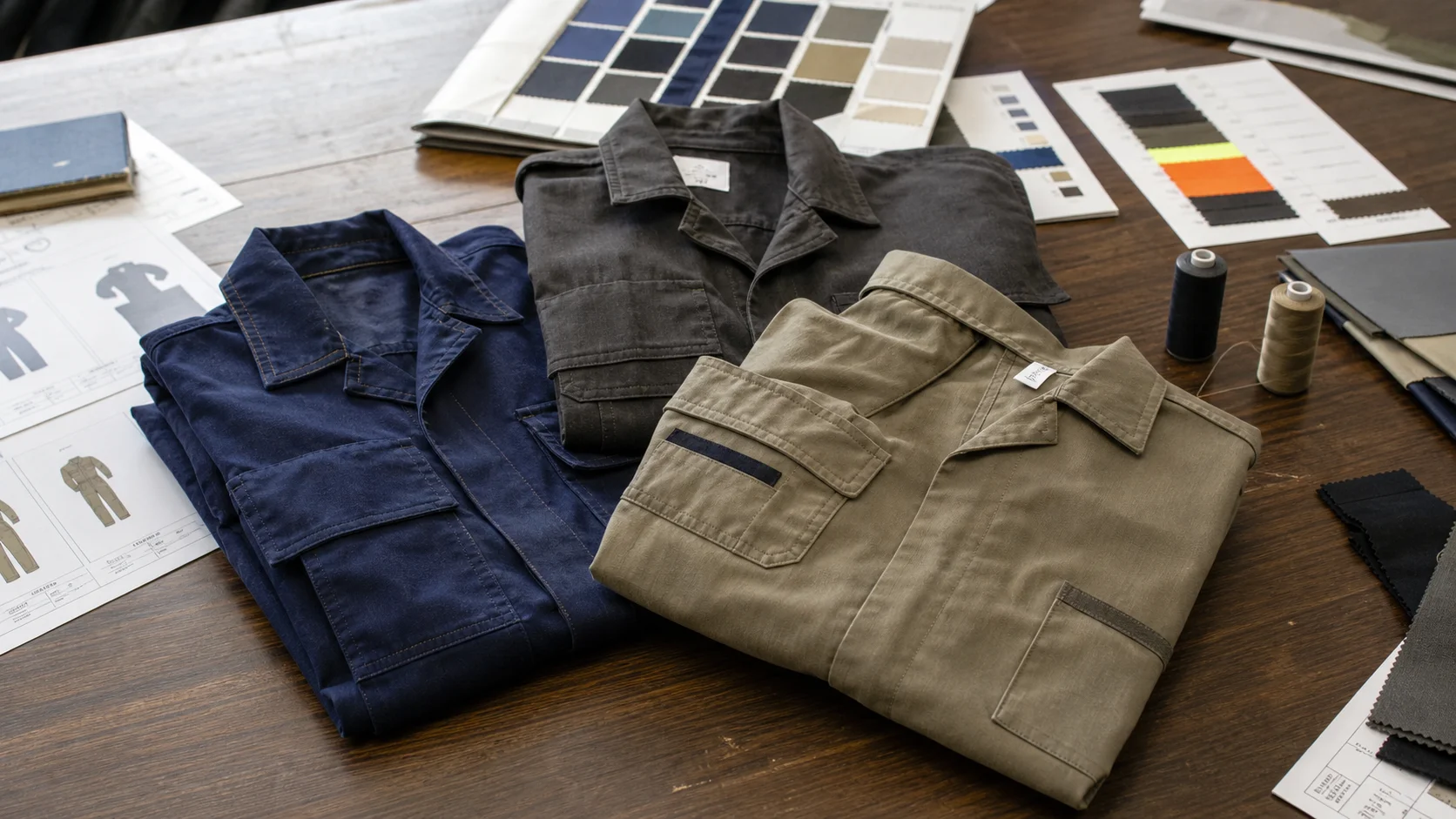
A quality-focused outline for corporate uniform buyers reviewing reorder risks in wholesale coverall programs, from fabric drift and fit changes to trim...
Coveralls look simple from a distance. In procurement, they are not simple at all. A reorder can fail for reasons that are easy to miss during the first buy: the fabric is close, not exact; the trim color shifts; a mill changes finishing; a zipper spec is substituted; shrinkage lands outside tolerance; or a new batch passes visual review and still fails in field use. For corporate uniform buyers, the risk is not only a bad shipment. The larger cost is inconsistency across seasons, sites, and employee populations that expect the second order to match the first.
This review is written for buyers who need repeatable supply rather than one-off production. It focuses on the practical issues that drive wholesale coverall reorder risk, where the weak points usually appear, and what to lock down before the next purchase order is released. The goal is not to overengineer the garment. The goal is to reduce avoidable variation and protect continuity of supply.
Coverall Reorder Risk Review for Uniform Buyers - Quality & Inspection manufacturing guide
Reorder risk is the chance that a second or third production run will not match the approved baseline in fit, durability, appearance, or delivery timing. For coveralls, that risk is higher than many buyers expect because the product combines multiple variables: heavy fabric, many seams, multiple trims, laundering exposure, and site-specific wear patterns. A small deviation in one component can affect the whole garment.
Uniform programs usually care about four outcomes:
When any of those drift, reorder risk becomes a service problem, not just a quality problem. Employees notice mismatched shades and fit changes quickly. Supervisors notice when garments fail early or arrive late. Procurement then has to reconcile stock, replace rejects, and explain why the same item is no longer the same item.
Fabric is the most common source of reorder drift. A coverall can be specified as a 7 oz cotton twill, a polyester-cotton blend, or a more technical workwear cloth, but the real control point is not the label alone. Buyers need to define fiber ratio, yarn count if relevant, weave construction, weave density, finishing process, and acceptable tolerance on weight. If the mill changes a finishing method, the hand feel, shrinkage, and color depth can change even when the nominal specification stays the same.
Typical reorder issues include:
Zippers, snaps, buttons, hook-and-loop tape, elastic, and reflective tape all create risk. A supplier may source from an equivalent component maker, but equivalent on paper is not the same as identical in use. Zipper pull force, tape reflectivity, thread count, and snap retention can all shift. In a coverall, trim failures often show up before fabric failures, especially in high-stress areas such as front closures, cuffs, ankles, and pocket openings.
Uniform buyers often approve a sample that fits well, then find that the second production run wears differently. Pattern drift can happen when factories adjust seam allowances, grade rules, or construction methods to improve sewing efficiency. The garment may still pass basic measurement checks while losing ease in the torso, sleeve length, or crotch rise. That is a problem for coveralls because mobility matters. Too much restriction leads to returns and complaints. Too much looseness creates snag risk and reduces professional appearance.
Color is one of the hardest reorder problems to manage. Even when the same Pantone or lab dip is approved, dye lot variation can occur. Dark shades and high-visibility colors are especially sensitive. For corporate uniform programs, the risk is broader than style consistency. Different lots can create visible mismatches across teams, branches, or replacement inventory. That weakens uniform identity and can make new stock look like a lower-quality substitute.
Lead time risk often starts before sewing begins. Material shortages, factory loading, holiday closures, lab test delays, and shipment bottlenecks can all extend the timeline. Reorders are often placed because stock is already running low, which leaves little room to absorb delay. Buyers who treat a reorder like a routine replenishment can end up forcing an air-freight decision that erases margin.
The best way to reduce reorder risk is to convert the approved coverall into a controlled technical package. A vague style reference is not enough. The reorder file should include a complete bill of materials, measured size spec, construction details, approved color references, and acceptance tolerances. If the first order was approved from a sample, the sample should become the reference standard, not a loose memory of what was approved.
Spec Area What to Lock Down Why It Matters Fabric Fiber blend, weight, weave, finish, shrinkage tolerance Controls durability, comfort, laundering performance Color Pantone or lab dip reference, approved shade band, lot control Reduces visible mismatch across reorders Trim Brand or equivalent approval, size, material, performance standard Prevents functional substitution problems Construction Stitch type, stitch density, seam type, reinforcement points Maintains wear life and appearance Fit Garment measurements, tolerances, grade rules Protects size consistency Packaging Folding method, polybag spec, carton count, labeling Supports warehouse control and issue accuracyFabric specs deserve special discipline. A buyer should not just request a cotton-poly blend and leave the rest to the supplier. The difference between 65/35 and 60/40 can be meaningful in wash behavior and abrasion resistance. The difference between a brushed finish and a plain finish can change comfort and lint release. Even thread type matters, because seam failure risk can rise if the sewing thread does not match the garment’s stress profile.
Trim specs need the same rigor. If a coverall uses a two-way zipper, define the zipper grade, tape width, metal versus resin teeth, puller style, and corrosion resistance if the garment will see wet or oily environments. If reflective tape is part of the design, specify width, placement, wash durability, and visibility standard. If the supplier proposes substitutions, those should be approved in writing before production starts.
Sample approval is where many reorder programs lose control. The first sample often gets judged on broad appearance. That is not enough. Buyers need to know whether the sample is a development prototype, a size set, a pre-production sample, or a production reference. Those distinctions matter because a prototype can look right while still hiding construction shortcuts or measurement drift.
A workable approval process usually includes the following steps:
For repeat programs, the previous approved shipment should be stored as the master reference. That does not eliminate risk, but it gives both buyer and supplier a tangible standard. If a reorder sample deviates from that standard, the issue should be addressed before mass production. A small correction at sample stage is inexpensive. The same correction after bulk output is not.
Reorder control starts with a frozen reference. If the technical package is loose, every subsequent order becomes a negotiation instead of a repeatable purchase.
Inspection at sample stage should focus on the areas most likely to fail in use: front closure strength, pocket stress points, crotch seam reinforcement, knee articulation if present, sleeve and inseam balance, and shrinkage after laundering. Buyers who skip this review often discover problems only after the first issue to the workforce.
MOQ is a practical issue, not a theoretical one. For wholesale coveralls, typical factory MOQs often fall in the range of 300 to 1,000 pieces per color or style, though some suppliers will go lower for simple constructions and some will ask for more if the fabric or trim is custom. The exact number depends on fabric availability, dye lot minimums, cut efficiency, and whether the factory is working from stock cloth or custom-developed material.
Uniform buyers should treat MOQ as part of the risk calculation. A lower MOQ can reduce inventory exposure, but it may raise the unit price and limit color or size flexibility. A higher MOQ can improve unit economics and secure a stable production block, but it increases cash tied up in stock. The right decision depends on turnover, headcount volatility, and whether the garment is standard issue or site-specific.
Lead time also changes with the order shape. A reorder using existing fabric and trims can move faster than a first order, but only if the supplier still has the same materials available. If the mill has moved on to a different dye lot, or the zipper source has changed, the supposed reorder becomes a partial re-development project. In that case, even a small replenishment can stretch into a long lead time.
Plan for the following lead-time dependencies:
Lead times are often quoted as if production were the only variable. That is not a dependable assumption. For coveralls, a stable reorder may still require 45 to 90 days depending on fabric sourcing, testing, and factory queue. Buyers who need frequent replenishment should build a buffer stock policy rather than assuming a fast response every time.
Inspection should not be broad and generic. It should target the failure modes that affect reorder confidence. A solid inspection plan for coveralls usually checks measurement, workmanship, fabric consistency, trim function, label accuracy, and packaging. Each category deserves specific attention.
Check weight consistency, shade stability, surface defects, and hand feel. If possible, compare the current run against the approved master sample under the same lighting. For workwear fabrics, inspect for slubs, thick-thin variation, and weave distortion. If the style uses a blended fabric, confirm that the blend feels and behaves like the approved base.
Seams should be even, secure, and reinforced where needed. Stress areas such as the crotch, underarm, knees, pocket corners, and placket should be reviewed carefully. If the garment includes action back or elasticated sections, the stretch recovery should be examined as part of the inspection. Broken stitches, skipped stitches, and inconsistent topstitching are warning signs of rushed production.
Coveralls must preserve movement without becoming baggy or distorted. Inspect key measurements across sizes rather than relying only on one size. Common trouble spots are body length, sleeve length, inseam, chest, shoulder width, and rise. Uniform buyers should insist on a tolerance band that reflects the garment’s intended use. A tolerance that is too loose will hide quality drift. A tolerance that is too strict may create unnecessary reject rates. The correct answer depends on the program, but the spec must be explicit.
Poor labeling can create warehouse errors that look like quality failures. Confirm size stickers, carton markings, PO references, country-of-origin labels, and care labels. Packaging should protect the garment from dust, moisture, and crushing during transit. If coveralls are issued by size at multiple sites, packaging consistency matters as much as the garment itself.
For buyers who want support with inspection planning, specification control, or reorder coordination, the supplier-side process should be easy to contact and verify through a direct service page such as https://fabrikn.com/services/ or a sourcing inquiry path such as https://fabrikn.com/contact-us/.
A supplier can be capable on first order and still weak on reorder support. The distinction matters. First-order production often benefits from close buyer attention. Reorders require a supplier that can preserve records, match materials, and communicate substitutions before they become surprises.
Useful signs of reorder readiness include:
Suppliers should also be able to explain where variation is likely to occur. A practical partner will not promise impossible precision. Instead, they will identify the tolerance band, the approved alternates, and the steps required if the original material is unavailable. That is a better signal than overconfident sales language.
For buyers comparing suppliers, company background also matters. A supplier with a documented process, clear communication, and a visible operating profile is usually easier to work with than one that changes answers depending on the order size. A basic company overview can be checked through a page like https://fabrikn.com/about-us/, but the real test is whether the production file is stable from one order to the next.
Purchase orders and supplier agreements should do more than list style numbers. They should reduce ambiguity. Reorder risk falls when the contract defines what counts as acceptable, who approves changes, and what happens if the supplied garment deviates from the approved standard.
Practical clauses or controls include:
Traceability is especially valuable. If one reorder performs well and the next does not, lot records can help isolate the root cause. Without traceability, the buyer is left arguing from appearance alone. That is a weak position when trying to resolve a claim or negotiate a correction.
Inspection timing should also be defined. A pre-production approval can reduce risk before bulk sewing begins. A final random inspection can catch workmanship issues before shipment. Some programs also benefit from a midline check when the order is large or the style is complex. The right approach depends on spend, criticality, and supplier maturity.
Not every detail deserves equal intensity. Effective uniform buyers separate the must-not-change elements from the acceptable variables. That judgment saves time and reduces friction with suppliers.
Be strict on:
Be more flexible on:
This is where sourcing discipline earns its value. Over-specifying low-impact details can slow procurement without improving the garment. Under-specifying core performance items creates avoidable replacements and complaints. The right balance depends on whether the coverall is for general maintenance, industrial work, logistics, utilities, or high-visibility duty. The use case should drive the tolerance for change.
A sensible rule is simple: if a variation changes wear life, safety, appearance at scale, or replenishment reliability, it belongs in the controlled spec. If it does not, the team can usually avoid overmanaging it.
Before releasing a reorder, the buyer should confirm the following points:
That checklist is not bureaucratic overhead. It is the minimum control set for a repeat purchase that must perform like the original order.
Wholesale coverall reorder risk is usually not caused by one dramatic failure. It is usually the result of several small changes that were not controlled tightly enough: a different fabric lot, a substituted zipper, a relaxed measurement tolerance, or a compressed schedule that left no room for verification. For corporate uniform buyers, the right response is a disciplined reorder file, a clear sample approval process, and a supplier relationship that treats consistency as a deliverable.
When the garment is intended to represent a company across shifts, sites, and seasons, uniform continuity matters as much as cost. The cheapest coverall is not the lowest-cost choice if it arrives late, wears out early, or no longer matches the approved standard.
Get a free quote from Fabrikn — your trusted B2B clothing manufacturer with 10+ years of experience. MOQ as low as 200 pieces.
Get a Free Quote →The main risk is inconsistency. A reorder may differ from the approved original in fabric shade, shrinkage, fit, trim quality, or delivery timing. Any one of those changes can disrupt a uniform program.
Typical factory MOQ ranges often fall between 300 and 1,000 pieces per color or style, though actual minimums vary by fabric type, trim complexity, and whether the factory is using stock or custom materials.
The reorder sample should be checked against the approved master sample and a written spec sheet. Measure key dimensions, verify color, review seam construction, test closures, and confirm wash performance if that matters to the program.
Fabric and trim usually create the most risk. Fabric lots can vary in shade and shrinkage, while zippers, snaps, and tape can change in performance even when they appear equivalent.
Buyers can reduce risk by keeping a frozen technical package, confirming material availability early, allowing time for inspection and testing, and maintaining buffer stock for critical sizes and colors.
Only if the substitute is fully documented and approved before production. Substitutions that seem minor can still affect fit, wear life, or appearance, so they should not be treated casually.