
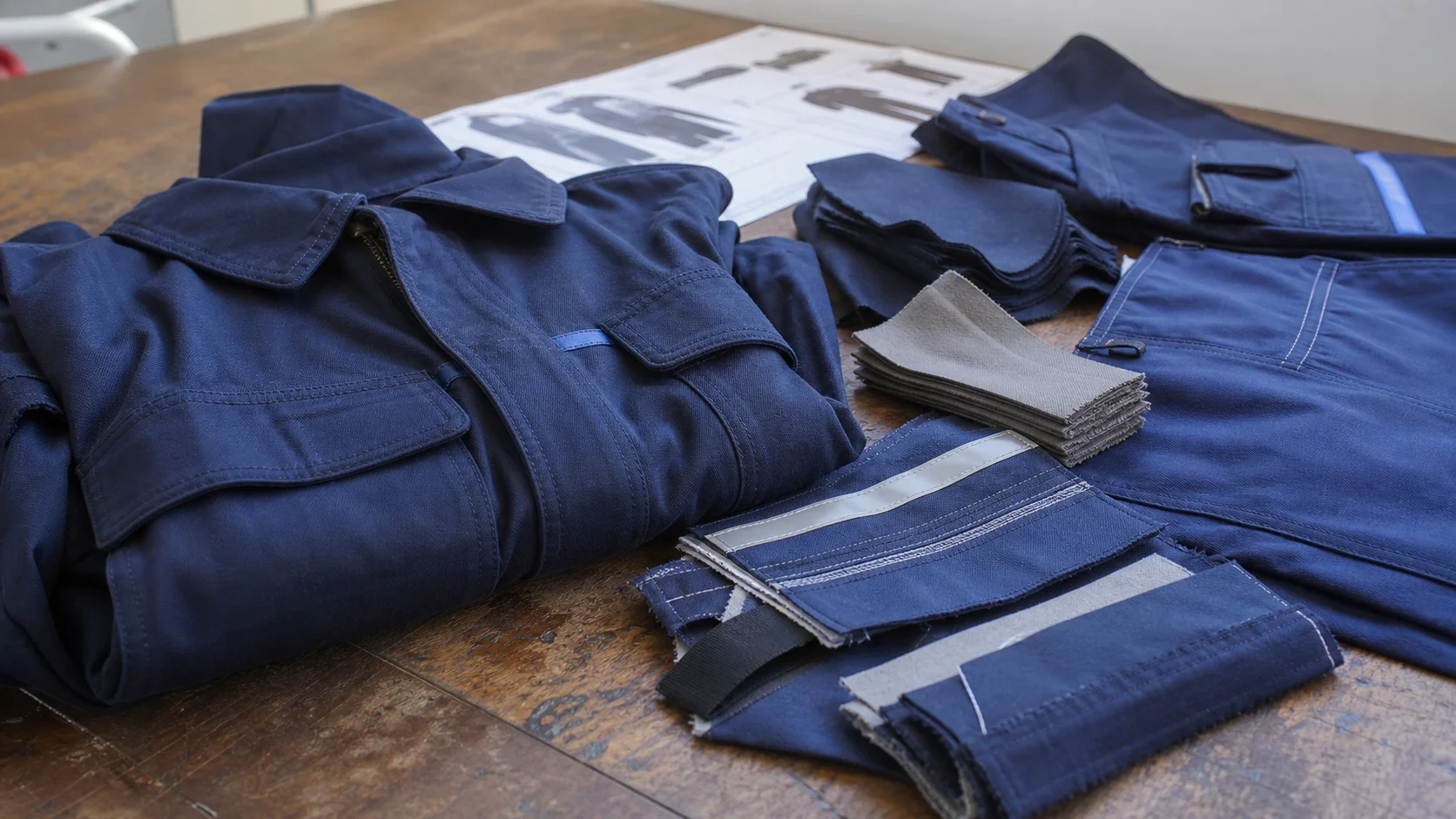
A practical quality and inspection outline for corporate uniform buyers evaluating wholesale coverall wash test results, including shrinkage,...
Coverall Wash Test Review for Uniform Buyers - Quality & Inspection manufacturing guide
Corporate uniform buyers do not buy coveralls only for the first fitting photo. They buy garments that must survive repeated washing, daily abrasion, industrial movement, logo visibility, and warehouse-level handling. A wholesale coverall wash test review is one of the most practical quality checkpoints before approving bulk production, especially when the order is intended for facility teams, mechanics, logistics crews, cleaning staff, maintenance workers, construction support teams, or branded workwear programs.
Wash testing is not glamorous, but it is where many uniform programs either gain control or lose margin. A coverall can look correct at sample stage and still fail after three or five washes because the fabric shrinks unevenly, seams twist, zippers wave, reflective tape lifts, snaps corrode, embroidery puckers, or shade changes enough that replenishment orders no longer match the original rollout.
This review guide is written for wholesale and corporate uniform buyers who need a structured way to judge coverall wash performance before committing to production. It covers what to test, how to read results, what risks matter most, and where purchasing judgment is needed.
Coveralls are high-risk uniform items because they combine large fabric panels, multiple stress points, functional trims, and often more than one decoration method. A polo shirt may have a simple body, collar, placket, and logo. A coverall may include two-way zippers, concealed snaps, action backs, elasticated waist panels, chest pockets, tool pockets, knee reinforcement, reflective tape, cuffs, bar-tacks, labels, and sometimes contrast color blocking.
Each component reacts differently to washing. Cotton-rich fabric may shrink more than polyester-rich fabric. Heavy twill may soften and lose its original pressed appearance. Reflective tape may crack or detach if the bonding method is poor. Thread may show seam puckering if it shrinks at a different rate from the shell fabric. Zippers can ripple when the tape and fabric do not stabilize together.
For corporate uniform buyers, the commercial issue is simple: failed wash performance creates complaints after delivery, not before. By that point, the supplier may have shipped thousands of units, employees may already be wearing the garments, and replacement inventory may be hard to match. Wash testing before bulk production gives buyers a chance to correct specifications while the order is still controllable.
A coverall wash test should not be treated as a laboratory formality. It is a purchasing control that helps predict whether the garment will remain acceptable in real use.
Uniform buyers should also think about the user environment. A warehouse team may wash coveralls at home in mixed laundry. A food processing team may require industrial laundering. A mechanical workshop may expose garments to grease, oil, and higher wash temperatures. A facility maintenance team may need acceptable appearance after frequent cleaning, even if the garments are not flame resistant or certified protective wear.
The wash test method should match the expected laundering route. Testing a coverall at mild domestic settings tells very little if the final wearer will use commercial laundry cycles. At the same time, over-testing can reject a garment unnecessarily if the buyer only needs standard corporate workwear. The goal is not to create impossible standards. The goal is to set a realistic pass/fail threshold before production.
A useful wholesale coverall wash test review looks at more than shrinkage. Shrinkage is important, but it is only one part of garment performance. Buyers should review dimensional stability, color change, shade consistency, seam appearance, trim durability, logo performance, and overall wearability after laundering.
Dimensional stability means how much the garment changes in size after washing and drying. For coveralls, buyers should measure chest, waist, hip, shoulder, sleeve length, inseam, body length, thigh, cuff opening, and across-back points before and after washing. The most important measurements are those that affect movement and safety: body length, sleeve length, inseam, chest, and shoulder width.
A small amount of shrinkage may be acceptable. Many buyers use a tolerance around 3% for woven workwear, but the correct threshold depends on fabric type, garment design, and contract requirements. Cotton-rich twill may need pre-shrinking or adjusted patterns. Polyester-cotton blends often perform better, but quality still varies by mill, dyeing process, and finishing.
Corporate coveralls often carry brand colors. Navy, black, charcoal, khaki, orange, and bottle green are common, but darker shades can show fading and crease marks more clearly. A washed coverall should be compared against the original approved sample and the buyer’s color standard, ideally under controlled lighting.
Colorfastness risks include overall fading, patchy fading, crocking, contrast panel bleeding, and shade mismatch between fabric panels. If a coverall uses contrast trims, reflective tape, or different fabric weights, buyers should check whether one component changes shade faster than the rest.
Seam puckering after washing is a common issue in coveralls. It can come from poor thread selection, incorrect needle tension, fabric shrinkage, seam construction, or inadequate finishing. Twisting is especially visible along legs, sleeves, front plackets, and zippers. On a corporate uniform, twisting looks cheap even if the garment is technically wearable.
Buyers should inspect side seams, inseams, sleeve seams, shoulder seams, armholes, waistband joins, pocket edges, and the front zipper area. If distortion appears on a sample, it often becomes more visible in bulk because production operators and fabric batches vary.
Coverall trims carry real failure risk. Zippers, snaps, buttons, elastic, hook-and-loop closures, eyelets, buckles, drawcords, labels, reflective tape, and reinforcement patches must be reviewed after washing. A zipper that feels smooth before washing may become wavy or stiff after laundering. A snap may show corrosion if plating is not suitable. Hook-and-loop tape may curl, collect lint, or lose grip.
Trim testing is especially important when the buyer has chosen a lower-cost coverall to meet budget targets. Cost pressure often appears first in trims rather than shell fabric. A weak zipper can turn an otherwise acceptable coverall into a return problem.
Corporate coveralls usually require embroidery, woven badges, heat transfer logos, screen printing, or reflective branding. Each method behaves differently after washing. Embroidery can pucker if the backing, stitch density, and fabric are not balanced. Heat transfers can crack or peel if the adhesive is not matched to the fabric and wash temperature. Screen prints may fade or break if ink curing is weak.
For buyers managing multiple departments or locations, logo consistency matters. A coverall that passes the garment wash test but fails the logo wash test is still not ready for bulk approval.
A disciplined sample approval process reduces arguments later. The buyer, supplier, and factory should agree on the sample type, wash method, measurement points, acceptable tolerance, and reporting format before the order moves to bulk cutting.
For larger corporate programs, the approval process usually includes several stages:
The washed pre-production sample is the most important stage for wash performance. It should be made using bulk-intended fabric, trims, thread, labels, and decoration. If the supplier submits a sample from available fabric or substitute trims, the result may not represent bulk production.
Buyers should keep one approved unwashed sample and one approved washed sample. Both should be sealed, labeled, dated, and referenced in the purchase order or quality file. This gives the inspection team a practical comparison standard during pre-shipment inspection.
For support with quality planning and garment sourcing workflows, buyers can review available manufacturing support at Fabrikn services. If the order needs custom inspection criteria, it is better to define them before the supplier starts cutting fabric.
Wash testing is only meaningful when the specification is clear. A vague coverall description such as “poly-cotton workwear fabric, navy, with zipper” is not enough for wholesale purchasing. The supplier may interpret it in several ways, and each version may wash differently.
The fabric specification should include fiber content, construction, weight, finish, color standard, shrinkage target, and any performance requirement. Common coverall fabrics include polyester-cotton twill, cotton twill, canvas, ripstop, stretch twill, and sometimes flame-resistant or anti-static materials where required by the end use.
Typical corporate workwear coveralls may use fabric weights from around 180 gsm to 300 gsm, depending on climate, durability needs, and wearer comfort. Lighter fabrics can improve comfort in hot environments but may wear faster and show pocket stress more easily. Heavier fabrics can improve durability but may shrink more, feel stiff, and increase shipping weight.
A buyer should confirm whether the fabric is pre-shrunk, mercerized, sanforized, resin finished, peach finished, water repellent, stain repellent, or treated for any special property. Each finish affects laundering performance. Some finishes reduce after repeated washing unless specified and tested for durability.
Trims should be specified with the same seriousness as fabric. A coverall zipper should be defined by type, size, material, puller style, tape color, length, and whether it is one-way or two-way. Snaps should include material and plating details. Reflective tape should include width, grade, placement, and wash durability claim. Elastic should include width, stretch recovery, and location.
Thread is often overlooked, but it affects seam strength and wash appearance. Polyester thread is common for workwear due to strength and stability. Buyers should avoid approving a coverall without knowing whether thread color, ticket size, and seam type are suitable for the fabric weight.
Branding should be documented with artwork size, placement, color reference, method, backing, thread color, print ink type, transfer type, and wash requirement. If embroidery is placed over a pocket or near a seam, the supplier should confirm whether the position affects function or creates puckering.
Heat transfers can be attractive for clean corporate branding, but they require strict application control. Temperature, pressure, dwell time, and peel method all affect wash durability. If the supplier cannot provide application parameters, buyers should be cautious about approving transfers for heavy-use coveralls.
Specification Area What to Confirm Why It Matters After Washing Fabric content Polyester/cotton ratio, cotton type, stretch content Affects shrinkage, comfort, fading, and drying behavior Fabric weight GSM or oz/yd² with tolerance Controls durability, hand feel, heat retention, and drape Zipper Type, size, tape, puller, length, slider quality Prevents waviness, jamming, and premature failure Snaps and buttons Material, finish, pull strength, corrosion resistance Reduces rust marks, detachment, and wearer complaints Reflective tape Width, grade, wash cycles, attachment method Controls cracking, peeling, and visibility loss Logo Embroidery, transfer, print, badge, placement Protects brand appearance through repeated washingThe wash test should be written into the quality plan. Buyers do not always need a complex lab protocol, but they do need consistency. If one sample is washed at 30°C and another at 60°C, the results are not comparable. If one garment is air dried and another tumble dried, shrinkage may differ significantly.
A domestic wash test is useful for corporate coveralls that employees will wash at home. A typical test may include washing at 30°C or 40°C with standard detergent, followed by line drying or low tumble drying. Buyers may request one wash, three washes, five washes, or ten washes depending on order value and risk.
For many standard corporate uniform programs, three to five wash cycles can reveal most early problems: shrinkage, twisting, zipper waviness, logo failure, and seam puckering. Ten cycles provide a stronger view of durability but add time and cost. Buyers should use longer wash testing when the coverall is expensive, heavily branded, replenished over time, or intended for demanding use.
Industrial laundry simulation is more relevant for rental uniform programs, centralized laundry contracts, manufacturing facilities, hotels, utilities, and higher-soil environments. Industrial laundering can involve higher temperature, stronger chemistry, mechanical action, and tumble drying. These conditions are tougher on fabric, trims, and decoration.
If industrial laundering is expected, the supplier should not rely only on domestic wash claims. Buyers should ask for test conditions that reflect actual laundering. For workwear with reflective tape, flame-resistant properties, or anti-static requirements, specialist testing may be necessary. A basic garment wash test cannot replace required safety compliance testing.
A one-wash review checks immediate shrinkage and obvious defects. It is fast and useful for early screening. Multi-wash testing gives a better view of how the coverall stabilizes. Some fabrics shrink most in the first wash; others continue changing over several cycles. Some trims look fine after one wash but fail after five.
A practical approach is to require one wash for development screening and three to five washes for pre-production approval. For high-value or long-term programs, keep a ten-wash result as part of the quality record.
Measurements should be taken before washing and after the garment is fully dry and conditioned. The garment should be laid flat without stretching. The same person or same measurement method should be used where possible. Points of measure should match the approved tech pack.
Buyers should avoid vague comments such as “slightly smaller” or “looks okay.” A useful report includes original measurement, after-wash measurement, difference, percentage change, and pass/fail judgment. Photos should show front, back, close-ups of trims, logo, seams, and any defects.
Coverall inspection after washing should be stricter than a casual visual check. Many defects appear only when the garment has relaxed, shrunk, or been exposed to mechanical action. The following risks deserve special attention.
Uneven shrinkage is more damaging than uniform shrinkage. If the whole coverall shrinks 2%, the pattern can sometimes be adjusted. If the body length shrinks 4%, sleeve length shrinks 1%, and the zipper area ripples, the issue is harder to solve. Uneven shrinkage may come from fabric instability, mixed materials, incorrect fusing, or trim incompatibility.
Zipper waviness is common on long front closures. It usually means the zipper tape, sewing tension, and fabric are not working together. A wavy zipper affects appearance and may cause wearer discomfort. Buyers should check whether waviness is visible when the garment is laid flat and when worn.
Workwear coveralls need strong seams at the crotch, seat, armhole, shoulder, pocket corners, and side seams. Washing can reveal weak stitching, poor seam allowance, skipped stitches, or inadequate bar-tacking. A seam that opens during sample wash testing is a serious warning sign for bulk production.
Coveralls often include multiple pockets, and pockets are easy to distort. Patch pockets may twist, pocket flaps may curl, and pen pockets may become uneven. Tool pockets and cargo pockets need reinforcement because they carry weight during use. After washing, buyers should check pocket symmetry, edge puckering, flap shape, and bar-tack condition.
Reflective tape can fail by cracking, peeling, curling, delaminating, or losing reflectivity. The buyer should confirm whether reflective tape is decorative visibility trim or required safety-grade trim. If it is part of a safety requirement, visual inspection is not enough; the specification must match the relevant standard and wash durability claim.
Logo damage is highly visible to corporate buyers because it affects brand presentation. Embroidery puckering, thread bleeding, transfer peeling, print cracking, and badge lifting should be recorded clearly. A supplier may propose changing backing, reducing stitch density, changing print ink, adjusting heat transfer parameters, or moving the logo away from heavy seam areas.
Some coveralls pass measurements but become uncomfortable after washing. The fabric may become harsh, stiff, limp, or excessively creased. Comfort matters because uniform compliance drops when employees dislike wearing the garment. Buyers should include wearer comfort in the approval decision, especially for all-day uniforms.
Wash testing affects both MOQ planning and lead time. Buyers should allow time for sampling, laundering, review, correction, and re-sampling. Rushing this stage often leads to bulk disputes later.
Typical MOQ ranges for wholesale coveralls vary widely by supplier, fabric availability, color, decoration, and size range. For stock fabric with simple branding, some suppliers may support around 100 to 300 pieces per style or color. For custom fabric dyeing, special trims, reflective tape, or full private-label production, MOQs commonly move to around 500 to 1,000 pieces per color, sometimes higher. For highly specialized certified protective coveralls, MOQ and testing costs can be much more demanding.
Buyers should not judge MOQ only by quantity. The more important question is whether the MOQ supports consistent fabric lots, trim availability, and replacement continuity. A very low MOQ may look attractive, but it can create shade variation and trim substitution problems across repeat orders.
Lead time depends on fabric sourcing, lab dips, trim ordering, sample rounds, wash testing, decoration approval, production capacity, inspection scheduling, and freight method. A simple stock-fabric coverall order may be faster than a custom-dyed program, but wash testing still adds days or weeks depending on the number of cycles and review speed.
As a cautious planning range, buyers may expect sample development and approval to take two to six weeks, with bulk production often taking four to ten weeks after final approval. These ranges are not guarantees. Fabric mill schedules, holiday periods, dyeing delays, trim shortages, and failed sample tests can extend timelines. Buyers with fixed rollout dates should build in a buffer instead of approving a borderline sample under pressure.
For buyers building a new supplier relationship or reviewing a complex uniform rollout, it may be useful to contact the sourcing team early through Fabrikn contact so wash test expectations can be included before quotation and sampling.
A wash test result should lead to a clear buying decision. The result is not only pass or fail. Sometimes the garment passes for a low-risk program but is not suitable for a demanding laundry environment. Sometimes the fabric is acceptable, but the trims or decoration need correction.
Test Result Likely Meaning Buyer Action Shrinkage within tolerance, appearance stable Sample is ready for final approval if fit and trims are also approved Approve with sealed washed sample and written tolerance Slight shrinkage above target but uniform across garment Pattern adjustment may solve the issue Request revised pattern and repeat wash test Uneven shrinkage or twisting Fabric, construction, or sewing tension problem Do not approve bulk cutting until corrected Zipper waviness after washing Trim compatibility or sewing method issue Review zipper tape, sewing tension, and front placket construction Logo cracks, peels, or puckers Decoration method is not suitable as applied Change logo method or parameters and retest Reflective tape lifts or cracks Tape quality or attachment method is inadequate Reject for visibility-critical use and require compliant tape evidence Seams open or bar-tacks fail Construction quality risk is high Reject sample and review seam type, SPI, thread, and reinforcementDirect purchasing judgment is needed here. If a coverall shows minor creasing but meets fit, function, and brand standards, the buyer may approve it for a budget-sensitive program. If the same coverall is intended for daily industrial wear with centralized laundering, the same result may be unacceptable. The risk level depends on the use case, not only the sample score.
Before approving a wholesale coverall order, buyers should ask practical questions that reveal whether the supplier understands wash performance. Strong suppliers should be able to answer with specifications, test reports, or clear production controls. Weak suppliers often answer with general reassurance.
Buyers should also request a clear defect classification. Critical, major, and minor defects should be defined before inspection. For example, open seams at the crotch, broken zippers, missing snaps, severe shade mismatch, and failed reflective tape are usually major or critical issues depending on the application. Small loose threads may be minor if they do not affect performance.
A supplier profile and sourcing philosophy can also help buyers judge whether the partner is suitable for structured uniform programs. General company background is available through Fabrikn about us, but project-specific approval criteria should still be documented in the order file.
Pass/fail criteria should be written before testing begins. If the buyer waits until after results arrive, the decision can become subjective. A purchasing manager may accept a defect to protect the delivery date, while an operations manager may reject it after employees complain. Written criteria reduce this conflict.
A practical coverall wash test review can include the following pass/fail checkpoints:
Buyers should separate “must pass” points from “review and decide” points. A broken zipper or open crotch seam should not be negotiated away. Slight softening of fabric after washing may be acceptable or even preferred. Mild creasing may be acceptable for workshop use but not for customer-facing facility teams. This distinction helps the supplier focus on what truly matters.
Coverall sourcing always involves tradeoffs. A heavier fabric may improve abrasion resistance but reduce comfort in warm facilities. A cheaper zipper may reduce the unit price but increase replacement claims. A heat transfer logo may look clean but perform poorly under high-temperature laundering unless properly specified. Embroidery may last longer but can pucker on lighter fabrics.
Uniform buyers should avoid treating the lowest quoted price as the final cost. If a low-cost coverall fails after several washes, the buyer pays through replacements, complaints, internal administration, and brand damage. A slightly higher unit cost may be justified if it improves fabric stability, trim reliability, and appearance retention.
That does not mean every order needs premium construction. A short-term event coverall, light-duty visitor coverall, or occasional maintenance garment may not require the same durability as a daily mechanic uniform. The correct decision depends on wear frequency, laundering method, brand visibility, safety requirements, and replacement strategy.
The strongest purchasing approach is to divide requirements into three groups: non-negotiable performance points, preferred quality improvements, and cost-sensitive options. This gives the supplier room to quote intelligently while protecting the buyer from unacceptable failures.
Passing the sample wash test does not remove the need for bulk inspection. It only confirms the approved standard. Pre-shipment inspection should check whether bulk production matches the approved sample, including fabric shade, measurements, workmanship, trims, labels, packing, and decoration.
For coveralls, inspectors should pay close attention to high-stress areas: crotch seam, seat seam, armholes, pocket corners, zipper base, waistband, reflective tape ends, and bar-tacks. They should also check size labels, care labels, logo placement, and carton assortment. A good wash test cannot protect the buyer if bulk production uses substituted trims or incorrect size grading.
Some buyers request random wash testing from bulk shipment. This can be useful, especially for repeat orders or large rollouts. The supplier should understand in advance whether washed bulk samples will be pulled during inspection and what happens if they fail.
Inspection risk increases when production is split across multiple lines or subcontracted without buyer visibility. It also increases when the order includes many sizes, tall sizes, short sizes, contrast panels, or multiple logo placements. Buyers should request production transparency and avoid late design changes that make inspection harder.
Good documentation helps resolve disputes and supports repeat orders. A corporate uniform buyer should keep the tech pack, fabric specification, trim sheet, logo artwork, approved sample comments, wash test report, measurement chart, pre-production sample approval, inspection report, packing list, and purchase order terms.
The wash test report should include test date, garment size, fabric batch if available, washing method, drying method, number of cycles, detergent type if relevant, before-and-after measurements, photos, defects, and final decision. If the supplier provides only a casual message saying “wash test passed,” the buyer should ask for details.
Repeat orders need the same discipline. Suppliers may change fabric lots, trims, thread, or decoration materials without realizing the wash performance impact. The buyer should specify that any material change requires approval before production.
A wholesale coverall wash test review is a practical safeguard for corporate uniform buyers. It protects fit, appearance, branding, and durability before the order becomes expensive to correct. The most useful review is not complicated, but it must be structured: approve the right sample, test under realistic conditions, measure critical points, inspect trims and logos, document results, and connect approval to the bulk inspection plan.
Buyers should be cautious with suppliers who resist wash testing, cannot specify fabric and trims, or ask for bulk approval based only on an unwashed sample. A coverall is a functional work garment. If it cannot survive the laundering conditions expected in the program, it is not ready for corporate uniform use.
The best decision is usually not the cheapest garment or the most overbuilt garment. It is the coverall that meets the actual work environment, laundry method, brand standard, and replacement budget with the lowest predictable risk.
Get a free quote from Fabrikn — your trusted B2B clothing manufacturer with 10+ years of experience. MOQ as low as 200 pieces.
Get a Free Quote →A coverall wash test review checks how a coverall performs after laundering. It usually reviews shrinkage, twisting, color change, seam puckering, zipper performance, trim durability, logo condition, and overall appearance. For uniform buyers, it is a key approval step before bulk production.
For basic screening, one wash can reveal obvious problems. For pre-production approval, three to five washes are more useful. For high-value, industrial, or long-term uniform programs, ten washes may provide better risk visibility. The number of cycles should match the expected use and laundry method.
Acceptable shrinkage depends on the fabric, pattern, and buyer requirement. Many woven workwear programs target shrinkage around 3% or less, but this should be confirmed in the specification. Uneven shrinkage is usually more serious than a small uniform shrinkage across the garment.
The test should match real use. If employees wash the coveralls at home, domestic washing may be suitable. If garments go through commercial laundry, the buyer should request industrial laundry simulation or relevant specialist testing. Safety-related garments may require additional compliance testing beyond a basic wash review.
It is risky. Bulk cutting before washed pre-production sample approval can lock the buyer into fabric, trim, and pattern problems. A better approach is to approve the unwashed and washed pre-production samples before bulk cutting begins.
Common failures include excessive shrinkage, leg or sleeve twisting, zipper waviness, seam puckering, open seams, pocket distortion, logo peeling, reflective tape cracking, snap corrosion, and visible color fading. These defects should be checked before approving shipment.
Yes. Low-MOQ orders can still fail after washing, especially if they use substitute fabric, cheaper trims, or quick decoration methods. The test level can be adjusted to the order value, but skipping wash review entirely increases the risk of post-delivery complaints.
A useful report should include the sample size, test method, wash temperature, drying method, number of cycles, before-and-after measurements, percentage shrinkage, photos, visible defects, trim and logo observations, and pass/fail decision. The report should connect directly to the approved sample and tech pack.
Neither method is automatically better. Embroidery is durable but can pucker on lighter fabrics or dense stitch areas. Heat transfers can look clean but must be matched to fabric and laundry temperature. Buyers should test the exact logo method on the actual coverall fabric before bulk approval.
Buyers should discuss wash testing before quotation or sampling, not after production starts. Early planning helps align fabric, trims, decoration, MOQ, lead time, and inspection criteria. This is especially important for corporate uniform programs with fixed launch dates or repeat-order requirements.