
A product-specific SEO outline for construction safety buyers comparing wholesale dock coat MOQ tiers, insulation specs, decoration costs, compliance...
Dock Coat MOQ Pricing Review for Safety Buyers - Fabrikn production reference
Wholesale dock coat MOQ pricing is rarely as simple as a unit price on a supplier quote. For construction safety teams, the real buying decision sits between protection, compliance expectations, size coverage, customization, delivery risk, and whether the order quantity is large enough to justify production without creating dead stock.
This review is written for safety managers, procurement teams, contractors, and distributors sourcing dock coats for crews working around loading zones, cold yards, warehouses, jobsite trailers, utility areas, and transport interfaces. Dock coats are practical outerwear, but they can become expensive if the buyer underestimates fabric weight, insulation, reflective trim, decoration setup, and inspection requirements.
A dock coat is a workwear outer layer designed for crews moving between indoor and outdoor environments, especially around loading docks, storage yards, trailers, cold rooms, and industrial facilities. In construction safety programs, it may be issued to workers who need warmth, visibility, and basic weather resistance without the bulk of a heavy parka.
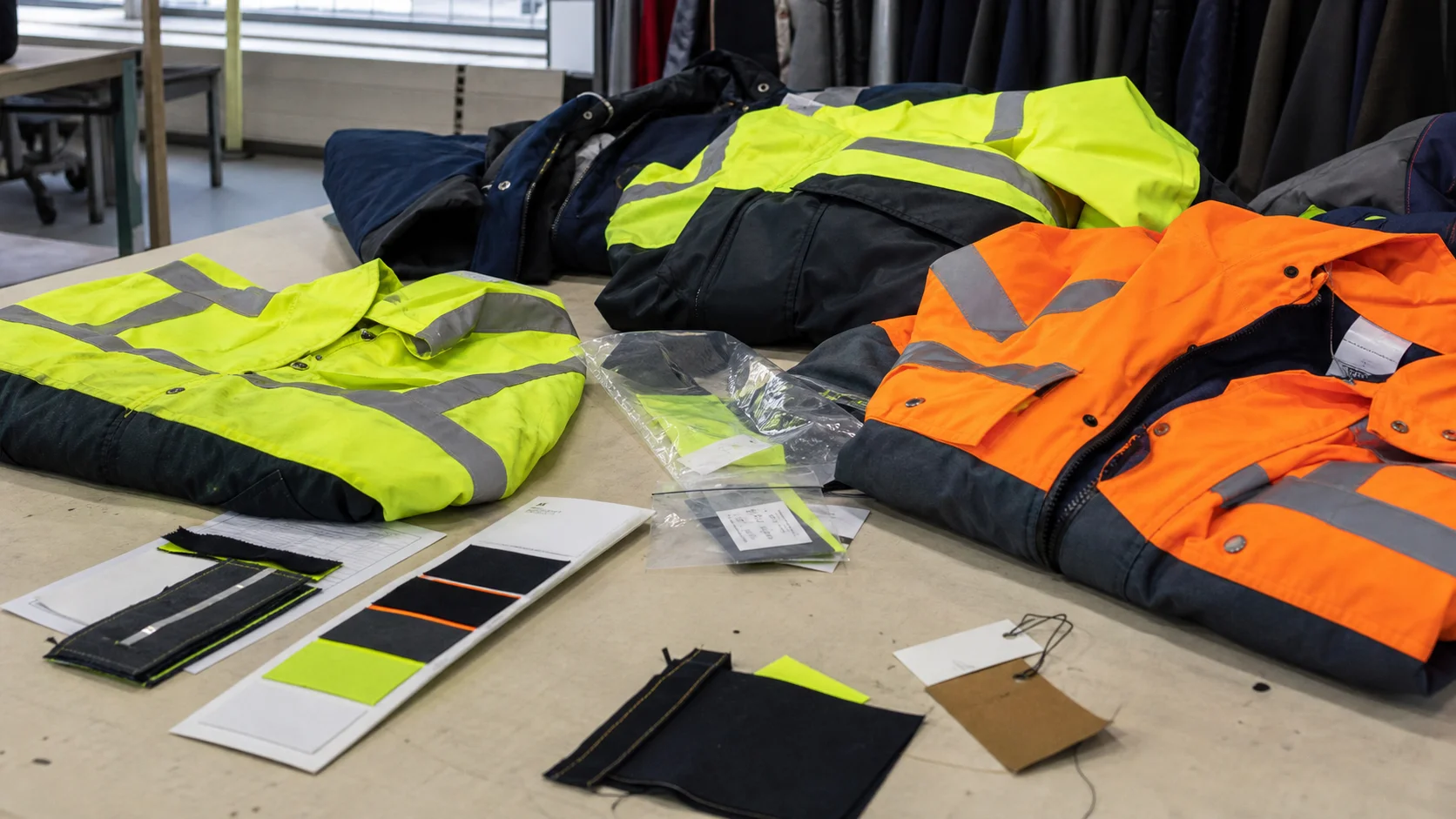
The typical dock coat is hip to thigh length, insulated or quilt-lined, and made with a durable polyester, nylon, cotton-poly blend, or water-resistant shell. Many safety-oriented versions include high-visibility color blocking, reflective tape, storm flaps, knit cuffs, reinforced pockets, and radio or ID badge access.
Dock coats are not always certified high-visibility safety garments. That distinction matters. If the garment is expected to meet ANSI/ISEA 107 or another visibility standard, the buyer must specify the class, background fabric color, reflective tape width, tape layout, and label requirements before pricing. A generic “safety dock coat” description is not enough for compliant sourcing.
Purchasing judgment: treat dock coats as protective workwear, not promotional jackets. A low quote that skips fabric ratings, insulation weight, reflective layout, and size grading can become expensive once the garment is tested in the field.
MOQ, or minimum order quantity, is the smallest quantity a supplier is willing to produce or sell under a specific specification. For dock coats, MOQ is driven by fabric sourcing, color availability, cutting efficiency, insulation purchase quantity, trim minimums, decoration setup, and factory line allocation.
Safety buyers often want mixed sizes, logo placement, reflective trim, and sometimes several colorways by department or project. Each of those choices can increase complexity. A 300-piece order split across six sizes, two colors, and three logo versions may be less efficient than a 500-piece order in one color with a standard size curve.
MOQ also affects pricing discipline. A small order may be possible, but the unit price will often carry surcharges for short fabric runs, small-batch cutting, sample room labor, embroidery setup, and freight inefficiency. A higher MOQ can lower the unit price, but only if the buyer can actually deploy the inventory before styles, staff counts, or safety requirements change.
Construction safety teams should avoid buying solely for the lowest unit price. The better target is a landed cost that supports correct sizing, acceptable quality, practical replenishment, and no major compliance gaps.
MOQ ranges vary by supplier type. Stock wholesalers, cut-and-sew manufacturers, and private-label exporters operate with different cost structures. The ranges below are typical market references, not guaranteed commitments. Final MOQ depends on fabric, trims, certification needs, decoration, and order timing.
Supply Option Typical MOQ Range Best Use Case Tradeoff Blank stock dock coats 24 to 100 pieces Fast issue programs, urgent replacement needs, small crews Limited color, fit, fabric, and compliance control Stock coat with logo decoration 48 to 150 pieces Contractor branding, distributor programs, seasonal crew outfitting Embroidery or heat transfer setup can raise cost on small runs Semi-custom dock coat 200 to 500 pieces Custom color blocking, selected trims, adjusted pockets, branded labels More sample approvals and longer lead time Fully custom safety dock coat 500 to 1,500 pieces Program uniforms, private-label workwear, certified high-visibility designs Higher development cost and stronger forecasting requirement Replenishment after approved bulk run 100 to 300 pieces Ongoing safety uniform programs Only practical if fabric and trims remain availableA buyer ordering fewer than 100 pieces should usually consider stock goods first. A buyer ordering 300 to 500 pieces can start to evaluate semi-custom options. Fully custom dock coats make better sense when the organization has repeat demand, stable branding, and enough time for development.
For broader manufacturing support and garment development planning, buyers can review Fabrikn’s apparel manufacturing services to understand how sourcing, sampling, and production coordination typically fit together.
Dock coat pricing is shaped by more than fabric and labor. Safety buyers should review each cost driver because small specification changes can shift the quote significantly.
The shell fabric is one of the largest cost inputs. Polyester oxford, pongee, taslan, ripstop, twill, and cotton-poly blends all price differently. A water-resistant coated polyester will usually cost less than a higher-performance breathable laminate. Flame-resistant or arc-rated materials sit in a different price category and should not be treated as a standard dock coat upgrade.
Buyers should specify fabric weight, fiber content, weave, coating, color, and testing expectations. “Heavy duty polyester” is too vague for serious quoting.
Insulation weight affects warmth, bulk, sewing difficulty, and price. Common synthetic insulation ranges may sit around 80 gsm to 200 gsm depending on climate and garment design. Lining may be plain taffeta, quilted polyester, fleece, or a combination. A warm coat with poor mobility can frustrate crews who climb, load, bend, and operate equipment.
Construction safety teams should match insulation to working conditions. A moderate quilted dock coat may be better than an overly heavy coat if crews frequently move between heated interiors and cold outdoor areas.
Reflective tape is a major pricing and compliance factor. Standard reflective tape, segmented tape, heat-transfer tape, and flame-resistant reflective tape carry different costs. Tape width, placement, number of bands, shoulder coverage, and sleeve layout all matter.
If the coat is sold or issued as a compliant high-visibility garment, the supplier should confirm the standard, garment class, test documentation, and label language. If the coat is only “enhanced visibility,” the product description should not imply certified compliance.
Dock coats often include lower patch pockets, chest pockets, inside document pockets, radio loops, pencil slots, hand-warmer pockets, and ID badge tabs. Each detail adds cutting, sewing, reinforcement, and inspection points.
Pockets should be useful, not decorative. A field crew may value secure inner pockets and easy glove access more than a complicated pocket package that increases cost and failure risk.
Common branding methods include embroidery, woven patches, heat transfers, reflective transfers, and private neck labels. Embroidery is durable but can penetrate water-resistant shells and may require backing. Heat transfers are cleaner for some logos but need testing for adhesion, wash durability, and compatibility with coated fabrics.
Logo quantity affects MOQ pricing. A left-chest logo is simple. Adding sleeve logos, back prints, department names, and individual personalization increases handling time and sorting risk.
Construction teams usually need a practical size spread from small through 3XL or 5XL. Extended sizes cost more because they use more fabric and may require adjusted patterns. A quote that averages all sizes may look simple, but it can hide extra charges if the order is heavy in larger sizes.
Ask the supplier how oversized units are priced. It is better to know that 4XL and 5XL carry surcharges before purchase order approval.
Cost Driver Low-Cost Choice Higher-Cost Choice Buyer Note Shell Basic polyester Coated, laminated, FR, or specialty fabric Confirm water resistance and durability claims Insulation Light quilt lining Heavy synthetic insulation or fleece combination Balance warmth with mobility Visibility Contrast trim only Certified reflective tape layout Do not blur enhanced visibility and certified PPE Branding One logo position Multiple logos, names, patches, labels More branding means more sorting checks Packaging Bulk pack by size Individual bags, barcodes, project sorting Useful for distribution but adds laborA serious dock coat RFQ should include measurable specifications. Without them, suppliers may quote different garments while appearing to compete on the same product.
The trim package deserves close review. Cheap zippers, weak snaps, low-grade elastic, and poor reflective tape can damage the value of an otherwise acceptable coat. For safety teams, failed closures and peeling tape create both user complaints and replacement costs.
Procurement teams can use a simple specification sheet before contacting suppliers. That sheet should include target quantity, size ratio, delivery location, required date, decoration details, and whether the garment must meet a safety standard. A clear RFQ reduces quote revisions and prevents suppliers from guessing.
Sampling should not be skipped on custom or semi-custom dock coat orders. Even stock programs benefit from a pre-production decorated sample when logos, reflective transfers, or special packaging are involved.
The buyer should first share a reference garment, product photos, or a basic tech pack. A good supplier will clarify fabric, fit, trim, and construction before quoting. If the supplier gives a firm price without asking about core specifications, the quote may not be dependable.
A fit sample checks overall garment shape, sleeve length, shoulder movement, pocket access, and insulation bulk. Construction safety teams should test movement with realistic clothing underneath, including hoodies or base layers if crews wear them on site.
The decoration sample verifies logo size, placement, thread color, transfer adhesion, patch stitching, and visibility against the shell color. On coated fabrics, heat transfers and embroidery should be reviewed carefully because both can affect appearance and durability.
The pre-production sample should represent the final approved materials, trims, labels, packaging, and workmanship. Bulk production should not begin until this sample is signed off. A photo approval may be acceptable for repeat stock decoration, but fully custom orders need stronger control.
A size set is especially useful when the order includes extended sizes. The buyer should confirm grading, sleeve length, sweep, chest allowance, and mobility. Larger sizes should not simply be scaled up without considering practical fit.
Purchasing judgment: if the coat is for a crew that works in cold, physical conditions, approve the sample while wearing the same mid-layer the worker will use on shift. A sample that fits over a T-shirt may fail in winter deployment.
Lead time depends on whether the order uses stock goods, available fabric, or new production. Buyers should separate sample time, material sourcing time, bulk production time, inspection time, and shipping time.
Order Type Typical Timeline Main Dependency Risk Point Blank stock order 3 to 10 business days Warehouse availability Size shortages during peak season Stock order with logo 2 to 4 weeks Decoration capacity and artwork approval Logo rework or garment damage during decoration Semi-custom production 6 to 10 weeks after approval Fabric and trim availability Late sample approval or trim substitution Fully custom production 10 to 16 weeks or longer Development, testing, bulk material booking Compliance testing, color matching, shipment delaysSeasonality matters. Dock coats are often ordered before cold weather, which compresses factory capacity and decoration schedules. A buyer who starts sourcing after temperatures drop may have to accept stock styles, higher freight costs, or incomplete size availability.
Lead time also depends on approvals. Many delays are buyer-side delays: late artwork, unclear logo placement, missing purchase order details, incomplete size ratios, and slow sample feedback. Safety teams can shorten the timeline by assigning one person to approve fit, compliance language, and branding.
For buyers who need production discussion, sizing clarification, or a quote pathway, contacting Fabrikn is a practical next step after preparing quantity, specifications, and delivery requirements.
Dock coats have more inspection points than basic jackets because they combine insulation, lining, closures, pockets, reflective elements, and sometimes compliance labeling. AQL inspection or internal QC should focus on both appearance and function.
Reflective tape placement deserves special attention. If the garment is meant to satisfy a safety standard, incorrect tape layout can make the garment non-compliant even if the tape itself is good quality. Buyers should not rely only on a visual check if compliance is part of the purchase requirement.
Carton sorting is another common risk. Construction teams often distribute garments by site, crew, or subcontractor. Mixed cartons and incorrect size counts can slow rollout and create frustration. Individual bag labels, carton marks, and packing lists should be checked before shipment.
A proper dock coat MOQ pricing review compares like with like. A $38 quote and a $52 quote may not represent the same garment. One may include reflective tape, heavier insulation, logo embroidery, and individual packaging, while the other may be a basic shell with minimal lining.
Safety buyers should request quotes in a structured format. The quote should state MOQ, unit price, sample cost, decoration setup, bulk lead time, payment terms, freight basis, size surcharge, testing cost, and packaging assumptions. If any of these are missing, the final cost may change later.
Quote Item What to Ask Why It Matters MOQ Is MOQ per style, color, logo, or total order? Prevents surprises when splitting colors or departments Unit price Which sizes are included in the quoted price? Extended sizes may carry extra charges Sample cost Is sample cost refundable after bulk order? Clarifies development expense Decoration Are logo setup and running charges included? Branding can materially change small-order economics Testing Who pays for compliance or fabric tests? Certified garments require stronger documentation Freight Is the price EXW, FOB, CIF, DDP, or delivered? Landed cost is the number that mattersFor small programs, the best quote is often a decorated stock coat from a reliable source. For larger programs, semi-custom production may offer better value because the buyer can specify pocket layout, color blocking, and branding. Fully custom production should be reserved for repeatable demand or strategic uniform programs.
Safety buyers should choose the sourcing path based on urgency, quantity, compliance requirement, and how long the program will run.
The biggest tradeoff is speed versus control. Stock buying is faster but limits fit and specification control. Custom buying improves control but requires better forecasting, sample discipline, and inspection planning.
Another tradeoff is price versus flexibility. A higher MOQ may reduce unit cost, but it also increases inventory exposure. Construction demand changes quickly. Project timelines shift, crews move, and branding requirements can change between seasons. Buyers should not chase a lower unit price if it creates a storage problem or leaves too many unpopular sizes.
A practical purchasing approach is to start with a core size curve, then hold back a small replenishment budget for unusual sizes or late hires. If the supplier can support repeat orders, the buyer can reduce overbuying. If the supplier cannot guarantee fabric continuity, the buyer may need to purchase more upfront.
Every workforce is different, so the size ratio should be based on past uniform issue data whenever possible. If no data exists, a cautious starting point may look like the table below. This is only a planning reference, not a universal rule.
Size Possible Starting Ratio Buyer Note S 5% Keep limited unless prior usage supports more M 15% Often needed but not usually dominant L 25% Common core size XL 25% Common core size for layered workwear 2XL 15% Important for comfort over mid-layers 3XL 7% Plan carefully to avoid shortages 4XL and above 3% May require surcharge or separate production handlingLayering changes size demand. A worker who wears a large T-shirt may need an XL dock coat over a hoodie or fleece. Safety buyers should avoid using casual apparel size data without considering cold-weather layering.
Dock coats used on construction sites may be part of a PPE program, a uniform program, or both. The distinction should be clear in purchasing documents. If the garment is issued for visibility protection, the buyer must specify the standard and class rather than relying on color alone.
High-visibility yellow or orange fabric does not automatically make a coat compliant. Reflective tape performance, background material area, garment design, and labeling all matter. The buyer should ask for documentation relevant to the claimed standard and keep records with the purchase file.
Care labels also matter because industrial workwear is exposed to dirt, oils, abrasion, and repeated washing. If reflective tape loses performance after washing, the garment may no longer serve its intended purpose. Buyers should request wash instructions and, when needed, test results for colorfastness, dimensional stability, and reflective durability.
MOQ can sometimes be negotiated, but not always. A supplier may reduce MOQ if the buyer accepts available fabric, standard trims, limited sizes, or a future replenishment commitment. The supplier may also agree to a lower MOQ at a higher unit price.
Buyers should negotiate around the constraint instead of simply asking for a lower number. If fabric minimum is the issue, use a standard color. If decoration setup is the issue, reduce logo positions. If cutting efficiency is the issue, simplify the size spread. If production line allocation is the issue, extend the delivery window.
A good negotiation question is: “What specification change would reduce MOQ without weakening safety performance?” That keeps the discussion focused on practical tradeoffs.
Low pricing is not automatically a problem. Unclear pricing is the problem. Safety buyers need enough detail to know what is included, what is excluded, and what happens if the sample fails approval.
Dock coat MOQ pricing should be reviewed as a total program cost, not a single unit price. The buyer should weigh MOQ against fit, warmth, visibility, decoration durability, lead time, inspection risk, and replenishment flexibility.
For small construction teams, stock or decorated stock is usually the cleanest choice. For larger safety teams, semi-custom dock coats can be a better value if specifications are clear and the buyer has time for sampling. Fully custom production is best for recurring programs where the organization can use the volume and manage the development process.
Buyers evaluating a manufacturing partner should look for clear specification handling, realistic MOQ discussion, sample discipline, and transparent pricing. Company background can also help procurement teams understand service scope and positioning; the Fabrikn about page is a useful internal reference for that review.
Get a free quote from Fabrikn — your trusted B2B clothing manufacturer with 10+ years of experience. MOQ as low as 200 pieces.
Get a Free Quote →Typical MOQs range from 24 to 100 pieces for blank stock, 48 to 150 pieces for decorated stock, 200 to 500 pieces for semi-custom orders, and 500 to 1,500 pieces for fully custom production. The exact number depends on fabric, trims, logo work, size range, and compliance needs.
Not always. A dock coat may be workwear, enhanced-visibility outerwear, or certified high-visibility PPE depending on its design and documentation. If the garment must meet a safety standard, the buyer should specify the standard and required class before quoting.
Larger sizes use more shell fabric, lining, insulation, reflective tape, and sometimes packaging space. Some suppliers average the cost across all sizes, while others apply surcharges for 3XL, 4XL, 5XL, or above.
Semi-custom production often takes 6 to 10 weeks after sample approval. Fully custom production may take 10 to 16 weeks or longer, especially when fabric sourcing, testing, and complex trim development are required.
Yes. A pre-production sample is strongly recommended for custom or semi-custom dock coats. Buyers should check fit, insulation, pocket function, reflective placement, logo quality, labels, and packaging before bulk production starts.
For a small crew, stock or decorated stock dock coats are usually the best choice. They offer lower MOQ, faster delivery, and less development risk, though customization and specification control will be limited.
Buyers may reduce MOQ by using standard fabric colors, limiting logo positions, simplifying trims, narrowing the size spread, accepting available stock materials, or extending the production timeline. The best negotiation focuses on which specification changes reduce production constraints without weakening safety performance.