
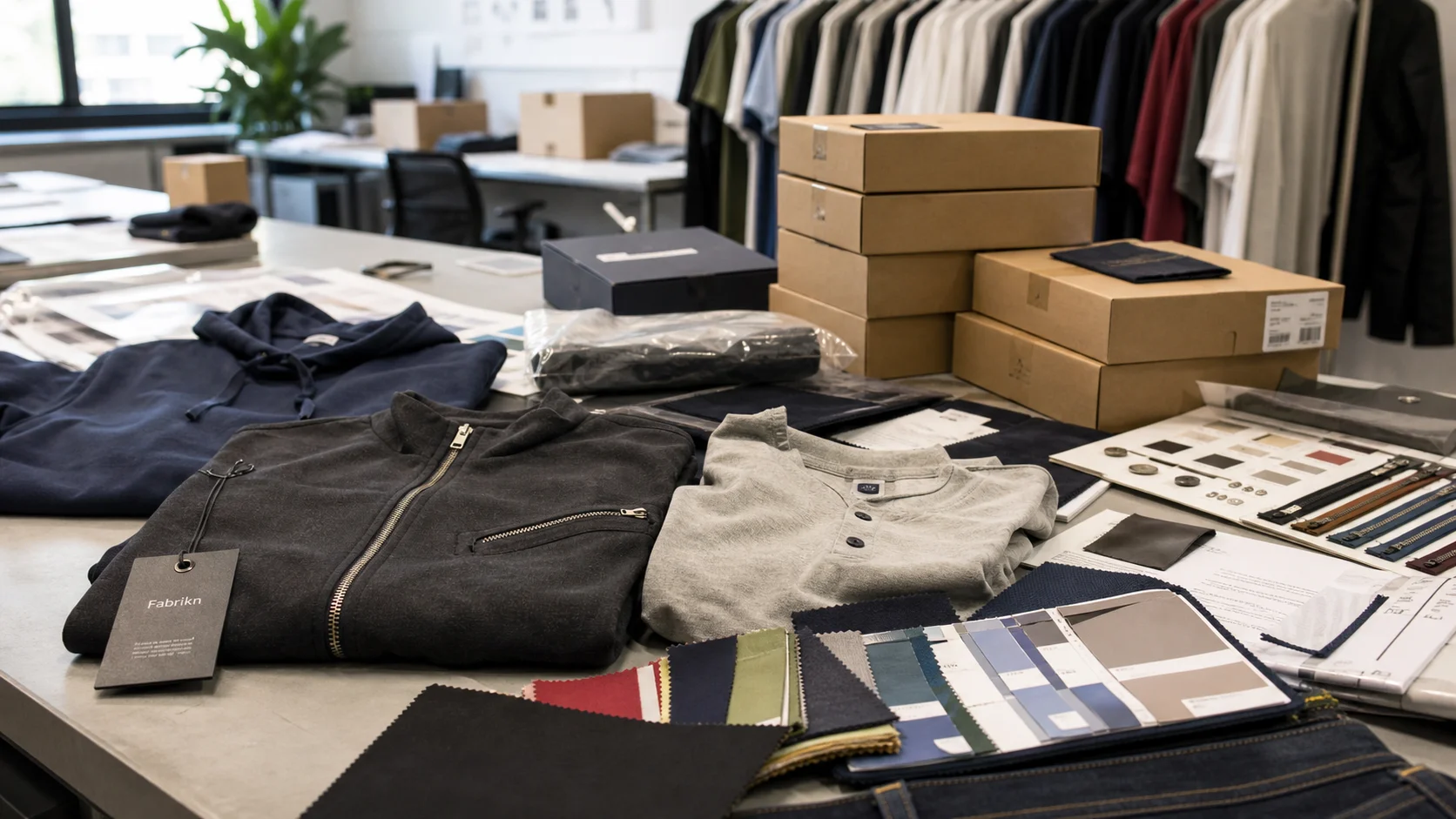
Wholesale Garment Manufacturing Contract Terms for Buyers with checks for samples, fit, MOQ, QC evidence, pricing terms, and delivery risk.
Fast answer: Wholesale Garment Manufacturing Contract Terms for Buyers should be judged by production evidence, not by a generic sourcing promise. The buyer needs sample proof, cost breakdowns, QC checkpoints, and delivery buffers in writing.
Ask for recent sample photos, measurement tolerances, fabric or print test assumptions, decoration test notes, packing examples, and a named inspection checkpoint. These details show whether the team can repeat an approved sample at bulk volume.
Separate garment cost, decoration, labels, packaging, sampling, testing, freight, and rush charges. When every cost line is visible, it becomes easier to reduce colorways, adjust size depth, or reserve more time for sampling.
When sourcing apparel at scale, the product itself is only part of the deal. For buyers, the real protection comes from the contract. A well-written wholesale garment manufacturing agreement clarifies responsibilities, reduces risk, and helps prevent costly misunderstandings around pricing, quality, delivery, and intellectual property.
If you are purchasing private-label apparel, uniforms, sportswear, or custom fashion products, understanding wholesale garment manufacturing contract terms is essential. These terms determine how your order is produced, what happens if the factory misses deadlines, how defects are handled, and whether your brand assets remain protected.
This guide explains the most important contract terms buyers should review before signing. It is designed to help brand owners, retailers, sourcing teams, and procurement managers make smarter decisions and negotiate more confidently with their manufacturing partners. If you are currently evaluating production options, you can also explore Fabrikn’s services to see how a professional manufacturing partner supports the process from development to delivery.
A wholesale garment manufacturing contract is a formal agreement between a buyer and a clothing manufacturer that defines how garments will be designed, produced, inspected, delivered, and paid for. It may be called a manufacturing agreement, supply agreement, purchase agreement, or production contract, depending on the structure of the relationship.
In wholesale apparel manufacturing, contracts often cover not only the finished goods, but also the process behind them. That means the agreement may address fabric sourcing, trimming, labeling, packaging, size specifications, sample approvals, production tolerances, shipment terms, and post-delivery claims.
Unlike simple purchase orders, a manufacturing contract is intended to govern repeated or high-value production relationships. It gives both parties a shared rulebook and is especially important when products are custom-made, time-sensitive, or destined for multiple retail channels.
For buyers, contract terms are not just legal formalities. They are business safeguards. In apparel manufacturing, small wording differences can significantly impact margins, timelines, and brand reputation.
For example, if a contract does not define acceptable quality levels, a buyer may receive products with inconsistent stitching, incorrect sizing, or packaging errors and have little leverage to reject them. If delivery terms are vague, the manufacturer may not be held accountable for delays that disrupt launch dates or seasonal sales.
Clear terms also create better working relationships. When expectations are documented, fewer disputes arise, approvals move faster, and the buyer and factory can focus on producing reliable results.
For businesses still comparing factory capabilities, it can be helpful to learn more about the manufacturer’s background and operating approach. Fabrikn shares company information on its About Us page for buyers who want to understand their production partner before entering into a contract.
Every apparel manufacturing agreement should clearly address the following core areas. These are the terms buyers should review carefully before signing any document.
The contract should describe the garment in detail. This includes style number, material composition, color, sizing, stitching requirements, labeling, artwork placement, packaging, and any special construction details. The more precise the specification sheet, the lower the risk of misunderstandings.
Buyers should ensure that all technical packs, measurements, approved samples, and artwork files are referenced in the contract as binding documents.
Wholesale manufacturing contracts should specify the order quantity and the acceptable tolerance for overage or underage. Apparel factories may have standard production tolerances based on fabric cutting or bulk manufacturing processes.
Without a written tolerance range, buyers may be surprised by receiving fewer units than expected or being invoiced for additional goods they did not plan to purchase.
Minimum order quantity, or MOQ, is a key commercial term in wholesale garment manufacturing. The contract should state whether MOQ applies by style, color, size breakdown, or fabric type. It should also clarify whether the MOQ applies to sample runs, first production runs, or all repeat orders.
Buyers should confirm whether the factory allows mixed sizes, mixed colors, or staggered production if order volumes are uncertain.
The agreement should spell out unit pricing and any additional charges. This may include sampling fees, pattern development, embroidery or printing costs, packaging charges, testing fees, and rush production premiums.
It is important to identify whether prices are fixed for a single production run or subject to revision based on material cost changes, exchange rates, or order volume changes.
Payment terms are one of the most important contract sections for buyers. Typical structures may include a deposit before production, partial payment after sample approval, and final payment before shipment or upon inspection.
Buyers should understand exactly when each payment is due, what triggers invoicing, and whether the manufacturer reserves the right to pause production if payments are late.
Pricing and payment terms often determine whether a deal is commercially viable. Buyers should treat these clauses as negotiable, especially when forecasting long-term production relationships.
A low unit price may not be the best value if the quote excludes critical items such as labels, hangtags, polybags, testing, or freight. Buyers should request a line-by-line cost breakdown to understand the true landed cost of each garment.
Some contracts allow price changes when fabric costs rise, order volumes change, or production timelines shift. These adjustments should be clearly defined so the buyer knows what conditions can trigger a revised quote.
Buyers should avoid paying too much before goods are completed. A balanced schedule helps reduce risk. For example, a deposit can secure raw materials, while a final balance can be linked to pre-shipment inspection or approved quality control results.
For international sourcing, the contract should specify currency, bank transfer instructions, and who bears transfer fees. This prevents confusion and minimizes payment delays.
Sampling and quality control are critical in apparel manufacturing. Many disputes happen because a buyer assumes the factory knows the expected finish, fit, or construction details without having formal approval steps in place.
The contract should identify which sample stages apply, such as prototype sample, fit sample, size set sample, pre-production sample, and top-of-production sample. Each stage should have its own review and approval process.
Quality terms should not be vague. Instead of saying garments must be “high quality,” specify measurable standards such as stitch density, color fastness, measurement tolerance, fabric weight, shrinkage limits, or allowable defect rates.
The contract should clarify who has final approval authority on behalf of the buyer. If multiple people review samples, the agreement should state whose sign-off is binding. This avoids confusion when feedback from different departments conflicts.
If samples or bulk production do not meet standards, the contract should explain what happens next. Options may include correction, replacement, rework, credit, or cancellation. Buyers should ensure the process is practical and timelines are clearly stated.
Delivery delays can hurt launches, seasonal sales, and retail relationships. That is why lead times and shipping terms must be written with precision.
The contract should identify the start date, production milestone dates, and final delivery deadline. If the buyer depends on a specific launch window, this should be noted in the agreement.
Manufacturers may seek exceptions for events beyond their control, such as natural disasters, political disruptions, or supply chain interruptions. Buyers should ensure that force majeure clauses are reasonable and do not excuse avoidable delays or poor planning.
Shipping terms should clarify whether the manufacturer delivers goods ex works, FOB, CIF, DDP, or under another Incoterm. The agreement should state who is responsible for freight booking, customs paperwork, insurance, duties, and final delivery.
A strong contract should include consequences if the manufacturer misses the agreed delivery date. These can include penalties, expedited shipping at the manufacturer’s cost, or the buyer’s right to cancel the order after a defined grace period.
For many brands, product design is one of the most valuable assets. Apparel buyers should never overlook intellectual property and confidentiality protections in manufacturing contracts.
The contract should state that the buyer owns or controls the designs, logos, graphics, patterns, and technical files supplied for the project. If the manufacturer develops any proprietary details, the agreement should clarify who owns them.
One of the biggest concerns in garment sourcing is unauthorized overproduction or factory direct sales. Buyers should ensure the contract prohibits the manufacturer from producing extra units, selling the goods to other customers, or using the buyer’s designs without permission.
Manufacturers may see pricing, customer lists, product launches, and design concepts. A confidentiality clause should require the factory to keep all non-public business information private and limit its use to the specific order.
If the manufacturer intends to outsource part of production, the contract should require prior written approval. Buyers should know which facilities are handling their goods and whether those subcontractors are bound by the same confidentiality standards.
Even with good planning, things can go wrong. That is why buyers should pay close attention to warranties and remedies.
The contract should state that the manufacturer warrants the goods will match approved specifications and comply with agreed quality standards. If the garments are intended for a regulated market, it may also be useful to include compliance with relevant labeling or testing requirements.
If goods are defective or off-spec, buyers need clear remedies. Common options include repair, replacement, rework, credit, partial refund, or rejection of the shipment. The contract should explain who pays for return freight and replacement production.
Many contracts include escalation steps such as negotiation, mediation, and arbitration before litigation. Buyers should confirm the governing law, venue, and language of the contract, especially when working across borders.
Contracts often require the buyer to report defects within a specific period after receipt. Buyers should ensure the timeline is realistic, especially for large or complex shipments where inspection may take time.
Even experienced procurement teams sometimes overlook important clauses. The most common mistakes in wholesale garment manufacturing contracts include the following:
Many of these problems can be avoided by reviewing the contract with both commercial and operational teams before signing.
Negotiating manufacturing terms does not have to create tension. In fact, the best contracts usually come from transparent conversations and mutual clarity.
Buyers should focus on what matters most: quality, consistency, timing, and protection of brand assets. If a term does not support one of those goals, it may need revision.
Attach tech packs, measurement charts, artwork files, packaging mockups, and quality checklists to the contract. Supporting documents reduce ambiguity and strengthen the agreement.
If a buyer expects to grow, the contract should support future repeat orders, price reviews, and new style development. A good partner will understand the value of long-term collaboration.
Overly aggressive terms can make cooperation harder. The goal is not to create an impossible legal document, but to build a workable agreement that protects both parties and supports successful production.
Choosing the right manufacturing partner can make contract negotiations simpler and more effective. A reliable supplier should be willing to discuss specifications openly, confirm production expectations, and support structured approval processes.
At Fabrikn, buyers can explore end-to-end manufacturing support through our services, connect with the team through the contact us page, and learn more about the company’s background on the About Us page. Whether you are launching a new apparel line or scaling an existing brand, strong contract terms are a foundation for consistent results.
Get a free quote from Fabrikn — your trusted B2B clothing manufacturer with 10+ years of experience. MOQ as low as 200 pieces.
Get a Free Quote →A strong contract should include product specifications, MOQ, pricing, payment terms, quality standards, sample approvals, production timelines, shipping responsibilities, intellectual property protections, warranties, and dispute resolution terms.
Sample approvals confirm that both buyer and manufacturer agree on fit, finish, construction, and appearance before bulk production begins. They help reduce costly mistakes during mass production.
Buyers should include confidentiality, ownership, and non-reproduction clauses in the contract. These terms help prevent unauthorized use of logos, patterns, artwork, and product concepts.
One of the most common mistakes is using vague language. If the contract does not define quality, delivery, or payment terms clearly, disputes are much more likely to occur.
Not always. Buyers should review any standard contract carefully and negotiate terms where needed. A standard template often favors the manufacturer unless it is adjusted to reflect the buyer’s priorities.
Yes. Even smaller orders benefit from clear terms. While some manufacturers may have more limited flexibility on very low-volume runs, buyers should still request written confirmation of the most important commercial and quality terms.
For high-value, international, or custom production agreements, legal review is highly recommended. A qualified professional can help identify gaps, protect the buyer’s interests, and ensure the agreement is enforceable.