
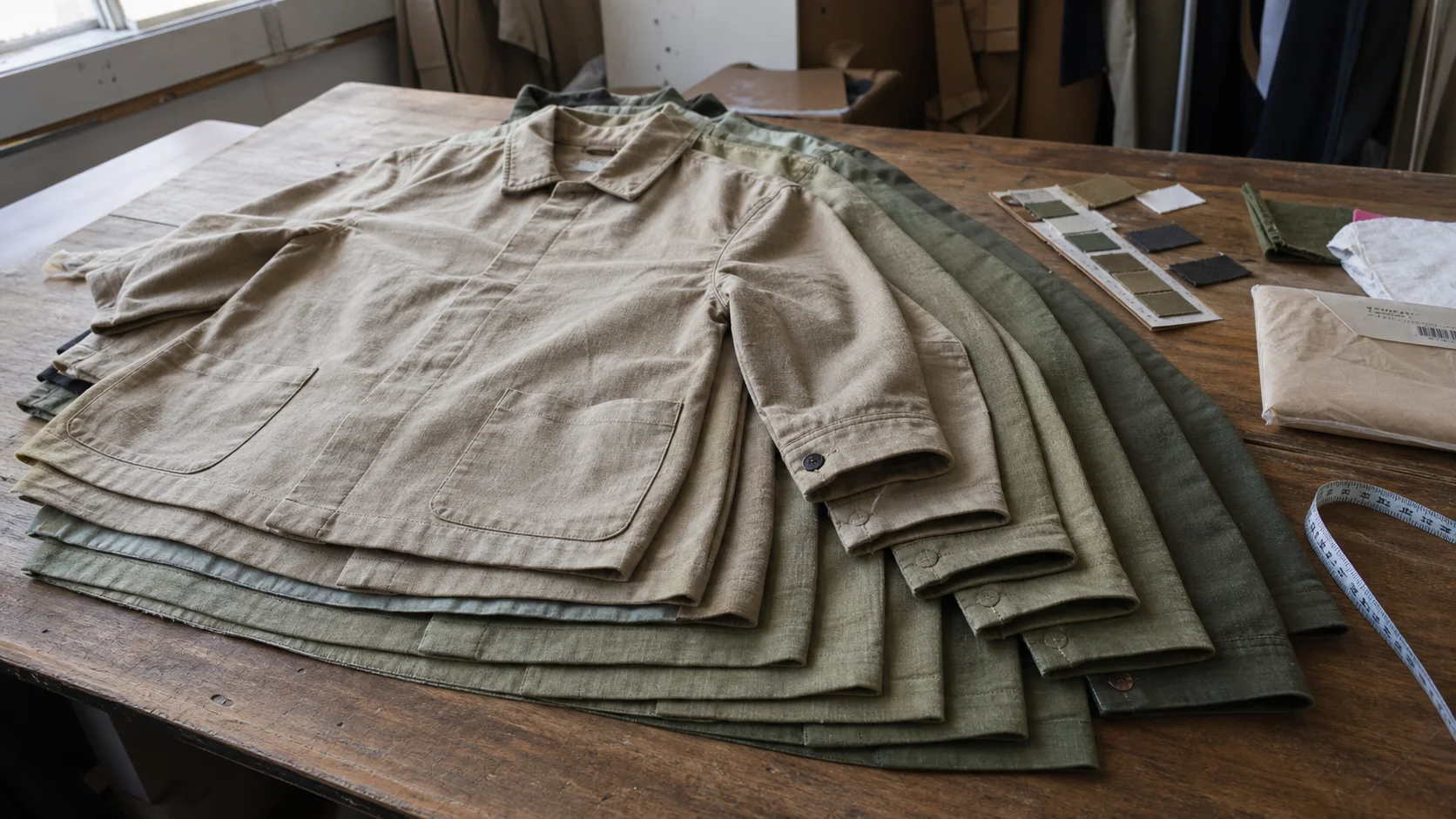
A product-specific SEO outline for reviewing wholesale hemp utility coat size grading, fit consistency, and cleaning-crew workwear performance before...
Hemp Utility Coat Size Grading for Crew Buyers - Sustainable Fashion manufacturing guide
A wholesale hemp utility coat size grading review for cleaning crews is not just a measurement exercise. It is a purchasing control point. Cleaning teams work across body types, climates, shifts, and job functions. A coat that fits well on a showroom sample may fail once staff reach, bend, carry supplies, drive between sites, or layer hoodies underneath during early shifts.
For crew buyers, size grading has direct cost consequences. Poor grading creates higher exchange rates, uneven stock depletion, frustrated employees, and rushed reorders. In contract cleaning, facility maintenance, hospitality support, and janitorial operations, uniform reliability matters because garments are issued in volume. A coat that is too narrow through the chest or too short in the sleeve becomes an operational complaint, not a fashion preference.
Hemp utility coats add another layer to the sourcing decision. Hemp fabrics can be durable, lower-impact, and appealing for sustainable uniform programs, but they need practical grading. The buyer should not treat hemp exactly like polyester twill, brushed cotton canvas, or stretch softshell. Fabric weight, shrinkage, garment wash, seam construction, pocket placement, and lining all influence the final size spec.
This review is written for wholesale buyers assessing hemp utility coats for cleaning crews. The focus is practical: size runs, grading increments, fit testing, MOQ expectations, sample approval, trim specs, production lead-time dependencies, and inspection risks. The best purchasing outcome is not the widest size chart on paper. It is a stable size system that crews can wear comfortably, suppliers can reproduce consistently, and buyers can reorder without reworking the entire specification.
Cleaning crew uniforms sit between workwear and brandwear. They need to look consistent, but they also have to perform during physical work. Utility coats are often used by supervisors, mobile crews, exterior cleaning teams, facility attendants, housekeeping leads, and employees moving between indoor and outdoor environments.
The common mistake is grading the coat like a casual jacket. A cleaning crew coat needs more functional ease. Staff may wear polo shirts, sweatshirts, thermal layers, or high-visibility vests underneath. They may carry radios, keys, tablets, gloves, disinfectant wipes, or checklists. The coat must allow movement without pulling at the shoulder, sleeve cap, back yoke, or hem sweep.
Uniform buyers also face distribution complexity. The wearer may not be available for a fitting. Orders may be placed by department, site, or contractor. Replacement stock may be issued months after the first delivery. That means the grading system must be easy to communicate and forgiving enough to cover real bodies, not just standard fit models.
Direct purchasing judgment: if the coat is intended for active cleaning crews, prioritize shoulder mobility, chest ease, and sleeve usability over a slim retail silhouette. A cleaner-looking fit is not a better fit if it causes size exchanges across the crew.
Size grading should reduce operational friction. A buyer should ask: Can most staff identify their size without confusion? Can the supplier hold measurements within tolerance? Can the garment support layering? Are extended sizes genuinely graded, or are they only widened without correcting sleeve, armhole, and sweep balance?
Hemp is valued in sustainable fashion because it can be strong, breathable, and durable. In utility coats, hemp is often blended with organic cotton, recycled cotton, or conventional cotton to improve hand feel, dye uptake, and cost control. A 100% hemp canvas may feel structured and firm, while a hemp-cotton blend can be easier to wear and cut in production.
Fabric behavior matters before grading is finalized. Hemp fabrics can relax, shrink, soften, or torque depending on yarn, weave, finishing, garment wash, and laundering conditions. A buyer should not approve a size chart based only on pre-wash fabric measurements unless the final garment will also be delivered unwashed and shrinkage is clearly controlled.
For utility coats, common fabric directions include hemp-cotton canvas, hemp twill, hemp ripstop blends, and midweight hemp herringbone. Fabric weights may range from roughly 7 oz to 12 oz per square yard for practical crew coats. Heavier weights can improve durability, but they may reduce drape and require more ease. Lighter weights improve comfort but may need reinforcement in high-stress zones.
Garment wash decisions influence size grading. Enzyme wash, soft wash, pigment dye, and stone wash can change garment dimensions. Dark colors may behave differently from natural or undyed shades. A utility coat in black, charcoal, navy, khaki, or olive should be tested in the intended final finish, not assumed from another colorway.
Shrinkage testing should be part of the approval process. For crew uniforms, after-wash measurements are more useful than ideal sample-room measurements. A buyer should request dimensional change data by length and width. If the supplier cannot provide this, the buyer can still approve cautiously, but the first order should include stricter pre-shipment measurement checks and a conservative reorder plan.
The base size is the anchor for the entire grading system. For many wholesale utility coat programs, size M or L is used as the development sample. If the target wearer group includes more broad-shouldered or layered use, L may be the more practical base. If the coat is unisex and intended for a mixed crew, the buyer should test at least M, L, XL, and one smaller size before bulk approval.
A basic crew size run might cover XS to 3XL. A broader contract uniform program may need XXS to 5XL. Extended sizing is important, but it should not be added as an afterthought. When sizes move beyond 2XL, the pattern often needs more than simple horizontal expansion. Armhole depth, sleeve width, bicep, cuff opening, back width, and hem sweep need to remain wearable.
Typical wholesale MOQs affect size-run planning. For a custom hemp utility coat, many manufacturers may quote around 300 to 800 pieces per style and color, depending on fabric availability, dyeing method, trims, and factory setup. Lower MOQs may be possible if the buyer uses stock fabric or simplified trims. Higher MOQs, sometimes 1,000 pieces or more, may apply for custom woven hemp fabric, special color dye lots, branded snaps, or specialized lining.
The buyer should forecast issue quantities by size before placing a purchase order. If the crew has no historical data, a conservative size curve is safer than equal distribution. Equal size buying often leaves too many small sizes and not enough L, XL, and 2XL for workwear programs.
Size Range Typical Use Case Buyer Risk Purchasing Recommendation XS-2XL Small teams with limited size variation May exclude some crew members Acceptable only with wearer data or flexible reorder access XS-3XL Most general cleaning crew programs Extended-size fit may be under-tested Good starting point for mixed staff if samples are checked XXS-5XL Large contracts, public-facing teams, inclusive uniform policies Higher inventory complexity Best for larger rollouts, but needs careful grading and forecastingFor sustainable uniform buying, overproduction is also a concern. A wider size range supports inclusion, but dead stock undermines sustainability claims. The answer is not to cut sizes. The better approach is to build a disciplined size curve, negotiate reorder terms, and keep the first production run close to known demand.
A hemp utility coat specification should include more than chest, length, and sleeve. Cleaning crews need movement, pocket usability, and layering capacity. A complete size chart should identify points of measure clearly and define whether measurements are taken flat, across, around, from seam to seam, or from high point shoulder.
Chest measurement is usually the first reference point, but it is not enough. Shoulder width and back width determine whether the wearer can reach forward. Armhole and bicep measurements determine whether the sleeve binds over a sweatshirt. Hem sweep matters because cleaning crew staff bend, sit, and move equipment. A coat that fits at the chest but catches at the hip can ride up during work.
Sleeve length needs careful attention. Utility coats are often worn while using gloves, carrying bags, or handling tools. Sleeves that are too long interfere with work. Sleeves that are too short look poorly issued and reduce warmth. Adjustable cuffs can improve fit across more wearers, but they add trim cost and inspection points.
Buyers should also define tolerances. A common tolerance for many outerwear measurements may be around plus or minus 0.5 inch for key body widths and lengths, with tighter tolerances on small components and wider tolerances on larger garment dimensions. The acceptable range depends on fabric, construction, and production method. Hemp canvas and garment washing may require realistic tolerance planning. Overly tight tolerances can increase rejection rates and cost without improving wearer satisfaction.
Grading increments vary by supplier and target market. The following framework is a practical starting point for wholesale hemp utility coat development. It should be adjusted through sampling, wearer trials, and factory pattern review. A cleaning crew coat usually benefits from more generous ease than a retail fashion jacket.
Point of Measure Typical Grade Between Sizes Why It Matters Buyer Note Chest circumference About 2 inches per size Main fit reference for layering Avoid tight chest specs for non-stretch hemp fabrics Hem sweep circumference About 2 inches per size Supports hip movement and sitting May need extra sweep in extended sizes Shoulder width About 0.4 to 0.6 inch per size Controls reach and upper-body comfort Check shoulder slope and sleeve cap together Body length About 0.5 inch per size Maintains coverage across sizes Do not over-lengthen small sizes Sleeve length About 0.25 to 0.5 inch per size Controls professional appearance and function Adjustable cuffs can reduce fit complaints Bicep circumference About 0.75 to 1 inch per size Prevents restriction over layers Important for XL and above Cuff opening About 0.25 to 0.5 inch per size Supports hand movement and glove use Snap or tab cuffs improve adjustabilityThis table is not a substitute for a technical package. It is a review framework. The supplier should return a graded spec sheet with garment diagrams, measurement method, tolerance, fabric details, construction notes, and sample comments. Buyers working with a development partner can review production planning through services such as Fabrikn’s services if they need support aligning product requirements with manufacturing execution.
The most common grading issue is proportional expansion without functional review. A coat can measure correctly but still fit poorly if the armhole becomes too deep, the sleeve pitch is wrong, or the pocket placement is not adjusted. Larger sizes need comfort without becoming shapeless. Smaller sizes need mobility without overwhelming the wearer.
Cleaning crews rarely stand still in a fitted pose. They lift trash liners, push carts, wipe high surfaces, bend under counters, enter service corridors, and move between different temperature zones. A utility coat must support these motions.
Workwear ease should be planned at the beginning. If the garment is expected to fit over a uniform shirt only, the chest ease can be moderate. If it must fit over a sweatshirt, fleece, or thermal layer, the grade and base measurement should be more generous. A buyer should clearly state the intended layering condition in the tech pack.
Hemp utility coats often have a structured look. That can be useful for durability and brand consistency, but stiffness can magnify fit problems. A gusseted back, action pleat, raglan sleeve, underarm gusset, or articulated sleeve may improve mobility. These features increase pattern and sewing complexity, yet they can reduce complaints if the crew performs active work.
The tradeoff is cost and lead time. A simple set-in sleeve utility coat is easier to manufacture and inspect. A mobility-enhanced design may require more development samples and closer production control. For smaller programs, a slightly roomier body with adjustable cuffs may be the best balance. For larger contracts, investing in a more ergonomic pattern can pay back through lower returns and better crew acceptance.
Length is another tradeoff. A longer coat provides more coverage and may look more protective, but it can restrict movement when staff sit or climb stairs. A shorter utility jacket is easier to move in, but it may not give enough weather coverage. For cleaning crews, mid-hip length is often a practical compromise, though the final choice depends on work environment.
Wholesale buyers should not approve bulk production from one attractive sample. Size grading requires a structured sample process. Each step should answer a different question: Is the design right? Is the fit right? Is the size range right? Can the factory reproduce it?
The first sample is usually a development sample or proto sample. It confirms silhouette, pocket layout, seams, trims, and basic construction. It may not be in final fabric. Buyers should treat proto feedback as design correction, not final approval.
The fit sample should be made in the intended or closest available fabric. For hemp utility coats, fabric substitution can mislead the fit review. A soft cotton twill sample will not behave like firm hemp canvas. If the final fabric is not ready, the buyer should mark all fit approvals as conditional.
The size set sample is the key grading checkpoint. A practical size set may include S, M, L, XL, and 3XL, or the smallest, base, largest, and one middle size. For large crew programs, checking only the base size is a poor buying decision. Problems often appear at the ends of the size range.
The pre-production sample should represent final fabric, trims, color, labels, print or embroidery, wash, and packaging. This sample becomes the reference for bulk manufacturing and inspection. It should be sealed only after all measurement and construction comments are resolved.
Sample Stage Main Purpose Buyer Should Check Approval Risk Proto sample Design and construction direction Pockets, closures, seams, silhouette Not reliable for final size approval Fit sample Base-size comfort and proportion Chest, shoulder, bicep, length, sleeve Fabric substitution may distort results Size set sample Validate grading across sizes Small, base, extended sizes, pocket placement Skipping this step increases return risk Pre-production sample Confirm final production standard Fabric, trims, labels, wash, packaging Late changes can delay deliveryWearer trials are useful when timing allows. For cleaning crews, a short movement test can reveal more than static fitting. Ask test wearers to reach forward, raise arms, bend, sit, zip or snap the coat, access pockets, and wear the intended underlayer. Feedback should be structured. General comments like “feels big” or “looks boxy” are less useful than specific notes on sleeve length, shoulder pull, chest tightness, or pocket access.
MOQ is one of the first constraints in wholesale hemp utility coat sourcing. Hemp fabric availability is more limited than common polyester or cotton workwear materials. Custom color, custom weave, garment dyeing, branded trims, and extended sizing can all raise the minimum order quantity.
Typical MOQ ranges for a custom hemp utility coat may fall around 300 to 800 pieces per style and color when using available fabric. Custom-milled hemp fabric, special dye lots, or unusual trims may push MOQ toward 1,000 pieces or more. Smaller pilot runs may be possible through some suppliers, but the unit cost will usually be higher and size distribution may be constrained.
Lead times depend on fabric, sampling, approvals, trims, production capacity, washing, inspection, and shipping method. A realistic custom program often needs 8 to 16 weeks after final sample approval, with longer timelines if fabric must be woven or dyed from scratch. Sampling can add several weeks before that. Buyers should avoid treating the quoted bulk production time as the total project timeline.
Cost should be evaluated against replacement and complaint risk. A cheaper coat that fits poorly may create hidden costs through exchanges, unplanned reorders, and low wearer compliance. A more expensive coat with stable grading and durable construction can be the better purchase if it reduces operational friction.
Buyers planning sustainable uniform programs can discuss project scope, development timelines, and supplier coordination through Fabrikn’s contact page. Early clarity on quantity, size range, fabric preference, and delivery deadline helps suppliers give more reliable quotes.
Size grading is tied to material decisions. A buyer should not finalize the graded spec while fabric, lining, or trims remain uncertain. Even small changes can alter fit. A heavier lining can reduce internal ease. A different zipper tape can affect front length. A rib cuff may change sleeve usability. A garment wash can shrink the body or twist seams.
The fabric specification should include fiber content, weave, weight, color, finish, shrinkage target, and testing requirements. For hemp blends, the buyer should ask for the exact blend percentage, not just “hemp fabric.” A coat labeled as hemp-rich may perform differently from one with a small hemp percentage blended for marketing value.
Trim specifications should include zipper type, snap material, button material, thread quality, labels, pocket closures, cuff adjusters, drawcords, toggles, and reinforcement materials. Cleaning crews may encounter moisture, chemicals, abrasion, and repeated laundering. Trims should be selected for durability, not only appearance.
Care instructions deserve special attention. Cleaning crew garments may be washed frequently, sometimes in industrial or semi-industrial conditions. If the coat requires delicate care, it may not be suitable for the intended user. The buyer should align fabric finishing and care labeling with real laundering behavior.
Inspection should not be limited to counting cartons and checking color. Hemp utility coats have specific inspection risks because the fabric can be structured, garment washed, and seam-sensitive. Measurement inspection should cover multiple sizes, not only the base size.
Size grading inspection must compare bulk garments to the approved graded spec. The inspector should measure chest, body length, sleeve length, shoulder width, hem sweep, bicep, and any other critical points. For extended sizes, it is useful to pull more samples because grading errors may be more visible there.
Common inspection risks include seam puckering, shade variation, twisted panels after washing, uneven pocket placement, snap failure, zipper waviness, incorrect label size, inconsistent sleeve length, and shrinkage beyond tolerance. Utility pocket placement is a frequent issue. A pocket that looks correct on M may sit too high, too low, or too close to the side seam on larger sizes if the grading rules are not reviewed.
Inspection Area Common Defect Operational Impact Buyer Control Measurements Chest, sleeve, or length outside tolerance Poor fit and size exchanges Measure by size against approved spec Fabric Shade variation, slubs, unexpected shrinkage Inconsistent uniform appearance Approve lab dips, bulk fabric, and wash standard Seams Puckering, skipped stitches, seam twisting Lower durability and poor appearance Set seam quality standards before production Trims Weak snaps, rough zippers, loose buttons Garment failure during work Test trim attachment and function Labels Wrong size label or care label Distribution errors and compliance issues Check labels during inline and final inspectionInspection sampling should match the risk level. A first-time supplier, new hemp fabric, garment wash, or broad size range justifies stricter inspection. Reorders from a stable supplier may need fewer interventions, but measurement checks should still be maintained. Sustainable sourcing does not remove the need for disciplined quality control.
The best wholesale hemp utility coat is not necessarily the lowest quote or the most premium fabric. It is the coat that meets the crew’s job requirements, fits the expected size range, can be produced consistently, and supports the buyer’s sustainability goals without creating avoidable waste.
For cleaning crews, the buyer should lean toward function. A slightly relaxed coat with reliable grading usually performs better than a narrow fashion cut. A practical hemp-cotton blend may be a better choice than a heavy 100% hemp canvas if comfort and movement are priorities. Adjustable cuffs, reinforced pockets, and durable closures often matter more than decorative details.
Extended sizing should be handled responsibly. If a supplier cannot provide proper size set samples, the buyer should be cautious about approving sizes beyond the tested range. It is better to delay and correct the grade than to receive unusable 4XL or 5XL inventory. Crew uniform programs need fit equity as well as visual consistency.
Inventory strategy should also be realistic. For a first order, buyers should avoid overcommitting to unusual sizes unless they have data. They should still offer inclusive sizing, but they can manage risk through staged purchasing, reorder planning, or holding a small reserve of high-demand sizes. A supplier’s reorder MOQ matters here. If reorders require a very high minimum, the first size curve must be more precise.
Direct purchasing judgment: if the supplier cannot explain grading, shrinkage control, sample stages, and measurement tolerance clearly, the price is not fully comparable. The hidden cost sits in returns, delays, and crew dissatisfaction.
Buyers should also evaluate supplier communication. A strong manufacturer or sourcing partner will ask about wearer profile, intended layering, work conditions, laundry method, order quantity, size range, and delivery deadline. A weak supplier may only ask for a reference photo and quantity. That approach is risky for a hemp utility coat because fabric behavior and grading details drive the outcome.
Companies reviewing sustainable uniform sourcing partners can learn more about business background and positioning through Fabrikn’s about page. For apparel buyers, the key is to connect sustainability intent with production reality. Hemp can be a strong material story, but size grading determines whether the garment works in daily crew operations.
This checklist should be used before the purchase order is finalized. Once fabric is ordered and bulk cutting begins, grading corrections become expensive. The buyer’s strongest leverage is during development, not after cartons arrive.
A wholesale hemp utility coat size grading review for cleaning crews should combine sustainability goals with workwear discipline. Hemp can support a responsible uniform program, but it does not remove the need for careful measurement planning, fabric testing, sampling, and inspection.
The practical route is clear. Start with the wearer’s job, not the garment photo. Define layering and movement needs. Select a hemp fabric that balances durability, comfort, cost, and availability. Build the size run around real crew data. Approve fit and size set samples before bulk production. Inspect the finished goods by size, not just by appearance.
For crew buyers, the strongest purchasing decision is a coat that staff will actually wear. Good grading reduces waste, protects budget, improves uniform compliance, and supports a more credible sustainable fashion program. A hemp utility coat can be a smart wholesale choice when its size system is treated as a core specification rather than a late-stage chart.
Get a free quote from Fabrikn — your trusted B2B clothing manufacturer with 10+ years of experience. MOQ as low as 200 pieces.
Get a Free Quote →Size grading is the process of increasing or decreasing garment measurements across a size range from a base pattern. For hemp utility coats, grading must account for fabric structure, shrinkage, layering, movement, and workwear comfort.
Many cleaning crew programs start with XS to 3XL. Larger organizations or inclusive uniform programs may need XXS to 5XL. The right range depends on crew data, wearer profile, reorder options, and budget.
A typical custom MOQ may range from about 300 to 800 pieces per style and color when stock hemp fabric is available. Custom fabric, special dyeing, branded trims, and broad size ranges can push MOQs higher, sometimes to 1,000 pieces or more.
The coat should allow active movement and likely layering. Exact ease depends on the base body measurements, fabric, lining, and intended underlayers. Non-stretch hemp canvas usually needs more functional ease than soft knit or stretch workwear fabrics.
No. One base-size sample is not enough for a cleaning crew uniform order. Buyers should request size set samples, especially for small and extended sizes, before approving bulk production.
Hemp fabrics can shrink depending on yarn, weave, finish, and laundering conditions. Buyers should request shrinkage data and approve samples in the intended final wash or finish whenever possible.
Chest, shoulder width, back width, sleeve length, bicep, body length, and hem sweep are critical. Pocket placement, cuff opening, armhole depth, and closure alignment should also be checked across sizes.
Garment washing can improve softness and appearance, but it may increase measurement variation, shade variation, and seam twisting risk. Buyers should set realistic tolerances and inspect bulk garments carefully.
After final sample approval, custom hemp utility coat production may take roughly 8 to 16 weeks, depending on fabric availability, trims, washing, factory capacity, inspection, and shipping. Sampling and fabric development can add more time before production starts.
The biggest mistake is using a slim retail fit without enough shoulder, chest, bicep, and sweep ease. Cleaning crew coats must support movement and layering, not just look tidy on a static sample.