
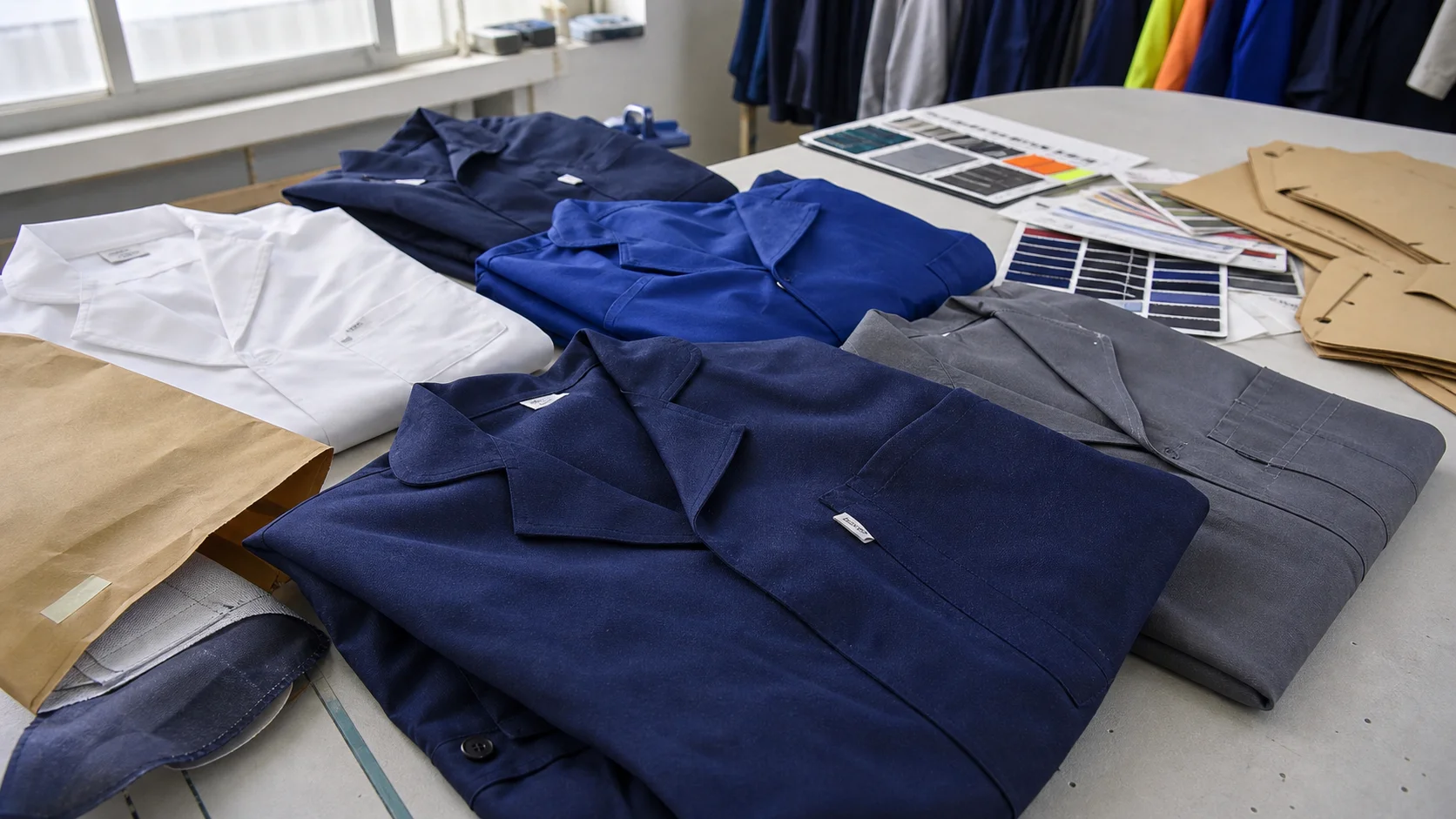
A practical wholesale lab coat compliance checklist for construction safety teams reviewing fabric, fit, labeling, documentation, inspections, and...
Wholesale lab coats for construction safety teams sit in an awkward middle ground. They are not always glamorous PPE, yet they can be the difference between a controlled work routine and avoidable exposure, contamination, or nonconforming site practice. In construction environments, lab coats often show up in materials testing rooms, concrete and aggregate labs, quality control spaces, coating and adhesive evaluation, and other technical work where garments need to resist light splashes, dust loading, and repeated laundering without falling apart.
This checklist is written for buyers who need to source at volume, compare suppliers carefully, and avoid the usual shortcuts that create trouble later. It focuses on practical compliance checks, not sales language. For support with sourcing, product specification, or program setup, useful starting points are the services page, the about page, and the contact page.
Lab Coat Compliance Checklist for Safety Buyers - Fabrikn production reference
Before asking for quotes, the buyer needs a clear use case. A lab coat for a concrete testing room is not the same as a coat for a chemical mixing bench, an industrial hygiene station, or a garment used only to keep dust off clothing. That distinction matters because compliance requirements follow the hazard, not the garment category name.
Construction safety teams usually buy lab coats for one or more of these functions:
If the coat is intended to protect against flame, molten material, arc flash, asbestos, or chemical splash, the specification changes immediately. A standard poly-cotton lab coat may be acceptable for dust control or light housekeeping, while a flame-resistant or chemically resistant garment may be required for a real exposure hazard. The buyer’s first job is to document that difference.
A procurement file should read like a hazard decision, not a style preference. If the garment is being bought for protection, the protective claim has to match the risk.
There is no single universal lab coat standard that covers every construction use case. That is why buyers need to map the garment to the hazard assessment and the internal safety policy before asking for compliance language from suppliers.
For construction safety teams, the most common mistake is assuming that a “lab coat” label implies compliance by default. It does not. A buyer should ask the supplier to specify exactly what the coat complies with, which fabric supports that claim, and whether the claim still holds after industrial laundering.
When the supplier cannot tie a compliance claim to a document, the claim should be treated as marketing rather than evidence.
Wholesale buyers often focus on price per unit and miss the small construction details that control durability and compliance. That is a costly habit. Fabric weight, thread quality, closure type, and trim selection all influence how the coat performs in daily use.
A light poplin coat may feel comfortable, but it may also wear faster in rough settings. A heavier blend can last longer, yet it may trap heat and become unpopular with the workers who must wear it every day. The best choice is rarely the heaviest fabric on offer. It is the one that matches the job, climate, and wash cycle.
Buttons are common, but snaps or concealed fasteners may be preferable in some controlled environments because they can be easier to use with gloves and less likely to snag. That choice should be made with the actual workflow in mind, not only on appearance.
Trim sounds minor until it causes a failure. Weak interfacing, brittle buttons, loose pocket stitching, and poor thread selection are typical inspection issues in lower-cost wholesale production. Decorative features can also create problems. Extra tabs, exposed snaps, or oversized cuffs may interfere with hygiene, cleaning, or task movement. For compliance buying, simpler is usually better.
Compliance is not only about fabric. A coat that fits badly gets worn incorrectly, left unbuttoned, or ignored altogether. That is a usability issue, but it becomes a safety issue fast.
Buyers should request a graded size chart, not just a generic S/M/L breakdown. Real sourcing work benefits from actual garment measurements in centimeters or inches. The vendor should also clarify whether the garment is made for a regular, relaxed, or generous fit. Those terms sound similar, but they do not function the same on a production floor.
For some construction lab environments, a knee-length coat offers better splash and dust coverage than a hip-length version. Side vents may improve movement but reduce coverage. Button-front garments are traditional and easy to source, while snap-front garments can improve speed of donning and doffing. The right answer depends on the task and the cleaning protocol.
If the coat is worn over company uniforms, test the fit with the normal base layers, not only on a mannequin sample. A coat that is perfect over a T-shirt may become unusable over a shirt, vest, or sweater.
Wholesale sourcing needs a tighter checklist than one-off buying. The supplier has to prove that the garment can be repeated at scale with consistent quality. That means the buyer should lock in the product spec before asking for full production.
Checklist Item What to Confirm Why It Matters Use case Dust control, light splash, chemical exposure, FR requirement, or general workwear Determines the compliance standard and fabric choice Fabric Fiber content, weight, finish, colorfastness Controls comfort, durability, and claim validity Construction Seams, buttons, snaps, pockets, reinforced stress points Impacts wear life and inspection results Sizing Full size range with measurement sheet and grade rule Prevents fit failures and worker rejection Labeling Fiber content, care instructions, size, origin, compliance labeling if applicable Supports traceability and laundering control Packaging Bulk pack count, carton labeling, polybag needs, mixed-size rules Reduces warehouse mistakes and receiving delays Testing documents Test reports, certificates, or declarations tied to the actual fabric and garment Verifies the claim behind the product Production control Pre-production sample, size set, top-of-production approval Reduces risk of batch variationThat table should sit inside the purchasing file, not just in an email thread. The goal is to keep the buying decision measurable.
MOQ varies widely by factory, fabric, and customization level. Basic stock-style coats may be available at lower minimums, while custom colors, custom trims, or specialized fabrics usually require more volume. Typical wholesale MOQs often fall somewhere between 100 and 500 pieces per style and color, though some suppliers will ask for higher quantities on private-label or technical garments.
Buyers should treat very low MOQ offers carefully. A low opening number can be useful for testing, but it may also signal limited production control, weaker fabric sourcing, or a supplier that cannot sustain repeat orders at the same spec. Price is not the only lever. Stability matters more when the coat is part of a safety program.
Sample approval is where many compliance problems are caught early, if the buyer insists on a disciplined process. The best sequence is usually simple: fabric strike-off or fabric swatch review, proto sample, size set, and then pre-production sample. Skipping steps increases risk.
Samples should be reviewed under real conditions, not only on a hanger. Try the coat over normal workwear. Sit, reach, lift, bend, and move through the motions that reflect the actual work. A garment can look correct and still fail the job once someone tries to use it.
This record protects the buyer when a later batch arrives with subtle changes. Without a written benchmark, “close enough” becomes a recurring problem.
Wholesale compliance buying needs inspection discipline. Garments often fail not because the design was wrong, but because the production run drifted from the approved sample. That drift can happen in fabric substitution, trim substitution, stitch quality, or sizing consistency.
For larger orders, a pre-shipment inspection is usually worth the effort. The inspection should check workmanship, measurements, labeling, packing, and carton count. If the coat carries a safety claim, verify that the label and documents match the delivered goods exactly. A claim on paper means little if the wrong fabric arrives in the cartons.
Many lab coat problems only appear after washing. Shrinkage, twisting, fading, seam puckering, and loss of finish can all change the garment’s compliance profile. That is especially important when the coats are issued to teams that wash garments on a regular schedule rather than using disposable stock.
Ask the supplier how the garment is expected to perform after the number of wash cycles relevant to the site. If the supplier cannot answer that question in a grounded way, the coat may be better suited to short-life or light-duty use only.
Lead time is not just a calendar issue. It depends on fabric availability, dyeing, trimming, sample approval, test requirements, and production queue position. A buyer trying to rush a custom lab coat order often discovers that the delays started much earlier, at the specification stage.
For standard stock-style garments, lead times may be manageable. Custom private-label coats or specialized compliance garments can take much longer, especially when trims and labels must be customized. The safest purchasing approach is to lock the spec early and leave room for sample approval and shipping delays.
A hurried order often creates a false bargain. The vendor may agree to a fast turnaround, then protect the schedule by changing fabric, trimming down inspection time, or offering a garment that is technically similar but not operationally equal. Buyers should watch for that pattern.
Before issuing a purchase order, the buyer should confirm the following points in writing:
That list looks plain, but it prevents a lot of expensive ambiguity. Good wholesale buying is usually more boring than people expect. The upside of boring is that it tends to arrive on time, match the spec, and survive the audit trail.
The strongest lab coat program is the one that can be repeated without debate. Repeatability is the real test of compliance in wholesale buying.
When suppliers compete, the obvious differences are price and turnaround. The more important differences are the quality of documentation, responsiveness to sample corrections, and willingness to hold the spec steady. A supplier that can explain fabric tradeoffs clearly is usually easier to work with than one that only promises low cost.
Useful comparison questions include these:
When the answer to any of those questions is vague, the buyer should slow down. The cheapest lab coat is rarely the cheapest program.
Some buyers need more than a factory quote. They need help translating compliance requirements into a workable garment spec, then getting the production details under control. That is where a sourcing partner can be useful, especially when the team is balancing safety requirements, budget pressure, and a hard delivery date. Services that help with product development, quality review, and order coordination can save time when internal buying teams are stretched. A practical starting point is the services page, with the option to reach out through the contact page once the basic requirements are defined.
Get a free quote from Fabrikn — your trusted B2B clothing manufacturer with 10+ years of experience. MOQ as low as 200 pieces.
Get a Free Quote →Compliance depends on the hazard and the intended use. A lab coat may be compliant for dust control or light splash work, but a different garment is needed for flame, chemical, or other defined exposures. The buyer should start with the hazard assessment and then match the garment to the required standard.
Typical MOQs often fall between 100 and 500 pieces per style and color, though the range can be lower for stock garments and higher for custom technical orders. Fabric choice, labeling, and customization all affect the minimum.
Check fabric weight, seam quality, closure strength, sizing, pocket placement, labels, and care instructions. The sample should also be tried in real working conditions, including movement, layering, and repeated wear.
The most common causes are fabric substitution, trim substitution, poor size grading, and weak production control. A written spec, approved benchmark sample, and pre-shipment inspection reduce that risk.
They are important because wash cycles can change shrinkage, finish, fit, and service life. If a coat will be laundered repeatedly, the supplier should confirm that the garment still performs after the expected wash routine.
Neither by default. The best fabric is the one that balances protection, durability, comfort, and wash performance. A heavier fabric may last longer, but it may also create heat and comfort problems that reduce wear compliance.
For teams building a wholesale lab coat program, the main lesson is simple: write the spec carefully, test the sample honestly, and treat inspection as part of compliance, not an afterthought. That is where safer purchasing starts.