
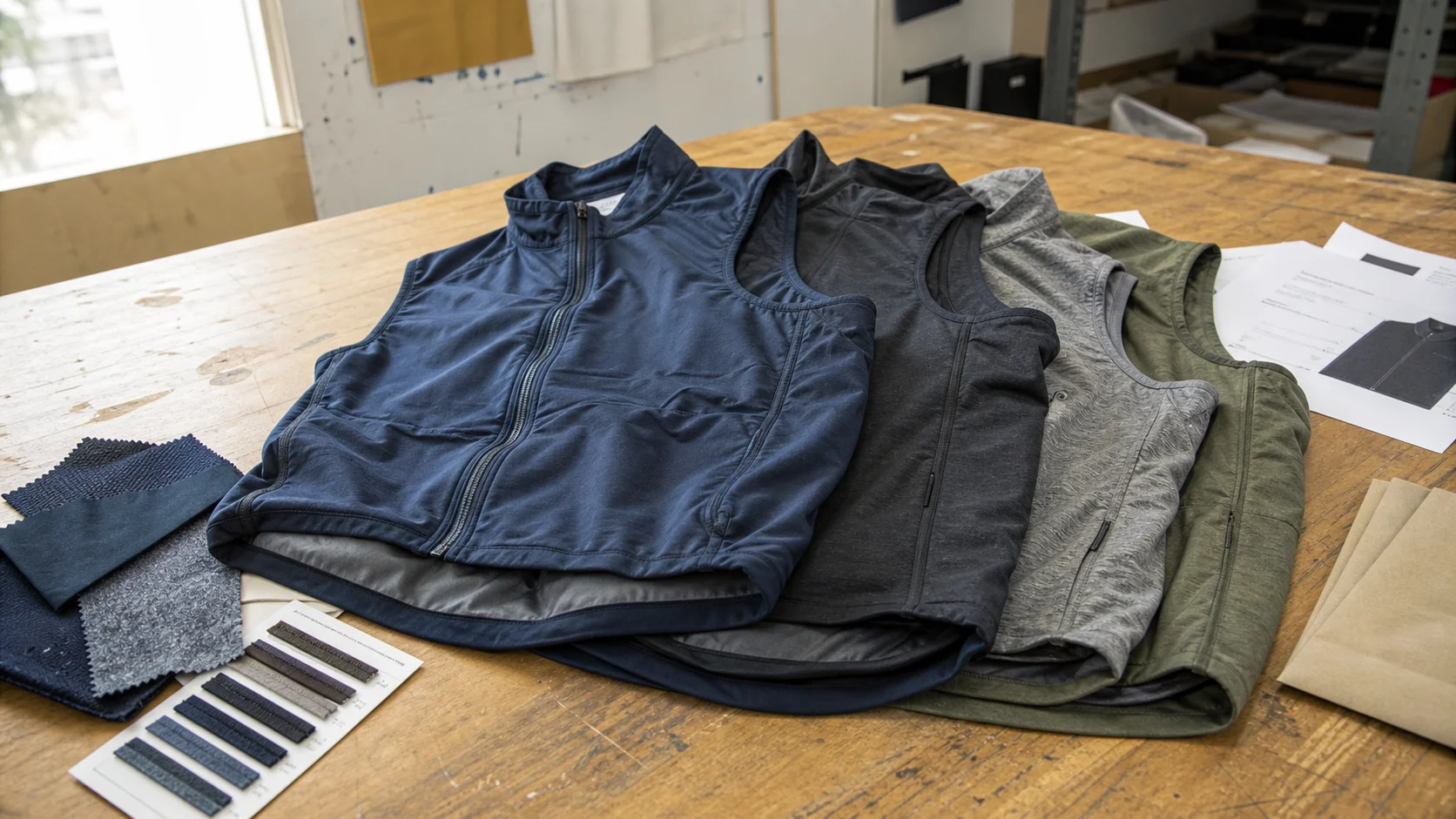
A clinic-focused compliance checklist for buying wholesale performance vests, covering fabric specs, sizing, labeling, decoration durability, laundering,...
Clinic purchasing teams do not buy performance vests the same way a sports retailer does. The garment still needs to move well, hold up to repeated washing, and present a clean professional look, but there are extra questions around hygiene, labeling, safety claims, size consistency, and supplier documentation. A vest that looks acceptable on a sales sample can still create problems once it is scaled into a real clinic uniform program.
This checklist is written for wholesale buyers sourcing performance vests for clinics, medical support teams, wellness practices, rehab staff, and front-of-house teams that need a polished activewear look. The focus is practical compliance: what to ask for, what to verify, where projects usually slip, and how to reduce risk before a bulk order is approved.
If you are building a uniform program and need a manufacturing partner rather than a marketplace listing, start with fabrication and sourcing services, then compare sample and compliance documents before you commit to volume. For team-specific questions, the fastest path is usually direct contact.
Wholesale Performance Vest Compliance for Clinic Buyers - Activewear & Teamwear manufacturing guide
Clinic uniforms sit in a middle ground between corporate wear and sportswear. A performance vest may be worn over scrubs, under a lab coat, or by mobile staff who move through multiple environments in a single shift. That means the garment has to do more than fit well. It has to survive repeated laundering, keep its shape, avoid excess lint or snagging, and support the professional image of the clinic.
Compliance matters because the risks are usually operational, not dramatic. The most common failure points are inconsistent sizing, poor color fastness, peeling logos, weak zipper or seam construction, vague care instructions, and unproven fabric claims. Any one of those issues can turn a low-cost bulk order into a recurring replacement cost.
There is also a branding dimension. Clinics often want a clean, controlled appearance. A vest that pills after a few washes, shrinks unevenly, or arrives with inconsistent dye lots will undermine that look quickly. Buyers need a quality standard they can defend internally, not just a style that looks good in the catalog.
Before requesting quotes, define how the vest will actually be used. “Performance vest” can mean several different things, and the right specification depends on the work environment.
That use case determines fabric weight, cut, closure type, pocket design, and whether the garment should emphasize structure or freedom of movement. A vest made for a reception team may not need the same stretch performance as one designed for active on-floor staff.
Clinic buyers should also decide whether the vest is part of a permanent uniform set or a seasonal program. Seasonal programs usually justify a lighter technical fabric, while permanent programs benefit from a more robust construction and stricter wash testing.
Wholesale compliance begins with paperwork. If a supplier cannot produce baseline documentation, the order is not ready for approval. The exact documents vary by market, but the following are common and useful for clinic procurement.
Do not treat test reports as a box-ticking exercise. A report is only useful if it matches the exact fabric construction, weight, and trim package being ordered. A test on a different knit, a different dye process, or a different zipper spec does not reduce your risk.
For clinic buyers, the main question is whether the supplier can connect the document set to the actual production line. A neat PDF pack is not enough. Ask how the approved sample will be controlled in bulk and how deviations will be handled if a component changes mid-production.
Performance vests for clinics usually sit in a technical knit category. Common fabric blends include polyester with elastane for stretch, polyester with rayon for a softer hand, or recycled polyester blends where sustainability is part of the brief. Each option has tradeoffs.
Polyester-heavy blends are usually better for durability, shape retention, and wash performance. Elastane improves mobility but can create recovery problems if the fabric is too light or the knit structure is weak. Rayon can feel softer, yet it may demand closer attention to shrinkage and drying conditions.
Typical buyer questions should include:
Trim selection matters more than many teams expect. Zippers should operate smoothly after repeated use and laundering. Pullers should not snag glove cuffs or compress the garment front. If reflective tape, piping, or contrast binding is used, the supplier should confirm wash durability and color migration risk. Decorative trims are often the first area to fail in a bulk order.
Fit components also deserve attention. Armhole depth, hem shape, back length, and collar build can affect whether a vest reads as polished or awkward on staff of different body types. For a clinic environment, a clean regular fit is usually more defensible than an aggressive athletic cut. Too much compression may reduce comfort and create sizing complaints.
Many product problems begin with the sales language. “Antibacterial,” “antimicrobial,” “odor-fighting,” “cooling,” and “medical grade” are not harmless phrases. If a buyer wants those claims on the vest or in the product literature, they need supporting evidence that matches the exact textile and market requirements.
It is safer to separate verified garment features from marketing language. A supplier can often confirm moisture management through fabric structure and test data, but that is not the same as promising a medical or hygiene benefit. Clinic buyers should avoid accepting vague claims that sound useful but have no compliance path.
Labels should be reviewed early. Check fiber content, size, care instructions, country of origin, and any branding requirements. If the vest is being resold or issued as branded clinic merchandise, buyers may also need to consider local textile labeling rules and consumer protection requirements. Small label errors can trigger avoidable rework on thousands of units.
Packaging deserves similar scrutiny. Individually packed vests may be useful for distribution, but excessive packaging can create cost and waste issues. Bulk folded packing is often more efficient for staff uniforms, provided the garments arrive clean, protected, and free of odor or creasing problems.
Do not approve a bulk order from a single photo sample. A structured sampling process is the lowest-cost insurance a buyer can buy. For clinic performance vests, the usual sequence is pre-production confirmation, fit sample review, lab dip or color approval, and final pre-production sample signoff.
A practical sample path looks like this:
The fit test should not be casual. Staff should move, bend, reach, and layer the vest over the intended base garment. This is where hidden problems appear: armholes that bind, hems that ride up, zipper stubs that rub, or a fabric that looks good on a hanger but feels too warm in use.
If your organization is managing multiple uniform categories, it can help to work from one controlled approval standard across programs. A supplier such as fabrikn.com can help organize specs, sampling, and production controls for teamwear programs, but the buyer still needs to define the compliance bar clearly.
Minimum order quantity is often where clinic programs become awkward. Many wholesale performance vest projects land in the range of 100 to 500 pieces per style and color for custom production, while simpler stock-program orders may go lower or higher depending on decoration and fabric availability. Exact MOQ depends on the supplier, fabric mill, embellishment method, and size run.
Clinic buyers should separate MOQ by decision layer. Fabric minimums, trim minimums, and decoration minimums are not always the same thing. A supplier may accept a smaller garment quantity but still require a larger print or embroidery run to keep costs stable.
Lead time depends on more than sewing capacity. Key variables include:
A realistic wholesale timeline often runs from 4 to 12 weeks after final approval, with custom materials pushing the schedule longer. Buyers should not commit to a clinic launch date until the sample path is complete and the production schedule is locked.
Fast orders can be done, but speed increases risk. If a supplier offers a compressed lead time, confirm what has been skipped. Often it is not the sewing that gets faster, but the depth of testing, the time allowed for corrections, or the flexibility in materials.
Bulk inspections should focus on faults that affect clinic use, not only cosmetic issues. A vest can pass a visual check and still be a poor uniform asset. The common risks are predictable.
Inspection should also test functional movement. A vest that measures correctly on paper may still fail if the shoulder slope is off or the armhole is too high. Clinics often have mixed-gender staff and a wide size distribution, so fit grading matters more than in narrow-fit retail programs.
Request an inspection standard before production starts. Buyers commonly use a third-party AQL framework, but the specific acceptance threshold should match the risk profile of the program. A front-desk uniform may tolerate minor aesthetic variation. A highly visible brand program usually cannot.
For clinic procurement, the cheapest vest is rarely the cheapest program. Returns, replacements, and staff dissatisfaction cost more than a sensible quality buffer at the order stage.
Use the following checklist before releasing a purchase order for performance vests in a clinic setting.
Area What to Confirm Buyer Risk if Missed Use case Front desk, mobile staff, rehab, or general clinic wear Wrong fit, wrong fabric, poor adoption Fabric Composition, GSM, stretch, shrinkage, colorfastness Pilling, heat retention, shape loss Trims Zippers, binding, pullers, reflective or decorative details Early failure, snagging, inconsistent appearance Labels Fiber content, care, country of origin, size Non-compliance, re-labeling cost Claims Moisture-wicking, antimicrobial, quick-dry support Unsupported marketing or legal risk Samples Prototype, lab dip, fit sample, pre-production sample Bulk errors repeated at scale MOQ Garment, fabric, and decoration minimums Unexpected cost or unusable surplus Lead time Material sourcing, approvals, production, shipping Missed launch or stockout Inspection AQL standard, measurement tolerance, wash performance Inconsistent bulk qualityBuyers who want tighter coordination between sourcing, sampling, and production should ask for a written project timeline that includes approval gates. A vendor that cannot map out each gate usually has limited control over the order.
When comparing wholesale suppliers, resist the temptation to anchor only on unit price. Clinic buyers should compare suppliers on specification control, responsiveness, sampling discipline, and ability to document changes. A slightly higher unit cost can be justified if the supplier prevents repeat correction cycles.
Useful comparison questions include:
It is also reasonable to ask for communication discipline. Clinic purchasing teams need clear status updates, not broad assurances. If a supplier uses vague language around approval, shipping, or quality, that usually becomes a management burden later.
A good partner will tell you where the tradeoffs are. For example, a softer hand feel may come with slightly lower abrasion resistance, while a heavier knit may improve durability but reduce comfort in warm clinical spaces. Those are useful decisions when they are disclosed early.
For clinic uniforms, a performance vest should be treated as an operational garment first and a branded item second. That ordering matters. Staff comfort, wash durability, and size consistency usually matter more than a premium finish or a trend-driven silhouette.
The safest procurement approach is to tighten the spec before quoting, not after. Define the fabric, confirm the trim package, approve the label language, and test the fit on real users. Once those pieces are locked, wholesale buying becomes much more predictable.
Teams that need help turning a rough concept into a controlled production brief can use custom sourcing support to structure the project. If you need a manufacturing conversation around timelines, trims, or sample planning, use the contact page and keep the brief specific. The more precise the initial input, the less likely the order will drift.
Get a free quote from Fabrikn — your trusted B2B clothing manufacturer with 10+ years of experience. MOQ as low as 200 pieces.
Get a Free Quote →Ask for fabric composition, care instructions, country of origin, size specs, trim details, and test support for shrinkage, colorfastness, and pilling. If the product includes performance claims, request evidence tied to the exact fabric and construction.
Many custom wholesale programs start around 100 to 500 pieces per style and color, but the actual MOQ depends on fabric sourcing, trim minimums, and decoration method. Smaller order quantities are sometimes possible with stock materials or simpler branding.
A practical program often uses at least two rounds: an initial prototype and a pre-production sample. Complex branding, custom fabrics, or major fit changes can require more.
Polyester-rich stretch blends are common because they balance durability, wash stability, and movement. Buyers should still check hand feel, breathability, and shrinkage risk before approving a fabric for clinical use.
Only if the supplier can support the claim with appropriate test data for the exact fabric and market. Unverified antimicrobial language creates compliance and reputation risk, so it should be used carefully.
The most common problems are shade variation, logo inconsistency, weak stitching, zipper failure, poor size grading, and shrinkage after washing. These issues often show up after the first production run if the sample process was too loose.
Finalize the spec early, approve samples quickly, avoid changing artwork late, and confirm which materials are in stock. Lead time usually slips because of approval delays or material sourcing, not only because of sewing capacity.
For clinic purchasing teams, the right wholesale performance vest is the one that passes specification control, supports repeated wear, and arrives consistent enough to issue without extra sorting. That is the standard worth holding.