
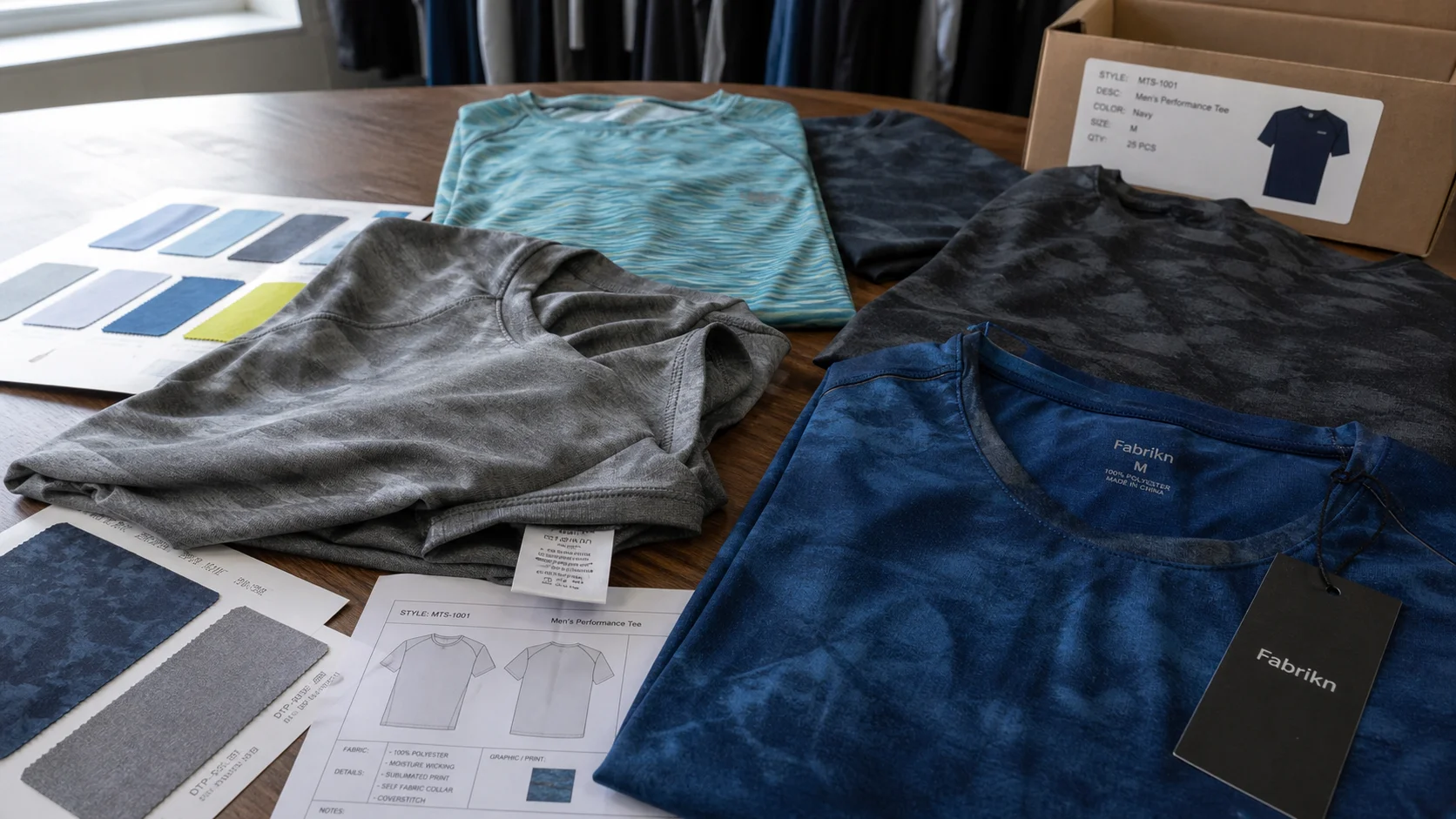
A buyer-focused outline for clinic purchasing teams evaluating wholesale performance vest size grading, fit consistency, and production details for...
Wholesale Performance Vest Size Grading Review - Fabrikn production reference
Clinic purchasing teams rarely buy performance vests for fashion. They buy them for workforce presentation, comfort, movement, and repeatability across departments. That makes size grading one of the most important parts of the order review. A vest can look fine in a size chart and still fail in real use if the grade between sizes is uneven, the armhole balance is off, or the fabric behaves differently after washing and embroidery.
For wholesale orders, the decision is not just about selecting S through 3XL. It is about confirming that the size range fits the intended wearers, that the garment remains consistent across production lots, and that the supplier can hold the same spec once logo work, labeling, and packing are added. Clinic buyers usually need a practical balance: enough room for layering over scrub tops, a professional shape at the front, and a size run that does not create avoidable returns or staff complaints.
This review covers what clinic purchasing teams should look for when evaluating wholesale performance vest size grading. It also covers sample approval, MOQs, lead times, and inspection risk, because fit problems often start long before bulk production begins.
Size grading is the progression of measurements from one size to the next. In a performance vest, that usually includes chest width, body length, shoulder width, and armhole balance. Some suppliers also grade across hem sweep and collar stand. The challenge is that even small inconsistencies become obvious in layered uniforms, where staff expect the vest to fit over medical apparel without looking oversized.
For clinics, the purchasing goal is usually consistency rather than a high-fashion silhouette. A vest that is too close-fitting may restrict movement when staff bend, lift, or move between departments. A vest that is too generous can look sloppy, especially when worn as part of a branded team uniform. Good grading sits in the middle and gives enough tolerance for different body types without creating a visibly mismatched range.
Clinic purchasing teams should treat grading as a risk control issue. If the base size is correct but the grade ratio is wrong, medium may fit well while large and extra-large become disproportionately long or boxy. That leads to uneven staff adoption, replacement requests, and tension between procurement and the end users. A supplier with a decent pattern room should be able to explain grade rules clearly, not just send a chart.
A wholesale performance vest review should start with the full technical package, not a product photo. The most useful items are the measured spec sheet, grading table, fabric composition, trim list, and decoration method. A photo can hide a lot. A spec sheet exposes where the supplier has actually controlled the garment.
Chest width alone is not enough. In a vest, armhole shape can change the wearing experience more than the chest spec does. A narrow armhole might look neat on paper but can bind over a scrub top. A generous armhole may solve movement issues but create a loose, unfinished look. Both extremes can create complaints in clinics where staff are expected to look uniform during patient-facing work.
Performance vests are often made from polyester, polyester-spandex blends, or lightweight woven shells with brushed or smooth interiors. The choice affects fit more than many buyers expect. A fabric with stretch will absorb some sizing differences, while a woven shell will show grading errors immediately. If the order includes lining, fleece backing, or bonded panels, the garment may feel smaller even when the measurement sheet looks fine.
Useful spec points include GSM, stretch percentage if relevant, yarn type, and shrinkage allowance. Buyers should also check whether the supplier has pre-shrunk the fabric or is relying on finishing alone. If the vest will carry embroidery, the backing, stitch density, and logo placement must be reviewed because these can pull the garment out of shape.
Zippers, snaps, elastic, binding, and pocket trims all affect fit and wearability. A low-quality zipper can distort the front placket and make the vest appear tighter than it is. Pocket placement can interfere with the silhouette if it sits too high or too low between sizes. Pull tabs and zipper garages should be checked for comfort, especially if the vest is worn through long shifts.
The right way to review grading is to compare each size jump against the base sample and the intended end use. For clinic purchasing teams, the question is not whether the math looks neat. The question is whether the vest will still fit correctly when staff wear it over uniform layers, wash it repeatedly, and move through a workday.
The base size is usually M or L, depending on the target user group. Buyers should confirm that the base sample matches the brand fit expectation before reviewing the grading spread. If the base is already wrong, the whole run becomes questionable. A supplier can grade accurately from a bad base pattern, but that still produces a bad garment.
Request a fit sample on a representative wearer, not just a hanger check. The wearer should ideally test the vest over the actual garments used in the clinic, since scrubs, polos, or long-sleeve layers change the fit. This step matters more than most buyer teams realize because performance vests often look acceptable on a table and fail once movement begins.
Look for consistent increments between sizes. A common wholesale pattern is a measured increase in chest width of about 1 to 1.5 inches per size, though this varies by market and fit target. Length may increase by around 0.5 to 1 inch per size, but there is no universal rule. What matters is that the increments are proportionate and aligned with the target fit.
If the chest grows faster than the body length, larger sizes may feel boxier. If length grows too quickly, the vest can look oversized and drag visually on smaller wearers. In clinic settings, this balance affects professionalism as much as comfort.
A size chart can hide problems if each point looks acceptable in isolation. Review the full curve from XS to 3XL or beyond, depending on the order. The shape of the curve should remain logical. For example, a 2XL should not suddenly jump in shoulder width while the body length barely changes. That usually signals a grading error or a copied chart rather than a developed product.
When a supplier offers extended sizes, ask whether the pattern has been rebalanced for those sizes or simply scaled up mechanically. Better suppliers often adjust proportions for larger sizes to maintain comfort and appearance. Lower-cost factories may not. That distinction is important for clinic teams ordering uniforms for mixed body types.
Every size chart should include tolerances. Without tolerances, the buyer cannot judge whether bulk production is within spec. Ask whether measurements are taken flat, relaxed, zipped, or after steaming. Small changes in method can produce misleading results.
For performance vests, chest width and length should be measured consistently and the method written into the tech pack. If the supplier does not define that method, the risk of disputes rises during inspection.
Several production choices affect size grading even when the label sizes stay the same. Clinic teams should review these dependencies before approving a bulk order.
Spec Area Fit Impact Buyer Check Fabric stretch Changes comfort and tolerance across sizes Ask for composition, stretch %, and recovery data Lining or bonding Can make the vest feel tighter Confirm whether lining is full-body or partial Embroidery Can pull fabric and distort the front panel Approve logo size, placement, and backing type Zipper quality Can affect front alignment Check zipper length, tape width, and glide performance Armhole finish Can create binding or gaping Review binding width and stretch retentionSeasonal use also matters. A clinic buying vests for all-year wear may need enough room for layering in cooler months. That does not mean ordering oversized garments. It means confirming that the pattern allows a shirt, scrub top, or thin midlayer underneath without forcing the front opening or armholes out of alignment.
If the order includes men’s and women’s fits, the grading should not simply mirror one block in two different size labels. The body shape, shoulder balance, and length proportions should reflect the intended wearer group. A unisex shape can work for some buyers, but it needs a deliberate review. Otherwise, fit complaints usually land on the largest and smallest sizes first.
Wholesale performance vest orders usually involve a sample approval sequence before bulk production starts. Clinic purchasing teams should expect at least a proto sample, a fit sample, and a pre-production sample in more controlled programs. Simpler orders may use fewer stages, but skipping review steps increases the chance of fit and grading disputes later.
MOQs vary by factory, fabric type, and decoration method. A simple stock-fabric vest may start around 100 to 300 pieces per color, while a fully custom program with special trim or branding may require 300 to 1,000 pieces or more. Embroidered clinic logos, custom zipper pulls, and branded labels can push the minimum higher.
Buyers should not focus only on the lowest MOQ. A smaller run can make sense for pilot programs or regional clinics, but the per-unit cost is usually higher and size assortments can become more fragile. A wider size range spread across a small MOQ sometimes leaves the buyer with too few units in the most-needed sizes.
Do not approve bulk based on photos alone. Photos are useful for general shape and logo placement, but they do not reveal chest ease, shoulder balance, or zipper distortion. A physical sample is the correct checkpoint, and a fit review should be signed off by someone who understands how the vest will be worn in the clinic.
Lead time depends on fabric sourcing, lab dips or color approval if custom dyeing is involved, sample revision count, logo method, and production line capacity. For a straightforward wholesale vest, production might take several weeks after sample approval. Custom fabrics, special trims, or larger orders can extend that timeline.
Clinic procurement should build in extra time for fit revisions. One round of correction is common. Two rounds are not unusual when the vest will be used over layered uniforms or needs to meet stricter presentation standards. A rushed approval can save a week and cost a season of complaints.
Inspection should focus on measurement accuracy, symmetry, garment appearance, and workmanlike finishing. A common failure in performance vests is inconsistency between sizes or between cartons. Another is measurement drift after decoration or finishing. Even a minor issue can become visible when staff members wear the vest side by side.
Clinic buyers should also ask how the supplier checks shrinkage, color fastness, and seam strength. A vest can pass measurement inspection and still fail after laundering if the fabric twists or the armhole binding relaxes unevenly. If the product will be worn frequently, wash testing matters.
Another useful control is carton ratio review. If a size run is uneven, the buyer may discover too many of one size and not enough of another after packing is complete. That creates distribution problems across departments, especially where staff counts by size are already known. Packaging should match the approved size breakdown exactly.
In clinic buying, the lowest unit cost is not always the best procurement result. A vest that fits poorly generates hidden costs through exchanges, reordering, and staff dissatisfaction. Spending more on the right grading, stronger trims, and a cleaner sample process often reduces total cost of ownership.
It is usually worth paying for a clearer fit sample, a more disciplined tech pack, and a supplier that can show measurement consistency across size runs. It is usually not worth overpaying for decorative features that do not improve wearability. A premium zipper, stable binding, and dependable fabric quality are defensible. Excessive styling details usually are not.
Clinic purchasing teams should also be cautious about over-customization. Each extra design change can affect lead time and grading control. If the vest is intended for multiple departments, a simpler design often performs better in the field and is easier to replenish later.
If your team is comparing suppliers, a structured sourcing review helps. The service overview at fabrikn.com/services/ is a sensible starting point for understanding how a production partner may handle sampling, development, and bulk orders. For supplier background, fabrikn.com/about-us/ can help procurement teams evaluate whether the manufacturer presents a stable program fit for recurring replenishment. For direct project questions, fabrikn.com/contact-us/ is the shortest route to requesting a quote or spec discussion.
Good questions usually expose weak grading faster than visual review alone. Before approving a wholesale performance vest order, ask the supplier the following:
Supplier answers should be specific, not generic. A strong answer includes measurement method, allowable tolerance, and sample process. A weak answer relies on vague assurances like “standard fit” or “good quality.” In wholesale apparel, those phrases mean little without a documented spec.
Get a free quote from Fabrikn — your trusted B2B clothing manufacturer with 10+ years of experience. MOQ as low as 200 pieces.
Get a Free Quote →Size grading is the controlled change in garment measurements from one size to the next. For a performance vest, that usually includes chest width, body length, shoulder width, and armhole balance.
Many suppliers start around 100 to 300 pieces per color for simpler programs, while custom fabric, trim, or branding can push MOQs to 300 to 1,000 pieces or more.
A practical process often includes a proto sample, a fit sample, and a pre-production sample. Smaller programs may use fewer stages, but reducing approval steps increases risk.
Chest width, body length, shoulder width, armhole opening, and hem sweep are the most useful review points. Chest alone does not tell the full fit story.
Embroidery can pull fabric and change the front shape, while zippers, binding, and pocket placement can alter how the vest sits on the body. These details should be reviewed before bulk approval.
Prioritize consistent grading, reliable sample approval, washable construction, and a fit that works over actual uniforms. Price matters, but fit problems usually cost more after delivery.
For teams building a repeatable sourcing process, a disciplined review of grading, samples, and production risk is the safest path. That is where wholesale performance vest programs succeed or fail, and it is usually where procurement can make the most practical difference.