
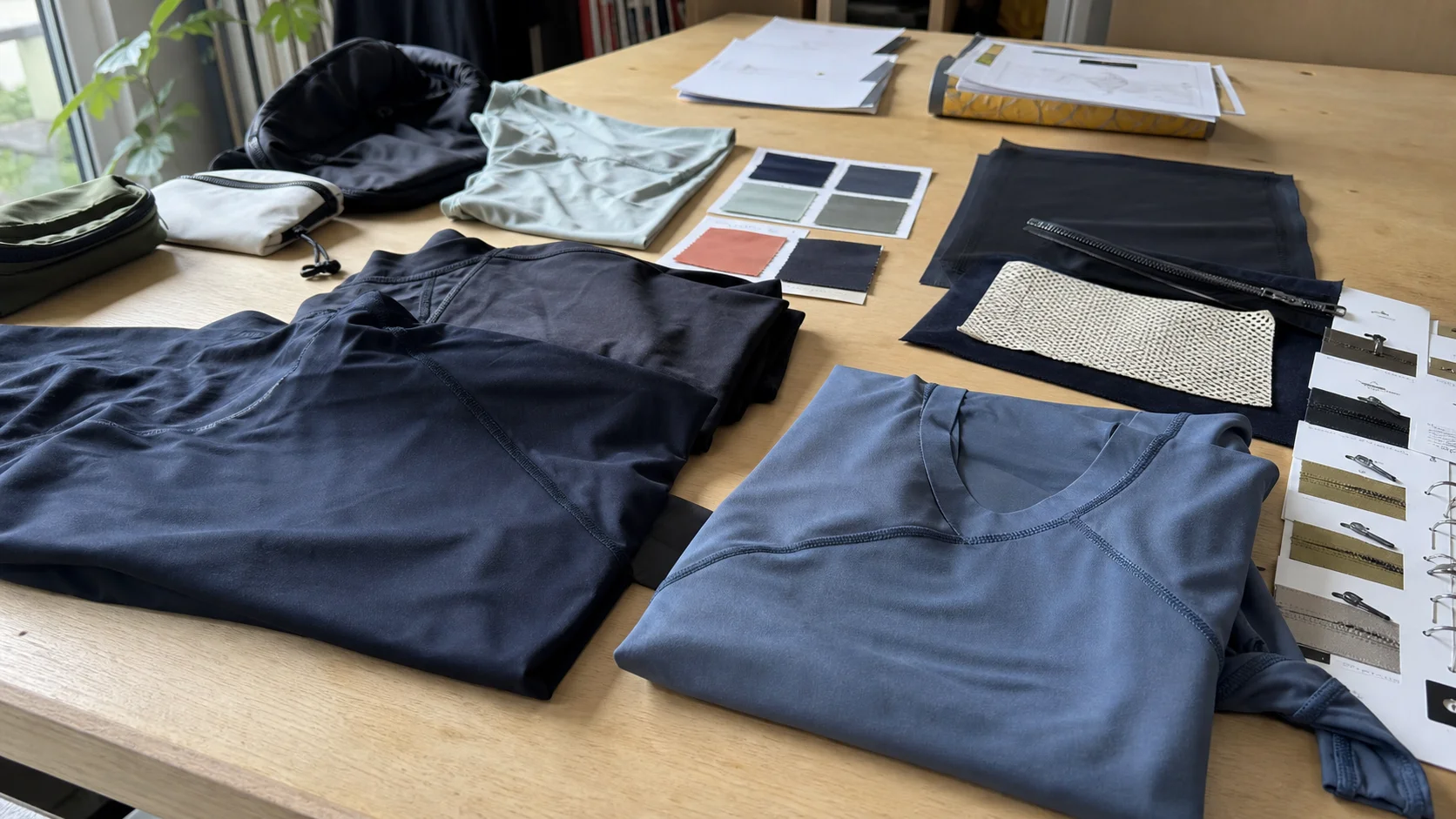
A product-specific quality control outline for warehouse safety teams buying wholesale rash guards, covering fabric inspection, seam strength, labeling,...
Rash Guard QC Checklist for Safer Warehouse Buying - Activewear & Teamwear manufacturing guide
Rash guards look simple on a purchase order: polyester-spandex tops, long sleeve or short sleeve, sometimes printed, sometimes plain, packed by size and color. In bulk buying, they are not simple. A weak fabric lot, poor seam recovery, loose label placement, or unstable sublimation print can turn a clean warehouse intake into a costly sorting job.
For warehouse safety teams, rash guard quality control is not just about appearance. These garments may be issued for outdoor staff, event crews, water-adjacent teams, surf schools, rescue-adjacent support teams, resort operations, sports clubs, camps, and branded activewear programs. If the garment is too tight, too sheer, poorly sewn, or inconsistent by size, it can create practical safety and compliance issues: restricted movement, skin exposure, overheating, chafing, trip hazards from loose threads, and rework pressure on receiving teams.
A wholesale rash guard quality control checklist gives purchasing, warehouse, and safety teams a shared standard before money is committed. It also makes supplier conversations clearer. Instead of vague comments like “the quality looks off,” buyers can point to measurable requirements: fabric GSM, stretch recovery, seam type, UPF test documentation, print handfeel, carton labeling, size ratio, and acceptable defect limits.
The best checklist is not complicated for the sake of it. It should focus on the failure points that actually cause returns, safety complaints, and warehouse disruption.
Warehouse buyers face a different risk profile than retail merchandisers. Retail teams may focus heavily on showroom presentation, hanger appeal, and seasonal color. Warehouse safety teams need garments that can be received, counted, distributed, worn, washed, and replaced without creating operational noise.
Rash guards are especially sensitive because they combine stretch fabric, tight body fit, technical claims, and often high-coverage printing. A minor issue in a cotton T-shirt may be acceptable. The same issue on a rash guard can become a functional defect because the garment is worn close to the skin and under movement.
Warehouse teams should treat these risks as buying variables, not afterthoughts. The lower the unit price, the more important the checklist becomes. Cheap rash guards often reduce cost through lighter fabric, weaker thread, lower spandex content, fewer inspection steps, or rushed packing. Some of these tradeoffs are acceptable for promotional use. They are less acceptable for staff uniforms, safety programs, or repeat-issue teamwear.
A practical rash guard QC checklist should cover five points: materials, construction, fit, decoration, and logistics. Each point should be checked before production, during production when possible, and at warehouse receiving.
QC Area What to Check Why It Matters Typical Risk Level Fabric GSM, fiber content, stretch, recovery, opacity, handfeel Controls comfort, coverage, durability, and movement High Construction Flatlock seams, coverstitch, thread tension, seam allowance Prevents chafing, seam burst, and premature failure High Fit Size spec, grading, sleeve length, body length, neck opening Supports safe movement and reduces issue complaints High Decoration Sublimation, screen print, heat transfer, logo placement Affects brand image, stretch performance, and wash durability Medium to High Labels Fiber label, care label, size label, country of origin where required Supports compliance and distribution accuracy Medium Packing Polybag, carton marks, size/color ratio, barcode or SKU labels Protects warehouse efficiency and prevents mis-shipments MediumFor factory sourcing support, buyers can review apparel production service options at fabrikn.com/services/. A structured supplier conversation is easier when specifications are documented before sampling starts.
Fabric is the biggest performance driver in rash guard buying. The common base is polyester-spandex or nylon-spandex jersey. Polyester is widely used for sublimation printing, quick drying, and cost control. Nylon can feel smoother and stronger, but it may raise cost and complicate certain print methods. Spandex content usually sits in the 8% to 20% range depending on price level, stretch requirement, and compression preference.
Lower GSM can save money and speed drying. It can also become transparent when stretched, especially in white, neon, pale blue, and printed areas. Heavier GSM improves coverage and perceived quality, but it may feel warmer during outdoor work. The right choice depends on the use case. For warehouse safety teams issuing rash guards to outdoor crews, opacity and comfort should matter more than shaving a few cents from the fabric cost.
Sun-protection claims require caution. If the garment is sold or issued as UPF-rated, ask for supporting test documentation from a recognized lab or a valid fabric test report linked to the same fabric quality. A verbal “UPF 50” claim on a quotation is not enough. Fabric color, stretch, wetness, age, and construction can affect protection. If safety teams rely on the claim, buying should require documentation before production approval.
Purchasing judgment: if the supplier cannot provide a test report for a UPF claim, either remove the claim from the program or buy the garment as a general performance top rather than sun-protection PPE.
Rash guard construction must survive stretch. A seam that looks neat on a table can fail when the wearer reaches, bends, swims, lifts, or pulls the garment over the head. Warehouse buyers should specify seam construction clearly rather than leaving the factory to choose the cheapest method.
Flatlock is often the safer choice for close-to-skin garments. It reduces raised seam irritation and gives a more technical appearance. The tradeoff is cost and production complexity. For one-time promotional rash guards, overlock plus coverstitch may be acceptable. For team uniforms and repeated use, flatlock is usually worth the added cost.
Seam stretch should be tested directly. Pull the garment across the seam with moderate force and listen for thread popping. This is not a substitute for lab testing, but it catches obvious production weakness before cartons are released into distribution.
Fit problems create the most visible end-user complaints. Rash guards are often intended to fit close to the body, but “close fit” is not the same as undersized. If a safety team is issuing garments across a broad workforce, sizing needs room for real body diversity, not just a catalog model.
Measurement tolerance should be realistic. For stretch activewear, common bulk tolerance may be around plus or minus 1 cm for small points and plus or minus 1.5 cm to 2 cm for larger points, depending on the measurement and fabric behavior. Tighter tolerances may increase rejection rates and cost. Loose tolerances may cause distribution problems.
A size set should be approved before bulk production. This means at least one sample per size, preferably in the final fabric and construction. If the order includes both men’s and women’s fits, the buyer should not approve one fit and assume the other will translate correctly. Women’s rash guards need separate attention to chest, waist, hip, sleeve, and length balance.
Safety teams should consider ordering extra units in common sizes. A 1:1 size ratio looks tidy on a spreadsheet but often fails in workforce issue programs. Size demand may vary by region, role, season, and whether the garment is worn over a base layer. Before placing a repeat order, compare issued sizes against returned or unused stock. That data is more useful than a supplier’s generic size curve.
Rash guards often use sublimation because polyester fabric accepts all-over prints well. Sublimation can produce lightweight decoration that does not sit heavily on the surface. It is common for teamwear, surf programs, promotional events, and branded activewear. The weakness is that color accuracy, panel alignment, and white grin-through can become problems.
Print quality should be approved on the same fabric used in bulk. A paper proof is not enough. Colors can shift after sublimation, especially on recycled polyester, heather effects, or fabrics with optical brighteners. Logos may look clean on a flat sample but distort when stretched across the chest or sleeve.
Purchasing should be careful with ultra-large chest logos on tight rash guards. The logo may distort during wear and create a worse brand impression than a smaller, better-positioned mark. A sleeve logo, back yoke logo, or chest logo with enough spacing often performs better.
Warehouse safety teams should review rash guards through the lens of worker comfort, task movement, and distribution control. A garment that passes a basic visual inspection may still be unsuitable for issue if it restricts reaching, becomes hot too quickly, or lacks clear size identification.
Rash guards should not be treated as automatic substitutes for certified PPE. If the buying program requires flame resistance, high visibility, chemical resistance, cut resistance, or certified UV protection, those requirements need separate product standards and documentation. A standard polyester-spandex rash guard is activewear unless the supplier provides valid evidence for a specific protective claim.
Purchasing judgment: use rash guards for comfort, coverage, identification, and activewear performance. Do not use them as certified safety equipment unless the product is tested and documented for that exact purpose.
A disciplined sample process prevents most bulk problems. Skipping samples may feel faster, but it transfers risk to the warehouse. When cartons arrive with wrong fit, weak seams, or off-color branding, the savings disappear quickly.
Not every project needs every stage at the same depth. A repeat order from a proven supplier may move faster. A new supplier, new fabric, new print method, or safety-sensitive issue program should go through the full process.
Sample approvals should be written, not informal. Keep a clear record of approved fabric, color, measurements, print placement, trims, labels, packing, and care instructions. A sample without written notes can lead to disputes because different teams may interpret “approved” differently.
MOQ and lead time depend on fabric availability, decoration method, size range, color count, trim sourcing, factory capacity, and inspection requirements. Buyers should treat very short lead times with caution if the order includes custom fabric, sublimation, multiple sizes, or private labels.
These ranges are not universal. Some suppliers can accept smaller trial orders at higher unit prices. Others require larger runs to control setup costs. A buyer should compare MOQ against total landed cost, not just unit price. Small orders may be easier to approve but expensive per piece. Larger orders reduce price but increase inventory risk if fit or demand is uncertain.
For many wholesale rash guard programs, sampling can take two to four weeks depending on revisions. Bulk production may take four to eight weeks after final approval, with longer timelines for custom fabric, lab testing, or large multi-style programs. Shipping time, customs clearance, and warehouse receiving capacity should be added separately.
Buyers planning a new program can discuss production scope through fabrikn.com/contact-us/ before locking a calendar. Clear timing at the start reduces pressure to skip QC later.
Incoming inspection protects the warehouse from becoming the final quality control department by accident. The goal is not to inspect every garment in every carton unless the risk demands it. The goal is to sample intelligently, identify shipment-level problems, and prevent bad stock from being issued.
Warehouse teams should separate defects by severity. A loose thread may be minor if it can be trimmed without damaging the garment. A popped underarm seam, wrong fiber label, damp carton, or print defect across many units is more serious. If a problem appears repeatedly in the sample, expand the inspection before releasing stock.
Defect Type Example Suggested Action Critical Mold smell, contamination, unsafe foreign object, false safety claim Hold shipment and escalate immediately Major Wrong size scale, seam burst, wrong logo, severe color variance Quarantine affected cartons and request supplier response Minor Trim-able loose threads, small packing wrinkle, slight label tilt Accept if within agreed toleranceInspection sampling can follow a recognized AQL approach if the organization already uses one. For safety-sensitive issue programs, a tighter sampling plan may be justified. The main point is consistency. Randomly checking a few garments only when staff have time does not create reliable control.
A supplier scorecard helps buyers move beyond unit price. Rash guard performance depends on repeatability. The best supplier is not always the cheapest quote; it is the one that delivers acceptable quality with fewer surprises.
Buyers should keep photos and inspection records from each order. This history supports stronger negotiation. It also helps decide whether to reorder, adjust specs, reduce volume, or move the program to another supplier.
Information about the company background and sourcing approach can be reviewed at fabrikn.com/about-us/. For B2B apparel buying, supplier fit matters as much as product fit.
Quality control is not about rejecting everything that is imperfect. It is about deciding which imperfections are harmless, which ones affect performance, and which ones create safety or operational risk.
Some problems come from unrealistic buying choices rather than factory error. If the buyer requested a very light fabric in white, sheerness may be predictable. If the budget requires a low MOQ, custom color matching may be harder. If the timeline is compressed, inspection and rework windows shrink.
A practical sourcing editor would not recommend the same rash guard specification for every buyer. For promotional giveaways, a lighter fabric and simpler seam package may be acceptable. For warehouse safety teams issuing garments to staff, the better buy is usually midweight fabric, tested stretch recovery, clear size grading, durable seams, and conservative branding. The purchase price is higher, but the risk of complaints and sorting labor is lower.
A rash guard QC checklist should be built into the purchase process, not added after problems appear. The buyer’s strongest leverage is before bulk production starts: during spec writing, sample approval, and supplier confirmation. Once goods are packed and shipped, every correction becomes slower and more expensive.
For warehouse safety teams, the right buying standard is simple: choose fabric that covers properly, construction that survives movement, sizing that works for real users, decoration that does not fail in wear, and packing that supports clean receiving. That combination is not always the lowest quote. It is usually the safer wholesale buy.
Get a free quote from Fabrikn — your trusted B2B clothing manufacturer with 10+ years of experience. MOQ as low as 200 pieces.
Get a Free Quote →Fabric performance and seam strength are the two most important checks. The fabric must provide suitable stretch, recovery, opacity, and comfort. The seams must stretch without popping or irritating the skin. A garment can look acceptable on a table and still fail when worn if these two areas are weak.
Many standard rash guards fall around 180 to 220 GSM. Lighter fabrics around 150 to 180 GSM may work for promotional use but can become sheer. Heavier fabrics around 220 to 260 GSM usually improve coverage and durability, though they may feel warmer. The best choice depends on climate, use case, budget, and wear duration.
Typical MOQs may range from 100 to 300 pieces for sublimation or stock-fabric programs, 300 to 500 pieces for private label or custom color programs, and 500 to 1,000 pieces or more for custom-knit fabric. Exact MOQs depend on supplier capacity, fabric sourcing, decoration method, and size/color complexity.
Start by checking carton condition, carton count, packing list accuracy, and outer carton marks. Then sample cartons across sizes and colors. Inspect garments for fabric defects, seam defects, print errors, wrong labels, odor, moisture, and size inconsistencies. If the sample shows repeated defects, expand inspection before releasing stock.
Standard rash guards are activewear unless they are tested and documented for a specific protective standard. They can support coverage, comfort, visibility by color, and team identification. They should not be treated as certified PPE for flame resistance, high visibility, chemical resistance, or UV protection unless valid documentation supports that claim.
At minimum, buyers should approve a pre-production sample made with final fabric, trims, labels, construction, and decoration. For new programs, a fit sample, print strike-off, and full size set are also recommended. Written approval notes should be kept with the purchase order and technical specifications.
Common failures include sheer fabric, poor stretch recovery, skipped stitches, seam popping, wavy hems, rough neck labels, incorrect size grading, sublimation color shift, logo misplacement, peeling transfers, mixed-size packing, and unsupported UPF claims. These failures are easier to control when the checklist is used before bulk production.
Flatlock seams are usually preferred for close-to-skin rash guards because they reduce bulk and chafing. They may cost more than basic overlock seams. For staff issue, teamwear, and repeated-use programs, flatlock is often a better long-term value. For short-term promotional use, overlock with coverstitch may be acceptable if stretch testing passes.