
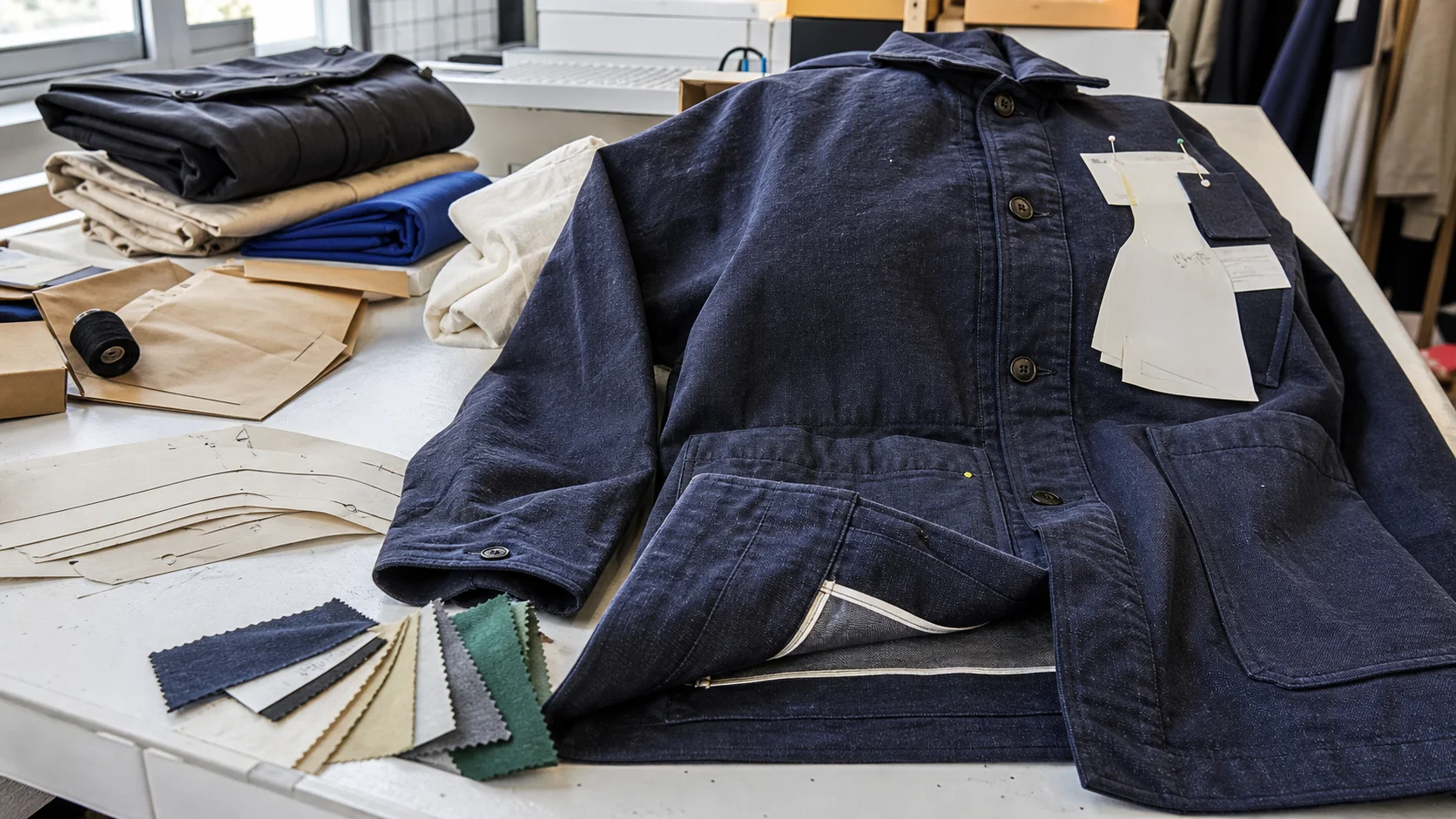
A distributor-focused outline for evaluating wholesale reclaimed cotton coat size grading, fit consistency, tolerance controls, spec sheets, sampling, and...
Reclaimed Cotton Coat Grading Review for Buyers - Sustainable Fashion manufacturing guide
Wholesale reclaimed cotton coat size grading is not a cosmetic detail. For distributor buyers, it affects sell-through, returns, warehouse sorting, retail confidence, and the true cost of every carton received. A reclaimed cotton coat can carry a strong sustainability story, but if the size run is unstable, the buyer ends up paying for the problem through markdowns, customer complaints, and uneven replenishment.
This review looks at reclaimed cotton coat grading from a practical sourcing angle. It is written for distributor buyers who need to evaluate bulk production, compare supplier offers, and decide whether a factory or trading partner can deliver consistent sizing across recycled-content outerwear.
Reclaimed cotton has clear commercial appeal in Sustainable Fashion. It can reduce dependency on virgin fiber, support circular material programs, and give brands a stronger environmental claim when the supply chain is properly documented. The sourcing risk is that reclaimed cotton fabrics often behave differently from conventional virgin cotton fabrics. Fiber length, yarn strength, shrinkage, hand feel, color consistency, and fabric recovery can vary by batch. Those variations matter when grading coats across XS to 3XL, or when building distributor-level size assortments for multiple retail accounts.
Buyers should treat size grading as a measurable production discipline, not a supplier promise. The right review process checks the base size, grade rules, fit intent, fabric behavior, seam construction, tolerance standards, and inspection method before bulk cutting starts.
Coat grading is the process of increasing or decreasing a base pattern across a size range while preserving the intended fit, proportion, and function. In wholesale reclaimed cotton coats, this is more complex than simply adding width to the chest and length to the body. A coat must allow movement over inner layers, maintain sleeve pitch, keep the shoulder balanced, and close properly across the front.
Distributor buyers usually handle mixed demand. One retail account may want a relaxed unisex fit, another may need women’s shaped grading, and another may require extended sizes. If the supplier uses a generic size chart without reviewing the garment’s fabric and structure, the size run may look acceptable on paper but fail in actual fitting.
Size inconsistency creates several commercial problems:
For a distributor, the main question is not whether the coat can be produced. The better question is whether the supplier can repeat the same fit in bulk, across multiple sizes, and across future fabric lots.
A sustainable coat that fits unpredictably is a weak wholesale product. Buyers should verify grading before they scale the order, not after the first return reports arrive.
Reclaimed cotton is usually made from post-industrial or post-consumer cotton waste that is mechanically recycled, blended, respun, and woven or knitted into new fabric. Some materials use reclaimed cotton blended with virgin cotton, recycled polyester, or other fibers to improve strength and stability. The blend ratio matters because it affects shrinkage, abrasion resistance, drape, and sewing performance.
In coat production, reclaimed cotton can appear in canvas, twill, brushed fabric, quilted shell fabric, bonded fabric, or lining blends. Each construction has a different grading impact. A dense reclaimed cotton canvas may need more wearing ease because it has limited give. A softer brushed cotton blend may relax after steaming or wearing. A quilted reclaimed cotton coat can become tighter after quilting because the stitching compresses the surface and changes the usable measurement.
These variables do not make reclaimed cotton unsuitable for coats. They simply require tighter technical control. Buyers should ask the supplier to submit fabric test data before the pre-production sample is approved. If test data is not available, the buyer should assume higher risk and negotiate smaller trial quantities or stronger inspection terms.
Grade rules define how the garment changes from one size to the next. A distributor buyer should not rely on vague terms such as “standard EU sizing” or “regular US fit.” Those descriptions are too broad for wholesale outerwear. The supplier should work from an approved size chart with clear points of measure, tolerance rules, and grading increments.
For coats, the base size is often M, L, 38, 40, or a brand-specific sample size. The base size must be fitted and approved first. After that, the size set should confirm whether the grading works at the ends of the range. A coat that looks balanced in size M may become too long in XS or too tight across the back in 2XL.
Distributor buyers should check the size curve against their sales history. If past sales show high demand in L and XL, the order ratio should reflect that reality rather than a supplier’s default packing ratio. For new sustainable fashion launches, a conservative first order with balanced sizes is safer than heavy investment in fringe sizes unless the account has reliable pre-orders.
A common grading mistake is increasing the chest while leaving the sleeve cap, armhole, and cross-back measurements too tight. This creates a coat that measures correctly on a flat table but feels restrictive when worn. Buyers should review movement, not only static measurements.
Important grading checks include:
For distributor orders, the safest approach is to approve a base size and at least two additional sizes before bulk cutting. One smaller and one larger size will reveal most grading problems early.
A reclaimed cotton coat specification should include a full measurement chart. The exact points of measure depend on the design, but several areas deserve close attention because they often create fit or inspection disputes.
Flat measurements should be supported by a clear measuring method. A 1 cm difference in where the inspector places the tape can create unnecessary disputes. The tech pack should include diagrams for curved areas such as armhole, sleeve opening, hood opening, collar, and back length.
For coats, tolerance should be realistic but not loose enough to hide poor production. Many buyers use tolerances around plus or minus 1 cm for smaller points and plus or minus 1.5 cm to 2 cm for larger body measurements. Heavy fabrics, quilted panels, garment washing, and complex seams may need slightly wider tolerance, but this should be agreed before production starts.
A disciplined sample process protects both the buyer and the supplier. It also gives the distributor a documented basis for rejecting production that drifts from the approved standard.
For reclaimed cotton coats, the size set should ideally be made from bulk or near-bulk fabric. Sampling in substitute fabric can mislead the buyer. A lighter or more stable fabric may make the grading look successful, while the actual reclaimed cotton fabric may shrink, twist, or feel tighter after finishing.
The pre-production sample should not be approved only by photo. Photos are useful for confirming color, trim placement, and general appearance, but they do not prove fit or measurement stability. Distributor buyers should request a physical sample for any new supplier, new fabric, new pattern, or new size range.
Buyers should record all corrections in one controlled document. Scattered comments across emails, chat messages, and marked photos can cause mistakes. The final approved tech pack should be the only production reference.
MOQ for wholesale reclaimed cotton coats depends on fabric availability, dyeing method, trim sourcing, pattern complexity, and factory line setup. Reclaimed cotton fabric may have more limited ready-stock options than standard virgin cotton fabric, especially when the buyer requires a specific composition, shade, or certification claim.
These ranges are not fixed rules. Some suppliers may accept lower quantities with a surcharge, limited size range, or available fabric. Others may require higher commitments because reclaimed cotton fabric must be produced to order. Buyers should compare the total landed cost, not only the unit price.
A low MOQ can be useful for market testing. The tradeoff is that small orders may carry higher unit costs, fewer customization options, and less priority in production scheduling. Larger orders can improve price and trim customization, but they increase exposure if grading has not been proven.
Lead time for reclaimed cotton coats often ranges from 45 to 90 days after final approval, depending on the complexity of the program. Sampling may add 2 to 6 weeks before that. Buyers should avoid treating the quoted production time as the full calendar requirement.
Distributor buyers should build decision deadlines into the purchase calendar. Late comments on sample fit or trim color can push the shipment into a less favorable retail window. The most reliable orders are those where the buyer approves the fabric, grading, trims, packaging, and testing plan before bulk materials are committed.
For buyers comparing sourcing partners, it may be useful to review broader manufacturing service capabilities at fabrikn.com/services/. A supplier that understands sampling, bulk production, and quality control as one workflow is usually safer than a partner focused only on quoting the lowest unit price.
Reclaimed cotton coat grading cannot be separated from fabric and trim specifications. A pattern approved in one fabric may not work in another. Even a small change in fabric weight or finishing can alter the final garment measurement.
For distributor buyers, the sustainability claim must be supported by documentation. Claims such as “eco,” “recycled,” or “reclaimed” are not enough for serious wholesale programs. The purchase file should include supplier declarations and, where required, transaction certificates, scope certificates, or test reports from recognized labs. Requirements vary by market and claim type, so buyers should check legal and retailer compliance before labeling.
Trims can change how a coat fits and performs. A stiff zipper can reduce front flexibility. Heavy snaps can pull on reclaimed cotton fabric if reinforcement is weak. Rib cuffs, drawcords, hood linings, and interlinings all affect finished measurements.
Buyers should lock trim specifications before the pre-production sample. Substituting trims during bulk production can alter appearance, measurement, and customer perception. A lower-cost zipper or button may save a small amount per unit but create bigger problems if returns increase.
Inspection for reclaimed cotton coats should cover measurements, workmanship, appearance, labeling, packaging, and material consistency. Distributor buyers should define acceptable quality limits before production, especially if goods are shipped directly to retail accounts or third-party warehouses.
Reclaimed cotton fabrics may naturally show more texture than virgin cotton. That can be acceptable if the buyer approves the appearance standard in advance. The risk comes when the supplier treats every irregularity as “normal recycled fabric” after production is finished. Buyers should approve fabric swatches and define what is acceptable, borderline, and rejectable.
Measurement inspection should include samples from every size and color. For large orders, inspectors should pull garments from multiple cartons and production batches. Checking only top-of-carton pieces is weak practice because it may miss variation between operators, bundles, or finishing lots.
Important measurement controls include:
If one size consistently fails, the issue is likely pattern grading or cutting. If measurements vary randomly within the same size, sewing handling or finishing control may be the problem. This distinction matters because it determines whether the goods can be repaired, repressed, remeasured, or must be rejected.
Distributor buyers should choose reclaimed cotton coat suppliers based on technical control, not just sustainability language. A convincing product page or low price does not prove that the supplier can manage grading, shrinkage, and bulk inspection.
The best supplier is not always the one offering the broadest size range. A factory that can deliver XS to 5XL sounds attractive, but extended grading requires more pattern skill and often more fit testing. If the buyer does not have proven demand for the full range, a tighter launch range may be smarter.
There is also a cost tradeoff between standard blocks and custom fit development. Using a supplier’s existing coat block can reduce sampling time and pattern cost. The downside is that the fit may not match the distributor’s target consumer. Custom grading improves brand consistency but usually requires more samples, clearer technical input, and a longer calendar.
Buyers planning a new sustainable outerwear program can review company background and sourcing approach through fabrikn.com/about-us/, or open a direct inquiry at fabrikn.com/contact-us/ when specifications, MOQ, or sample planning need review.
A buyable wholesale reclaimed cotton coat order has more than an acceptable FOB price. It has a controlled technical file, realistic MOQ, tested fabric, approved grading, and a clear inspection plan. Distributor buyers should be cautious when a supplier pushes for bulk confirmation before size set samples are reviewed.
For a first order, a practical structure may be:
This approach may feel slower than placing a broad launch order, but it protects margin. Sustainable fashion products still need conventional wholesale discipline. Retailers may appreciate the reclaimed cotton story, but they will judge the coat by fit, quality, delivery, and customer response.
A higher unit price may be justified when the supplier offers tested fabric, better grading support, stronger trims, reliable documentation, and inspection cooperation. Paying slightly more for a stable size run can be cheaper than dealing with returns and retailer deductions.
Price pressure becomes dangerous when it removes the controls that make the coat sellable. Common shortcuts include skipping the size set, using untested fabric, accepting substitute trims, reducing seam reinforcement, or approving production from photos only. Those savings rarely help the distributor if the goods arrive inconsistent.
Buyers should be careful with suppliers that cannot explain shrinkage, refuse measurement tolerances, avoid physical samples, or provide unclear sustainability documentation. Another warning sign is a supplier that offers very low MOQ, custom fabric, broad size range, fast lead time, and low price all at once. Some suppliers can be flexible, but every production advantage has a cost or limitation.
A responsible purchasing decision weighs the full risk profile. If the supplier cannot control grading on a reclaimed cotton coat, the sustainability benefit does not compensate for poor product execution.
Before confirming a wholesale reclaimed cotton coat order, distributor buyers should make sure the following points are complete:
Wholesale reclaimed cotton coat sourcing can work well when buyers apply the same discipline they would use for any technical outerwear program. The difference is that reclaimed cotton needs closer attention to fabric behavior and documentation. The most reliable distributor programs are built on controlled grading, realistic order planning, and a supplier relationship that supports correction before bulk production.
Get a free quote from Fabrikn — your trusted B2B clothing manufacturer with 10+ years of experience. MOQ as low as 200 pieces.
Get a Free Quote →Reclaimed cotton coat size grading is the process of scaling a coat pattern across sizes while maintaining fit, movement, proportion, and measurements. It is especially important because reclaimed cotton fabrics can vary in shrinkage, strength, and hand feel.
Typical MOQ may range from 100 to 300 pieces per color for simple styles using ready fabric, and 500 to 1,000 pieces or more for custom reclaimed cotton fabric, certified materials, special trims, or complex outerwear construction.
Yes, whenever possible. A size set made in substitute fabric may not reveal real shrinkage, stiffness, drape, or quilting effects. Bulk or near-bulk fabric gives the buyer a more accurate grading review.
Chest, shoulder, cross back, armhole, sleeve length, body length, and hem sweep are usually the most important. Hood, collar, cuff, and pocket placement should also be reviewed when they affect function or appearance.
Production often takes 45 to 90 days after final approval, but sampling, fabric development, lab dips, trim booking, and testing can add several weeks. Lead time depends heavily on fabric availability and approval speed.
Main risks include out-of-tolerance measurements, shade variation, fabric surface irregularity, seam puckering, weak trim attachment, incorrect labels, and packing errors. Buyers should define acceptable standards before production.
Reclaimed cotton can be suitable for coats when the fabric is properly blended, tested, and matched to the design. Heavy-use outerwear may require reinforcement, stronger yarn blends, lining support, or more conservative styling.
Buyers can reduce returns by approving physical samples, checking size sets, testing fabric shrinkage, using clear tolerances, confirming fit on the target body type, and inspecting production before shipment.
Buyers should request supplier declarations, fabric composition details, test reports, and certification documents where applicable. The correct documentation depends on the market, retailer requirement, and exact sustainability claim.
A lower unit price is useful only if grading, fabric quality, trims, and documentation remain controlled. If the price depends on skipping size set approval or using untested fabric, the commercial risk is usually too high for distributor buyers.