
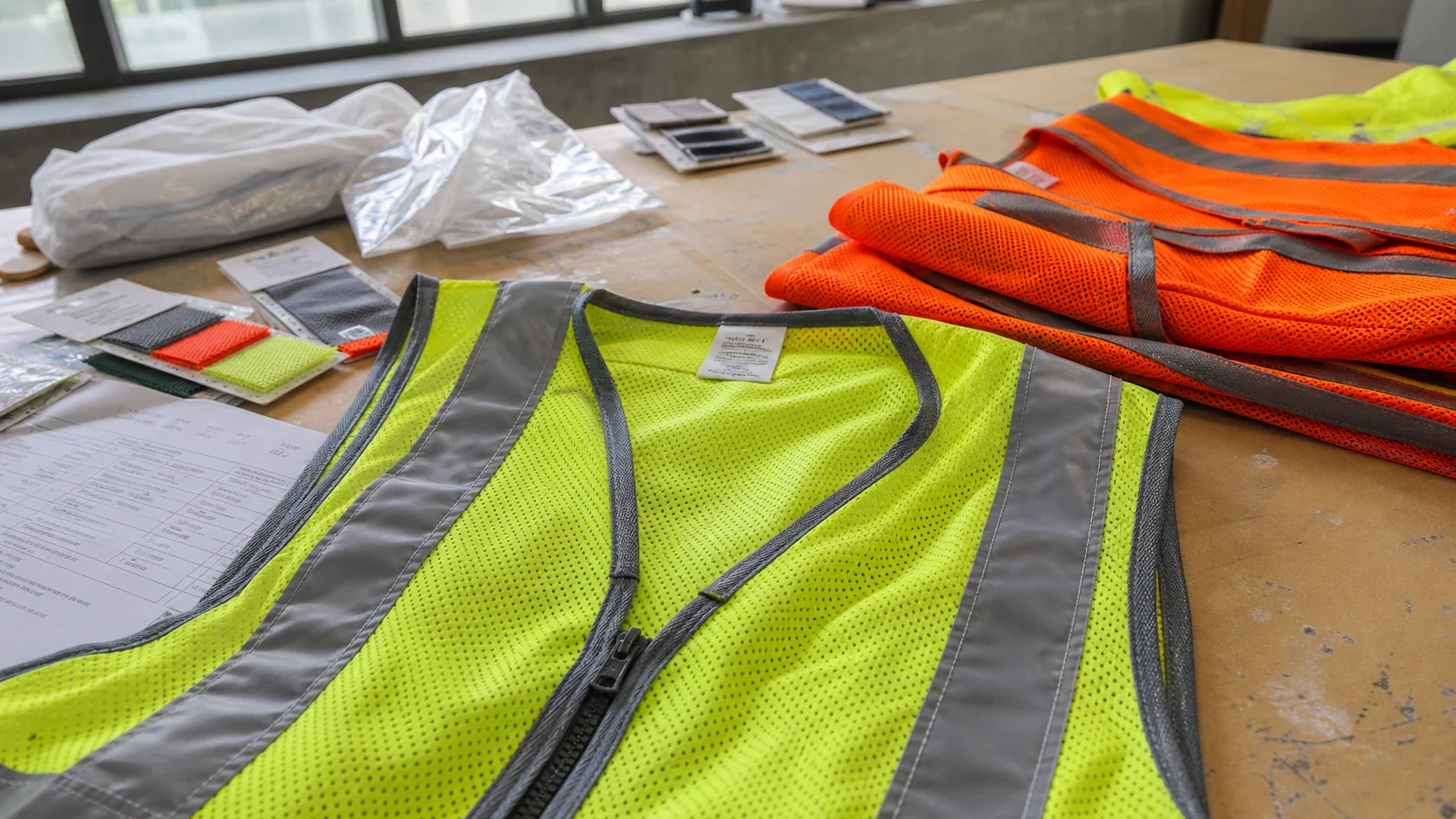
A sourcing-focused outline for airport uniform teams evaluating wholesale safety vest seam strength, reinforcement choices, testing evidence, MOQ...
Safety Vest Seams Review for Airport Buyers - Fabrikn production reference
Category: MOQ, Cost & Sourcing
Airport safety vests look simple, but seam strength is one of the main reasons a vest either survives daily operations or becomes a recurring replacement problem. Airport uniform teams usually buy in volume for ground handlers, ramp crews, baggage teams, maintenance workers, shuttle staff, cleaning crews, and temporary contractors. These groups do not wear vests in low-stress retail conditions. They bend, lift, climb, turn quickly, carry radios, pass through vehicles, and work around belt loaders, carts, jet bridges, and service equipment.
A wholesale safety vest seam strength review should look beyond whether the vest meets a visibility requirement on paper. It should ask whether the garment construction can handle the way airport teams actually use it. A weak shoulder seam, loose side seam, poorly secured reflective tape, or low-quality binding can cause failures long before the base fabric wears out.
For airport buyers, seam failure creates three problems. First, it can reduce visibility if reflective tape pulls away or the vest no longer sits correctly on the body. Second, it increases replacement cost because damaged vests are often discarded rather than repaired. Third, it creates operational friction when teams must wait for replacement stock, especially during seasonal hiring, airline contract changes, or ramp staffing surges.
The right purchasing judgment is straightforward: do not evaluate safety vests only by unit price. A slightly cheaper vest with weak stitching can cost more over a season than a better-built vest with stronger seams, cleaner bartacks, and more reliable tape attachment. The lowest quote may still be suitable for visitors or occasional-use contractors, but it is usually risky for daily ramp and baggage teams.
Airport environments create repeated stress points that are different from warehouse, roadwork, or event staffing programs. Uniform teams should map vest construction to actual job functions before approving a bulk order.
Ramp workers often wear vests over hoodies, rain jackets, thermal layers, or work shirts. Size variation becomes important because seams are strained when the vest is too tight over outerwear. Side seams, shoulder joins, armhole binding, and zipper areas take the most stress. If the vest has pockets for radios or small tools, pocket seam reinforcement also matters.
Baggage teams bend and twist constantly. Vests can snag against conveyor equipment, carts, belt loaders, and stacked bags. Side openings, hook-and-loop closures, zipper plackets, and pocket seams need special attention. Lightweight mesh vests may breathe well, but if the mesh is very open or low denier, stitching can tear through the fabric around high-tension areas.
Maintenance teams may require more durable fabric, stronger pockets, and better seam reinforcement than general staff. If the vest carries radios, ID holders, pens, inspection tags, or small accessories, a basic promotional vest construction is not enough. Buyers should look for bartacks at pocket corners, reinforced shoulder seams, and clean binding that does not unravel after washing.
Visitor vests are usually lower-stress garments. A lower-cost vest may be acceptable if it is worn occasionally and stored properly. The tradeoff is that these vests are often shared across users and may be handled roughly. Even for visitor stock, seam finishing should be good enough to prevent rapid fraying and tape detachment.
For airport sourcing teams, the practical split is simple: daily-use vests need stronger seams and better trim control; visitor-use vests can be more cost-sensitive but should still pass basic pull, stitch, and reflective tape checks.
Seam strength depends on fabric, stitch type, thread, seam allowance, machine tension, operator consistency, and finishing. A buyer does not need to become a sewing technician, but the purchase specification should identify which seams matter most and how they should be checked before production.
Shoulder seams carry load when the vest is pulled on, removed quickly, worn over bulky layers, or caught on equipment. A basic overlock seam may be acceptable for light use, but a stronger construction often includes a safety stitch, double stitching, or binding reinforcement. Shoulder failures are common when buyers approve a vest based only on front appearance and ignore the inside seam finish.
Airport buyers should ask suppliers to submit close-up photos of shoulder seams from both outside and inside. If the vest uses mesh, the seam allowance must be wide enough that the stitching does not cut through the holes of the fabric. If the vest uses solid polyester, seam puckering may indicate poor tension control or fabric feeding issues.
Side seams handle body movement and sizing pressure. They are especially important when the vest is worn over winter uniforms. A side seam that looks clean on a flat sample can still fail if the size grading is narrow or the vest is cut too close to the body.
For airport uniform programs, sizing should be reviewed with layering in mind. If the supplier’s standard size set is slim, buyers may need extended sizing or a relaxed fit pattern. A good side seam will not compensate for a bad fit. Seam strength and size specification must be reviewed together.
Armhole binding is often overlooked because it is a narrow trim, but it is a frequent failure point. Workers move their arms constantly, and binding can fray, twist, or detach if the tape quality is poor or the stitching margin is too close to the edge.
Buyers should check whether the binding is woven tape, knit tape, or folded polyester. The best choice depends on cost target and durability requirement. Knit binding can feel softer, while woven binding may hold shape better. Poorly attached binding can make even a compliant vest look worn out quickly.
Hook-and-loop closures, zipper fronts, and snap fronts all create seam risks. Hook-and-loop is economical and easy to use with gloves, but it can pull against the fabric during removal. Zippers improve appearance and closure security, but they add cost and require better stitching alignment. Snaps may be useful for certain programs, but they can tear out if the backing reinforcement is weak.
For daily airport wear, a zipper vest may look more uniform and secure, especially for supervisors or staff who wear the vest for long shifts. Hook-and-loop closures may be better for visitor stock, short-term contractors, or lower-cost bulk replenishment. The seam review should include repeated open-close handling, not just a visual check.
Many airport teams ask for ID pockets, radio loops, badge windows, pen pockets, or lower storage pockets. Every added pocket increases the number of seams and potential failure points. Pocket corners should be bartacked or reinforced, especially if the pocket is expected to carry anything heavier than paper.
A common purchasing mistake is adding many pockets to a lightweight mesh vest without upgrading fabric or seam reinforcement. This can create a vest that looks functional in a sample room but fails during real use. If pockets are required, buyers should specify pocket load expectations and ask for reinforcement details.
Seam strength is not only a sewing issue. Fabric and trims determine how well stitching holds under tension. Airport buyers should ask suppliers for a complete specification sheet before confirming a wholesale order.
Component Typical Options Purchasing Judgment Main fabric Polyester mesh, solid polyester, bird-eye knit, oxford panels Mesh improves breathability, while solid or reinforced panels usually hold seams better. Fabric weight Often around 100–160 gsm for lightweight vests; heavier for tactical or utility styles Very light fabric can reduce cost but may not support pockets or repeated pulling. Thread Polyester sewing thread in standard or heavier ticket sizes Thread should suit fabric weight; weak thread undermines otherwise good construction. Binding Polyester woven tape, knit binding, self-fabric binding Binding quality affects armhole, hem, and front edge durability. Reflective tape Glass bead or microprismatic tape, sewn or heat applied depending on style Airport buyers should confirm visibility class requirements and wash durability. Closure Hook-and-loop, zipper, snaps Closures change cost, user convenience, and seam stress at the front opening.Mesh safety vests are common because they are breathable and cost-effective. They work well for warm climates, indoor baggage areas, or short-duration wear. The tradeoff is that mesh can be vulnerable around seams if the fabric is too open or the stitching is not properly set.
Solid polyester vests usually provide better surface stability for reflective tape and pocket stitching. They may feel warmer, but they often hold branding, printed logos, and ID pockets more cleanly. For airport programs that need a more uniform appearance, solid panels can be worth the cost increase.
A balanced option is a hybrid vest: mesh body sections for breathability with solid panels where reflective tape, pockets, or logos are attached. This construction can improve durability without moving all the way to a heavy utility vest.
Thread quality and stitch density are central to seam performance. Too few stitches per inch can reduce holding strength. Too many stitches can perforate lightweight fabric and create a tear line. A practical range often depends on fabric, but buyers should ask the supplier to define the stitch density used for shoulder seams, side seams, binding, pocket attachment, and reflective tape.
Airport buyers should avoid vague specifications such as “strong stitching” or “good sewing.” Better wording includes stitch type, seam allowance, bartack locations, and acceptance standards for skipped stitches, loose threads, broken stitches, and seam slippage.
Airport uniform teams often require logos, department names, contractor identification, or role labels. Printing and embroidery both affect seam review indirectly. A large printed logo may be fine on solid polyester but less suitable on open mesh. Embroidery can look premium, but it adds needle perforation and may distort lightweight fabric if backing is poor.
If branding is required, buyers should approve a decorated sample, not only a blank sample. Decoration can change the way the vest hangs, stretches, and washes. It can also affect lead time because logo artwork, color matching, and placement approval add steps before bulk production.
Reflective tape is a critical part of a safety vest, and it is also one of the most visible failure points. Tape can lift, crack, wrinkle, detach, or pull the base fabric if the attachment method is wrong for the material.
Sewn reflective tape is common for wholesale safety vests. It can be durable when the tape, thread, and fabric are compatible. The risk is poor stitch placement. If stitches are too close to the tape edge, the tape may peel or curl. If stitches are inconsistent, the vest can look cheap and fail inspection.
Buyers should check that reflective tape is flat, aligned, and securely attached at intersections. Tape ends should be cleanly finished. Wrinkled tape is not only a cosmetic issue; it can indicate poor handling, rushed production, or mismatch between tape and fabric.
Heat-applied tape can create a cleaner surface because there are no visible stitch lines. It may be suitable for certain fabrics and designs, but it requires controlled heat, pressure, and dwell time. A weak application can detach after washing or in hot working conditions. A harsh application can damage fabric or cause stiffness.
For airport uniform teams, heat-applied tape should be tested on the actual production fabric before approval. Buyers should ask for wash guidance and confirm whether the tape is intended for repeated laundering or limited-use garments.
Tape placement should support visibility while allowing movement. Poor placement around armholes or side seams can create stress when the worker bends or reaches. Tape crossing bulky seams can also increase risk of lifting or skipped stitches.
Airport buyers should compare the vest design against applicable high-visibility standards used by their organization or local market. The sourcing team should not rely on supplier claims alone. If certification is required, request valid documents for the specific style, material, and tape configuration being purchased.
A disciplined sample process is the best way to catch seam problems before a wholesale safety vest order moves into production. The process does not need to be complicated, but it should be specific.
The supplier should provide fabric type, fabric weight, color references, reflective tape type, closure type, pocket layout, thread details, size chart, logo method, and packaging method. If the order is being developed from an existing vest, buyers should send a reference sample and define what must match and what can change.
For buyers comparing suppliers, a clear specification sheet also improves quote accuracy. Without it, one supplier may quote a lightweight visitor vest while another quotes a reinforced daily-use vest. The prices will not be comparable.
The first sample should confirm pattern, sizing, seam construction, trims, and overall workmanship. It may not have final logo decoration, but it should use representative fabric and reflective tape. Check shoulder seams, side seams, binding, closure strength, pocket attachment, and tape alignment.
Airport teams should test the sample over typical work layers. If the vest only fits over a T-shirt, it may fail in colder months. A sizing review should include the largest common uniform combination, such as hoodie, jacket, or rainwear.
The decorated sample should include logo, department label, ID window, custom color blocking, or any other branding requirement. Color should be reviewed under normal light and, if possible, under working conditions. Airport buyers should check whether decoration affects fabric stretch, seam flatness, or reflective tape appearance.
A pre-production sample should come from final materials and final construction before bulk sewing begins. This is the sample that should be held as the approval standard. If the supplier changes fabric, tape, thread, binding, or closure after approval, the buyer should require notification and re-approval.
A sealed approval sample gives both buyer and supplier a reference for inspection. It helps resolve disputes about seam finish, tape alignment, color, sizing, and logo placement. Without a sealed sample, inspection becomes more subjective.
Businesses that need help structuring a manufacturing brief can review service capabilities through Fabrikn’s services page or contact the team through Fabrikn’s contact page for sourcing discussion.
MOQ and cost depend on fabric availability, trim requirements, logo decoration, size range, color, packaging, and whether the vest is a stock style or custom development. Airport uniform buyers should treat MOQ as a commercial planning tool, not just a supplier restriction.
For stock safety vests with standard colors and standard trims, wholesale MOQs may start around 100–300 pieces per style, depending on supplier and decoration needs. For custom colors, custom patterns, specialized reflective tape, multiple pockets, or private-label packaging, MOQs often move into the 500–1,000 piece range. More complex programs with custom fabric, special compliance documentation, extended sizing, or multiple departments can require higher minimums.
These ranges are typical commercial reference points, not guaranteed pricing rules. Actual MOQ depends on the supplier’s production model and material sourcing. A factory holding stock fabric and reflective tape can often support lower MOQs than a supplier that must dye fabric or purchase trims specifically for the order.
Safety vest cost is shaped by more than fabric weight. Reflective tape quality, tape width, amount of tape, seam reinforcement, pockets, closure type, logo method, size range, and packing all affect price. A vest with multiple pockets, zipper closure, ID holder, reinforced seams, and certified tape can cost meaningfully more than a simple hook-and-loop mesh vest.
Cost Driver Lower-Cost Choice Higher-Cost Choice Tradeoff Fabric Light polyester mesh Solid polyester or reinforced panels Lower cost and cooler wear versus better seam support and durability. Closure Hook-and-loop Zipper or reinforced snap front Easy use and low cost versus better appearance and secure closure. Reflective tape Basic sewn tape Higher-grade certified tape Budget control versus stronger compliance confidence and wash performance. Pockets No pockets or one chest pocket Multiple reinforced utility pockets Lower seam risk versus better worker functionality. Branding Simple print Multi-location print, embroidery, or badges Lower decoration cost versus stronger identity and role control.Airport buyers should pay more when the vest is worn daily, must support pockets, requires certified reflective performance, or needs to survive repeated laundering. Better seams, reinforced pockets, and reliable tape attachment are not luxury upgrades in these cases. They protect the replacement budget and reduce operational interruptions.
It may also be worth paying more when the vest is part of a customer-facing uniform. Supervisors, shuttle teams, airline service staff, and branded contractor teams may need a cleaner fit, better closure, and more consistent finishing. A cheap vest can undermine uniform presentation even if it technically performs.
Cost control makes sense for visitor vests, short-duration contractor access, training sessions, or emergency reserve stock. In these cases, a simple mesh vest with basic seams may be acceptable if it passes minimum safety and inspection requirements. The key is not to use the same low-cost specification for every worker group.
A practical sourcing approach is to create two or three vest tiers: daily-use operational vest, supervisor or branded vest, and visitor or temporary-use vest. This keeps cost aligned with wear intensity instead of forcing one garment to serve every use case.
Lead time depends on sample approval speed, material availability, decoration complexity, production capacity, compliance documentation, inspection scheduling, and shipping mode. A simple stock-color vest may move faster than a custom color or multi-pocket design. Custom reflective tape, special size grading, and branded packaging can add time.
Buyers should build extra time into airport uniform programs because delays often come from approvals rather than sewing. Logo artwork revisions, color disputes, size changes, and unclear tape requirements can stall production before the factory starts cutting. A good purchase order should freeze specifications after pre-production approval.
Organizations evaluating supplier fit can also review company background through Fabrikn’s about page before starting a sourcing brief.
Inspection should focus on safety, durability, sizing, appearance, and packaging. Seam strength is part of workmanship inspection, but it should be checked in a structured way rather than left to a quick visual review.
For practical inspection, a controlled pull check can reveal weak seams. Inspectors should not destroy every garment, but they can apply reasonable tension to sample units from the order. Shoulder seams, pocket corners, side seams, and closure areas should be checked. If seams open easily under moderate handling, the bulk order is not ready for shipment.
Airport buyers can request lab testing if contract requirements justify it. For many wholesale orders, a combination of pre-production sample approval, in-line quality monitoring, and final random inspection is a practical balance. The inspection level should match the order value and safety requirement.
Seams fail faster when garments are too small. Final inspection should measure key points: chest width, body length, shoulder width, armhole opening, and closure overlap. Tolerance should be agreed in advance. A vest that is one size too tight may pass visual inspection but fail in the field.
Extended sizing matters for airport teams because uniforms are worn over variable layers. Buyers should avoid ordering only standard medium to XL sizes unless worker data supports it. A poor size mix creates stress on seams and leads to avoidable complaints.
Inspection should confirm that reflective tape is positioned correctly and consistently across sizes. Color should also be checked against the approved sample. High-visibility yellow, orange, and lime tones can vary between fabric lots. Small shade variation may be commercially acceptable, but major variation can create uniform inconsistency across teams.
Poor packing can damage reflective tape and create creases that look like production defects. Vests should be folded consistently, packed dry, and protected from heavy compression. If the airport team distributes uniforms by department or size, carton labeling should be clear. Poor size segregation increases receiving labor and distribution errors.
A reliable wholesale safety vest seam strength review should turn into a buying checklist. The more specific the checklist, the easier it is to compare suppliers and prevent weak production from entering the airport uniform system.
Quotes that are too brief often hide risk. A supplier that lists only “polyester vest with reflective tape” has not provided enough detail for a serious airport program. The buyer should ask for the specification behind the price. If the supplier cannot explain fabric weight, tape type, seam construction, and sample process, the low price is not meaningful.
Another red flag is a supplier who avoids pre-production approval or claims every construction detail is “standard.” Standard varies widely in safety vest production. A visitor vest standard is not the same as a daily-use ramp vest standard.
The best-value approach is to separate the vest program by use intensity, lock specifications early, approve real samples, and inspect seam-critical points before shipment. This does not always mean buying the most expensive vest. It means spending where failure would be costly and saving where the garment has low stress.
Airport buyers should also consider replenishment planning. A vest program is rarely a one-time purchase. New hires, damaged garments, department changes, and seasonal staffing can create repeat demand. If the specification is stable, future orders become easier to quote, produce, and inspect. If every order is built from vague instructions, seam quality can drift over time.
The purchasing goal is not the strongest possible seam at any cost. The goal is the right seam strength for the worker group, fabric, compliance requirement, and replacement budget.
Get a free quote from Fabrikn — your trusted B2B clothing manufacturer with 10+ years of experience. MOQ as low as 200 pieces.
Get a Free Quote →Shoulder seams, side seams, armhole binding, pocket corners, front closures, and reflective tape edges are the main areas to inspect. These points receive repeated pulling, twisting, or abrasion during airport operations.
Stock safety vests may start around 100–300 pieces per style, depending on supplier and decoration. Custom colors, special pockets, private labeling, or certified trim packages often move MOQs toward 500–1,000 pieces or more.
Mesh can work for ramp teams if the fabric is stable, sizing allows layering, and seams are properly reinforced. Very lightweight mesh is better suited to visitor or occasional-use programs unless the construction is upgraded.
Hook-and-loop is economical and easy to use, making it practical for visitor and temporary vests. Zippers usually give a cleaner look and more secure closure for daily-use staff, but they add cost and require better sewing quality.
Inspect tape alignment, stitch consistency, edge security, tape end finishing, wrinkles, lifting, and placement across sizes. If heat-applied tape is used, confirm it has been tested on the actual production fabric.
Airport buyers should approve a pre-production sample made with final fabric, final reflective tape, final trims, final sizing, and final decoration. This sample should be kept as the inspection standard for the bulk order.
Seam failure can come from weak fabric, narrow seam allowance, poor thread, tight sizing, heavy pocket loads, rough laundering, bad trim compatibility, or reflective tape placed across high-stress areas.
Segment the vest program by use case, invest in stronger construction for daily-use teams, control pocket loads, approve a detailed sample, and inspect seam-critical points before shipment. Cheap vests are not always cheaper once replacement frequency is counted.