
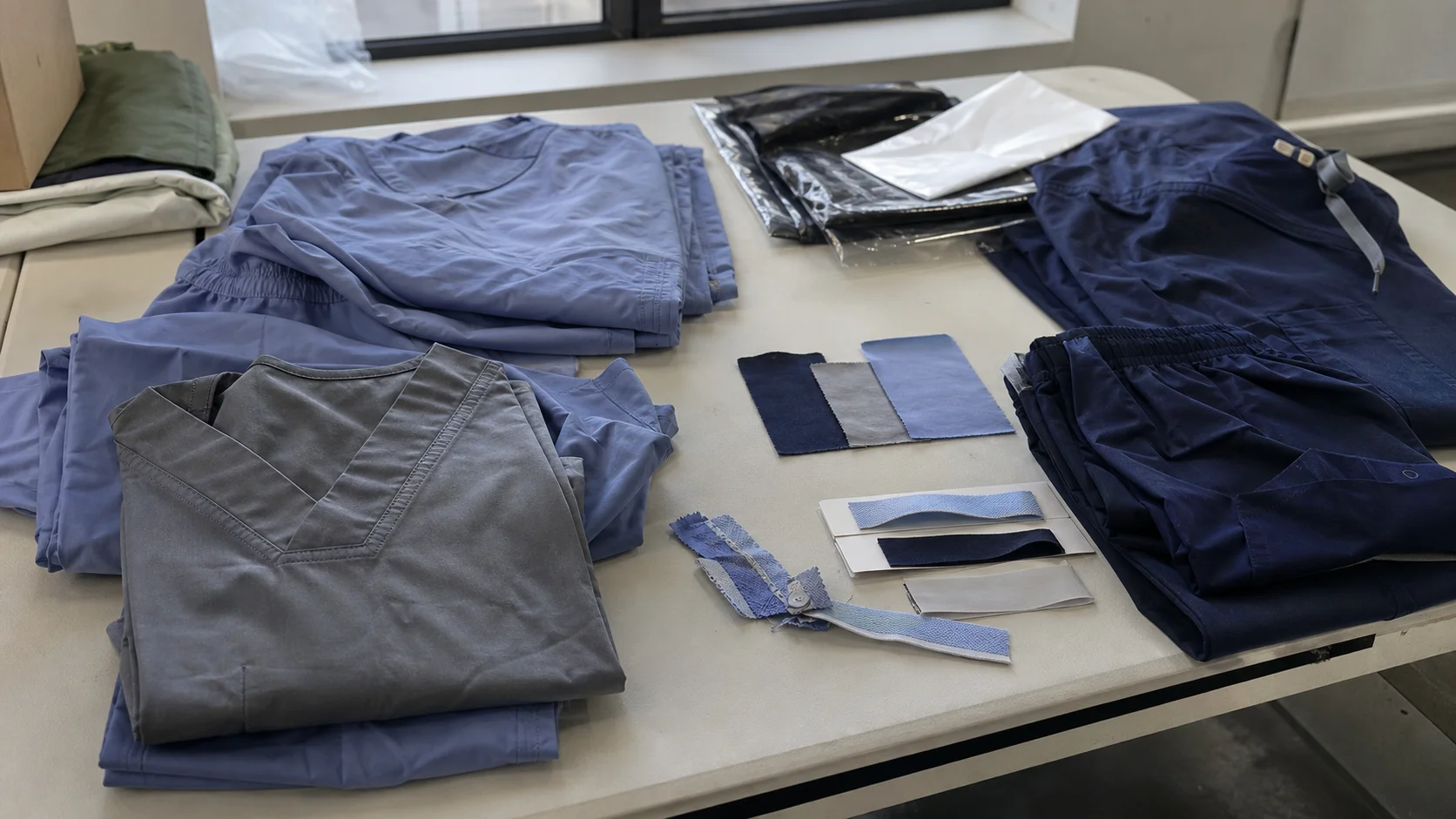
A practical outline for gym program buyers evaluating wholesale scrubs reorder risk, including size runs, fabric continuity, color matching, MOQ exposure,...
Scrubs Reorder Risk Review for Gym Buyers - MOQ, Cost & Sourcing manufacturing guide
Gym program buyers are not the first group most apparel vendors think of when they hear “scrubs.” Yet scrubs are increasingly used in fitness-adjacent operations: recovery lounges, spa treatment rooms, physiotherapy areas, wellness clinics inside gyms, staff uniforms for cleaning and sanitation teams, and branded comfort sets for high-volume member programs. The reorder risk is different from a one-time promotional tee or hoodie. Scrubs must fit consistently, wash well, keep their color, and remain available across multiple buying cycles.
For wholesale scrubs reorder planning, the main risk is not simply “Can the supplier make the first order?” The more useful question is: “Can the same supplier reproduce the same garment, in the same shade, with the same trims, at the same acceptable quality level, when the gym needs a reorder?” That is where many sourcing decisions become expensive.
This review is written for gym program buyers comparing wholesale scrub options, especially buyers managing multiple locations, staff roles, or branded wellness programs. It focuses on MOQ, cost, sourcing controls, reorder planning, fabric consistency, inspection risks, and the tradeoffs that matter before the first purchase order is placed.
Scrubs are often treated as basic workwear, but for gyms and wellness operators they sit between uniform, brand asset, and operational garment. A front desk polo can tolerate some variation between batches. A scrub set used in a recovery clinic, treatment room, or spa setting is judged more closely. Members notice when staff uniforms look mismatched, faded, or poorly fitted.
The reorder issue becomes sharper when a gym program grows. A single location may only need 80 to 150 scrub sets for a wellness launch. A regional chain may need 500 to 2,000 sets across different departments, sizes, and replacement cycles. The first order may be easy to approve because the budget is attached to a launch. The second and third orders are where procurement discipline matters.
Reorder risk can show up in several ways:
Gym buyers should treat scrubs as a controlled uniform program, not a loose merchandise purchase. That means building reorder rules before the first bulk production, not after the first batch is already in use.
Purchasing judgment: if the scrubs are part of a recurring staff or wellness program, a slightly cheaper first order can become the more expensive choice if the supplier cannot protect fabric, fit, shade, and reorder availability.
The biggest wholesale scrubs reorder risks usually fall into four categories: material continuity, production consistency, MOQ mismatch, and approval control. Each one affects cost and service reliability.
Scrubs fabrics vary widely. Common compositions include polyester-cotton blends, polyester-rayon-spandex, polyester-spandex stretch woven, cotton-rich twill, and performance blends with moisture-wicking or antimicrobial finishes. A gym wellness program often prefers stretch, wrinkle resistance, quick drying, and clean recovery after washing. Those benefits depend on fabric specification, not just garment silhouette.
If the buyer only approves “navy stretch scrubs,” the reorder has too much room for variation. The technical file should define fiber content, fabric construction, weight, finish, color standard, shrinkage tolerance, and hand feel expectations. For reorder protection, the supplier should confirm whether the fabric is a regular stock program or a custom mill run.
Navy, charcoal, black, ceil blue, wine, and forest green are common scrub colors. These shades may look stable in a catalog, but bulk dyeing can produce variation between lots. A gym with multiple locations may receive mixed batches over time. If staff from different locations attend one event or rotate between sites, shade differences become visible.
For critical colors, buyers should request lab dips or strike-offs before production and keep an approved physical standard. A Pantone reference helps communication, but fabric dyeing does not always match Pantone exactly. The buyer should approve a realistic fabric-based color standard and define the acceptable tolerance.
Drawcords, waist elastic, snap buttons, pocket bags, zipper pulls, bartacks, woven labels, heat-transfer neck labels, and packaging materials all affect the final garment. Reorder failures often happen because trims are treated as minor details. A drawcord shade shift, weaker elastic, or different label placement can make a repeat order look like a different product.
The first order may meet a factory’s MOQ, but smaller reorders may not. A gym buyer might order 1,000 scrub sets for a launch, then need only 120 replacement sets three months later. If the supplier’s reorder MOQ is 500 sets per color, the buyer must either overbuy or accept a substitute stock style.
This is one of the most important sourcing questions to ask early: what is the MOQ for initial production, and what is the MOQ for repeat production using the same fabric, color, trims, and branding?
MOQ depends on whether the scrubs are stock blanks, semi-custom, or fully custom. Gym buyers should identify which model fits the program before negotiating price.
Scrubs Buying Model Typical MOQ Range Best For Main Reorder Risk Stock blanks with logo decoration 24 to 100 pieces per style/color Small gym teams, pilot programs, urgent needs Stock availability and style discontinuation Private label stock-based scrubs 100 to 300 sets per color Mid-size wellness programs needing branding Limited control over fabric and fit changes Semi-custom scrubs 300 to 800 sets per color/style Gym chains needing controlled trims and labels Fabric and trim continuity between reorders Fully custom scrubs 800 to 2,000+ sets per color/style Large programs with dedicated uniform standards Higher inventory exposure and longer lead timesThese ranges are typical market planning ranges, not fixed rules. Actual MOQ depends on fabric sourcing, dyeing requirements, cutting efficiency, factory capacity, branding method, packaging, and whether tops and pants are produced as matched sets or separate SKUs.
Gym buyers should separate MOQ into three levels:
A supplier may say the MOQ is 300 sets, but the fabric may require a higher minimum if the color is custom dyed. The real commercial risk may sit upstream at the mill, not at the sewing line. Buyers should ask for the constraint directly.
A smart first purchase order should not only cover launch demand. It should establish the reorder pattern. For a gym chain, that means forecasting replacement demand by department and location. Wellness staff may need more frequent replacement than administrative staff because scrubs are washed more often. Cleaning or sanitation teams may need darker colors or more durable fabric because stains and abrasion are higher.
Practical planning approach:
If the reorder MOQ is far higher than real replacement demand, the buyer has three options: consolidate reorders across locations, keep a central inventory buffer, or choose a less customized scrub style with lower replenishment minimums. The lowest first-unit price is not automatically the best option.
Scrubs costing is shaped by fabric, construction, trims, decoration, packaging, testing, freight, and order complexity. Reorders can cost more than expected if the original quote was based on a higher first-order quantity.
Fabric is usually the largest cost component. Stretch blends with rayon or spandex cost more than basic polyester-cotton. Performance finishes, liquid resistance, antimicrobial treatments, and special washes can add cost and complexity. Some finishes also require minimum batch sizes, which affects reorder MOQ.
For gyms, performance comfort may be worth paying for if staff wear scrubs through long shifts and move between treatment, reception, and floor support. Yet buyers should be cautious with over-specification. A high-end medical-grade fabric may not be necessary for a wellness desk uniform. A practical mid-weight stretch woven may deliver better value.
Scrub tops and pants look simple, but construction choices affect both durability and price. Cargo pockets, reinforced bartacks, side vents, shaped waistbands, rib-knit panels, jogger cuffs, zipper pockets, contrast binding, and topstitching all add labor minutes.
For a gym program, the best construction is usually not the most complex. It is the one that supports the role. Treatment staff may need clean pocket placement and comfort. Cleaning teams may need stronger seams and darker fabric. Front-of-house wellness staff may need a more polished fit and better wrinkle recovery.
Branding methods include embroidery, heat transfer, screen print, woven patches, silicone patches, and inside labels. Embroidery is durable and premium, but it can pucker on lighter fabrics if backing and stitch density are not controlled. Heat transfer is clean and flexible but should be tested for wash durability and hand feel.
For repeated scrubs orders, the decoration file should be locked: logo size, placement, thread colors or transfer colors, backing, stitch count, and approval standard. A small placement shift across reorders can make the uniform program look unmanaged.
Reorder cost is not only FOB garment price. Air freight for urgent replenishment can erase savings from overseas production. Ocean freight is more economical but slower and less flexible. Domestic decoration on imported blanks may shorten response time, but it may reduce control over garment consistency if blank stock changes.
Buyers should calculate landed cost by reorder scenario, not only by first production quote. A 1,000-set overseas order may be attractive. A 100-set emergency air shipment six months later may not be.
Clear specifications reduce reorder disputes. A gym buyer does not need to write a factory-level technical manual alone, but the purchase file should be detailed enough to protect the garment program.
Trim substitutions should require approval, especially for visible or functional components. A substitute thread or pocket bag may seem minor, but frequent small changes create visible inconsistency across a uniform program.
Buyers who need structured product development support can review sourcing and production service options at fabrikn.com/services/. A service-led process is useful when the program involves custom fabric, private labeling, or multi-location delivery planning.
Sample approval is the buyer’s best opportunity to reduce reorder risk. It should not be rushed because a poor approval process becomes the production standard.
The buyer should start with a clear reference: scrub top style, pant style, fit expectation, pocket layout, branding method, target fabric, color, and size range. If the gym is replacing an existing uniform, provide a measured sample and explain what should change.
The development sample checks silhouette, construction concept, and early fabric direction. It may not be in final fabric or final color. Buyers should use this stage to correct obvious design problems: neckline depth, pocket size, pant rise, waistband comfort, inseam, sleeve opening, and overall fit.
The fit sample should be reviewed on body types that represent the actual staff population. Scrubs that fit a showroom mannequin may not work for active wellness staff bending, reaching, setting up rooms, or moving equipment. Fit comments should be specific and measurable.
The pre-production sample should use approved bulk fabric, approved trims, approved branding, and final construction. This is the most important sample for reorder control. Buyers should keep one approved physical sample as the standard for inspection and future reorders.
For programs with broad sizing, request a size set before full production. The goal is to check grading across sizes. Common issues include tight upper arms in larger scrub tops, inconsistent pant rise, short inseams, waistband pressure, or pocket placement that shifts poorly across sizes.
At minimum, the buyer should review shrinkage, color change, seam twisting, logo durability, pilling, and general appearance after washing. Lab testing may be appropriate for large programs or claims involving performance finishes. For gym use, laundering reality matters. Staff may not always follow ideal wash instructions, so the garment should be reasonably durable.
Purchasing judgment: do not approve bulk production from a photo alone for a controlled scrub program. A physical pre-production sample is worth the delay when the program depends on repeat orders.
Lead time depends on product complexity, material availability, production capacity, decoration, testing, inspection, and freight mode. A simple stock blank with embroidery can sometimes move quickly. A custom-dyed stretch scrub set with private labels and size sorting takes longer.
Stage Typical Time Range Risk for Gym Buyers Design and tech pack alignment 3 to 10 business days Unclear specs cause sampling delays Fabric sourcing or lab dips 1 to 3 weeks Color approval may require multiple rounds Sample development 2 to 5 weeks Fit and trim changes extend timeline Bulk production 4 to 10 weeks Capacity, fabric delivery, and QC issues affect schedule Inspection and packing 3 to 10 days Failed inspection can delay shipment Freight Several days by air; several weeks by ocean Urgent replenishment increases landed costFor reorders, the timeline may be shorter if fabric, trims, and patterns are already approved and available. It may not be shorter if the fabric must be re-dyed, the mill has MOQ constraints, or the production line is booked. Buyers should avoid assuming that a repeat order is automatically fast.
Factories and mills have busy periods. Holiday schedules, regional shutdowns, raw material shortages, and freight congestion can affect delivery. Gym buyers launching a new wellness area or opening a new location should place orders backward from the launch date, not from the date they hope to receive uniforms.
A safe reorder system sets internal triggers. For example, reorder when central inventory drops below 12 weeks of expected usage, not when the last box is opened. The right trigger depends on supplier lead time and business tolerance for substitutions.
Scrubs sizing is a major reorder risk because size demand is rarely distributed evenly. A gym buyer may order based on a generic size curve, then discover that real staff demand differs by location, role, or gender mix. If the first order is poorly balanced, the buyer may be forced into small top-up orders that do not meet MOQ.
Unisex scrubs simplify inventory but can create fit dissatisfaction. Gender-specific or body-shape-specific fits improve appearance and comfort but increase SKU count. More SKUs mean more inventory planning complexity and higher risk of dead stock.
For small programs, unisex or relaxed modern fit may be practical. For large branded wellness programs, separate fits may justify the complexity. The decision should be based on staff count, role visibility, and reorder capability.
Selling or issuing scrubs as sets is simpler, but staff often need different top and pant sizes. Ordering separates improves fit and reduces exchanges, yet it increases SKU management. Gym buyers should decide early whether scrubs will be procured as matched sets or separate units.
For multi-location programs, separates usually make sense if the central team can manage inventory. Sets are cleaner for smaller teams with limited administrative support.
Initial orders should include a size curve based on actual staff data where possible. If that data is not available, start with a conservative size range and collect issue data from the first distribution. After the first cycle, update the reorder curve using real usage, not assumptions.
Important size data to track:
This data turns the second order into a controlled replenishment purchase instead of another guess.
Scrubs inspection should focus on both appearance and function. A garment can look acceptable in a folded carton but fail during daily use. Gym programs should define inspection priorities before shipment.
Measurement tolerance should be agreed before production. Typical garment tolerances may vary by point of measure, but critical areas include chest, waist, hip, rise, inseam, sleeve length, shoulder width, and garment length. Stretch fabrics can be harder to measure consistently, so the measuring method must be clear.
For scrubs, fit-related points should be treated as high priority. A pant waistband outside tolerance creates more user complaints than a minor difference in pocket depth. Buyers should identify which measurements are critical to wearability.
Multi-location gym programs often fail at the packing stage. The garments may be acceptable, but the allocation is wrong. One location receives too many small sizes, another receives missing pants, and the central team spends time correcting shipments.
For controlled programs, packing instructions should include SKU, color, size, quantity, carton marks, location allocation, and any employee-level packing requirements. If locations need separate delivery, this must be built into the order early because it affects labor and freight cost.
A supplier’s first quote rarely tells the full reorder story. Gym buyers should ask direct questions and compare the answers across vendors.
Buyers comparing production support can also review company background and sourcing approach at fabrikn.com/about-us/. For a specific scrub program, it is usually better to discuss MOQ, fabric, fit, and delivery requirements before requesting final costing.
A practical reorder risk review should score the program before the purchase order is placed. The goal is not to eliminate every risk. That is rarely realistic. The goal is to identify which risks are acceptable, which need controls, and which should change the sourcing route.
A low-risk program usually uses stock or semi-custom scrubs, limited colors, moderate branding, and flexible delivery timing. The gym can accept minor style changes over time or has a small team that can be transitioned into a new stock style if needed.
This route works well for pilot wellness programs, small spa teams, or internal staff uniforms where continuity is useful but not mission-critical. Unit price may be higher than full custom production, but lower MOQ and faster replenishment can be worth it.
A medium-risk program involves several locations, visible branding, and recurring replacements. The buyer needs consistent color and fit, but volumes may not justify fully custom mill commitments. Semi-custom production with strong documentation is often the right balance.
The buyer should lock approved samples, maintain a central size curve, and negotiate realistic reorder MOQs. Some inventory buffer is usually necessary.
A high-risk program has strict branding, multiple locations, custom fabric, dedicated colors, many SKUs, and firm launch dates. Reorder failure can disrupt staff presentation or operational readiness. This route requires stronger sourcing controls, clearer inspection standards, and earlier reorder triggers.
Fully custom scrubs may be justified, but only if the buyer can support the MOQ and inventory planning. Without disciplined forecasting, custom production can create too much dead stock in slow-moving sizes.
Gym buyers should approach wholesale scrubs sourcing with a clear view of operational use. A scrub set for a recovery room does not need the same specification as hospital clinical wear, but it still needs professional appearance, wash durability, and repeatable supply. Overbuying complicated custom scrubs can lock cash into inventory. Under-specifying cheap scrubs can produce shade, fit, and durability problems after the first few washes.
The strongest purchasing approach is usually a controlled middle ground:
For a gym buyer managing cost, MOQ, and sourcing risk, the key is to avoid treating reorders as an afterthought. The reorder plan should be part of the first quote comparison. A supplier offering a slightly higher unit price but clearer fabric continuity, realistic repeat minimums, and better sample control may be the safer commercial choice.
When a program requires private-label scrubs, multi-location packing, or custom production planning, buyers can start a direct discussion through fabrikn.com/contact-us/. The useful details to prepare include target quantity, staff roles, preferred colors, size range, branding method, launch date, and expected reorder frequency.
Before placing the first order, gym program buyers should confirm the following points in writing:
This checklist will not prevent every issue, but it reduces ambiguity. In apparel sourcing, ambiguity usually becomes cost. For gym programs using scrubs as part of a professional wellness environment, the better buying decision is the one that protects continuity over multiple cycles, not only the one that wins the first quote round.
Get a free quote from Fabrikn — your trusted B2B clothing manufacturer with 10+ years of experience. MOQ as low as 200 pieces.
Get a Free Quote →Typical MOQ can range from 24 to 100 pieces for decorated stock blanks, 100 to 300 sets for private label stock-based scrubs, 300 to 800 sets for semi-custom scrubs, and 800 to 2,000 or more sets for fully custom production. The actual MOQ depends on fabric, color, decoration, trims, and factory requirements.
Stock scrubs are better for small teams, fast launches, and lower MOQ needs. Custom scrubs are better when the gym needs strict brand control, specific fit, dedicated colors, or long-term uniform consistency. The tradeoff is clear: stock is more flexible, while custom gives more control but requires stronger forecasting.
Buyers can reduce reorder risk by locking fabric specifications, approving physical samples, confirming reorder MOQ, keeping a color standard, documenting trim details, and tracking real size demand after the first issue. Reorder planning should be discussed before the first purchase order is confirmed.
Many gym wellness programs prefer stretch woven fabrics with polyester, rayon, and spandex because they offer comfort, movement, and wrinkle recovery. Polyester-cotton blends can be more economical and durable but may feel less premium. The best fabric depends on role, washing frequency, climate, and budget.
Custom scrubs reorders may take 4 to 10 weeks for production after materials are ready, plus freight time. Lead time can be shorter if fabric and trims are available, but longer if the fabric must be dyed again or the factory is at capacity. Buyers should set reorder triggers based on actual supplier lead time.
Inspection should check shade matching, measurements, seam strength, logo placement, waistband recovery, pocket construction, fabric defects, size labels, packing accuracy, and carton allocation. For gym programs with multiple locations, packing accuracy is especially important because distribution errors create operational delays.
Embroidery is durable and has a premium look, but it can pucker on lighter stretch fabrics if not controlled. Heat transfer gives a clean modern finish and can work well on performance fabrics, but wash durability should be tested. The best option depends on fabric, logo detail, budget, and laundering expectations.
They can be reordered separately if the supplier and MOQ structure allow it. Buyers should confirm this before the first order. Separate reordering improves fit and inventory control, but it increases SKU complexity.
Color variation usually comes from different dye lots, fabric substitutions, finishing changes, or poor color standard control. Buyers should approve lab dips or bulk fabric swatches and keep a physical standard for future production.
A buyer should prepare estimated quantity, style preference, staff roles, color requirements, size range, logo method, packaging needs, delivery locations, launch date, and expected reorder frequency. Better upfront information leads to more accurate pricing and a more reliable reorder plan.