
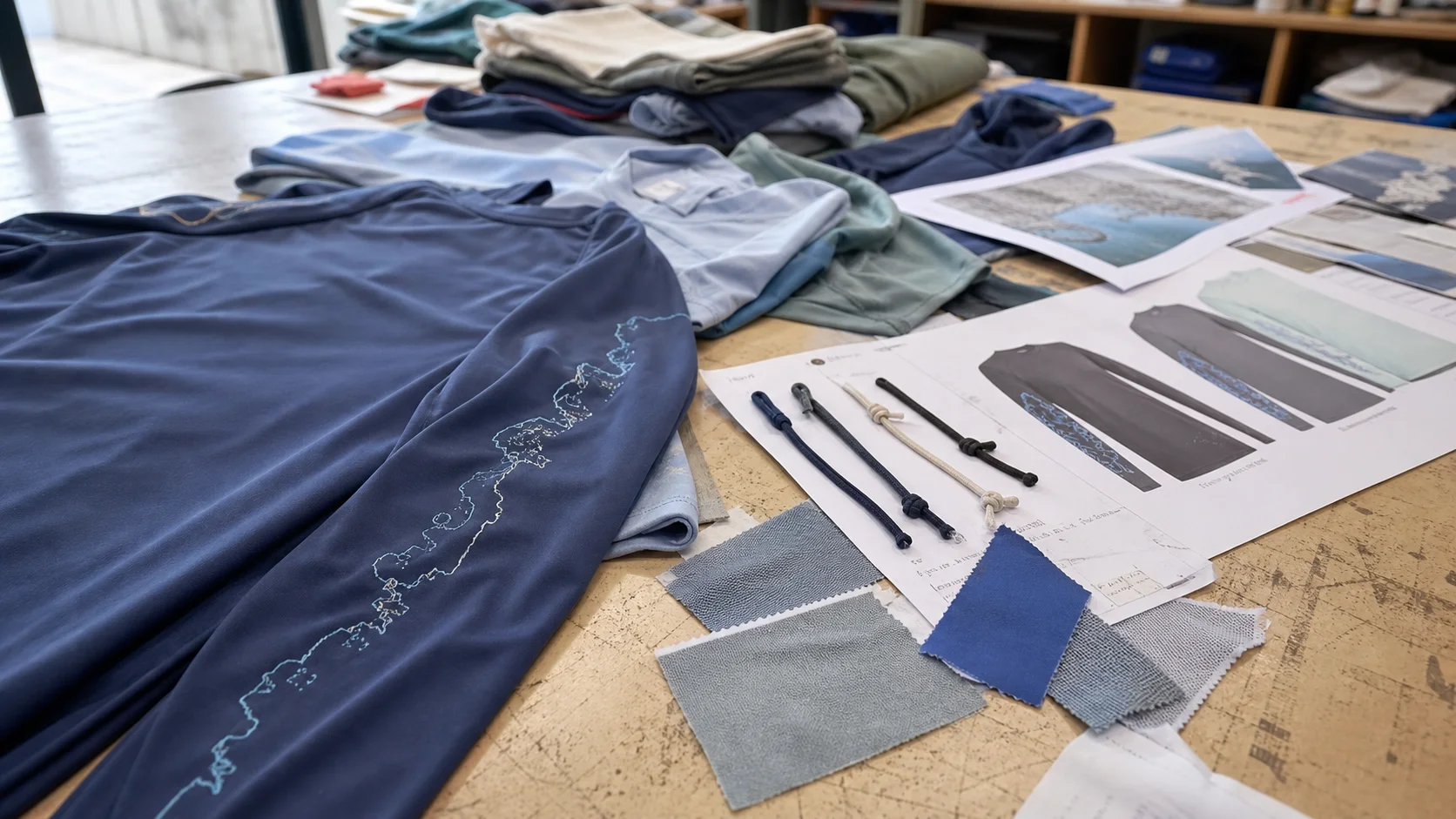
A practical SEO outline for food hall operators auditing wholesale sleeve print maps, colorfastness risks, decoration placement, wash performance, and...
Sleeve Print Map Audit for Food Hall Uniform Buyers - Fabrikn production reference
Food hall uniforms work harder than standard promotional apparel. Staff move between heat, steam, oil, sauce, handwashing, sanitizer, waste handling, and customer-facing service. A sleeve print map can help operators organize brand marks, vendor identifiers, wayfinding cues, allergen roles, security tags, or event graphics across a multi-concept food hall. The risk is that sleeve decoration sits in a high-friction, high-contamination zone.
A wholesale sleeve print map colorfastness audit is the practical check that tells buyers whether those sleeve graphics will survive real food hall conditions. It is not just a graphic placement review. It is a production-control process covering artwork mapping, print method selection, fabric compatibility, color migration, wash durability, crocking, abrasion, and inspection standards before bulk uniforms are released.
For food hall operators buying uniforms at scale, this audit protects brand consistency and reduces the chance of staff wearing faded, stained, cracked, or bleeding sleeve prints after only a few service cycles. It also gives purchasing teams a clearer basis for approving samples, negotiating decoration tolerances, and holding suppliers accountable.
A sleeve print map is the placement plan for decoration on the left sleeve, right sleeve, or both. It may specify logo size, distance from shoulder seam, angle, color reference, print technique, layering order, and whether each mark is shared across the whole food hall or assigned to certain vendors, zones, or roles.
Food hall uniform programs often use sleeve decoration because the chest area is already crowded. Name badges, aprons, POS devices, lanyards, and vendor logos all compete for attention. Sleeves offer a visible surface when staff serve trays, pour drinks, clean tables, or direct guests. The sleeve can also separate operator branding from individual restaurant branding.
The commercial problem is consistency. If one vendor’s sleeve print holds color while another fades or bleeds, the whole uniform program looks poorly controlled. In a high-traffic food hall, customers may not know which company supplied the uniforms. They simply see an inconsistent operation.
For wholesale buyers, the sleeve print map should be treated as a production specification, not a creative file alone. A good map tells the decorator what to print and gives quality control teams a measurable basis for checking placement, color, durability, and appearance after laundering.
A colorfastness audit checks how well sleeve prints resist color change, staining, bleeding, rubbing, and degradation under expected use and care conditions. For food hall uniforms, the audit should evaluate both the decorated area and the base garment because failure can come from either side.
Common audit points include wash fastness, crocking resistance, perspiration resistance, abrasion resistance, stain exposure, heat exposure, and chemical contact. A print may look strong on a pre-production sample but fail after repeated washing at commercial laundry temperatures. Another print may survive washing but transfer pigment when rubbed against a damp apron or table edge.
Buyers should view the audit as a risk filter before bulk purchase. It does not guarantee that every uniform will look new indefinitely. It does reveal whether the proposed garment, print method, ink system, and care label are suitable for the job.
Purchasing judgment: if a supplier cannot provide a clear decoration specification, care test history, or production sample for a sleeve print program, the order is not ready for bulk approval. The risk is not only poor colorfastness; it is unclear accountability when failure appears after delivery.
Food hall operators planning multi-location or seasonal rollouts may benefit from working with a manufacturer that can coordinate garment sourcing, decoration development, sampling, and quality control in one process. Buyers can review broader apparel manufacturing support through Fabrikn services when building structured uniform programs.
Sleeve graphics face more stress than many buyers expect. Staff sleeves come into contact with counters, stainless steel edges, trays, bus tubs, sanitizer buckets, delivery cartons, oven doors, condiment stations, and aprons. The sleeve can also pick up oil, sauce, coffee, citrus, dairy, cleaning chemicals, and sweat during a shift.
The colorfastness audit should reflect these conditions rather than relying only on basic retail apparel testing. A shirt intended for casual wear may pass standard washing expectations but still disappoint in a food service environment.
The audit should include a written use profile. That profile does not need to be complicated, but it should state whether staff are front-of-house only, kitchen-adjacent, bar service, cleaning support, delivery pickup, or multi-role. Decoration decisions should be stricter for staff who handle food, cleaning, and guest service in the same shift.
No sleeve printing method is universally best. The right choice depends on fabric content, sleeve shape, artwork detail, order volume, color count, care method, and budget. Wholesale buyers should compare durability and process controls rather than choosing decoration by unit cost alone.
Print Method Common Use Colorfastness Strengths Main Risks for Food Hall Uniforms Screen Printing Logos, text, solid sleeve graphics Good durability when ink and curing are controlled; cost-effective at volume Improper curing can cause cracking, fading, or poor wash resistance; thick prints may feel stiff Heat Transfer Small runs, role labels, multi-color graphics Clean detail and repeatable color when applied correctly Peeling, edge lift, heat sensitivity, and adhesion failure on textured or high-stretch fabrics DTF Transfer Complex designs, multiple colors, lower MOQs Flexible for varied artwork; often strong color opacity Film hand feel, cracking risk, adhesive compatibility, and wash performance variation by supplier Sublimation Polyester sleeves, all-over or integrated designs Excellent wash fastness on suitable polyester; no surface ink layer Limited to polyester or poly-rich fabrics; color shift and migration risks on some blends Embroidery Premium marks, small logos Good perceived durability; no printed ink fading Thread snagging, puckering, discomfort on sleeves, and poor suitability for fine map detailsScreen printing remains a common wholesale choice for sleeve programs because it balances durability and cost at volume. Buyers should confirm ink type, curing temperature, curing time, and whether the supplier performs wash testing on the same fabric. Plastisol, water-based, discharge, and silicone ink systems each have different hand feel and colorfastness behavior.
Heat transfers and DTF transfers can be useful for food halls with many vendor identities or frequent staff changes because they reduce setup complexity. The tradeoff is process sensitivity. Temperature, pressure, dwell time, peel method, and fabric surface all matter. A transfer that performs well on a cotton tee may fail on a stretch polo or polyester kitchen shirt.
Sublimation can be strong for polyester uniforms, especially when the sleeve print map is integrated into the fabric panel before sewing. It may be less practical for buyers who want cotton-rich garments, dark base colors, or small repeated reorders that must match earlier production exactly.
Colorfastness auditing starts with the garment specification. A sleeve print does not exist in isolation. Fabric composition, dye quality, surface texture, moisture management finish, and stretch recovery all affect decoration performance.
Trim should also be reviewed. Sleeve cuffs, seam allowances, reflective bands, snaps, tabs, or pen pockets can restrict print placement. A print map that looks clean in a flat digital mockup may collide with seams during production.
Buyers should request exact fabric and trim specifications before approving artwork. At minimum, the tech pack or production sheet should include fiber content, fabric weight, color code, shrinkage expectation, garment measurements, sleeve seam details, decoration method, ink or transfer reference, print dimensions, placement tolerance, and care instructions.
Purchasing judgment: if the sleeve graphic needs to land over a seam, cuff, or pocket, expect higher defect risk. It may be better to adjust the artwork than to force a difficult print placement that creates rejects and inconsistent bulk output.
A disciplined sample process prevents most sleeve print map failures. Food hall operators often move quickly because opening dates, staff onboarding, and vendor launches create hard deadlines. Rushing sample approval can become expensive when hundreds or thousands of uniforms arrive with decoration problems.
For colorfastness, a single fresh sample is not enough. The print should be reviewed after washing, rubbing, stretching, and stain exposure if the uniform will be used in active food service. Buyers should compare the decorated sample against an unwashed control. The objective is to identify unacceptable fading, bleeding, edge lift, color migration, cracking, or stiffness.
Approval notes should be specific. “Looks good” is weak documentation. Better notes include sleeve print height, width, distance from shoulder seam, distance from cuff, color approval status, hand feel approval, accepted tolerance, care label requirement, and any known limitations.
When buyers need help translating artwork into a production-ready specification, a structured manufacturing partner can reduce confusion between design intent and factory execution. General company background and operating focus can be reviewed at Fabrikn About Us.
MOQ varies by garment type, decoration method, supplier structure, and whether the uniforms are stock blanks or custom-made garments. Buyers should treat the following ranges as typical planning references, not guaranteed terms.
Program Type Typical MOQ Range Typical Lead-Time Factors Stock blank shirts with sleeve print 50 to 300 pieces per style/color Blank stock availability, artwork approval, print queue, color count Custom cut-and-sew tees or polos 300 to 1,000 pieces per style/color Fabric sourcing, lab dips, fit sample, pre-production sample, bulk sewing Multi-vendor food hall sleeve map program 100 to 500 pieces per artwork variant, often higher for efficiency Artwork version control, decoration setup, labeling, packing by vendor or role Sublimated or engineered sleeve panels 300 to 800 pieces per design Fabric print approval, panel alignment, cutting accuracy, sewing capacity Outerwear or chef jacket sleeve decoration 100 to 500 pieces per style Garment construction, sleeve access, heat sensitivity, embroidery or transfer testingLead time depends on more than production days. Artwork delays, unclear brand color standards, unavailable blanks, failed lab dips, sample revisions, holiday capacity, and missing size breakdowns can all push delivery. A basic stock blank print order may move in a few weeks after approval. A custom garment program with sleeve map auditing, lab dips, fit sampling, decoration testing, and bulk production can require several months.
Buyers should build time for at least one sample revision. If the first sample passes, the schedule gains breathing room. If it fails, the buffer protects the launch. Colorfastness problems are usually cheaper to fix before bulk production than after staff begin wearing the uniforms.
Sleeve print inspection should be practical and measurable. Wholesale buyers do not need to inspect every microscopic variation, but they do need clear criteria for defects that affect brand appearance, wearability, or durability.
Placement tolerance should be agreed in writing. For sleeve prints, many buyers use a tolerance around 0.5 inch to 1 inch depending on garment type, sleeve size, and decoration method. Tight tolerances may be possible, but they can increase reject rates and cost. Large sleeve graphics on small sizes need special attention because the available print area changes.
Color tolerance should be handled with approved physical samples whenever possible. Digital mockups are not reliable for final print color approval because screens, file formats, fabric base color, and ink opacity all alter appearance. A Pantone reference can guide the process, but fabric and print method still affect the final result.
Inspection can be performed at several stages: incoming blank garment check, decoration line check, mid-production check, final random inspection, and post-wash audit. Food hall buyers placing repeat orders should also compare each new batch against the retained approved sample from the previous production run.
A sleeve print map colorfastness audit should be structured enough to support purchasing decisions but not so complicated that it delays routine replenishment. The checklist below is suitable for wholesale uniform programs where sleeve decoration is visible and brand-critical.
For larger orders, buyers should define acceptable quality limits before production begins. The standard can vary by program and risk level. Critical defects such as wrong artwork, severe color mismatch, or peeling after test wash should not be treated like minor placement variation. A uniform may be wearable but still unacceptable if the sleeve map undermines brand consistency.
The right supplier questions reveal whether the program is under control. Buyers should ask direct, practical questions and expect written answers when the order is significant.
A supplier that answers these questions clearly is easier to manage. A supplier that avoids technical detail may still produce acceptable goods, but the buyer carries more risk. In wholesale uniform sourcing, low price only helps if the goods are durable enough to remain in service.
Food hall operators planning a new uniform program or reviewing a sleeve print issue can discuss specifications, sampling, and production requirements through Fabrikn contact.
A useful sleeve print map should combine design, garment construction, and inspection details. The goal is to remove interpretation from bulk production. Operators with many restaurants or service zones should be especially careful because small differences multiply across artwork versions.
One common mistake is using a single sleeve map for every size without checking scale. A sleeve logo that looks balanced on a large shirt may dominate an extra-small shirt. A long vertical print may crowd the cuff on shorter sleeves. Buyers should request size-run photos or samples when the order includes a wide size range.
Another mistake is treating decoration as interchangeable between garment types. A sleeve print approved on a cotton tee may not behave the same way on a polyester polo, work shirt, or jacket. If the food hall uniform program includes multiple garments, each fabric and decoration combination should be checked separately.
Colorfastness auditing adds time and sometimes cost. The purchasing question is whether that cost is justified by the risk. For a one-day event, a lower-cost sleeve transfer with limited durability may be acceptable. For daily staff uniforms, durability matters more.
Screen printing may have setup charges but can become economical as volume increases. Heat transfers may reduce setup friction for multiple artwork versions but can carry higher per-unit cost and more application sensitivity. Sublimation may provide excellent durability on polyester but may restrict fabric choice and design flexibility. Embroidery can look premium, but it is not always comfortable or practical on sleeves used in active service.
The cheapest decoration option can become expensive if it causes replacement orders, staff complaints, or inconsistent guest-facing appearance. A slightly higher unit cost may be justified when it improves wash durability and reduces replacement frequency.
Buyer Priority Likely Best Direction Tradeoff Lowest initial cost Stock blanks with simple sleeve screen print Less customization and possible setup limits by color count Many vendor artwork versions Heat transfer or DTF program More attention needed to wash testing and adhesion High wash durability on polyester Sublimation or tested performance print system Less suitable for cotton-rich or dark garment programs Premium appearance Small embroidery or high-quality specialty print Higher cost and possible sleeve comfort concernsColorfastness performance depends on how uniforms are washed and dried. Care instructions should be realistic for food hall operations. If staff launder uniforms at home, instructions must be simple and visible. If the operator uses a laundry service, the supplier should understand the likely wash temperature, detergent strength, drying conditions, and finishing process.
Care labels should address bleach, tumble drying, ironing, dry cleaning, and washing inside out where relevant. Sleeve prints can fail early when uniforms are dried on high heat or exposed to bleach not compatible with the print system. If the operation requires sanitizing wash conditions, test the decoration under those conditions before committing to bulk.
Operators should also consider staff allocation. A uniform program with too few pieces per employee forces excessive washing and faster wear. A larger issue count may cost more upfront but can extend the life of each garment and preserve print appearance.
A wholesale sleeve print map colorfastness audit is most valuable before the order becomes urgent. Food hall operators should build the audit into the uniform calendar at the same time they finalize branding, vendor mix, and staff roles. The sleeve is a useful branding area, but it is also exposed to abrasion, stains, heat, and laundering.
For daily uniforms, approve the garment and decoration together. Require a physical sample, test it under realistic care conditions, and document the accepted result. Keep tolerances practical, especially across multiple sizes. Avoid placing critical graphics over seams or cuffs unless the supplier has proven the method works.
The strongest purchasing position is simple: no bulk approval without a tested sleeve print map, clear fabric specification, written decoration method, and inspection criteria. That standard reduces avoidable disputes and gives food hall teams a better chance of receiving uniforms that look consistent throughout service.
Get a free quote from Fabrikn — your trusted B2B clothing manufacturer with 10+ years of experience. MOQ as low as 200 pieces.
Get a Free Quote →A sleeve print map is a production guide showing exactly where sleeve graphics should appear on a uniform. It usually includes sleeve side, artwork size, distance from seams, color references, print method, and placement tolerances.
Food hall uniforms face frequent washing, sanitizer exposure, stains, oil, heat, and abrasion. Poor colorfastness can lead to fading, bleeding, peeling, or color transfer, making the staff uniform program look inconsistent and worn out quickly.
There is no single best method. Screen printing is often efficient for larger runs with simple graphics. Heat transfer and DTF can work for multiple artwork versions or smaller runs. Sublimation can be durable on polyester. The best choice depends on fabric, artwork, volume, care method, and durability expectations.
Stock blank sleeve printing may start around 50 to 300 pieces per style or color. Custom cut-and-sew uniform programs often begin around 300 to 1,000 pieces per style or color. MOQs vary by supplier, garment type, decoration method, and artwork complexity.
Buyers should test the print on the actual garment fabric, then wash it according to intended care instructions. They should check for fading, bleeding, cracking, peeling, edge lift, dye migration, and rubbing transfer when dry and damp.
Sometimes, but it should be checked carefully. A print that looks balanced on a medium shirt may appear too large on smaller sizes or too small on extended sizes. Size-run review is useful for programs with a wide size range.
The most common risks include placement drift, color mismatch, under-cured ink, transfer peeling, dye migration, crocking, print distortion over seams, and inconsistent placement across sizes.
Yes. A fresh sample only shows initial appearance. A washed sample reveals more about real durability, colorfastness, shrinkage, print adhesion, and whether the care instructions are suitable for daily food service use.