
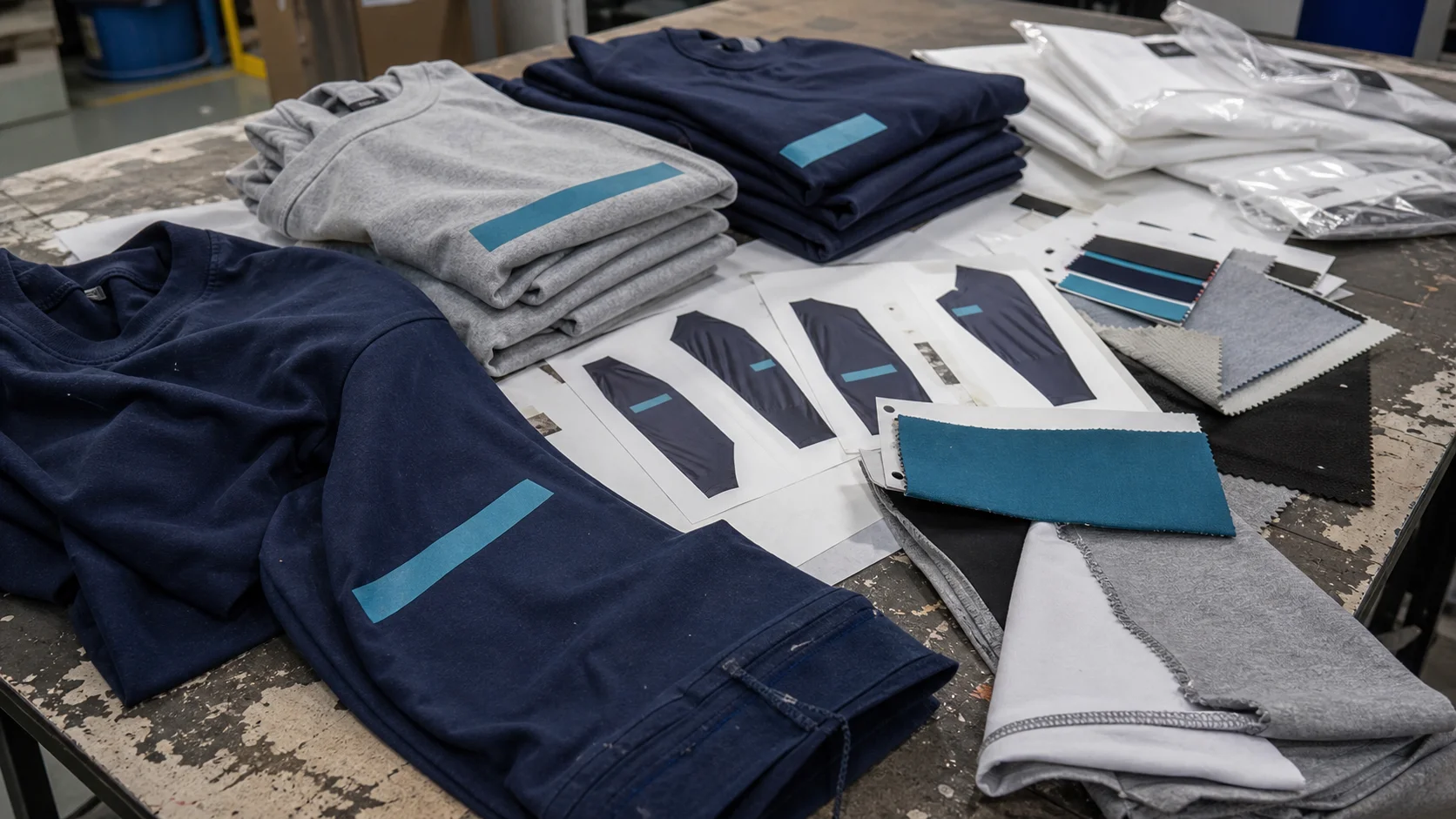
A buyer-focused SEO outline for validating wholesale sleeve print maps, logo placement, safety visibility, laundering durability, and approval steps for...
Sleeve Print Map Checklist for Cleaning Crew Buyers - Decoration & Printing manufacturing guide
Buying printed uniforms for cleaning crews looks simple until the first shipment arrives with sleeve logos sitting too low, partially hidden under aprons, cracking after industrial laundering, or placed differently across sizes. A sleeve print map prevents those problems before bulk production starts.
This guide is written for B2B buyers sourcing wholesale cleaning crew uniforms with sleeve decoration. It covers the practical compliance checklist: print placement, artwork control, fabric compatibility, trim conflicts, sample approvals, MOQ planning, inspection risks, and production documentation. The goal is not just a good-looking sleeve print. The goal is a repeatable, inspectable sleeve print that works across real cleaning operations.
A sleeve print map is a technical placement document showing exactly where a logo, text, safety label, department mark, QR code, or brand graphic should appear on the sleeve of a uniform. It is usually attached to the tech pack, purchase order, or production file. For cleaning crews, it may apply to polo shirts, T-shirts, work shirts, jackets, hoodies, coveralls, scrub-style tops, or high-visibility garments.
A proper sleeve print map includes more than a flat picture. It should specify the sleeve side, distance from seam, distance from cuff or shoulder point, logo dimensions, print method, color standard, orientation, tolerance, size grading rules, and inspection criteria.
For wholesale production, the print map is a compliance tool. It gives the factory, print shop, quality inspector, and buyer the same reference point. Without it, “left sleeve logo” can mean several different things. The printer may center it visually. The sewing team may measure from the shoulder seam. The buyer may expect it to sit above the elbow. The inspector may reject it because no approved tolerance was agreed.
Purchasing judgment: if sleeve decoration affects brand identity, access control, contract visibility, or safety communication, treat it as a controlled specification rather than a design preference.
Cleaning crew uniforms have different wear conditions from retail apparel. Staff bend, reach, carry supplies, wear gloves, use chemicals, and often layer uniforms with aprons, vests, jackets, or protective sleeves. A print that looks fine on a showroom sample can fail in daily use if placement and durability are not specified correctly.
Common issues include sleeve logos disappearing under safety vests, prints cracking after hot washing, reflective markings placed too close to seams, and inconsistent positioning between small and 3XL sizes. These problems create rework costs and can damage the uniform program’s credibility.
Cleaning service buyers also often purchase across multiple job sites. One order may need the same sleeve print on men’s and women’s fits, short sleeves and long sleeves, or seasonal fabric weights. The print map becomes the bridge between these variations.
For buyers sourcing through a full-service apparel manufacturing partner, decoration details should sit inside the same development workflow as garment construction and fabric approval. Suppliers offering end-to-end production support, such as those described on Fabrikn’s services page, can usually help align printing requirements with garment development earlier in the process.
The checklist below is the practical foundation for a wholesale sleeve print map compliance file. Buyers should confirm each point before approving pre-production samples.
This section prevents the printer from applying one placement rule to garments that behave differently. A short-sleeve T-shirt and a long-sleeve softshell jacket cannot share the same measurement logic without review.
For cleaning crews, left sleeve placement is often used for company identification, while right sleeve placement may carry role, site, contract, or safety information. If both sleeves are used, the map should show each sleeve separately. Avoid relying on verbal instructions such as “same on opposite side.” Mirroring errors are common in decoration production.
The map should define where measurements start. Common reference points include:
The best reference point depends on the garment. For polo shirts and T-shirts, measuring down from the shoulder seam may be practical. For jackets with shaped sleeves, measuring from the cuff or a panel seam may be more stable. For coveralls, the sleeve construction may include multiple seams, so the print map must identify the exact seam used.
Wholesale print files should state finished print dimensions, not just artwork scale. For example:
A tolerance that is too tight can cause unnecessary rejects. A tolerance that is too loose can create inconsistent uniforms. For most sleeve prints on cleaning uniforms, a placement tolerance of plus or minus 5 mm to 10 mm is more realistic than a zero-tolerance requirement. Very small sleeve graphics, barcode-style elements, or badge-like prints may need tighter control.
Sleeve graphics can run horizontally, vertically, or diagonally. Cleaning crew buyers should decide based on visibility during work. A logo placed horizontally across the sleeve may look natural when the arm hangs down. A vertical wordmark may be easier to read from the side if staff are moving through commercial buildings.
Orientation must be shown on the print map. If the design is vertical, confirm whether it reads from shoulder to cuff or cuff to shoulder. This is a frequent source of production mistakes.
The print map should name the decoration technique. Typical options include:
For cleaning uniforms, the method should be chosen for laundering, chemical exposure, comfort, and order quantity. Screen print can be cost-efficient for larger runs and simple colors. Heat transfer and DTF may suit smaller logo runs or multi-color designs, but buyers should confirm wash durability. Embroidery has a premium look but may not suit thin sleeves or areas where staff need flexibility.
Artwork color should be specified by Pantone, CMYK, RGB, thread color, or transfer supplier reference, depending on the decoration method. For screen print, Pantone references are common. For digital transfers, printed color can shift depending on film, powder, fabric shade, and heat settings. A color target should still be approved on actual fabric.
Cleaning uniforms often use navy, black, grey, white, and high-visibility colors. Light logos on dark fabric may need an underbase. Dark logos on textured or mélange fabric may lose sharpness. The print map should note contrast requirements if readability matters.
A major sleeve print compliance issue is whether the logo size changes across garment sizes. Most buyers keep sleeve logo dimensions the same from XS to 3XL for brand consistency. That is usually easier to inspect and cheaper to control.
There are exceptions. Very small sizes may not have enough sleeve width for a large horizontal logo. Extended sizes may look under-branded if the artwork is too small. If grading is required, the map should provide size groups, such as XS-S, M-XL, and 2XL-5XL, with separate dimensions for each.
Cleaning crew uniforms are often worn with aprons, reflective vests, utility belts, gloves, jackets, or disposable PPE. Sleeve placement must consider what remains visible. A logo too close to the lower sleeve may be covered by gloves or elastic cuffs. A mark too high on the upper sleeve may sit under a safety vest edge.
Buyers should review actual workwear combinations before approval. If a client-facing logo is required, upper sleeve placement may be better for short sleeves, while forearm placement may work for long sleeves only if it remains comfortable and durable.
No single placement rule works for every cleaning crew uniform. The following guidance gives practical starting points. Buyers should still confirm measurements on physical samples.
Polo shirts are common for front-of-house cleaning crews, hospitality cleaning teams, facility attendants, and supervisor uniforms. Sleeve logos are usually placed on the outer upper sleeve, centered between the front and back sleeve seam or aligned to the sleeve fold when laid flat.
Typical placement may sit 60 mm to 100 mm below the shoulder seam on short sleeves, depending on sleeve length. For slim women’s fits, reduce logo width or test size grading. A wide print can wrap around the sleeve and distort when worn.
T-shirts have softer sleeves and more stretch. Screen print and DTF transfers are common. The print map should account for fabric movement during heat pressing. For lightweight jersey, heavy transfer films can feel stiff and may crack faster under repeated hot washing.
For short-sleeve T-shirts, a 50 mm to 90 mm drop from shoulder seam is often used as a starting point. The buyer should approve the placement on a worn sample, not only on a flat garment.
Woven work shirts may include sleeve plackets, cuffs, pleats, or panel seams. The print map must avoid seam ridges and areas that cannot sit flat on a heat press. If embroidery is used, confirm backing, needle size, and puckering risk.
Placement on long sleeves often works best above the elbow or on the upper arm. Forearm placement can be visible, but it faces more abrasion from counters, carts, and cleaning equipment.
Jackets require careful print method selection. Softshell fabrics may have stretch, coatings, water-resistant finishes, or textured surfaces. Some heat transfers may not bond reliably without controlled testing. Reflective sleeve transfers may be useful for night crews, parking facility cleaners, and industrial sites, but they must be compatible with the outer fabric.
Upper sleeve placement is usually more stable than lower sleeve placement. Avoid seams, zippers, pocket edges, and areas with insulation bulk. Heat temperature must not damage coatings or cause shine marks.
Coveralls have more complex panels and fit movement. Sleeve marks may identify sanitation teams, maintenance cleaning teams, or hazardous-area roles. The print map should show the sleeve on a flat technical drawing and define whether the placement is measured from the shoulder seam, cuff, or sleeve panel seam.
Buyers should test range of motion. If the print sits across a high-stretch or high-friction point, it may crack or peel sooner.
High-visibility cleaning uniforms may need reflective tape, contrast panels, and printed branding. Sleeve prints must not interfere with mandated reflective areas if the garment is intended to meet a safety standard. Buyers should not assume decorative reflective prints replace certified reflective tape.
Ask the supplier to separate decorative branding requirements from safety compliance requirements. If certification is needed, decoration changes can affect compliance and should be reviewed before bulk order.
Cleaning uniforms are exposed to detergents, disinfectants, bleach alternatives, sweat, abrasion, and frequent laundering. Fabric and print compatibility is one of the most important buying decisions.
Cleaning crew buyers should request fabric specifications before finalizing decoration. Basic specs should include fiber content, GSM, knit or weave type, color, shrinkage target, colorfastness expectations, and any finish such as moisture-wicking, anti-pilling, stain release, or water resistance.
Finishes can affect print adhesion. A stain-release finish may be useful for cleaning work, but it can make certain transfers less reliable. Water-resistant coatings can also reduce adhesion or create heat press marks. This tradeoff should be handled during sampling, not discovered during inspection.
Screen printing is often the best value for larger wholesale runs with one to three solid colors. It can be durable when the ink system is matched to the fabric and cured correctly. It is less flexible for small multi-color personalization or frequent artwork changes.
For cleaning crews, screen print works well on cotton, blends, and some polyester fabrics if dye migration is controlled. Polyester garments may need low-bleed inks or blockers to prevent fabric dye from contaminating the print color.
Heat transfer and DTF decoration can be practical for smaller runs, multi-color logos, and orders where different sites need different sleeve marks. MOQ can be lower than screen print because setup is more flexible.
The tradeoff is durability control. Buyers should request wash testing on the exact fabric. Transfers can peel, crack, or feel heavy if the wrong film, adhesive, pressure, or temperature is used. On stretch sleeves, the transfer should stretch enough without splitting.
Sublimation is suitable mainly for white or light polyester. It becomes part of the fabric hand feel and can be durable under laundering. It is not suitable for dark cotton garments. For cleaning crews using bright polyester performance uniforms, sublimation can work, but buyers must control color appearance and artwork position carefully.
Embroidery on sleeves can look professional, especially on polos and jackets. It may be less suitable for thin T-shirts or lightweight sleeves. Dense embroidery can irritate the wearer, create puckering, or limit stretch.
If embroidery is selected, the print map becomes an embroidery placement map and should include stitch count, thread reference, backing type, maximum logo dimensions, and placement tolerance.
Artwork errors create production delays. A sleeve print map should be linked to a controlled artwork file so that the factory does not rebuild the logo from a low-resolution image.
Small text on sleeves is risky. Cleaning crew buyers sometimes want service categories, phone numbers, website URLs, or site names printed on a sleeve. Fine details may fill in during screen printing or become unreadable on textured pique. If the sleeve is curved around the arm, text visibility drops further.
For functional markings such as “Supervisor,” “Sanitation,” “Day Shift,” or “Authorized Staff,” use simple typography and sufficient contrast. If the mark must be readable at distance, test it on a worn garment in normal lighting.
Some buyers use QR codes or asset codes on uniforms for laundry tracking, access control, or workforce management. Sleeve placement can work, but it is risky if the code bends around the arm or rubs against surfaces.
If scannability matters, test the code after printing and after washing. Keep a quiet zone around the code. Avoid very small codes on stretch fabric. For high-volume programs, consider a separate woven label or heat-applied internal tracking label instead of a visible sleeve code.
A sleeve print map is only reliable after it has been tested through sampling. The approval process should be documented and linked to the purchase order.
The digital mockup confirms general artwork, sleeve side, and approximate location. It is useful but not enough for approval. Digital sleeve mockups can hide fit distortion, seam interference, fabric texture, and visibility issues.
A strike-off tests print color, hand feel, opacity, and adhesion on the actual fabric or a close approved fabric. For screen print, this may show ink color and underbase behavior. For transfer, it shows film hand feel and edge quality. For embroidery, it shows thread color, density, and backing.
The sleeve mark should be placed on an actual garment sample. The buyer should review it flat and worn. Check whether the logo twists, sits too high, gets covered, or wraps too far toward the inner arm.
The pre-production sample should match bulk fabric, bulk trims, final artwork, final placement, and final decoration method. This is the key approval sample. Bulk production should not start until the buyer approves this sample or signs off on listed exceptions.
Cleaning uniforms should be tested through laundering. A common practical test is 5 to 10 wash cycles before bulk approval for new fabric-print combinations. For high-duty programs or industrial laundering, buyers may require more extensive testing. Testing should check print cracking, peeling, color change, shrinkage, twisting, and fabric damage.
Purchasing judgment: skipping wash testing may save one week during development, but it can create a full-season uniform failure if the decoration cannot handle the laundry process.
MOQ and lead time depend on garment type, fabric availability, decoration method, artwork complexity, and supplier workflow. Buyers should treat sleeve printing as part of the production schedule, not a last-minute add-on.
The following ranges are common in wholesale uniform sourcing, but actual requirements vary by supplier, fabric, and print method:
Low MOQ is attractive for pilot programs, new contracts, and site-specific uniforms. The tradeoff is usually higher unit cost and fewer customization options. Higher MOQ can reduce unit cost, but it increases inventory risk if cleaning contracts change or staff turnover is high.
Typical lead time for decorated cleaning uniforms may range from 2 to 8 weeks after approvals for standard programs. Custom fabric, custom trims, lab testing, or complex size ranges can push timelines longer.
Key lead-time drivers include:
Buyers should build approval deadlines into the order plan. A delayed artwork approval can delay the entire production run. If uniforms are needed for a contract launch, confirm the latest possible approval date with the supplier.
Sleeve decoration should be included in incoming inspection and final inspection. If the inspection checklist only covers garment measurements and stitching, print defects may pass unnoticed until distribution.
The inspection method should match the print map. If the map measures from the shoulder seam to the center of the logo, the inspector should use the same points. If the map measures from cuff edge to lower logo edge, the report should follow that method.
Photos are useful, but measurements decide compliance. Ask for inspection photos with a ruler visible where possible. For large orders, inspect multiple sizes, not only the middle size. Sleeve length and panel shape can change significantly in extended sizes.
Buyers can classify decoration defects by severity. A wrong logo, wrong sleeve, unreadable required mark, or major peeling should usually be treated as a major defect. A small placement variance within tolerance should pass. A slight shade difference may be minor or major depending on brand requirements.
The purchase order should state whether decoration defects are inspected under standard AQL or under a separate branding compliance requirement. If every garment must meet a contract uniform standard, the buyer may need stricter control than standard apparel inspection.
A good supplier should be able to turn your sleeve decoration idea into a production-ready specification. The buyer still needs to provide clear brand assets and usage requirements. The supplier should confirm garment construction, print compatibility, sample path, and bulk quality controls.
When discussing a sleeve print map, ask direct questions:
Buyers planning a new uniform program can review supplier capability early rather than after artwork is finalized. A manufacturer’s background, process, and production model matter when decoration compliance is part of the order. You can review company information through Fabrikn’s about page or discuss requirements directly through Fabrikn’s contact page.
For a cleaning crew sleeve print program, request a documentation package before bulk production. It should include:
This package reduces disputes. If the shipment fails, everyone can compare the goods against the same approved standard. If the order repeats later, the supplier can reproduce the same placement and print method more reliably.
Sleeve print compliance is linked to the whole garment. A sleeve logo may fail because the wrong fabric finish was used, the sleeve panel shrank, or the care label allowed washing conditions the print could not handle.
At minimum, confirm fiber content, GSM, construction, shrinkage, colorfastness, pilling expectations, and finish. For cleaning crews, stain resistance and quick-dry performance can be valuable, but these features must not undermine print adhesion.
Trims can affect sleeve decoration indirectly. Reflective tape, sleeve tabs, elastic cuffs, pen pockets, snap closures, and zippers may reduce available print area. If the sleeve has a utility pocket, confirm whether the logo should sit above, below, or opposite the pocket.
The care label should match real laundry conditions. If crews use hot washing, tumble drying, or disinfecting wash cycles, the print must be tested for those conditions. Do not approve a delicate-care print for a uniform that will be laundered aggressively.
Cost decisions should be made with the full uniform program in mind. The lowest print price is not always the lowest total cost.
Screen printing often becomes economical at higher quantities, especially with simple one-color logos. Transfers are flexible for smaller batches and multi-color artwork, but unit cost may remain higher. Embroidery looks durable and professional, yet it can be more expensive and less comfortable on light sleeves. Reflective prints add visibility, but they require careful testing and may increase cost significantly.
Buyers should also account for spoilage and rework. Sleeve printing is less forgiving than chest printing because sleeve panels are smaller, curved, and sometimes harder to position. If exact placement is critical, budget for proper sampling and inspection.
A sleeve print map is a small document with a large impact. For cleaning crew buyers, it protects brand consistency, helps staff look professional, and reduces disputes during wholesale production. Treat it as part of your sourcing control system. The best time to fix sleeve print details is before the first bulk panel reaches the print table.
Get a free quote from Fabrikn — your trusted B2B clothing manufacturer with 10+ years of experience. MOQ as low as 200 pieces.
Get a Free Quote →A sleeve print map is a technical document showing the exact sleeve location, artwork size, print method, color, orientation, and tolerance for a uniform sleeve decoration. It helps suppliers produce consistent sleeve prints across wholesale orders.
The best method depends on fabric, order quantity, laundry conditions, and artwork. Screen print is often cost-effective for larger simple designs. Heat transfer and DTF can work for smaller or multi-color orders. Embroidery may suit polos and jackets, while sublimation works mainly on light polyester.
Stock garments with sleeve transfers may start around 50 to 200 pieces per design. Custom garments often start around 300 to 500 pieces per style/color. Screen-printed or custom fabric programs may require 300 to 1,000 pieces or more, depending on supplier and decoration complexity.
A tolerance of plus or minus 5 mm to 10 mm is common for many sleeve print programs. The exact tolerance depends on sleeve construction, print method, garment size range, and whether the logo has a strict branding or safety function.
Most buyers keep sleeve logo size fixed across sizes for consistency and easier inspection. Size grading may be needed if the sleeve logo is too large for small sizes or too small for extended sizes. If grading is used, each size group should be listed on the print map.
Some sleeve prints can survive demanding laundering, but only if the fabric, ink or transfer, curing process, and care conditions are compatible. Buyers should request wash testing before bulk approval, especially for cleaning crews using hot wash, tumble drying, or disinfecting cycles.
Inspectors should check sleeve side, placement, logo size, print color, opacity, tilt, adhesion, cracking, peeling, seam interference, and consistency across sizes. The inspection method should match the approved sleeve print map.
Not automatically. Decorative reflective prints are not the same as certified reflective tape used for safety compliance. If the uniform must meet a safety standard, decoration changes should be reviewed carefully before production.