
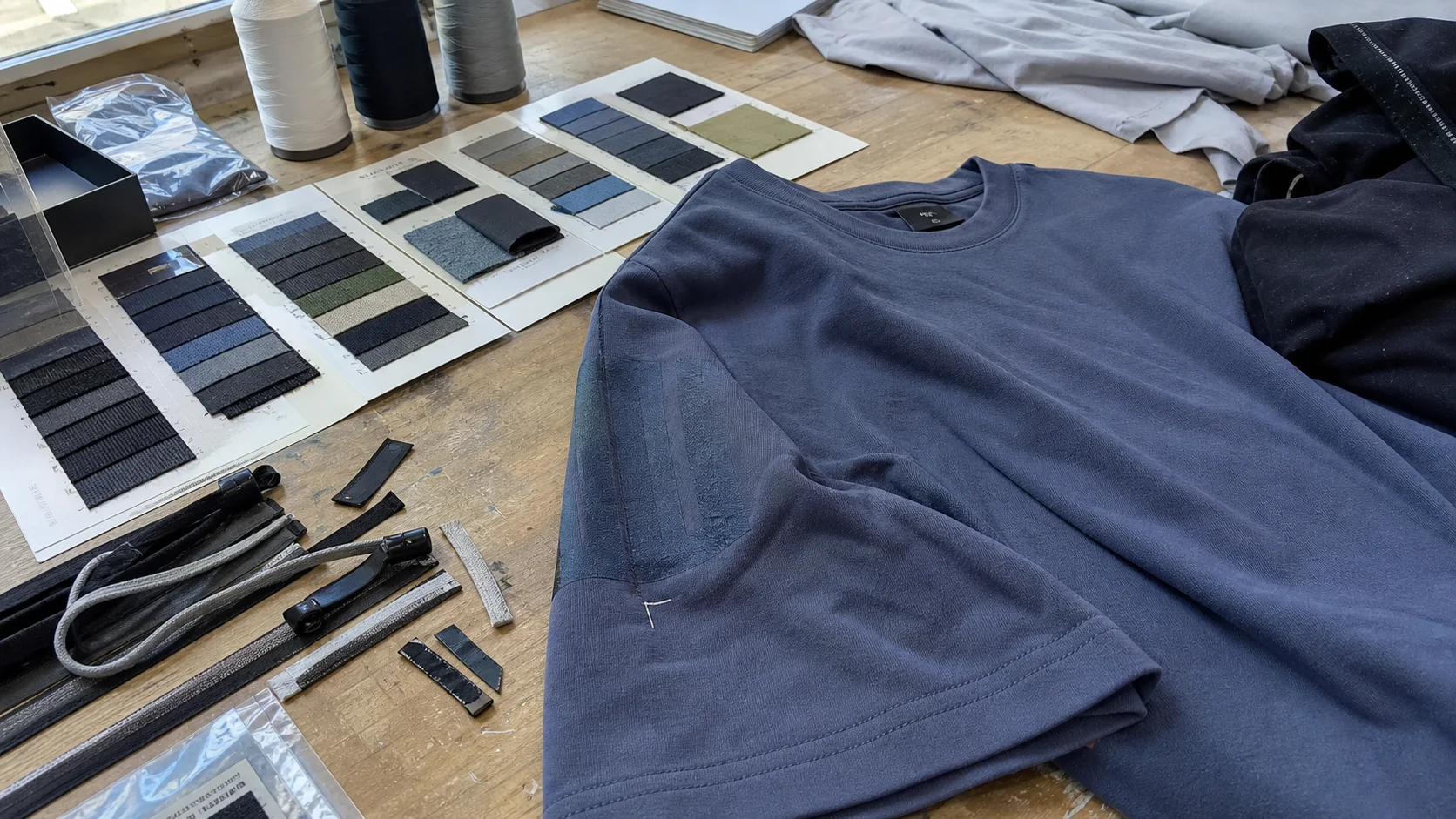
A sourcing-focused outline for facilities managers evaluating wholesale sleeve print map trim, including placement specs, durability checks, decoration...
Sleeve Print Map Trim Sourcing Review for Facilities - Fabrikn production reference
Wholesale sleeve print map trim sourcing is a practical purchasing issue, not just a decoration decision. For facilities managers handling uniform programs, promotional apparel, retail replenishment, teamwear, workwear, or branded merchandise, sleeve decoration can create avoidable delays if artwork placement, trims, fabric behavior, and production routing are not reviewed before bulk approval.
The phrase “sleeve print map trim” usually refers to the full decoration placement package for sleeve graphics: artwork location, print dimensions, distance from sleeve seam, distance from cuff or hem, orientation, trim interaction, and any supporting labels, patches, tapes, reflective details, or seam construction that may affect print execution. In wholesale apparel production, this map becomes a control document. It tells the factory where the print lands, what it must avoid, and how it should be checked during inspection.
Facilities managers often buy decorated garments in volume for operational use. These orders may include company logos, department identifiers, safety markings, event graphics, QR codes, sponsor names, or compliance information. Sleeve prints are popular because they keep the chest clean, add visibility, and allow extra branding without overwhelming the garment. They are also more difficult to control than flat front or back prints because sleeves are narrow, curved, seamed, and sometimes tapered.
A good sourcing review should answer five questions before the purchase order is released: Can the selected fabric accept the chosen print method? Can the sleeve panel be printed accurately in the available production setup? Do trims interfere with the print area? Are tolerances realistic for bulk output? Can the supplier inspect placement consistently across sizes?
Facilities managers who need structured apparel development support can review broader production capabilities through Fabrik Services. For sourcing decisions, the useful point is not whether sleeve printing is possible. It almost always is. The real question is whether the program has enough specification control to produce the same result across hundreds or thousands of units.
Sleeve graphics appear simple in mockups, yet bulk production exposes every weak point in the specification. A digital design file may show a clean vertical logo down the forearm, but the real garment has sleeve seams, cuffs, rib, taper, panel distortion, fabric stretch, and size grading. Without a print map, each operator may interpret placement differently.
For facilities programs, this matters because uniforms and branded apparel are usually distributed across departments, job sites, branches, or events. If some sleeves show the logo close to the cuff and others show it drifting toward the elbow, the inconsistency is visible immediately. If the print crosses a seam or sits over a bulky trim, cracking and distortion can appear after washing.
Wholesale buyers should treat sleeve placement as a measurable production requirement. The supplier should not only receive the artwork file; they should receive a placement map with reference points. Common reference points include shoulder seam, sleeve hem, sleeve opening, underarm seam, centerline, cuff join, placket edge, reflective tape edge, or panel break.
Purchasing judgment: sleeve printing is low risk only when the garment construction is simple, the artwork is not oversized, and the print area avoids seams and heavy trims. Risk rises quickly with stretch fabric, tapered sleeves, reflective tape, rib cuffs, multi-size grading, and wraparound artwork.
A facilities manager should ask the supplier to confirm the print method, sleeve loading method, production tolerance, and inspection method before approving the sample. A vague approval such as “print logo on right sleeve” is not enough for repeatable wholesale output.
In sourcing discussions, “trim” can mean several things. It may refer to garment components such as cuffs, labels, zippers, drawcords, Velcro, reflective tape, binding, rib, elastic, badges, or woven patches. It may also refer to decoration-support materials, including heat-transfer films, backing papers, screen-print additives, appliqué edges, or embroidery stabilizers.
For sleeve print map trim sourcing, the most important trim issue is interference. A print may look correct on a flat drawing but fail when it meets a cuff seam, reflective strip, elastic binding, or bulky sleeve construction. Trim can also change how the fabric lies on the print platen. A raised seam or tape can prevent even pressure, creating weak adhesion or blurred print edges.
Facilities managers should classify trim interactions into three groups:
Overlapping trims usually require redesign or a different decoration method. Adjacent trims require tolerance control. Functional trims require caution because decoration may affect performance claims. For example, printing over reflective tape can reduce reflectivity. Applying a heat transfer over a waterproof membrane may compromise the garment’s performance if not tested. Printing on flame-resistant apparel can raise compliance concerns depending on the ink and garment standard.
The safest sourcing approach is to lock the sleeve decoration zone before trims are finalized. When that is not possible, the supplier should provide a trim sheet and a placement diagram that shows all relevant distances.
A wholesale sourcing review should look beyond unit price. Sleeve print quality depends on garment design, decoration method, factory equipment, operator skill, artwork engineering, and inspection discipline. Facilities managers should evaluate suppliers on practical execution rather than broad capability claims.
Not every print facility handles sleeves efficiently. Sleeve prints may require narrow platens, sleeve boards, special jigs, or manual alignment. A supplier that prints flat chest graphics well may struggle with long vertical sleeve designs or repeat placement across sizes.
The supplier should be able to translate a design into production artwork. This includes scaling, color separation, bleed adjustment, underbase planning, print order, and placement references. For heat transfers, the supplier should confirm carrier size, film type, adhesive layer, and pressing parameters.
Any sleeve decoration should be tested on the actual bulk fabric, not a substitute swatch, when possible. Fabric dye, finish, stretch, texture, and fiber content can all affect print performance. Trims such as rib cuffs, reflective tape, waterproof coatings, or seam sealing can change temperature and pressure behavior.
The same print may not sit identically across XS to 5XL. Larger sleeves may need adjusted placement, or the buyer may accept a fixed distance from cuff or shoulder seam. This decision should be documented. A fixed graphic size across all sizes is common, but the visual proportion will change.
Facilities programs often reorder. The supplier should retain print maps, color standards, artwork files, approved samples, and trim records. If the program is likely to repeat quarterly or seasonally, ask how production records are stored and how color and placement are controlled in later batches.
Buyers reviewing sourcing partners can also examine company background and production positioning through Fabrik About Us. For wholesale apparel purchasing, supplier fit is usually as important as nominal capacity.
Fabric selection is one of the largest predictors of sleeve print success. A stable cotton jersey behaves differently from a polyester-spandex performance knit. A brushed fleece sleeve accepts decoration differently from a coated woven workwear shell.
For facilities managers, the fabric spec should be collected before decoration costing is finalized. Useful details include fiber composition, fabric weight, knit or woven structure, stretch percentage, surface texture, dye type, finishing treatment, and care instructions.
Fabric Type Common Sleeve Print Concern Purchasing Guidance Cotton jersey Shrinkage, fibrillation, ink hand feel Good for screen print; pre-shrinkage and wash testing are useful. Cotton-poly fleece Raised surface, pile movement, print cracking Use compatible ink or transfer; test after wash and tumble drying. Polyester performance knit Dye migration, stretch recovery, heat sensitivity Use low-bleed inks or transfers and confirm pressing temperature. Nylon woven Adhesion difficulty, coating interference Requires careful ink or transfer selection; coating details matter. High-visibility fabric Reflective trim conflict, compliance marking Avoid printing over reflective tape unless tested and approved. Stretch spandex blends Cracking, distortion, poor recovery Select stretch inks or elastic transfers; test at realistic extension.Ink and transfer selection should follow fabric behavior. Plastisol may be common for cotton and blends, but it can feel heavy on long sleeve prints. Water-based inks can produce a softer hand but may need fabric-specific testing, especially on dark garments or synthetic blends. Silicone inks are often considered for stretch performance fabrics, though they may carry higher costs and require experienced handling. Heat transfers can provide clean detail and efficient multi-color production, but adhesion, stretch, dye migration, and edge lift must be tested.
Trim details are not secondary. A sleeve with rib cuffs may need a minimum print distance from the cuff join. A sleeve with reflective tape may need a protected no-print zone. A sleeve with Velcro or hook-and-loop closure may create abrasion risks in laundering. A sleeve with seam sealing may not tolerate high heat near the seam.
The right sleeve print method depends on order quantity, artwork complexity, fabric, performance requirements, and budget. No method is best for every case.
Screen printing is common for wholesale sleeve programs, especially for simple logos, text, and one- to three-color designs. It can be cost-effective at volume and durable when matched correctly to fabric. Setup cost is higher for small orders because each color generally requires screen preparation.
Screen printing on sleeves needs accurate loading. Long vertical prints can skew if the sleeve is twisted or stretched during placement. Narrow sleeve boards help, but operators still need a clear map. Print height should be realistic for the sleeve size range.
Heat transfers are useful for multi-color logos, variable names, detailed graphics, and smaller production batches. They can reduce setup complexity compared with screen printing, especially when designs change often. The main risks are edge lifting, poor stretch, dye migration, shine marks, and pressure inconsistency around seams.
For facilities programs with many departments or job roles, heat transfers can support versioning. The tradeoff is that transfer cost per unit may remain higher than screen print at large volumes.
Direct-to-film transfers are widely used for flexible decoration programs. They can reproduce detailed graphics and support low to mid-volume runs. Buyers should review wash durability, hand feel, stretch behavior, and adhesive compatibility with the garment fabric. Not all DTF outputs are equal, and sleeve placement still requires controlled pressing.
Sublimation works on suitable polyester fabrics and is often used when the print is applied before sewing or when the sleeve panel is part of a full all-over print program. It gives a soft hand because the dye becomes part of the fabric. The limitation is fabric compatibility and color base. Sublimation is not suitable for standard cotton garments and is difficult on dark fabrics.
Embroidery is not usually described as sleeve printing, but it competes for the same decoration zone. It can look premium, yet it adds weight and may distort lightweight sleeves. Woven or rubber patches can work for workwear or outerwear, but they create trim complexity and may require sewing, heat application, or adhesive bonding.
For sleeve map trim sourcing, the practical question is whether the method can meet placement, durability, hand-feel, and cost targets at the required volume.
MOQ depends on garment type, decoration method, fabric sourcing, trim sourcing, color count, and whether the order uses blanks or custom production. Buyers should treat any MOQ estimate as conditional until specs are confirmed.
Program Type Typical MOQ Range Notes for Facilities Managers Blank garment with sleeve heat transfer 50-200 units Often suitable for pilot programs or department-level orders. Blank garment with sleeve screen print 100-300 units Better value when artwork is stable and color count is low. Custom cut-and-sew knitwear with sleeve print 300-1,000 units MOQ depends heavily on fabric availability and dyeing. Custom outerwear with sleeve trims and print 500-1,500 units Trim sourcing, coatings, and performance testing can raise MOQ. High-visibility or compliance-related apparel 300-2,000 units Testing and approved component requirements may affect minimums. Multi-location uniform replenishment program Varies by SKU Annual volume may matter more than single-release quantity.Small MOQs usually mean higher unit costs and less custom control. Large MOQs improve pricing but increase inventory risk. Facilities managers should balance forecast accuracy against supplier requirements. If a program includes many sizes, colors, and role-specific sleeve prints, the effective MOQ per SKU may become the real constraint.
A common purchasing mistake is approving a low total MOQ without checking size and color breakdowns. A 500-unit order divided across five colors, eight sizes, and four sleeve print versions may create inefficient micro-runs. Decoration suppliers may charge extra setup or handling fees when the breakdown is too fragmented.
For facilities operations, the best order plan often separates core evergreen styles from short-term campaign styles. Keep the main uniform sleeve print stable. Use transfers or small-batch decoration for temporary identifiers, event sleeves, or location-specific graphics.
Sampling should reduce risk before bulk production, not just provide a visual reference. A sleeve print sample should be reviewed for placement, artwork scale, color, hand feel, adhesion, distortion, and compatibility with trims.
The buyer should provide vector artwork when possible, Pantone or color references, intended print size, sleeve side, placement reference, and garment style details. If only raster artwork is available, resolution must be checked before sampling.
The supplier should create or confirm a sleeve print map. This should show distance from cuff or sleeve hem, distance from seam, print orientation, maximum print area, and no-print zones. The map should also identify trims that must not be covered.
A strike-off is a test print on fabric or garment panel. It helps confirm color, print quality, adhesion, and artwork clarity. For sleeve prints, a flat strike-off is useful but incomplete. A garment sample or sleeve mockup is better for placement review.
The pre-production sample should use actual or approved bulk fabric, trims, print method, and placement. Facilities managers should review it against the tech pack rather than relying only on appearance.
At minimum, decorated samples should be laundered according to the intended care label. More demanding programs may require multiple wash cycles, abrasion checks, stretch checks, colorfastness review, or dimensional stability checks.
Approval should include notes on accepted placement tolerance, color tolerance, hand-feel tolerance, and any known limitations. If the buyer accepts a visible compromise, such as slight print proportion changes across sizes, it should be recorded.
A disciplined sampling workflow may add days to the schedule, but it protects the bulk order. Skipping sample approval is rarely worth the savings when sleeve decoration is prominent or operationally important.
Lead time for wholesale sleeve print map trim sourcing depends on whether the garments are stocked blanks, made-to-order blanks, or fully custom apparel. Decoration itself may be fast, but artwork approval, trim sourcing, production queue, and inspection can add time.
Stage Typical Time Range Dependency Artwork and print map review 1-5 business days Completeness of artwork files and placement instructions. Decoration strike-off 3-10 business days Print method, color count, supplier queue, fabric availability. Pre-production sample 7-21 business days Garment availability, custom trims, printing setup. Bulk blank decoration 5-20 business days Order quantity, versions, print positions, approval speed. Custom garment production with sleeve print 30-90 days Fabric knitting or weaving, dyeing, trims, sewing, decoration. Inspection and packing 2-7 business days AQL level, repacking needs, carton marking requirements.Lead-time compression increases error risk. Rush sleeve programs often fail because print maps are approved late or trims arrive after decoration planning. Facilities managers should avoid releasing decoration instructions after garments are already in the production queue unless the supplier confirms feasibility.
Color matching can also affect schedule. If the sleeve print must match corporate brand colors closely, the buyer should provide Pantone references and accept that screen print, transfer, and fabric base color can all influence final appearance. A white logo on black cotton is simpler than a precise corporate blue on heather polyester fleece.
Import shipping, customs, and local receiving should be considered separately from production lead time. A supplier may quote a production window that excludes transit, customs clearance, final distribution, or relabeling.
A sleeve print map trim package should be clear enough that a production team can execute the order without guessing. Facilities managers do not need to write a complex fashion tech pack, but they do need a controlled specification sheet.
Placement tolerance should be realistic. For many wholesale sleeve print programs, a tolerance of around plus or minus 0.5 cm to 1.0 cm may be achievable on controlled styles, while larger tolerances may be needed for bulky garments, stretch sleeves, or manual loading. Extremely tight tolerances increase cost and rejection risk.
Facilities managers should also clarify packaging requirements. Sleeve prints can be damaged by poor stacking, insufficient curing, hot packing, or abrasion from trims. If garments are individually polybagged, the print must be fully cured or cooled before packing. If garments are bulk packed, carton pressure and transfer blocking should be considered.
Sleeve decoration has specific inspection risks. The most common are skewed placement, inconsistent distance from cuff, poor adhesion near seams, cracking on stretch fabrics, dye migration, color mismatch, ghosting, smudging, and print distortion after laundering.
Quality control should include both in-line and final inspection. In-line checks catch operator drift before hundreds of garments are printed. Final inspection confirms shipment quality, but it is less efficient if defects are already built into the batch.
Inspection Risk Likely Cause Control Action Print skew Sleeve twisted during loading Use sleeve jig, seam reference, and first-piece approval. Placement drift Unclear map or manual inconsistency Set measurable distance from a stable reference point. Cracking Ink or transfer not suited to stretch Test stretch recovery and wash performance before bulk. Dye migration Polyester dye bleeding into print Use low-bleed systems and test after heat exposure. Edge lift Transfer adhesion failure Confirm pressure, dwell time, temperature, and fabric finish. Print over trim No trim clearance zone Mark no-print zones in the sleeve map. Color mismatch Uncontrolled ink mix or fabric base effect Approve strike-off under consistent lighting.AQL inspection can be used for bulk orders, but defect classification should be agreed in advance. A sleeve print that is 2 cm out of position may be a major defect for a visible uniform program. A tiny pinhole inside a distressed graphic may be minor. If the buyer does not define this, the supplier may apply a looser standard than expected.
Facilities managers should request photos of first bulk pieces when production starts, especially for new programs. For high-volume or high-risk orders, third-party inspection may be justified. The cost is usually easier to accept than sorting defective sleeves after delivery.
Sleeve print map trim sourcing has several cost drivers. The obvious cost is decoration, but the hidden costs are setup, handling, rejects, testing, artwork changes, trim complexity, and slow production speed.
Screen printing can become economical at volume, especially with simple artwork. Heat transfers may be better for lower quantities, multiple logo versions, or complex colors. Sublimation can be efficient for polyester panel programs but may require custom cut-and-sew production.
Every sleeve version adds handling. A left-sleeve safety logo, right-sleeve department code, and separate location identifier may look manageable on paper, but it can multiply production steps. Facilities buyers should consolidate versions where possible.
Reflective tape, rib cuffs, patches, and seam details can increase decoration difficulty. The garment may need special loading or decoration before sewing. Printing panels before assembly may improve accuracy but changes the production route and can make replenishment harder.
Wash testing, colorfastness testing, adhesion testing, and compliance review add cost and time. For uniforms used weekly, testing is usually worthwhile. For one-day promotional apparel, a lighter review may be acceptable.
Large MOQs reduce unit cost but increase the risk of excess stock, especially when sleeve graphics include dates, department names, site names, or campaign messaging. Facilities managers should avoid large inventory commitments for graphics likely to change.
Direct purchasing judgment: if the sleeve artwork is stable for at least one year, screen print or controlled bulk transfer production can be efficient. If the artwork changes by location, role, or event, a transfer-based program may cost more per unit but reduce dead inventory and versioning risk.
The cheapest quote may not be the best value. A supplier with weak print mapping can create sorting labor, rework, late delivery, and inconsistent uniforms. A slightly higher quote with better documentation, sampling, and inspection control may be the safer procurement decision.
Facilities managers should ask practical questions before approving a wholesale sleeve print supplier. These questions reveal whether the supplier understands the execution risks.
The answers should be specific. A supplier that only says “we can do it” without naming tolerances, sample steps, and print limitations is not giving enough production control for a facilities program.
When a project needs direct specification review, buyers can use Fabrik Contact Us to discuss production requirements, decoration methods, and sourcing direction. Good early questions save more time than late-stage corrections.
Facilities managers often coordinate apparel across internal stakeholders. Safety teams may want high visibility. Marketing may want brand accuracy. Operations may want durability. Finance may want low unit cost. HR may want inclusive sizing. Distribution teams may want easy replenishment.
Sleeve print sourcing should bring these priorities together before the PO is issued. If safety requirements are involved, decoration cannot be treated as cosmetic only. If brand color is critical, artwork and print method must support color control. If industrial laundry is expected, the decoration must be reviewed for harsher wash conditions than ordinary home laundering.
Internal approval should include the people who will actually use the garments. A sleeve print placed too close to the wrist may rub against gloves, tools, desks, or machinery. A large print on a stretch sleeve may feel restrictive. A raised patch may catch on equipment. These are not design problems visible in a PDF mockup; they appear during wear.
Facilities managers should also plan distribution. If garments are sorted by department, sleeve version, and size, carton marking becomes important. Mixed cartons can cause allocation errors. Clear SKU labeling, size stickers, and packing lists reduce receiving labor.
This process may seem more formal than a standard apparel order, but it is appropriate when garments represent the organization and must perform in daily use.
For wholesale sleeve print map trim sourcing, facilities managers should prioritize documentation and repeatability over the lowest decoration price. Sleeve prints are visible, placement-sensitive, and vulnerable to trim interference. A supplier should prove that they can control the print area, not simply decorate the garment.
The strongest sourcing route depends on the program type. For simple cotton or cotton-blend uniforms with stable artwork, screen printing can be a strong value at medium to large volumes. For variable graphics, smaller runs, or multi-location programs, heat transfers or DTF transfers may be more flexible. For polyester performance apparel with full design integration, sublimation or panel printing may be suitable if the garment is planned from the start.
Custom garments with sleeve trims require earlier coordination. The decoration zone should be locked before trims are finalized, especially when cuffs, reflective tape, zippers, patches, or seam sealing are involved. Printing after sewing may be simpler for replenishment, while printing before sewing may improve flatness and placement for complex graphics. Each option has a tradeoff.
A practical facilities sourcing decision should include:
The best purchasing outcome is not just a clean first sample. It is a bulk order that looks consistent across sizes, survives expected use, and can be reordered without restarting the development process.
Get a free quote from Fabrikn — your trusted B2B clothing manufacturer with 10+ years of experience. MOQ as low as 200 pieces.
Get a Free Quote →Sleeve print map trim sourcing is the process of planning and purchasing sleeve decoration with controlled placement, trim clearance, fabric compatibility, and inspection standards. It covers where the print sits, what materials are used, which trims may interfere, and how bulk quality will be checked.
Typical MOQs may start around 50-200 units for blank garments with heat transfers, 100-300 units for sleeve screen printing, and 300-1,500 units or more for custom garments with special trims. Actual MOQ depends on garment type, print method, size breakdown, color count, and supplier capacity.
Screen printing is often efficient for stable artwork and larger volumes. Heat transfers and DTF transfers are useful for smaller runs, detailed graphics, or versioned programs. Sublimation works for suitable polyester garments. The best method depends on fabric, durability needs, artwork complexity, and reorder strategy.
Placement should be measured from a stable garment reference point such as the sleeve hem, cuff edge, shoulder seam, or underarm seam. The print map should define distance, orientation, maximum print area, and acceptable tolerance. It should also show any no-print zones around trims.
The main risks are skewed placement, inconsistent distance from cuff, poor adhesion, cracking, dye migration, edge lift, color mismatch, and printing too close to seams or trims. In-line checks and first-piece approval help reduce these risks before the full batch is completed.
Yes. At minimum, buyers should review a decorated sample and conduct care-label wash testing. Stretch fabrics, polyester blends, outerwear, high-visibility garments, and workwear may need more careful adhesion, abrasion, colorfastness, or performance review.
Printing over reflective tape or functional trims is usually risky unless the supplier has tested and approved the construction. Decoration may reduce reflectivity, weaken adhesion, damage coatings, or affect compliance claims. A no-print zone is usually the safer choice.
Reduce the number of sleeve print versions, keep artwork stable, avoid oversized graphics, use standard garment styles where suitable, and approve clear placement maps before sampling. Larger consolidated orders can improve price, but only if inventory risk is acceptable.
A practical tech pack should include garment details, artwork files, print dimensions, sleeve side, placement reference, print orientation, trim clearance, print method, color references, performance requirements, and inspection tolerances.
Contact a sourcing partner before artwork, garment style, and trims are locked. Early review helps prevent placement conflicts, fabric-print mismatch, unrealistic MOQ planning, and late production changes.