
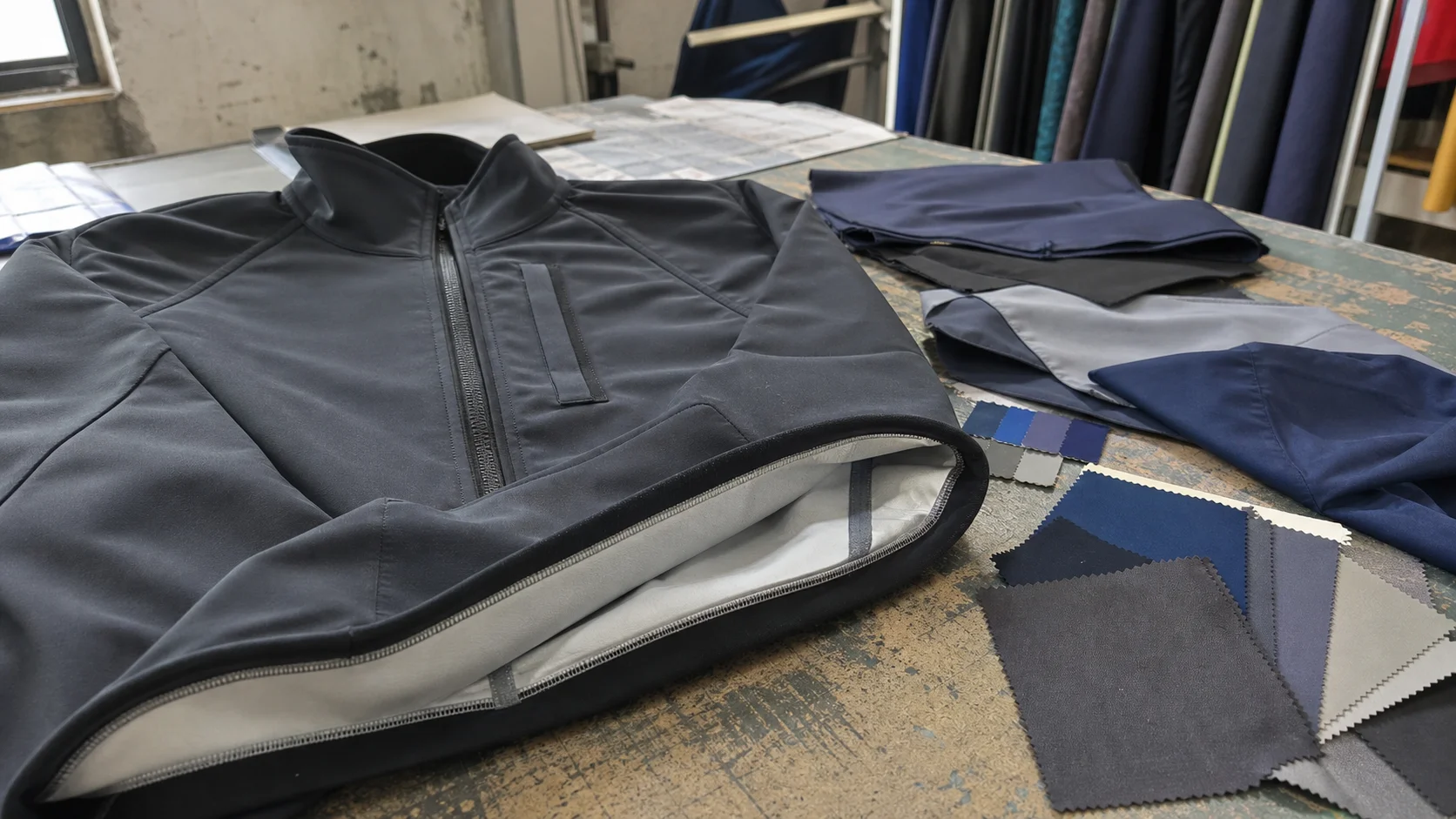
A practical outline for clinic purchasing teams to audit wholesale softshell jacket colorfastness before bulk ordering, decoration, laundering, and staff...
Softshell Jacket Colorfastness Audit for Clinic Buyers - MOQ, Cost & Sourcing manufacturing guide
Wholesale softshell jacket colorfastness audit for clinic purchasing teams is not a cosmetic exercise. It is a practical sourcing control that protects uniform consistency, brand presentation, staff satisfaction, and repeat-order stability. Clinics often buy softshell jackets for front desk teams, mobile care units, physiotherapy staff, dental teams, veterinary staff, and outpatient coordinators. These jackets may be worn daily, washed frequently, stored in lockers, exposed to disinfectant residue, and layered over scrubs or polo shirts. Poor dye performance becomes visible quickly.
A softshell jacket can look acceptable during a showroom review and still fail in real use. Dark navy may bleed onto pale uniforms. Burgundy may crock at cuffs and pocket edges. Black may fade unevenly after laundering. Charcoal may shift green under repeated wash cycles. White or light grey contrast embroidery may pick up dye migration from the shell fabric. Clinic buyers should not rely on a supplier’s verbal assurance that “the color is stable.” A colorfastness audit turns that assurance into measurable checkpoints.
For clinic purchasing teams, the buying risk is different from fashion retail. A retail customer may accept slight shade variation across seasons. A clinic usually needs departments to look consistent across shifts, locations, and replenishment orders. If a clinic group buys 300 jackets this quarter and 120 more six months later, the second lot should not look like a different uniform program. That is where color standards, test reports, lab dips, bulk fabric approval, and shipment inspection become important.
Direct purchasing judgment: do not treat softshell color as a design-only decision. Treat it as a repeatable specification. The darker, brighter, or more customized the color, the more discipline the audit needs.
Softshell jackets are also more complex than basic woven shirts. A typical softshell may include an outer face fabric, inner fleece or brushed backing, TPU or PU membrane, zipper tapes, pullers, pocket bags, elastic binding, drawcords, reflective details, heat-transfer labels, embroidery, and printed logos. Each component can behave differently when exposed to washing, rubbing, perspiration, moisture, heat pressing, and disinfectant contact. A jacket can pass fabric shade review but fail because zipper tape stains the garment, binding fades, or logo backing changes color after pressing.
Clinic buyers do not need to become textile chemists. They do need a clear audit checklist, sensible acceptance limits, and a sourcing process that catches problems before bulk shipment. If a clinic is sourcing through a manufacturing partner, the buyer should request documentation at the right stage rather than waiting until finished goods arrive. Fabrikn’s apparel development and sourcing support can be reviewed through the services page for teams building structured uniform programs.
A colorfastness audit for wholesale clinic softshell jackets should cover the full garment, not only the main shell fabric. The audit should define what is being tested, when it is tested, who approves it, and what happens if a result is borderline. A practical audit normally includes five areas: approved color standard, material test evidence, sample performance, bulk shade control, and finished garment inspection.
The buying team should define the color target before asking for pricing. A vague instruction such as “clinic navy” or “medical blue” leaves too much room for interpretation. Better options include a Pantone reference, a physical fabric swatch, or an approved previous production garment. Physical standards are usually more reliable than screen images because monitor settings distort color.
For clinic buyers, the best approach is to approve a master standard and keep duplicate signed standards with the buyer, supplier, and factory. The standard should include the shell face color and, where visible, fleece backing color, zipper color, logo thread color, binding color, and lining color. If the jacket uses contrast trims, each trim needs its own target.
The supplier should provide test reports for the softshell fabric and major trims. The reports should be recent enough to be relevant to the material batch being used. A two-year-old report on a similar fabric is not the same as a report on the actual nominated fabric lot. For repeat programs, buyers should request updated tests when the mill, dye lot, finish, membrane, or backing changes.
Prototype and pre-production samples should be reviewed for shade, rubbing, washing, embroidery impact, logo application, and trim matching. Clinic teams sometimes approve fit samples without laundering them. That is a missed opportunity. At least one approved sample should be washed according to the intended care label before bulk cutting is released.
Bulk fabric should be checked before cutting. Shade variation across rolls is a common source of garment mismatch. If a factory cuts multiple shade lots into the same size run, staff receiving jackets may notice panels or sleeves that do not match under clinic lighting. Roll-to-roll shade checks, roll grouping, and marker planning reduce this risk.
Final inspection should include colorfastness-related visual checks, even when lab tests are already approved. Inspectors should examine shade consistency, contrast trims, rubbing marks, heat press marks, embroidery staining, crocking at seams, and packaging transfer. Color issues found after shipment are expensive to resolve because clinics need usable uniforms on schedule.
Color choice affects cost, MOQ, lead time, and testing risk. Clinic buyers often prefer navy, black, charcoal, royal blue, bottle green, burgundy, or teal. These colors communicate professionalism and hide daily wear better than white or pale shades. The tradeoff is that darker and more saturated colors usually carry higher risk for rubbing, dye migration, and visible fading.
Color Type Typical Clinic Use Main Colorfastness Risk Purchasing Judgment Black General staff, admin, mobile teams Fading, shade difference between lots, lint visibility Reliable if sourced from stable stock fabric; test laundering carefully Navy Medical, dental, therapy, front desk Crocking onto light garments, lot-to-lot shade drift Good clinic choice, but specify exact navy standard Royal Blue Department color coding, care teams Shade inconsistency, trim matching issues Use if branding requires it; approve lab dip and bulk shade band Burgundy Reception, care home, therapy teams Rubbing, fading, uneven tone after wash Attractive but needs stricter wet rubbing and wash tests Teal or Green Dental, wellness, veterinary, clinic branding Dye matching, metamerism under different lighting Check shade under daylight and clinic lighting Light Grey Premium reception or branded uniforms Staining from trims, visible dirt, dye transfer from darker garments Cleaner look but less forgiving in daily clinical settingsStock colors can reduce risk when the fabric mill has consistent running shades and available test history. Custom colors give better brand alignment but usually require higher MOQ, longer lab dip cycles, and more shade approval work. A clinic group with several locations may justify custom dyeing if annual demand is predictable. A smaller clinic buying 80 to 150 jackets is usually better served by a stock or semi-stock shade unless the branding requirement is strict.
Metamerism deserves attention. A jacket can look correct under factory light and slightly wrong under LED clinic lighting. This is common with blue, teal, green, grey, and purple shades. Buyers should review approved lab dips and pre-production samples under daylight, office LED, and the actual lighting used in reception or treatment areas when practical. The goal is not laboratory perfection. The goal is avoiding a visible mismatch that makes the uniform look poorly controlled.
Softshell jackets are often described too loosely in purchase requests. “Three-layer softshell, waterproof, breathable” is not enough for a clinic uniform program. Colorfastness performance depends on the face yarn, dye process, finishing, membrane lamination, backing fabric, and trim package. A sourcing brief should give the supplier a clear technical target.
Typical clinic softshell weights range from about 260 gsm to 340 gsm. Lightweight versions are easier for indoor wear and layering. Heavier versions feel more substantial and may suit mobile staff who move between buildings. Weight influences cost, shipping volume, warmth, and wearer comfort. It also affects dye uptake and shade perception. A 300 gsm navy softshell may not visually match a 260 gsm navy even if both are labeled the same color.
Trim specifications are just as important. Zipper tapes should be tested for staining and shade match. Elastic binding can fade faster than shell fabric. Drawcords may bleed when wet. Reflective trims can discolor during heat application. Embroidery threads may react differently to laundering than the shell fabric. Heat-transfer logos can trap heat and leave press marks, especially on dark polyester softshells.
For clinic uniforms, the trim package should be conservative unless the design brief requires high contrast. Matching navy shell, navy zipper tape, and tonal embroidery reduces visual risk. White contrast zippers on dark jackets look sharp but can expose dye migration and dirt. Reflective piping may be useful for mobile healthcare staff, but it adds another component to test and inspect.
A clinic purchasing team should not request every textile test available. That increases cost without always improving decision quality. The better approach is to request a focused test package aligned with garment use. Softshell jackets for clinics should normally be reviewed for washing, rubbing, perspiration, water, light exposure where relevant, and staining between components.
This test checks whether the fabric color changes or stains adjacent materials after laundering. Clinic staff may wash jackets at home, where detergents, water temperature, and load mixing vary. The care label should be realistic. If the supplier recommends cold wash only, the buyer should decide whether clinic staff will actually follow that instruction. A garment that only performs under delicate washing may not be suitable for high-frequency uniform use.
Common acceptance expectations for uniform outerwear often sit around Grade 4 or better for color change and staining, with some buyers accepting Grade 3-4 depending on color and end use. Exact standards should be agreed in writing. Dark colors may be harder to maintain, but that does not justify obvious bleeding or severe fading.
Rubbing tests check whether color transfers when the fabric is rubbed dry or wet. This is critical for softshell jackets worn over light scrubs or white coats. Wet rubbing is usually harder to pass than dry rubbing. Dark navy, black, burgundy, and red-toned colors need particular attention.
Clinic buyers should pay attention to high-friction areas: cuffs, pocket openings, side panels, elbows, collar edges, and underarms. A lab test gives a controlled reading, but a garment review should still check whether rough zipper tape, seam bulk, or stiff embroidery backing increases rubbing in real wear areas.
Perspiration testing matters for staff who wear jackets during active work, commuting, or mobile care. Sweat can affect dye stability, especially around collars, underarms, and cuffs. Testing should include acidic and alkaline perspiration when possible. This is especially relevant when jackets are worn over pale tops.
Softshell jackets may be exposed to rain, handwashing splash, damp storage, or cleaning residue. Water fastness checks whether the color bleeds or stains when wet. For clinics, wet storage is a practical risk. Jackets may be hung close together in staff rooms, left in bags, or stored against light-colored garments.
Light fastness is not always the top priority for indoor clinic uniforms, but it matters for mobile care staff, reception areas with strong sunlight, and jackets stored near windows. Black, navy, teal, and burgundy can show fading if the dye system is weak. If the jacket is used outdoors or for community care, include light fastness in the audit.
Heat-transfer logos, embroidery backings, lamination, and packaging can create migration issues. Polyester fabrics dyed with disperse dyes can sometimes migrate under heat, especially when a heat press is used for logos. A white logo on dark softshell may appear clean at first, then become dull or tinted. Buyers should request logo application trials before bulk branding.
Test Area Why Clinic Buyers Need It Practical Watchpoint Washing Checks fading and staining after laundering Use the intended care label conditions Dry rubbing Checks color transfer during normal wear Important for dark shades over light uniforms Wet rubbing Checks transfer when damp or sweaty Often the weak point in saturated colors Perspiration Checks collar, cuff, and underarm dye behavior Useful for active care and mobile teams Water Checks bleeding in damp storage or rain Review trims and shell together Light Checks fading from sun exposure More important for outdoor or mobile staff Heat migration Checks logo and press application risk Trial branding before productionMOQ is one of the first constraints clinic buyers face. Softshell jackets have higher material and trim complexity than basic scrubs or polo shirts, so factories often require a larger production commitment for custom work. MOQ depends on fabric availability, color choice, garment complexity, logo method, size range, and whether the order uses stock fabric or custom-dyed fabric.
Typical MOQ ranges for wholesale clinic softshell jackets often fall into these broad bands:
These ranges are not guarantees. A mill may require more yardage for custom dyeing than the garment factory needs for the order. A buyer ordering 220 jackets in a custom teal may discover that the fabric MOQ supports 600 jackets. The unused fabric has to be paid for, stored, or converted into future production. That cost should be visible in the quotation.
Cost also varies by test package. A basic fabric test may be manageable, but testing shell, backing, zipper tape, binding, logo, and finished garment performance increases pre-production expense. For clinic buyers, the question is not whether testing adds cost. The question is whether avoiding the test creates a larger replacement risk. Reworking or replacing a failed 500-piece jacket order usually costs far more than upfront audit control.
Purchasing teams should avoid over-customizing small orders. A clinic buying 75 jackets does not need a private-dyed softshell unless the brand color is non-negotiable and the budget supports it. A better route may be a stock navy jacket with precise logo placement, controlled embroidery thread, and a documented wash test. A healthcare group buying 1,000 jackets across multiple sites can justify a custom shade and stricter audit because the volume spreads development cost.
If the buyer needs help structuring a request for quotation, supplier comparison, or sample process, the contact page is the right next step for discussing sourcing requirements.
A strong sample approval process prevents most colorfastness disputes. The key is sequencing. Buyers should not approve a production sample before the fabric color, trim color, logo application, and care performance are all reviewed. Speed matters, but skipping the wrong approval step creates delays later.
The buyer should issue a technical brief before samples begin. This should include garment style, intended use, color reference, fabric weight, logo method, size range, expected order quantity, care label expectation, packaging requirements, and required test standards. If the jacket must coordinate with existing scrubs, polos, or trousers, include those color references too.
For custom colors, the supplier should submit lab dips before bulk fabric dyeing. Buyers should review at least two to three options if possible. Each option should be labeled clearly and reviewed under consistent lighting. Approval should be written, dated, and tied to a physical standard. For stock colors, request a cutting or swatch from the actual fabric lot if available.
The first garment sample may use available fabric rather than final color. That is acceptable for fit and construction review, but it should not be treated as color approval. Clinic teams should check sleeve length, layering room, pocket placement, collar comfort, zipper function, and size grading. Softshell jackets worn over scrubs need enough mobility through shoulder, chest, and upper arm.
Branding should be tested on the actual fabric or a confirmed equivalent. Embroidery can pucker or distort laminated softshell. Heat transfers can leave shiny press marks. Silicone, reflective, or raised logos can fail wash testing if the adhesive is not matched to the fabric finish. A logo that works on cotton polo shirts may not work on softshell.
At least one pre-production sample should be washed according to the proposed care label. The buyer should check fading, staining, seam puckering, logo changes, zipper tape behavior, and fleece backing appearance. A simple in-house wash review does not replace laboratory testing, but it catches obvious failures quickly.
The pre-production sample should represent actual bulk materials, actual trims, actual logo method, and final construction. This is the sample that should be sealed and used as the production reference. If the buyer approves this sample with comments, those comments must be specific. “Improve color” is not enough. “Zipper tape must match approved navy standard within agreed tolerance” is more useful.
Bulk fabric approval should happen before cutting. Once fabric is cut, correcting shade issues becomes much harder. A practical inspection checks roll labels, shade grouping, visible streaks, side-to-center shade variation, face-to-backing consistency, and fabric defects. For custom colors, compare bulk fabric against the approved lab dip or master standard.
Colorfastness risk does not end after testing. Production handling can create new problems. Fabric can be mixed across shade lots. Trims can be substituted. Pressing temperature can be too high. Embroidery backing can discolor. Finished jackets can be packed before moisture has fully cleared. Cartons can be exposed to humidity during shipping.
Clinic buyers should build inspection points into the purchase order. The inspection does not need to be complicated, but it should be documented. If the supplier knows color and shade will be checked at pre-shipment, they are more likely to control production carefully.
Factories should inspect incoming fabric and trims before production. Key checks include roll count, fabric width, weight, handfeel, visible shade, stains, bonding quality, and trim color. Zippers, bindings, cords, toggles, and labels should be compared against approved samples. If any component is substituted, the buyer should be informed before production continues.
Shade variation can be created during cutting if rolls are mixed carelessly. For softshell jackets, panel mismatch is noticeable because the surface is smooth and often dark. Sleeves, front panels, back panels, and collars should come from controlled shade groups. If the fabric has nap, directionality, or light reflection differences, all panels should be cut consistently.
Sewing can expose color problems. Needle heat, seam pressure, and handling marks may show on dark polyester softshells. Chalk marks, oil stains, adhesive residue, and dirty machine surfaces are common inspection issues. Dark jackets often hide some stains but reveal shine marks and abrasion. Light jackets show dirt and dye transfer more easily.
Decoration is a frequent failure point. Embroidery thread should match approved color and should not bleed. Backing should not show through or cause discomfort. Heat-transfer logos should be aligned, fully bonded, and free from scorching or gloss boxes. If staff names or department names are added, each personalization step increases handling risk.
A final random inspection should check packed and unpacked goods. The inspector should compare finished jackets against the approved pre-production sample and color standard. They should check shade consistency across sizes, cartons, and production batches. They should rub dark panels with a white cloth as a quick screening method, although this is not a replacement for a formal crocking test.
Good sourcing questions make weak suppliers visible early. A supplier that cannot identify the fabric composition, dye lot, test method, or trim source may still produce a jacket, but the buyer carries more risk. Clinic purchasing teams should ask direct questions before placing a wholesale order.
Question Why It Matters Preferred Answer Is the color stock or custom dyed? Determines MOQ, lab dip timing, and shade control risk Clear stock reference or custom dye process with MOQ Can you provide recent colorfastness tests? Shows whether the fabric has documented performance Reports tied to the actual fabric or nominated base Will trims be from the same approved source in bulk? Prevents zipper, binding, or cord substitution Confirmed trim card and supplier-controlled sourcing How do you control shade between fabric rolls? Reduces panel mismatch and size-run variation Roll shade grouping before cutting Can we test the logo on actual fabric? Prevents heat migration, puckering, and press marks Pre-production decoration trial before bulk What is the replenishment plan? Protects multi-site clinic programs over time Fabric availability window and repeat-order shade processBuyers should also ask what happens if fabric fails testing. Will the supplier redye, replace, discount, or ask the buyer to accept a lower grade? This should be agreed before money is committed. A low price with no remedy is not a strong offer. A slightly higher price with clear test accountability may be the better procurement decision.
Lead time depends on more than sewing capacity. Color approval and testing often drive the schedule. A stock black softshell with embroidery may move quickly if fabric and trims are available. A custom clinic teal with matching zipper tape, branded heat transfer, and a full colorfastness test package needs more time.
Typical planning ranges can look like this:
Testing can add time at several points. Lab dips may take one to two rounds. Colorfastness tests may take several working days depending on the lab and test scope. Failed results can reset the timeline. Buyers working toward a clinic opening, rebrand, or new staff onboarding date should lock the color and sample path early.
Air freight can recover delivery time but rarely fixes development delay. It also increases cost significantly for bulky softshell jackets. A better approach is to approve colors early, avoid unnecessary trim customization, and hold a realistic buffer between final inspection and staff issue date.
A purchase specification should remove ambiguity. It does not need to be overly technical, but it should define the order clearly enough that quotation, sample approval, production, and inspection all follow the same target.
Size breakdown should also be included early. Softshell jackets often need a broader size range than office apparel because they are layered over clinical uniforms. If the order includes XS to 5XL, the factory may need extra fabric planning and grading review. Very small quantities across many sizes can raise MOQ pressure because cutting and packing efficiency drops.
For healthcare buyers comparing suppliers, company background and sourcing approach matter. The about page can help purchasing teams understand how a manufacturing partner positions its apparel development work before entering a program discussion.
Acceptance criteria should be realistic and commercially enforceable. If the buyer demands extremely high grades on a difficult dark color at a small MOQ and low target price, suppliers may either refuse or quote cautiously. If the buyer sets no criteria, the shipment may pass despite visible issues. A balanced standard is better.
For many clinic softshell programs, buyers may target Grade 4 or better for most color change and staining tests, with clear discussion around wet rubbing for deep shades. Some brands accept Grade 3-4 for wet rubbing on dark colors if there is no practical risk to light garments. Clinic buyers should be more cautious because jackets are often worn over pale scrubs. If wet rubbing is weak, consider changing shade, fabric source, or care communication before accepting the order.
Visual tolerance should be described too. Shade bands can be used to define acceptable variation. Panels within one garment should match closely. Garments within one department issue should be consistent enough that staff do not appear to be wearing different uniform colors. Replenishment orders should be compared to the original approved standard, not only to the latest batch.
Direct purchasing judgment: if the colorfastness result is borderline and the jacket will be worn over white or pale clinical garments, do not approve bulk production without a mitigation plan.
The most common mistake is approving a jacket based only on appearance. A softshell sample can look polished on the hanger but fail after washing or rubbing. Another mistake is treating embroidery approval as separate from fabric approval. Decoration interacts with softshell surfaces, especially laminated or coated fabrics.
Clinic procurement is usually judged on total outcome, not garment theory. Staff need jackets that fit, look consistent, survive normal washing, and arrive when needed. The sourcing team needs a supplier that can explain risk plainly. A cheaper jacket that fails in service becomes expensive once replacements, complaints, and rushed reorders are counted.
For most clinic purchasing teams, the safest route is a controlled stock-color softshell with tested fabric, stable trims, and a carefully approved logo method. This keeps MOQ and lead time manageable while still giving the clinic a professional uniform. Custom dyeing is worth considering when the clinic has a larger multi-location program, a strict brand color, and predictable repeat demand.
A strong wholesale softshell jacket colorfastness audit should happen before bulk production, not after delivery. Start with a clear color standard. Request relevant test evidence. Wash and review samples. Confirm trims and logos on actual fabric. Check bulk fabric before cutting. Inspect finished garments against the approved standard. This process is not excessive for clinic uniforms; it is basic risk control.
The best purchasing decision is not always the lowest unit price. It is the option that balances color reliability, staff usability, MOQ, replenishment stability, and delivery timing. In clinic apparel, consistency is part of the product.
Get a free quote from Fabrikn — your trusted B2B clothing manufacturer with 10+ years of experience. MOQ as low as 200 pieces.
Get a Free Quote →A colorfastness audit is a structured review of how well the jacket fabric, trims, and logos resist fading, bleeding, rubbing, staining, and dye migration. For clinic buyers, it helps prevent dark jackets from staining light uniforms and keeps staff apparel consistent across orders.
Key tests usually include colorfastness to washing, dry rubbing, wet rubbing, perspiration, water, and sometimes light. If the jacket has heat-transfer logos, reflective details, or contrast trims, buyers should also check migration, staining, and logo durability.
Stock color softshell jackets may start around 50 to 150 pieces, while stock fabric with custom logos often sits around 100 to 300 pieces. Custom colors commonly require around 300 to 800 pieces or more, depending on fabric mill minimums. Fully custom fabric and trim programs can require 500 to 1,500 pieces or higher.
Dark colors are practical for daily wear, but they need stronger colorfastness control. Navy, black, burgundy, and deep green can show rubbing transfer, fading, or shade variation. They are still good choices when tested properly and sourced from stable fabric lots.
Stock colors are usually better for smaller orders, faster delivery, and lower MOQ. Custom colors are better for larger clinic groups with strict brand requirements and repeat-order volume. The tradeoff is cost, lab dip time, dye lot control, and testing responsibility.
Yes. Embroidery thread, backing, needle heat, and stabilizer can affect the fabric surface. Embroidery can also pucker laminated softshell if not tested. Buyers should approve embroidery on the actual fabric before bulk production.
Yes. Heat pressing can trigger dye migration on polyester softshells, especially with white or light logos on dark fabric. A logo trial should be washed and reviewed before bulk branding starts.
Buyers should require bulk fabric shade checks before cutting, roll grouping by shade, and comparison against an approved physical standard. Finished garments should also be inspected across sizes and cartons before shipment.
Stock styles with logos may take about 2 to 5 weeks, depending on inventory and decoration capacity. Custom styles using stock fabric may take around 6 to 10 weeks. Custom dyed fabric programs may take 8 to 14 weeks or longer if lab dips, testing, and bulk approvals are included.
The biggest risk is approving the fabric but missing component-level issues. Zipper tape, binding, drawcords, embroidery thread, logo films, and packaging can all create staining or mismatch. A finished garment inspection should check the whole jacket, not only the shell fabric.