
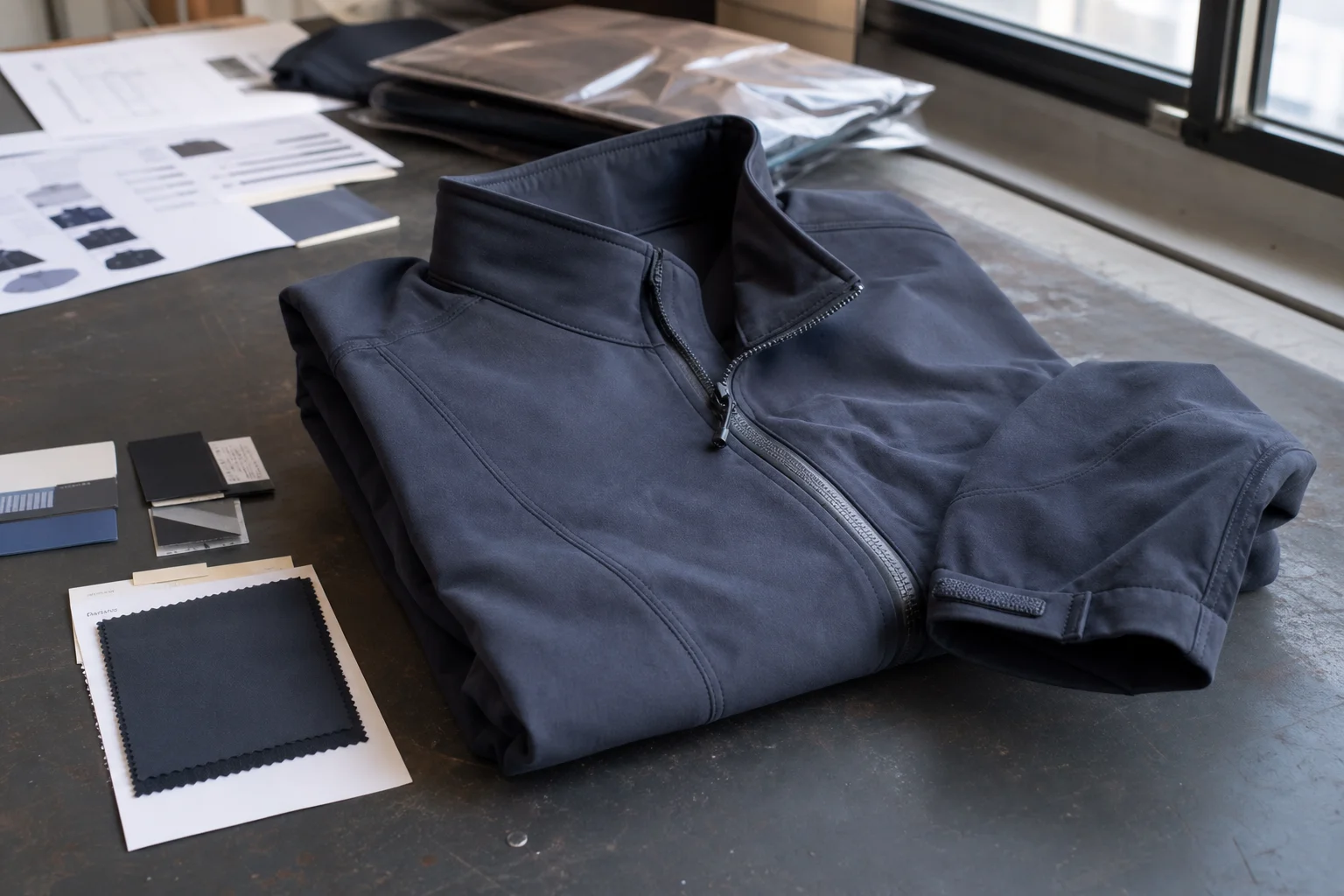
A quality and inspection outline for restaurant group buyers reviewing reorder risk on wholesale softshell jackets, including fabric consistency,...
Softshell Jacket Reorder Risk Review for Buyers - Quality & Inspection manufacturing guide
Wholesale softshell jacket reorder risk review for restaurant groups is rarely just a repeat purchase. A jacket that passed the first rollout can become a problem on the second or third order if the buyer assumes the original approval covers every future production run. Restaurant groups face a specific mix of risks: multi-location distribution, staff turnover, uneven wear conditions, brand-color consistency, embroidery or logo placement, and reorder timing before seasonal weather changes.
For buyers managing uniforms across casual dining, quick-service, catering, delivery, and hospitality-adjacent restaurant operations, the reorder stage deserves a structured quality and inspection review. The goal is not to make the process complicated. The goal is to prevent avoidable surprises: different handfeel, shade variation, poor zipper performance, inconsistent sizing, delamination, missing trims, late shipments, or jackets that no longer match the approved uniform standard.
This guide focuses on practical sourcing judgment for wholesale softshell jacket reorders. It covers fabric and trim checks, MOQ planning, sample approval, lead-time dependencies, inspection risks, and purchasing tradeoffs that matter when ordering for restaurant groups.
A reorder feels safer than a first order because the style has already been approved. That confidence is useful, but it can also hide risk. Apparel production is not automatically identical from one batch to the next. Fabric mills may change lots, coating recipes may vary, trims may be substituted, and sewing operators may interpret construction details differently if the original technical file is incomplete.
Softshell jackets are more sensitive than basic T-shirts or aprons because the product depends on layered materials and functional trims. A typical softshell fabric may include an outer woven face, a bonded membrane or mid-layer, and an inner fleece or brushed backing. If one layer changes, the final jacket can feel stiffer, lighter, warmer, noisier, or less water-resistant. Restaurant employees may notice the difference immediately, especially if the jackets are worn during delivery, outdoor hosting, curbside pickup, or early morning receiving shifts.
Reorder risk also increases when the original order was rushed. Many first uniform programs are launched around a new brand rollout, store opening, franchise event, or seasonal deadline. Buyers may approve a sample quickly, accept a close fabric match, or skip deeper inspection because the first order must ship. That shortcut becomes dangerous during reorders if the buyer treats the rushed first production as a permanent standard without documenting what was actually accepted.
A reorder should not be managed as a copy-and-paste purchase order. It should be treated as a controlled repeat production with confirmed materials, updated specs, and inspection checkpoints.
Restaurant groups buy softshell jackets for operational reasons, not fashion assortment alone. The jacket often represents the brand in public-facing environments: front-of-house teams, managers, delivery staff, catering crews, valet teams, outdoor hosts, and field trainers. A poor reorder does more than create a return issue. It can make staff look inconsistent across locations.
Uniform jackets also need to survive irregular but demanding wear. Restaurant staff may move between cold storage, kitchens, parking lots, patios, delivery vehicles, and back-of-house receiving areas. Jackets can be exposed to moisture, food stains, grease transfer, cleaning chemicals, and repeated washing. A wholesale softshell jacket for retail promotion may not face the same abuse as one used by a restaurant group every week.
Buyers should review the intended use before every reorder. If the first order served corporate managers but the reorder will include delivery teams, the risk profile changes. If the first order was for mild-weather markets and the reorder expands into colder regions, fabric weight and warmth may need review. If franchisees are placing replenishment orders in smaller quantities, color consistency and decoration control become harder.
Each scenario affects the sourcing decision. A large centralized reorder can support better MOQ leverage and tighter inspection. A scattered replenishment model may need a stock program, a controlled fabric reserve, or a more flexible supplier arrangement. The cheapest factory price is not always the best answer if the reorder pattern is frequent and fragmented.
A useful reorder review starts with a simple question: what must remain identical, and what can reasonably change? Buyers should separate critical requirements from negotiable details. Critical requirements usually include brand color, logo placement, approved silhouette, size fit, zipper function, care label accuracy, and packaging allocation by location. Negotiable details may include carton size, inner polybag format, or minor construction methods if they do not affect appearance or performance.
For wholesale softshell jacket reorder risk review, the buyer should compare five documents or references before issuing a purchase order: the approved original sample, the final production sample from the first order, the current supplier spec sheet, the new fabric and trim cards, and the reorder purchase order. If these do not match, production risk rises.
Review Area Main Risk Buyer Control Point Fabric Different weight, stretch, bonding, water resistance, or handfeel Approve lab dips, fabric swatches, and test results before bulk cutting Color Shade variation across locations or against earlier uniforms Use Pantone, approved standard, and lot-to-lot comparison Fit Changed measurements, tight sleeves, short body length, inconsistent grading Check size set samples against sealed measurements Trim Zipper failure, wrong puller, weak snaps, label changes Confirm trim card and require no substitution without written approval Decoration Logo distortion, wrong thread color, poor placement, puckering Approve embroidery or heat-transfer strike-off before production Packing Wrong store allocation, mixed sizes, missing cartons Issue a location-level packing matrix and inspect carton markingsGood reorder management does not rely only on supplier memory. Staff change, factories shift capacity, and fabric lots move quickly. The safer approach is to create a reorder control pack. This pack should include the approved sample photos, construction details, measurement chart, fabric specification, trim list, decoration artwork, packaging instructions, and inspection criteria.
Softshell fabric is the largest risk area because it drives appearance, comfort, performance, and cost. A typical wholesale restaurant uniform softshell may use polyester-spandex woven fabric bonded to fleece, often in the range of 280 gsm to 350 gsm. Lighter options may sit around 240 gsm to 280 gsm, while heavier cold-weather options can exceed 350 gsm. These ranges are general; buyers should specify the target instead of accepting vague descriptions such as “same as before” or “standard softshell.”
Fabric composition should be written clearly. A common specification might include polyester with a small percentage of elastane or spandex for stretch. If the stretch content changes, fit and comfort change. If the fleece backing changes, warmth and bulk change. If the membrane or bonding quality changes, durability and water resistance can change.
Water resistance needs careful wording. Many buyers say “waterproof” when they only need light rain resistance. A softshell jacket may have a durable water-repellent finish, but that does not automatically make the garment waterproof. Seams may not be sealed. Zippers may not be waterproof. Embroidery can create needle holes. If restaurant teams work in steady rain, a softshell may not be enough unless the design and testing support that claim.
Bonding is another major concern. Poor bonding can lead to bubbling, delamination, stiffness, or separation after washing. Buyers should request bonding performance information when the jacket is positioned as a durable uniform item. For restaurant groups, wash durability matters because employees may not follow delicate care instructions. If the care label says machine wash cold but the garment fails under normal workplace laundering, the buyer still faces complaints.
Trim substitution is one of the most common reorder problems. A supplier may use a different zipper because the original is unavailable, expensive, or below MOQ. The replacement may look similar in photos but perform differently in daily use. For restaurant staff, zipper issues are highly visible. A jacket with a catching zipper or broken puller becomes a complaint quickly.
Buyers should specify zipper brand or performance level when needed, but they also need to be realistic about cost. Premium zippers improve reliability but raise unit price. Generic zippers can be acceptable if tested and inspected, especially for budget-sensitive programs. The purchasing judgment is straightforward: if the jacket is part of a manager uniform or daily outerwear program, zipper quality is not the place to save a few cents.
Labels require more attention than many buyers expect. A care label that changes washing instructions can create compliance and customer-service issues. Country-of-origin labeling must match actual production. Size labels must match the size chart and packing list. If the reorder is shipped to multiple restaurant locations, carton and polybag labeling become part of quality control, not just logistics.
Packaging risk grows with distribution complexity. A bulk shipment to one warehouse is easier to control than a shipment divided by store, region, franchisee, or department. If the buyer needs pre-packed store assortments, the purchase order should include a clear packing matrix. The inspection should verify not only garment quality but also quantity, size ratio, carton markings, and location allocation.
Restaurant groups often use jackets as a brand signal. Black, charcoal, navy, red, forest green, or custom brand colors must stay consistent across regions and reorders. Even black can vary. One batch may look blue-black, another brown-black, and another deep neutral black. Under restaurant lighting or outdoor daylight, the difference can be obvious.
Color control starts with an approved standard. A Pantone reference helps, but Pantone alone is not enough for fabric because surface texture, fiber content, finish, and lighting affect appearance. The best control is a physical approved fabric standard from the earlier production run, stored properly and used for comparison against new lab dips or bulk fabric.
Buyers should review shade bands if the reorder quantity is large. A supplier may produce fabric in multiple dye lots, especially when the order is split across sizes or delivery windows. If shade variation is unavoidable, the buyer should avoid mixing dye lots within the same location or uniform group. Shade segregation is not ideal, but it is better than random mixing.
For restaurant groups, a close color match may be acceptable in warehouse stock. It may not be acceptable when employees from different locations stand together at a corporate event, catering job, or franchise meeting.
The buyer should decide early how strict the color tolerance must be. Tight tolerance can increase cost and delay approvals. Loose tolerance may save time but risks brand inconsistency. For visible uniform programs, the stricter path is usually worth it.
Fit risk is easy to underestimate on a reorder. If the supplier changes the fabric stretch, bonding thickness, seam allowance, or sewing line, the jacket may feel different even when the measurement chart appears unchanged. Softshell jackets also need enough mobility for restaurant work. Staff may reach, carry trays, unload supplies, drive, or layer over polos and shirts.
Buyers should pay special attention to chest width, sweep, sleeve length, shoulder width, armhole, bicep, back length, and collar height. Sleeve and shoulder fit are common complaint areas. If the jacket is too tight through the upper arm, staff will avoid wearing it. If it is too boxy, the uniform can look sloppy.
Size grading should match the workforce. Restaurant groups often need a wide size range, commonly from XS to 3XL, with some programs requiring 4XL or 5XL. Extended sizes may carry higher MOQs or surcharges. The buyer should confirm this before promising availability to all locations.
Size Issue Likely Cause Reorder Control Tight sleeves Changed grading or lower-stretch fabric Approve size set and check bicep measurement Short body length Pattern adjustment or cutting variation Measure front and back length on production samples Inconsistent 2XL and above Poor extended-size grading Request actual samples for key extended sizes Restricted movement Fabric stiffness or armhole shape Review wear test feedback before bulk approvalA full size set sample is a smart control for reorders, especially when the supplier changes fabric lot, factory line, or pattern file. At minimum, buyers should review base size, one smaller size, one larger size, and one extended size if extended sizing is part of the order. Measurement tolerance should be realistic. For jackets, a tolerance around half an inch in key width measurements is common, but the exact tolerance should be stated by point of measure and garment type.
Decoration quality can make or break a restaurant uniform reorder. Even if the jacket itself is acceptable, a poor logo application will make the order look wrong. Embroidery, heat transfer, silicone patch, woven patch, and reflective print each carry different risks.
Embroidery on softshell can cause puckering if the backing, stitch density, or hooping method is not controlled. Dense logos may distort on stretch fabric. Small lettering can fill in. Thread color may shift under different lighting. Heat transfers can look clean, but they need correct temperature, pressure, dwell time, and compatibility with the softshell surface. Some coatings or textured fabrics do not accept transfers well.
Logo placement should be measured from clear reference points. “Left chest” is not enough. A better specification states distance from center front, distance below shoulder seam or collar seam, logo width, and orientation. For sleeve logos, buyers should confirm whether placement is based on sleeve seam, cuff edge, or shoulder point.
Restaurant groups should also consider hierarchy. Corporate managers may need a subtle embroidered logo. Delivery teams may need higher visibility or reflective elements. Catering staff may need a clean premium appearance. One jacket design may not serve every role equally well.
Minimum order quantity is a practical constraint in wholesale softshell jacket sourcing. Typical MOQ ranges vary by supplier, fabric availability, customization level, and whether the jacket is made from stock fabric or custom-dyed fabric.
Order Type Typical MOQ Range Buyer Notes Stock softshell with logo decoration 50 to 300 pieces Best for small replenishment, but color and style continuity may be limited Custom style using available fabric 300 to 800 pieces Useful for restaurant groups needing controlled fit and branding Custom-dyed fabric softshell 800 to 1,500 pieces or more Better color control, but higher inventory commitment Extended-size or special-size runs Often 30 to 100 pieces per size or negotiated Plan early because low-volume sizes can disrupt production efficiencyThese ranges are not fixed rules. They are planning references. A supplier may accept lower quantities if fabric is in stock, production capacity is open, or the buyer pays a surcharge. A supplier may require higher quantities if the fabric, zipper, lining, or dye color is custom. The buyer should confirm MOQ by color, size, and delivery drop, not only by total order quantity.
Restaurant groups often underestimate replenishment demand. Staff turnover can create steady size gaps. The common problem is not that the buyer orders too many jackets overall; it is that the buyer orders the wrong size mix. Medium, large, XL, and 2XL may move faster than expected, while XS or 3XL depends heavily on workforce profile. Historical issue data is valuable. If no data exists, buyers should start with a conservative size curve and hold extra inventory in the most flexible sizes.
The biggest MOQ tradeoff is between inventory risk and continuity risk. Ordering more units improves unit price and helps maintain consistency. Ordering fewer units protects cash flow but may force later reorders from different fabric lots or suppliers. For branded restaurant uniforms, continuity risk often costs more than the apparent savings from small fragmented purchases.
A reorder should still go through sample approval, even if the style is unchanged. The approval process can be shorter than a new development cycle, but it should not be skipped. Buyers should ask what has changed since the last production: fabric mill, dye lot, trim source, pattern file, sewing factory, decoration vendor, label supplier, or packing method.
The pre-production sample matters most. It should represent what the factory will actually make, not a close substitute. If the supplier submits a sample using available zipper color, temporary label, or similar fabric, the buyer should treat it as a development sample, not a production approval sample.
Sample approval should be documented in writing. Approval notes should state what is accepted, what must be corrected, and what remains pending. A vague “approved” message creates room for dispute. Buyers should keep photos, measurements, fabric references, and decoration comments in one file so inspection teams can compare bulk goods correctly.
For buyers needing structured supplier support, Fabrik’s apparel manufacturing services page is a useful place to frame the type of production and quality-control support required before placing a reorder.
Softshell jacket lead time depends on material availability, customization, factory capacity, decoration, inspection, and shipping method. A simple stock jacket with logo decoration may move quickly. A custom softshell jacket with dyed fabric, size set approval, embroidery, and store-level packing takes longer.
Stage Typical Timing Risk Factor Fabric and trim confirmation 3 to 14 days Longer if custom color, special zipper, or fabric testing is required Sample or pre-production sample 7 to 21 days Corrections can add another cycle Bulk fabric production or sourcing 10 to 35 days Custom dyeing and bonding increase timing risk Cutting, sewing, and finishing 15 to 35 days Capacity pressure rises before cold-weather seasons Decoration and packing 5 to 15 days Store allocation and embroidery volume can slow completion Inspection and shipment release 2 to 7 days Failed inspection can delay shipmentAs a cautious planning range, buyers should allow 45 to 90 days for many custom wholesale softshell jacket reorders, depending on complexity. Faster timelines may be possible, especially for stock-based programs, but speed usually reduces room for corrections. If the jackets are needed for fall or winter, buyers should begin planning well before seasonal demand peaks.
Lead time is also affected by approval behavior. Slow lab dip approvals, unclear artwork comments, late size changes, or revised store allocations can push production back. Buyers should not blame the factory alone if internal decisions arrive late. A reorder calendar should include buyer-side approval deadlines.
Inspection should be designed around the risks of the product. A softshell jacket inspection is not only about loose threads. It should include measurement checks, fabric appearance, shade consistency, zipper function, seam strength indicators, decoration quality, label accuracy, packing correctness, and workmanship.
For larger wholesale reorders, buyers often use final random inspection based on accepted quality limit sampling. Exact AQL levels depend on buyer policy and product risk, but many apparel programs use stricter limits for critical defects and more flexible limits for minor appearance issues. The key is to define defects before inspection. If the buyer has not defined unacceptable logo placement, zipper defects, or shade variation, the inspector may not flag them consistently.
Inspection should include functional checks. Zippers should be opened and closed multiple times. Pocket bags should be checked for holes. Drawcords and toggles should be pulled lightly to confirm attachment. Seams at stress points should be reviewed closely. If the jacket includes water-repellent claims, the buyer may request simple spray checks or lab testing, depending on contract requirements.
Measurement inspection should cover more than one size. A supplier may keep the base size accurate but drift in extended sizes. Buyers should require measurement checks across the size range, especially for high-volume sizes and any sizes that caused complaints in the previous order.
Inspection timing matters. Inline inspection can catch issues during production, while final inspection catches issues before shipment. For a high-risk reorder, such as a changed fabric mill or new decoration method, inline inspection is worth considering. For a stable repeat order with strong history, final inspection may be sufficient. The decision should reflect risk, not habit.
Every reorder involves tradeoffs. A buyer can push for lower cost, faster delivery, tighter quality, lower MOQ, broader size range, and custom color, but not all at once without consequences. The better approach is to decide which outcomes matter most for the restaurant group.
If brand consistency is the top priority, the buyer should accept longer approval time and possibly higher MOQ for controlled fabric and color. If speed is the top priority, a stock softshell jacket with approved decoration may be the right choice, even if the style is less customized. If cash flow is the top priority, smaller reorders may work, but the buyer should accept higher unit cost and greater continuity risk.
Buyer Priority Best Purchasing Choice Tradeoff Lowest unit cost Larger consolidated reorder Higher inventory commitment Fastest delivery Stock style with logo decoration Less control over fabric and future continuity Best brand consistency Custom fabric and locked trim package Longer lead time and higher MOQ Flexible replenishment Core stock program or planned reserve inventory May require forecasting and storage planning Wider size inclusion Approved extended-size grading and planned size curve Possible surcharges or slower productionDirect purchasing judgment: restaurant groups should avoid chasing the lowest reorder price if the jacket is a visible uniform item. A small unit-price saving can be erased by inconsistent color, poor zipper performance, or replacement shipments. Budget pressure is real, but the best savings usually come from better forecasting, consolidated ordering, and fewer emergency reorders, not from weakening the specification.
Buyers should also question whether the original jacket still suits the operation. If staff complaints show that the jacket is too warm, too stiff, too short, or not water-resistant enough, a reorder may be the wrong move. In that case, the buyer should treat the next order as a controlled revision and communicate the change clearly to locations.
Clear supplier communication reduces reorder disputes. The purchase order should not be the only document. Buyers should send a complete reorder package and require written confirmation from the supplier before materials are purchased or production begins.
Buyers should ask the supplier to flag any changes from the last order. This is a simple but important step. If the supplier cannot obtain the same fabric, zipper, or label, the buyer needs to know before production. Silent substitutions are one of the main causes of reorder failure.
For restaurant groups evaluating a manufacturing partner, the company background and operating model also matter. Fabrik’s about us page can help buyers understand positioning before starting a sourcing conversation. For specific reorder requirements, buyers can use the contact page to discuss specifications, quantities, and inspection expectations.
The strongest wholesale softshell jacket reorder programs share a few habits. They keep a sealed standard sample. They document fabric and trim details. They approve decoration on actual fabric. They review size sets when anything changes. They inspect packing against location-level requirements. They treat reorders as repeat production, not automatic duplication.
Restaurant group buyers should also keep feedback from the field. Store managers can identify zipper complaints, size shortages, warmth issues, and laundering problems before the next purchase order is placed. This feedback should be sorted into two categories: quality failures and preference changes. Quality failures require correction. Preference changes require a buyer decision, because not every employee preference should trigger a specification change.
Reorder risk review is mainly about discipline. It protects the buyer from assumptions and gives the supplier a clear standard to follow. The process may add a few days at the front end, but it can prevent weeks of replacement work, internal complaints, and brand inconsistency after delivery.
For restaurant groups, the safest softshell jacket reorder strategy is to lock the visible and functional details first: fabric, color, fit, zipper, logo, labels, and packing. Then negotiate price and timing around that standard. If the order is urgent, reduce customization rather than quietly accepting material substitutions. If the order is large, invest in pre-production approval and inspection. If the order is fragmented across franchisees or locations, build a replenishment plan instead of letting each reorder become a separate sourcing exercise.
A softshell jacket is not the most complex garment in apparel manufacturing, but it carries enough material, trim, and decoration risk to justify a structured review. The buyers who manage reorders carefully usually get better continuity, fewer complaints, and stronger long-term supplier performance.
Get a free quote from Fabrikn — your trusted B2B clothing manufacturer with 10+ years of experience. MOQ as low as 200 pieces.
Get a Free Quote →The biggest risk is assuming the reorder will match the previous order without confirming fabric, trim, color, fit, and decoration details. Fabric changes are especially important because softshell performance depends on weight, bonding, stretch, backing, and finish.
Typical MOQ ranges may start around 50 to 300 pieces for stock jackets with logo decoration, 300 to 800 pieces for custom styles using available fabric, and 800 to 1,500 pieces or more for custom-dyed softshell fabric. Actual MOQ depends on supplier, material, color, size range, and decoration method.
Yes. The process can be shorter than first development, but buyers should still approve fabric, trims, logo strike-off, and a pre-production sample. A size set is recommended if fabric, fit, factory line, or pattern details have changed.
Many custom reorders require about 45 to 90 days, depending on fabric availability, sample approvals, production capacity, decoration, inspection, and shipping method. Stock-based reorders can be faster, but they provide less control over long-term continuity.
Buyers should keep a physical approved fabric standard, approve lab dips before production, check bulk fabric before cutting, and avoid mixing shade lots across the same location or team. Pantone references help, but they should not replace physical fabric standards.
Inspection should cover fabric defects, shade variation, measurements, zipper function, stitching, logo placement, label accuracy, packing quantities, carton markings, and location allocation. For higher-risk reorders, inline inspection may be useful before final inspection.
Stock jackets can be a good option when speed, low MOQ, or budget control matters most. The tradeoff is reduced control over fabric continuity, exact color, fit, and long-term availability. For highly visible brand uniforms, custom or controlled production is usually safer.
Buyers should send the approved sample reference, measurement chart, fabric specification, trim card, logo artwork, placement guide, size breakdown, packing matrix, inspection criteria, and required delivery date. The supplier should confirm any changes from the previous order in writing.