
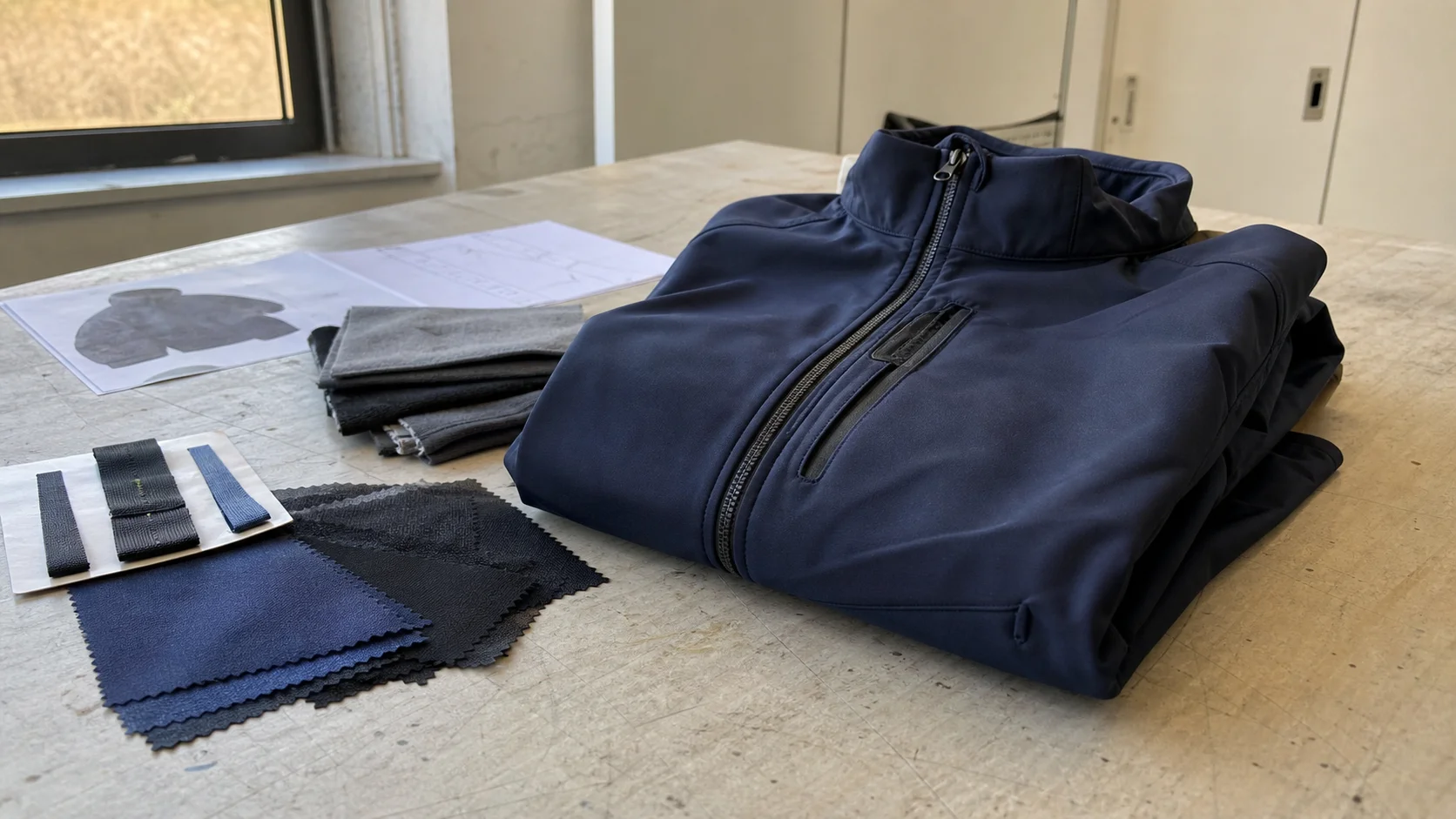
A fitness club buyer-focused review of reorder risks for wholesale softshell jackets, covering fit consistency, decoration placement, fabric performance,...
For fitness club buyers, a softshell jacket reorder can look straightforward on paper. The first run passed, the fabric feels acceptable, the embroidery or print placement is approved, and the club logo is already set. The real risk appears on the second or third order. Reorders often expose changes in dye lot consistency, trim substitution, stitching tension, waterproof performance, zipper quality, packaging, and even size matching against the original bulk shipment. This is why a wholesale softshell jacket reorder risk review matters: it protects brand consistency, member satisfaction, and margin.
Fitness clubs buy softshell jackets for staff uniforms, member retail, seasonal promotions, and outdoor coaching programs. These jackets sit in a difficult middle ground. They need to look polished like branded outerwear, but they also need practical features such as wind resistance, moderate water repellency, mobility, and durability under repeated wear. A reorder can fail in subtle ways that are easy to miss in a quick visual check. A slightly thinner fleece backing, a changed membrane, or a different zipper pull may not trigger complaints immediately, yet it can weaken the product line and create return risk.
This article reviews the main reorder risks, the quality checkpoints that matter most, and the sourcing decisions fitness club buyers should make before issuing a repeat PO. It also covers sample approval, inspection priorities, lead-time factors, and the tradeoffs between price stability and production control.
Wholesale Softshell Jacket Reorder Risk Review - Fabrikn production reference
The first order is usually the best-controlled order. Buyers and suppliers are both paying attention, the style is new, and approvals are fresh. A reorder is different. Production teams may rely on archived specs, substituted trims may be treated as equivalent, and fabric inventory may come from another dye lot or mill run. If the original style file is incomplete, the factory may reproduce the jacket “close enough” rather than exactly.
Softshell fabrics are especially vulnerable to drift because they are composite materials. A typical construction may include a woven face, a membrane or laminated layer, and a fleece or brushed back. Small changes in any layer affect handfeel, stretch recovery, breathability, warmth, and weather resistance. A reorder risk review is not just about matching color. It is about checking whether the full performance profile still fits the club’s expectations.
Fitness club buyers should assume that reorder quality can slip unless controls are explicit. That does not mean every repeat order is risky. It means the risk must be managed with the same seriousness as a new development order, especially when the jackets carry prominent club branding and are sold or worn in public-facing settings.
Fitness clubs usually have a narrow tolerance for appearance issues. Staff uniforms need to look consistent across locations, and retail items need to reflect a premium image. That changes the quality priorities compared with industrial or outdoor workwear buyers.
For clubs using jackets as staff uniforms, consistency affects professionalism. For retail, consistency affects resale confidence. If a member buys a jacket in a second wave and the product feels different, the club can lose trust quickly. This is why reorder risk should be treated as a business continuity issue, not only a QC issue.
The most common reorder issue is fabric change. A supplier may source a different woven shell, fleece backing, or membrane to protect schedule or cost. Even when the fabric content appears similar on paper, the outcome can differ in weight, stretch, gloss level, pilling tendency, and water resistance.
Buyers should compare the original fabric specification against the reorder fabric in measurable terms:
A practical judgment point: if the original jacket was approved by sample handfeel and visual appearance only, the reorder should be checked more carefully. A softshell that feels thicker is not always better. It may be warmer, but it may also reduce flexibility and wear comfort during active use.
Softshell jackets are often ordered in black, navy, charcoal, or dark green. These shades look stable at first glance, yet minor dye lot shifts are easy to spot on a hanger or under indoor lighting. If club staff wear jackets as a group, visible shade differences can make a uniform set look disjointed.
Color control should include the following:
Buyers should also watch for mismatched panels. Even if the main shell looks right, contrast zipper tape, pocket bags, or binding can stand out if sourced from a different batch.
Trim substitution is one of the easiest ways for quality to drift without immediate detection. Zippers, cord locks, elastic tape, snaps, drawcords, and labels are all vulnerable to replacement if the original components are not available.
The zipper deserves special attention. Fitness club buyers often want a smooth front zip that feels premium in daily use. A lower-grade zipper can snag, wobble, or create a weak point during frequent wear. Pocket zipper quality matters even more when jackets are used by coaches or front-desk staff carrying keys, cards, or small tools.
Check whether the reorder is using the same:
Softshell jackets need balanced construction. Too much tension in the seams can affect stretch and comfort. Too little control can cause puckering, loose threads, or poor alignment around the shoulder, armhole, and hood area if present.
Reorders should be checked for seam consistency, seam allowance stability, and bar-tack reinforcement at stress points. Pocket openings, hem joins, and cuff finishing should remain uniform. Any shift in thread type or stitch density can affect strength and appearance.
Softshell is usually chosen for comfort and light weather protection, not heavy rain performance. That distinction should be kept clear in buyer expectations. A reorder may still look acceptable but perform worse if the membrane or DWR treatment has changed.
Ask the supplier whether the same treatment is being used on the reorder fabric and whether performance was verified on the new batch. A club may not need technical outerwear certification, but it does need predictable field performance. If coaches or staff use the jackets outdoors, comfort under wind and light drizzle is part of the product’s value.
The cleanest way to reduce reorder risk is to keep the original specification file complete and usable. Many problems happen because the first production file was scattered across email threads, marked-up PDFs, and sampling notes. By the time the reorder comes in, no one can tell which version was final.
A good reorder tech pack or spec sheet should include:
When a buyer has a complete spec, the factory has fewer excuses to improvise. That does not eliminate risk, but it reduces interpretation. In sourcing terms, fewer assumptions usually means fewer defects.
Do not treat a reorder as a paperwork exercise. A sample review is still useful, especially if the original production was several months earlier or the supplier has changed materials.
Typical approval steps include:
If the order is a repeat of a successful style, some buyers try to skip this step to save time. That shortcut often costs more later. A quick sample approval can catch a zipper substitution or fit shift before bulk production locks it in.
For reorder programs, the safest rule is simple: if the fabric source, trim source, or logo method changed, the buyer should re-approve the sample before bulk release.
Inspection should focus on the failures most likely to impact the club’s use case. A general visual check is not enough. The point is to verify whether the reorder still matches the approved standard in production reality.
Before cutting, inspect fabric rolls, trims, and labels. Check shade bands, width, weight, and obvious surface defects. A bad roll can create a cluster of problems that show up only after cutting is complete.
During sewing, monitor seam alignment, stitch density, and logo placement. If the order has multiple sizes, measure early pieces from each size run. This helps catch grading errors before they spread across the batch.
Final inspection should include measurements, appearance, function testing, and packaging review. Use a clear acceptance standard tied to the original approved sample. If the jacket was originally sold as a premium club outer layer, the final inspection must also reflect that level of finish.
Common inspection risks include:
For larger club programs, third-party inspection can add useful discipline. It is not a guarantee. It does, though, create a record and a sampling structure that can reduce dispute when quality is uneven.
Lead time on a reorder is not just sewing time. It depends on fabric availability, trim stock, approval speed, and the complexity of the logo application. A reorder can move quickly if the original materials are still in stock. It can slow down sharply if a matching fabric needs to be milled again or if the zipper supplier changed.
Typical reorder timing for wholesale softshell jackets often falls into a broad range of 30 to 75 days after confirmation, but that range is highly dependent on material readiness, seasonality, and production queue position. If fabric must be remade or imported, the timeline can extend further.
Fitness clubs should plan ahead for seasonal demand. Autumn and winter campaigns compress factory capacity. If the reorder is meant for staff onboarding or a retail launch date, buyers should confirm whether there is enough buffer for:
A delayed reorder is often not a factory problem alone. It can result from slow buyer approvals as well. The best programs keep the decision chain tight and the change requests limited.
MOQ is one of the first commercial issues fitness club buyers face on reorders. For softshell jackets, MOQ can vary widely depending on fabric, color, logo method, and whether the order is a stock program or custom build. A rough wholesale range might start around 100 to 300 pieces per color/style for simpler programs, while fully custom orders may require higher quantities. Some suppliers can support lower MOQs, but the buyer may trade off price, flexibility, or lead time.
That tradeoff deserves attention. Lower MOQ can help a club manage risk if the product is new or if staff and retail demand is uncertain. Larger MOQ can improve unit price and material consistency, but it increases inventory exposure if sizing forecasts are wrong.
Size distribution is another practical issue. Fitness clubs often need a wide spread of sizes, with smaller quantities in less common sizes and more demand in core sizes like M, L, and XL. If the reorder is based on a previous sell-through pattern, buyers should not assume the same size curve will repeat exactly. Membership mix, seasonal layering, and staff assignment can all change demand.
Risk Area Buyer Impact Practical Control Fabric substitution Different handfeel, warmth, or performance Lock original spec and approve new fabric sample Color drift Visible mismatch across staff or retail stock Compare dye lot and inspect under consistent light Trim changes Zipper failure or reduced premium feel List exact trims and forbid substitutions without approval Measurement shift Fit complaints and returns Measure first-off pieces and compare with sealed sample Packing inconsistency Retail presentation damage and handling issues Issue packing standard with folding and labeling rulesPackaging matters more than many buyers expect. Fitness club jackets are often delivered to multiple branches or sold through front-desk retail. If the packaging is sloppy, wrinkled, or inconsistent, the product’s perceived value drops before it is worn.
Reorders should confirm the same packaging format used in the approved run:
Be careful with over-optimization. A club may want premium presentation, but costly retail packaging can add avoidable expense if the jackets are only used for staff uniforms. The right package is the one that matches the sales channel.
Before issuing a reorder, buyers should ask direct questions. The answers reveal whether the supplier is controlling production or simply repeating a file.
The supplier’s response should be specific. “Same quality” is not enough. Buyers should look for measurable confirmation. In apparel sourcing, vague reassurance is usually a weak control signal.
For fitness club buyers who want tighter control over wholesale softshell jacket reorders, it helps to work with a supplier that treats spec management, sample approval, and inspection as part of the same process. A sourcing partner should be able to support clear communication on fabric, trims, and production checkpoints, rather than pushing buyers to accept substitutions after the order is placed.
If you are reviewing production services, start with the information available on Fabrikn services. If you need to discuss a reorder plan, approval workflow, or quality checklist, use the contact page. Buyers who want a better sense of company background can also review the about page.
That said, supplier selection should stay practical. A good partner is one that documents details, confirms materials, and does not blur the line between an approved sample and a convenient substitute. For reorders, that discipline is worth more than optimistic promises.
A wholesale softshell jacket reorder can preserve brand consistency and protect club revenue, but only if the buyer manages the risks actively. The main threats are fabric drift, trim substitution, color mismatch, measurement variation, and packaging inconsistency. Fitness club buyers should not rely on memory or verbal confirmation. They should rely on clear specs, a repeat sample approval step, measurable inspection checkpoints, and a supplier that is willing to confirm exact materials before production begins.
In practical terms, the safest reorder is not always the cheapest or fastest. It is the one that matches the approved original closely enough to avoid member complaints, staff uniform mismatch, and unexpected returns. That is the standard worth holding on a repeat order.
Get a free quote from Fabrikn — your trusted B2B clothing manufacturer with 10+ years of experience. MOQ as low as 200 pieces.
Get a Free Quote →The biggest risk is material drift, especially changes in fabric composition, weight, membrane performance, or trim quality. These changes are not always obvious at first glance, but they affect comfort, durability, and overall brand consistency.
MOQ varies by supplier and customization level. A common wholesale range may start around 100 to 300 pieces per color/style for simpler programs. Fully custom jackets, special fabrics, or complex logo work may require higher quantities.
Yes. If the fabric, trims, logo method, or factory production conditions changed, sample approval should still be done. Even a repeat order can drift from the original approved standard.
Lead time often falls somewhere between 30 and 75 days, but that depends on fabric availability, trim stock, production queue, and shipping method. Reorders can take longer if materials need to be remade or matched again.
Focus on color consistency, measurements, zipper performance, logo placement, seam quality, and packaging. Those areas most directly affect uniforms, retail presentation, and member perception.
Only with buyer approval. Even small trim changes can affect function and appearance. Buyers should require exact trim specifications and reject substitutions unless they are reviewed and approved in writing.